
DIY indoor herb garden ideas make it easy to cook with fresh basil, mint, parsley, and thyme without needing a yard. With a sunny windowsill, a small shelf, or even a rolling cart, you can grow herbs right where you prep meals.
This post shares 10 simple indoor herb garden setups inspired by real home moments like a calm kitchen windowsill, a ladder shelf by the armchair, and jars hanging by the sink. Each idea includes styling tips so your herbs look good in a lived-in space.
You will also get practical care tips for light, watering, and container choices. Many of these projects use items you may already have, like clay pots, mason jars, twine, and vintage crates.
If you came from Pinterest, you can use the headings to jump to the look you saved and copy the setup in your own home. Each section ends with a Pro Design Tip and a Budget Consideration to help you plan.
1. Kitchen Windowsill Herb Garden with Clay Pots


A kitchen windowsill is one of the easiest places for a DIY indoor herb garden because it is close to water and cooking space. Use mismatched clay pots for basil, mint, and parsley, and add small wooden plant markers so you always grab the right herb. A linen curtain softens the view and keeps the scene cozy while still letting in sun-drenched morning light.
Set the pots on a tray or shallow dish to protect the counter from drips. If you like the calm, lived-in look, keep an open cookbook nearby with a folded page and a half-full water glass on the counter. Those everyday items also remind you to harvest often, which keeps herbs bushy.
For care, give the pots a quarter turn every few days so plants do not lean. Water when the top inch of soil feels dry. If the pale tile backsplash gets subtle plant shadows, that is usually a good sign you have enough light for leafy herbs like basil and parsley.
- Pick a south or east window for the strongest light.
- Use clay pots with drainage holes to prevent soggy roots.
- Add a saucer or tray to catch water and keep the sill clean.
- Group herbs with similar needs, like basil and parsley, together.
- Style with simple labels and one neutral linen towel for a tidy look.
Pro Design Tip: Keep pot colors in the same warm family (terracotta, tan, soft white), so mismatched containers still look intentional.
Budget Considerations: Clay pots are cheap, but saucers add up; use thrifted plates or baking sheets as a low-cost drip tray.


2. Ladder Shelf Indoor Herb Garden for Small Apartments
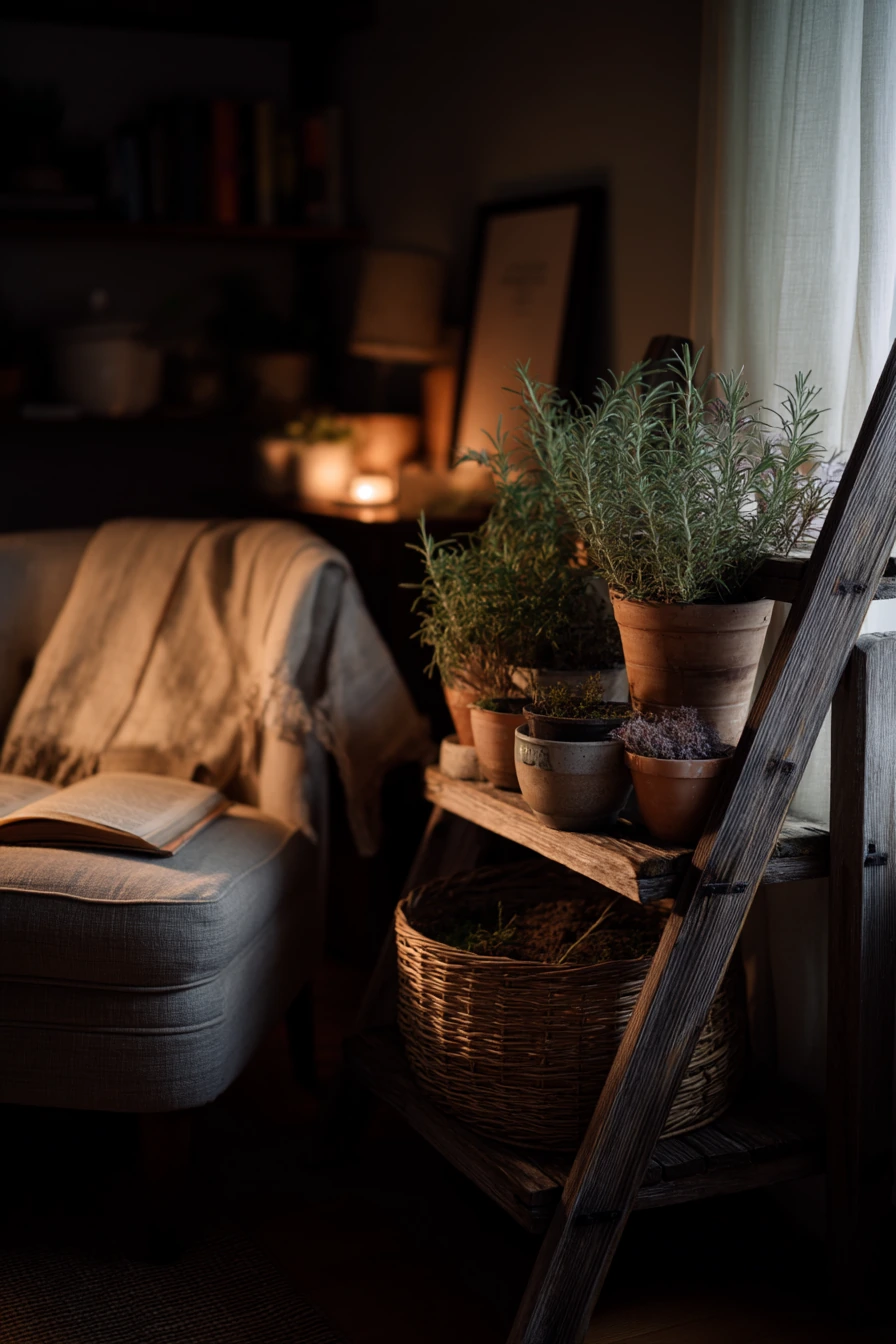
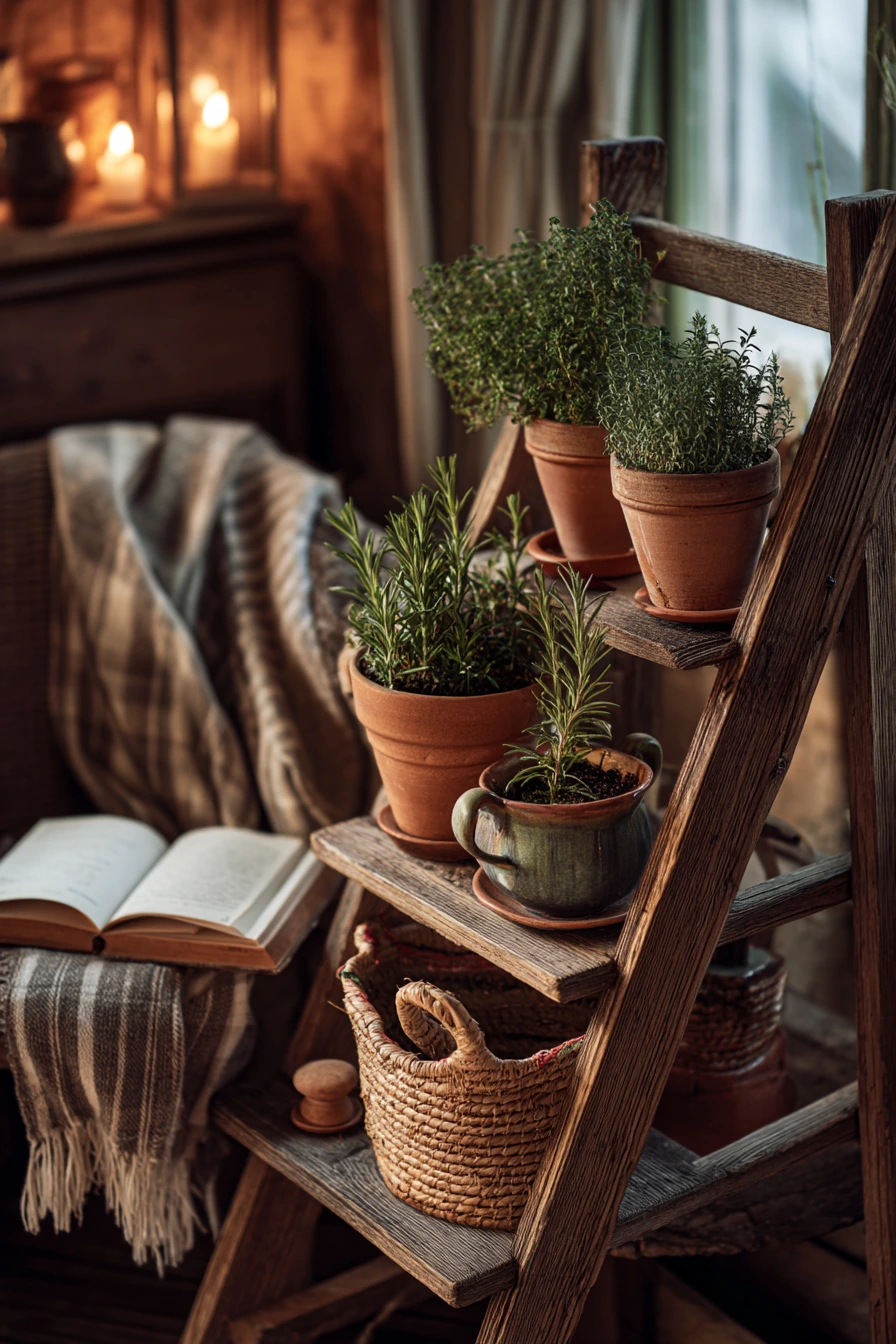
A rustic wooden ladder shelf is a smart DIY indoor herb garden idea when your windowsill is full. The shelves let you stack terracotta and enamel pots vertically, so rosemary and thyme get light without taking over your table. Place a woven basket on the bottom shelf to store soil tools, small snips, and extra plant markers.
This setup also fits well in a compact living room. Warm lamplight mixing with soft window glow makes the green leaves look rich at night, and it is easy to do quick evening plant care. To style it like a real home, keep a slightly wrinkled throw on a nearby armchair and a paperback book left open, but keep water away from electronics.
For success indoors, choose herbs that handle drier air, like rosemary and thyme. Use a gritty potting mix and do not overwater. Let the pot feel lighter before watering again, and keep air moving so the soil surface dries between drinks.
- Place the shelf near the brightest window in the room.
- Put sun lovers on the top rung and shade-tolerant herbs lower.
- Use matching saucers to protect wood from water rings.
- Prune rosemary tips to keep it compact and full.
- Add one small lamp with a warm bulb for evening ambiance.
Pro Design Tip: Repeat one material, like terracotta, on each shelf to tie the whole ladder display together.
Budget Considerations: New ladder shelves can cost more; look for used ones online, or convert an old step ladder with sandpaper and clear sealant.


3. Hanging Mason Jar Herb Garden with a Wooden Rail

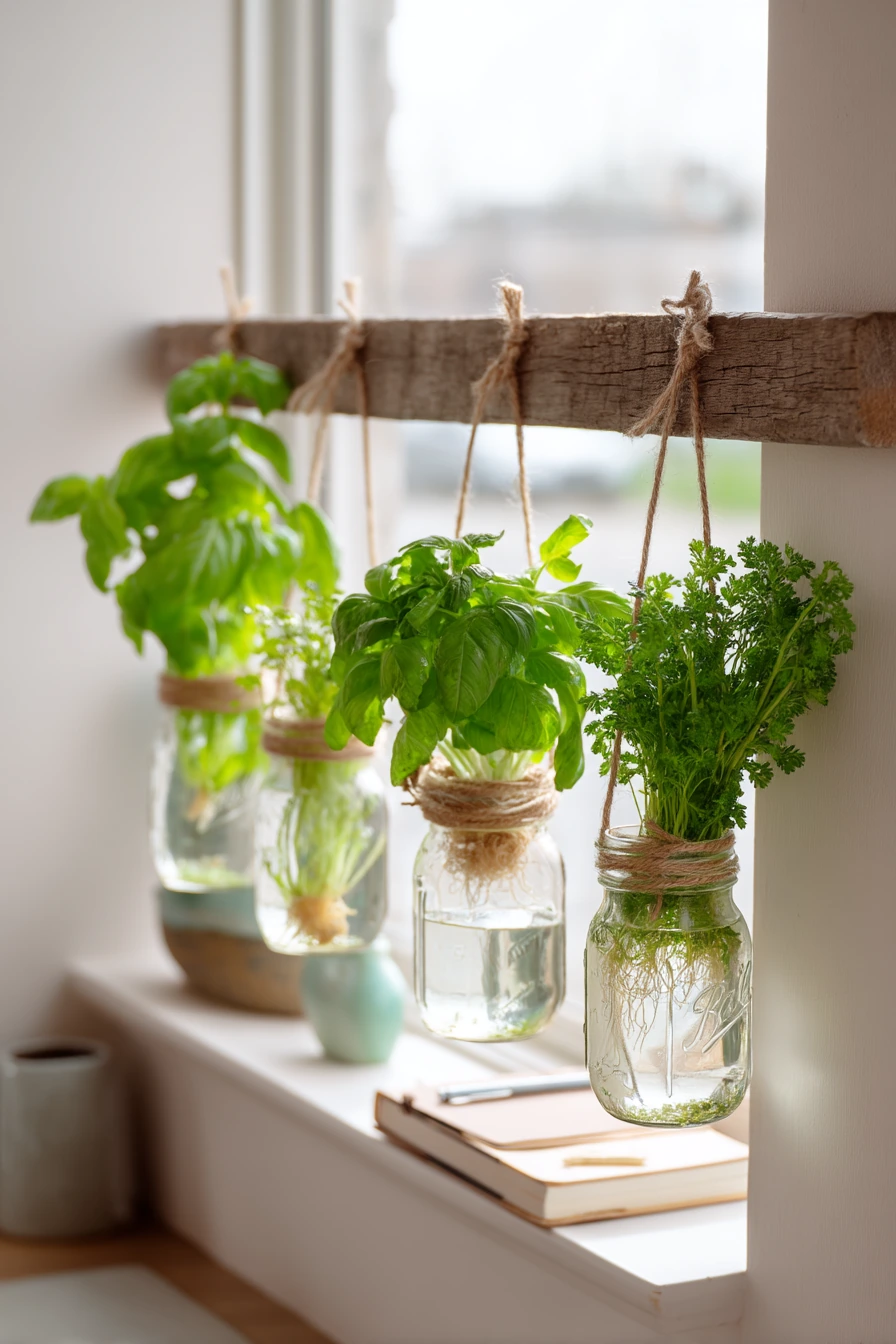
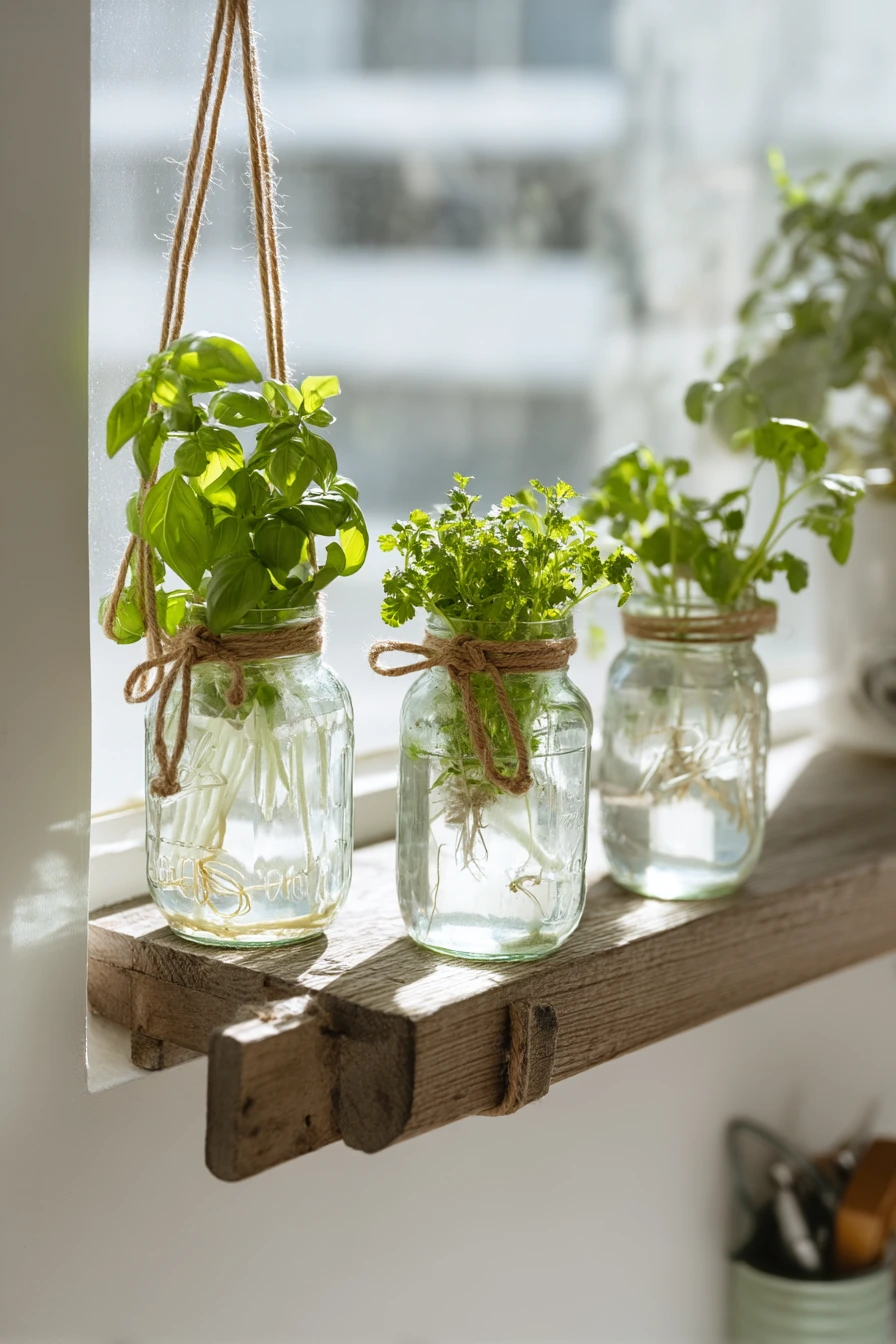
Hanging mason jars are a clean DIY indoor herb garden idea for small kitchens because they free up counter space. Attach a wooden rail to studs, then hang glass jars with linen twine knots. Grow fresh basil and cilantro in water so the roots stay visible through the clear glass, which adds a simple, airy texture on a white wall.
This style works well in an urban kitchen where you want a relaxed look. Keep a small notebook and pen on the sill to track water changes and how fast each herb grows. If you have a tablet nearby with a charging cable curling on the counter, keep the jars slightly to the side to avoid splashes.
For best results, start with cuttings from the grocery store or a healthy plant. Strip leaves from the lower stem, then place stems in clean water. Change water every 3 to 5 days and rinse the jar to reduce odor. Once roots are strong, you can keep them in water long term or move them into soil for faster growth.
- Use wide-mouth jars so stems are easy to remove and clean.
- Hang jars at a height that is easy to refill without a step stool.
- Keep leaves above the waterline to prevent rot.
- Rotate jars weekly so plants grow straight toward the light.
- Style with neutral twine and one simple rail for a calm look.
Pro Design Tip: Keep jar spacing even so the line of glass looks neat and the plants do not crowd each other.
Budget Considerations: If you do not want to buy new hardware, use sturdy hooks and a scrap board, or repurpose a coat rack as the rail.

4. Vintage Fruit Crate Stack Herb Garden Corner
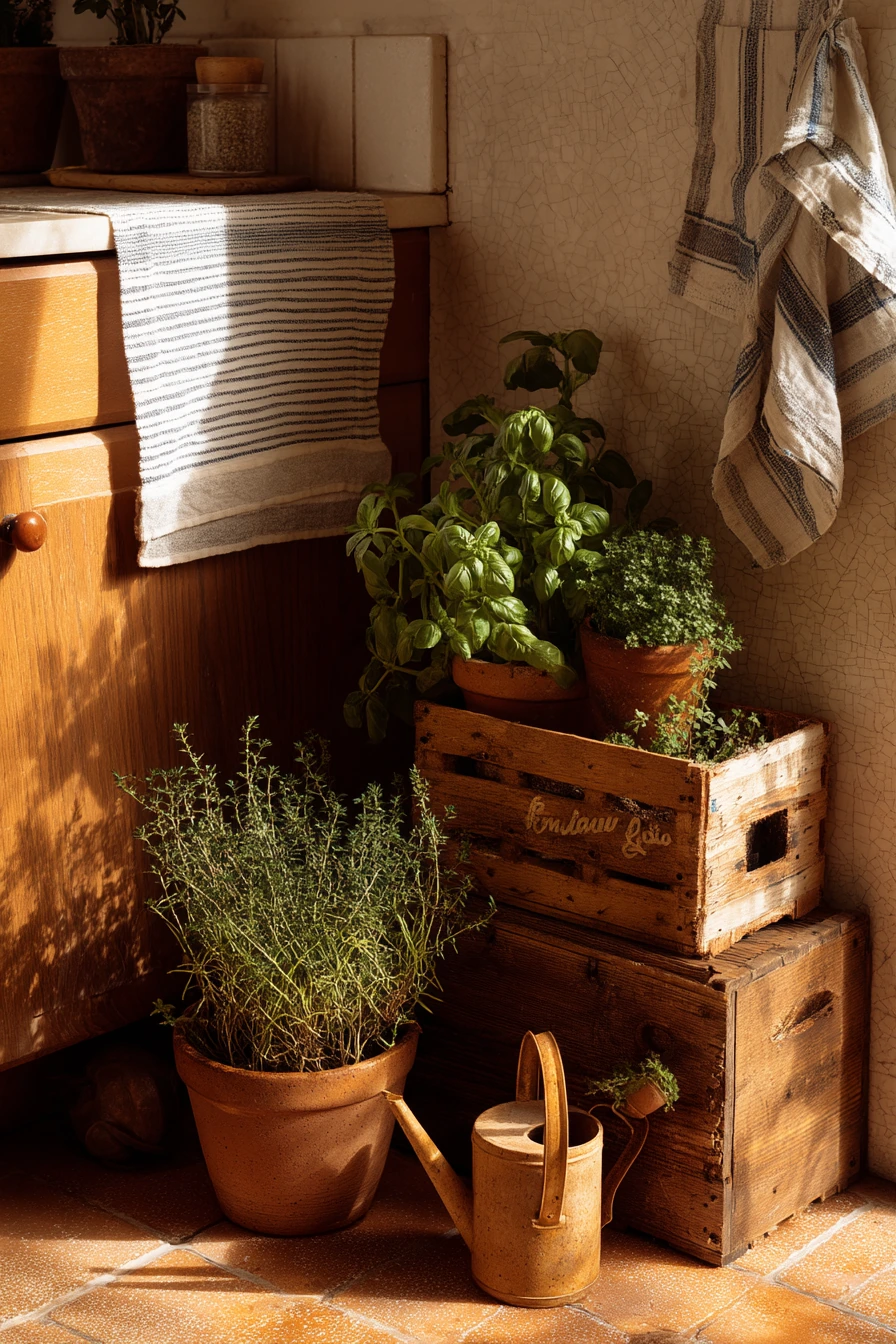

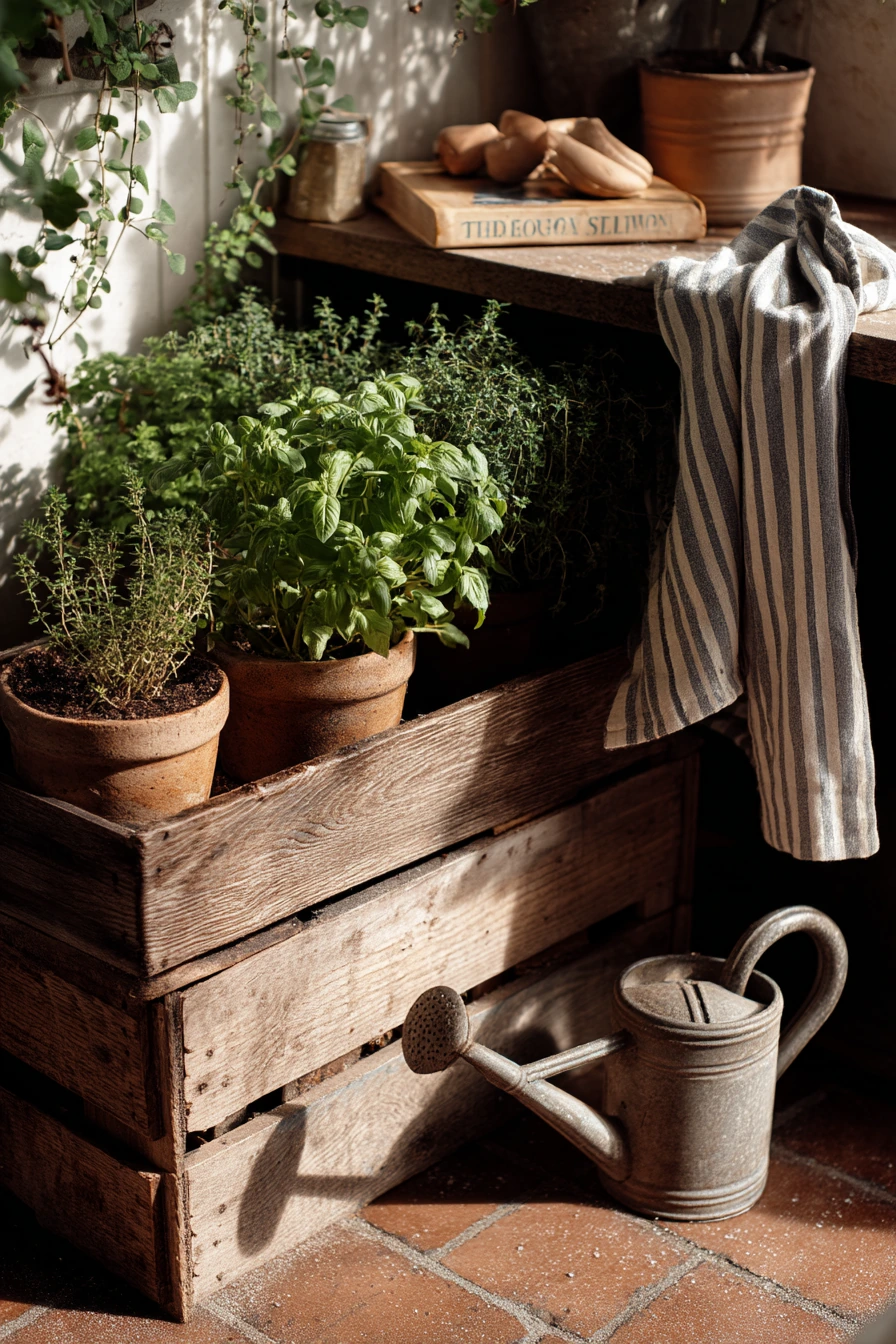
Stacked vintage fruit crates make a strong DIY indoor herb garden for a kitchen floor corner. The open sides let light reach the plants, and the crates create built-in shelves for clay pots of thyme and oregano. The look is warm and homey, especially with dusty terracotta textures and warm midday sunlight grazing the leaves.
To set it up, stack two or three crates in a stable pattern, then secure them with small brackets or screws so they do not shift. Place the heaviest pots on the bottom level. Keep a small watering can nearby so you can water fast without dripping across the room. A striped dish towel hanging loosely on a hook ties the corner into the rest of the kitchen.
This is also a great way to keep herbs close to a cooking space. If you like to cook from books, a dog-eared cookbook on the counter fits the mood and reminds you to use your herbs. For care, thyme and oregano prefer drier soil, so avoid watering on a schedule. Water only when the pot feels light and the topsoil is dry.
- Line each crate shelf with a tray to catch spills.
- Use crates with similar sizes so the stack looks balanced.
- Keep the corner bright, or add a small grow light if needed.
- Trim oregano often to prevent it from getting leggy.
- Add one basket for plant food, gloves, and extra saucers.
Pro Design Tip: Angle the top crate slightly forward to create a tiered look and make each herb easy to see and reach.
Budget Considerations: Vintage crates can be pricey; ask local markets for used produce boxes, then sand rough edges for a cleaner finish.

5. Countertop Tray Herb Garden with Tiny Pots
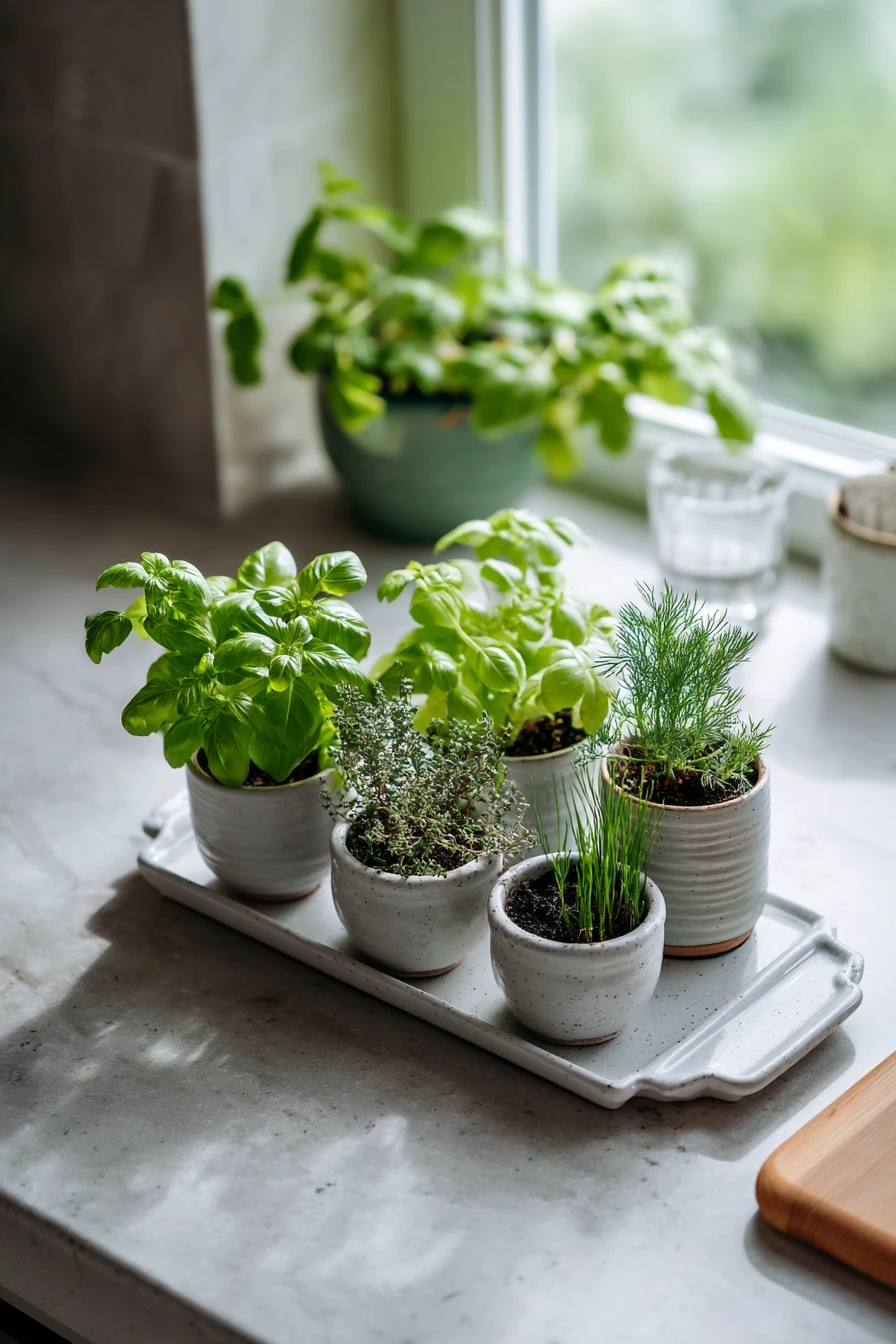

A ceramic tray herb garden is a simple DIY indoor herb garden idea for renters because it is portable and easy to clean. Arrange tiny pots of basil, dill, and chives on a single tray so watering stays contained. On a pale stone counter, the tray looks neat and keeps your herbs close to the cutting board where you cook.
For styling, keep the area minimal. A water glass beside a cutting board and faint plant shadows on a soft wall create a quiet morning feel without clutter. Choose pots in similar shapes, even if the colors vary a little, so the group looks organized. If you want a modern look, pick matte ceramics and keep labels small.
Because small pots dry out fast, check them often. Stick a finger into the soil and water when the top layer is dry. Basil likes more moisture than chives, so consider grouping herbs with similar needs or using a tray with two sections. Snip herbs from the top to encourage new growth, and remove flower buds to keep leaves tender.
- Use a tray with a raised lip to catch extra water.
- Pick compact varieties made for containers.
- Keep the tray near the brightest part of the counter.
- Bottom-water small pots for a few minutes to reduce mess.
- Style with one neutral towel and a simple wood cutting board.
Pro Design Tip: Vary pot heights slightly using a small riser under one or two pots for a more designed, layered look.
Budget Considerations: Instead of buying a new ceramic tray, use a thrifted serving platter or a baking dish that matches your kitchen colors.


6. Floating Shelf Herb Garden Above the Kitchen Sink
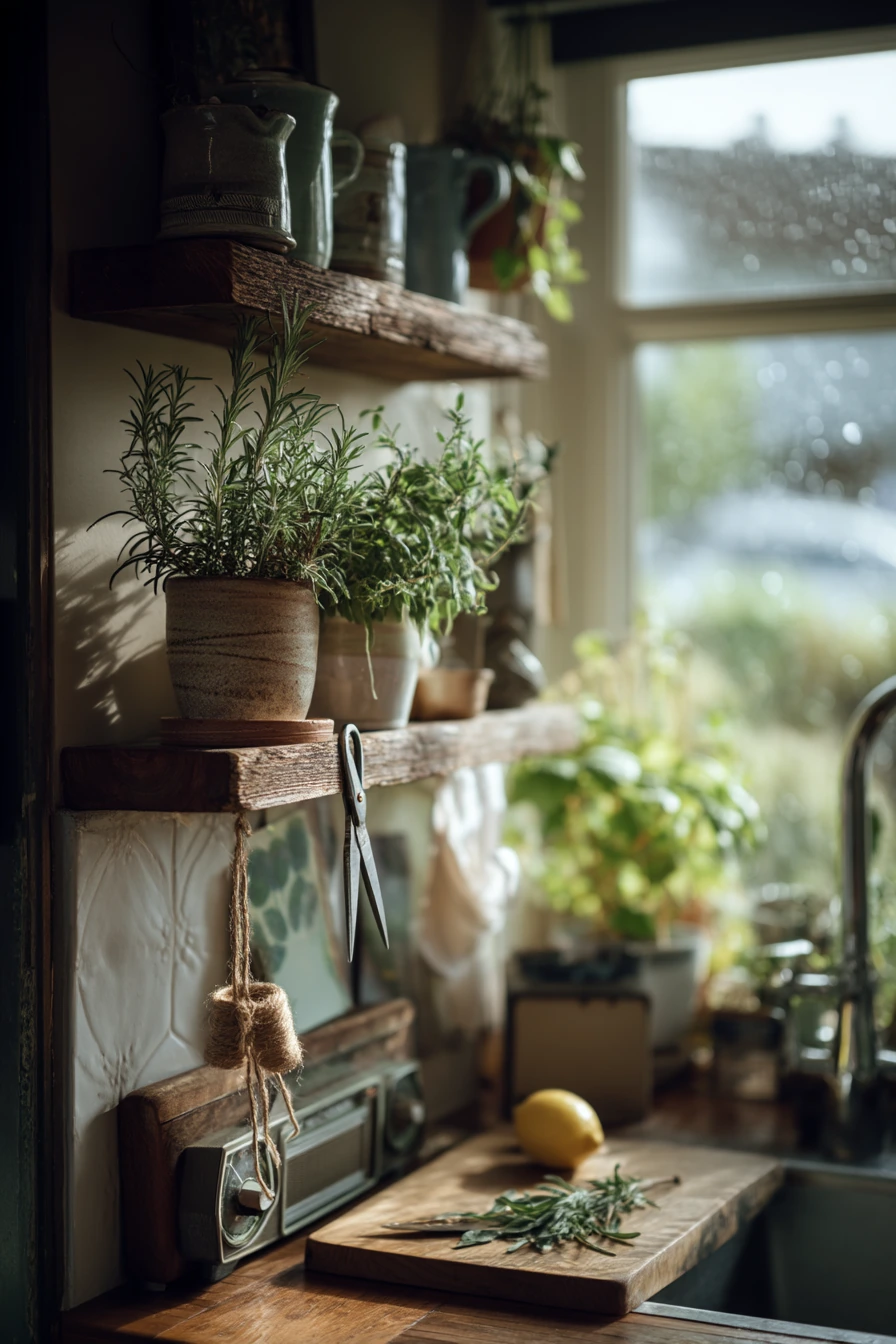
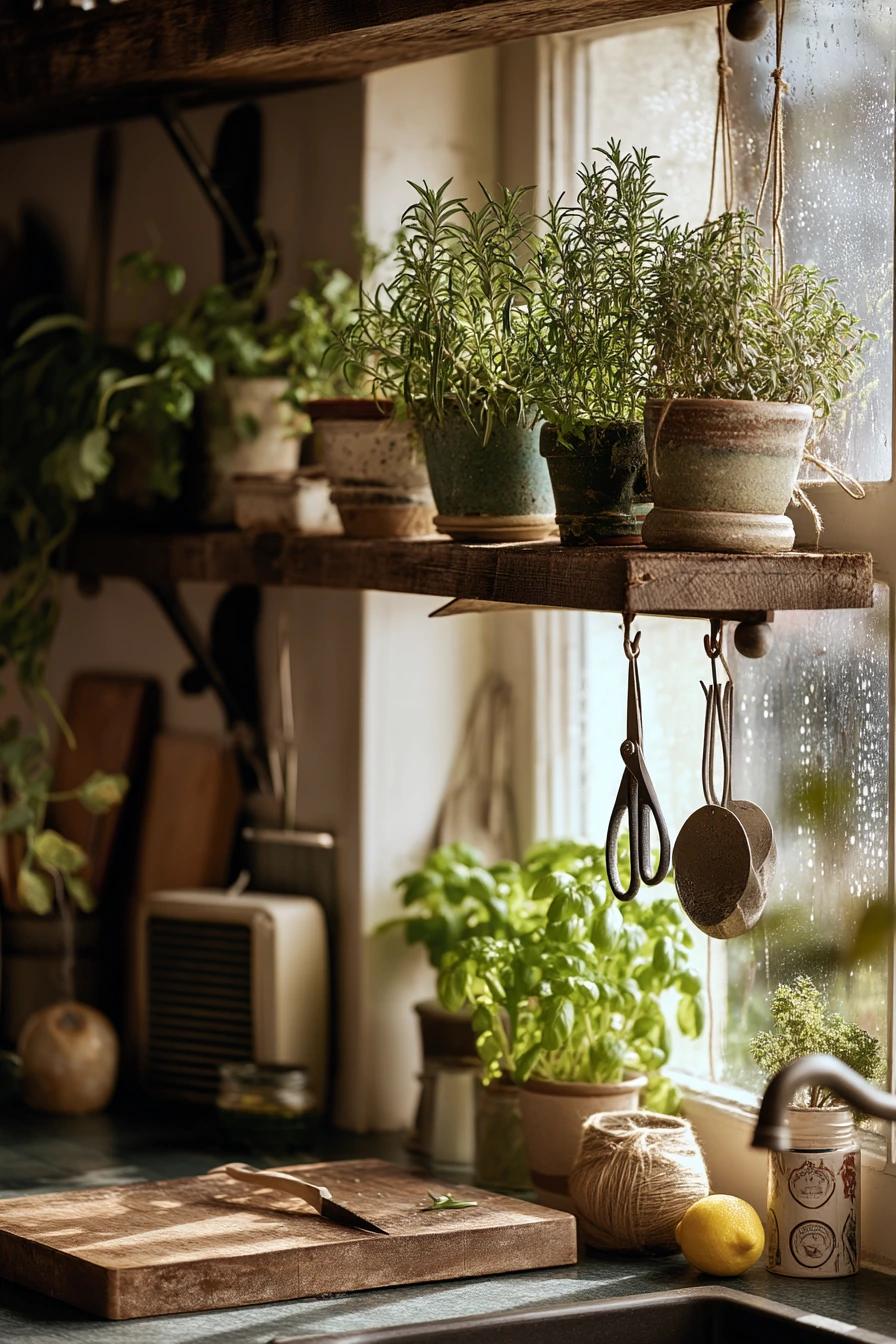
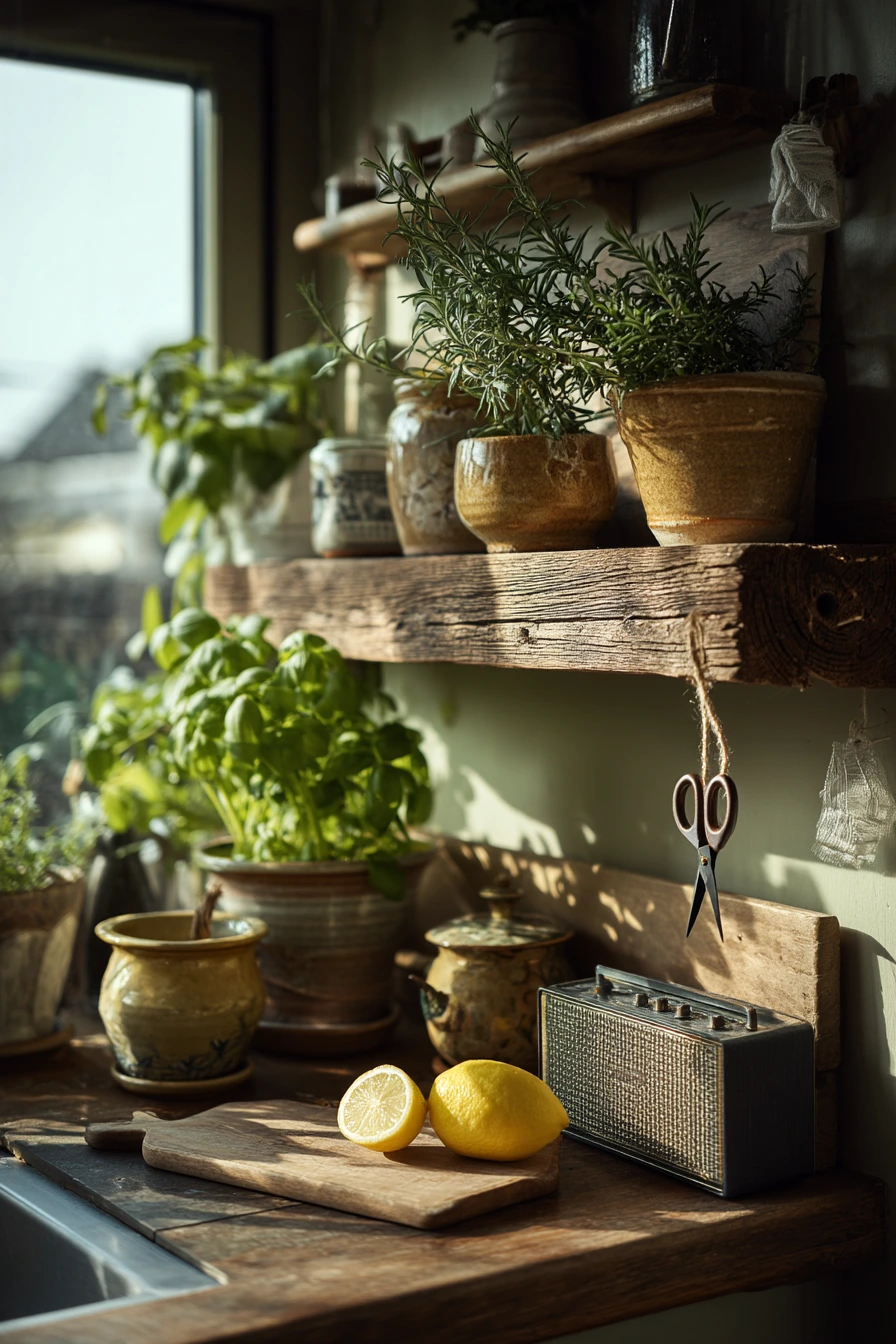
Floating wooden shelves above the kitchen sink turn unused wall space into a practical DIY indoor herb garden. Rosemary and sage do well here when they are planted in handmade pottery with good drainage. The sink area is also convenient for watering, and late afternoon window light spilling in helps herbs stay healthy.
Add tools that look nice and work well. Hanging scissors and twine on hooks make it easy to harvest a few stems and tie small bundles to dry. A small radio resting on the counter adds a lived-in touch, and a lemon half on a cutting board fits the cooking theme. If you see gentle water droplets on leaves, make sure the area has airflow so moisture does not sit overnight.
To keep shelves safe, use sturdy anchors and avoid overloading them with heavy pots. Put a narrow waterproof liner or small saucers under each container. Rotate pots weekly, and watch for signs of low light like long stems and small leaves. If needed, add a slim under-shelf grow light for a few hours a day.
- Install shelves 18 to 24 inches above the faucet for working room.
- Choose pots with drainage and matching saucers to protect wood.
- Keep herbs that like drier soil, like rosemary, closer to the window.
- Harvest often to keep plants compact and bushy.
- Style with two hooks, one pair of scissors, and one coil of twine.
Pro Design Tip: Use the same pottery finish on all shelves so the display looks calm even with different plant shapes.
Budget Considerations: Floating shelf kits vary in price; basic pine boards with simple brackets are cheaper and still look good when stained or sealed.

7. Painted Tin Can Herb Garden on a Balcony Door Ledge
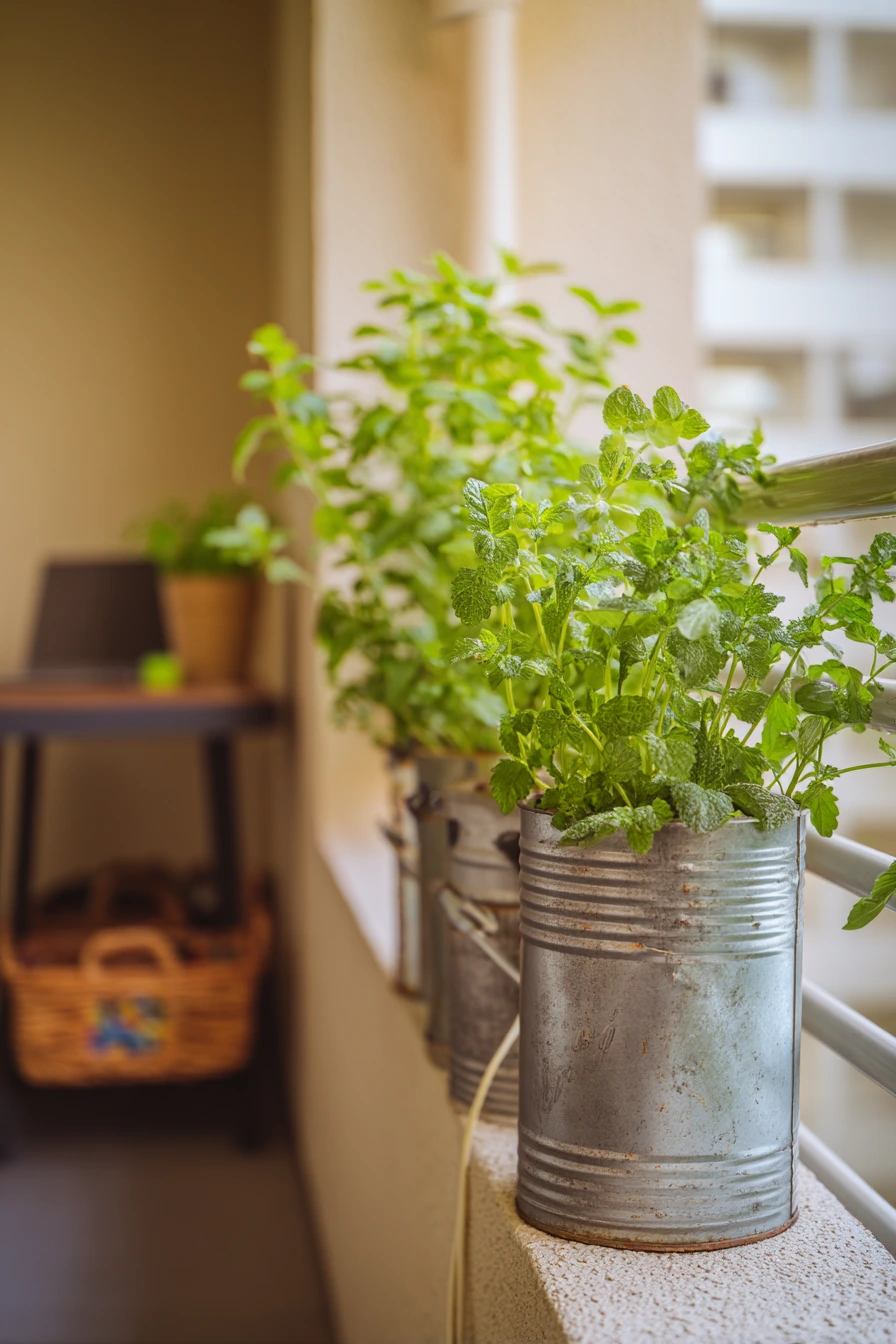
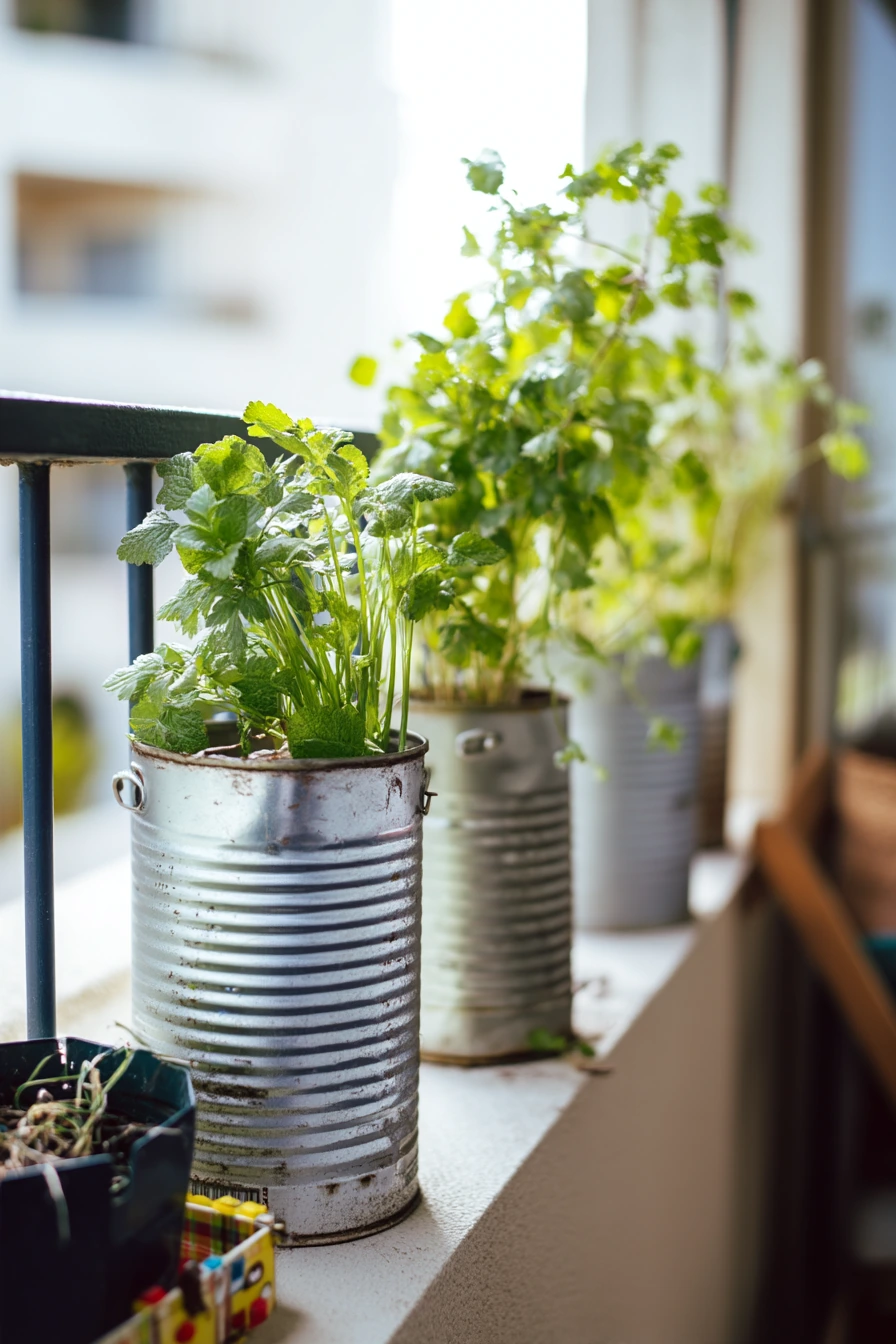
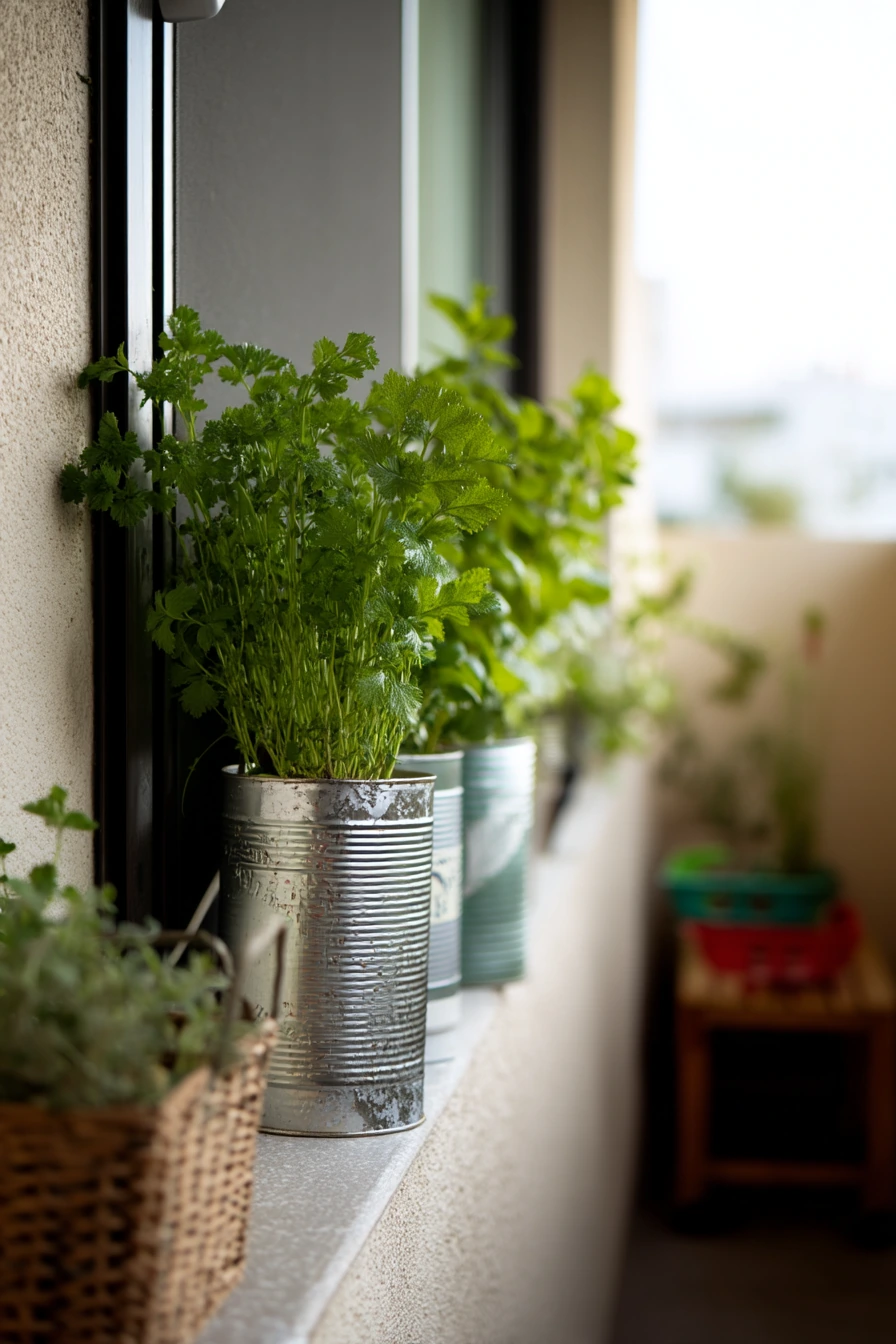
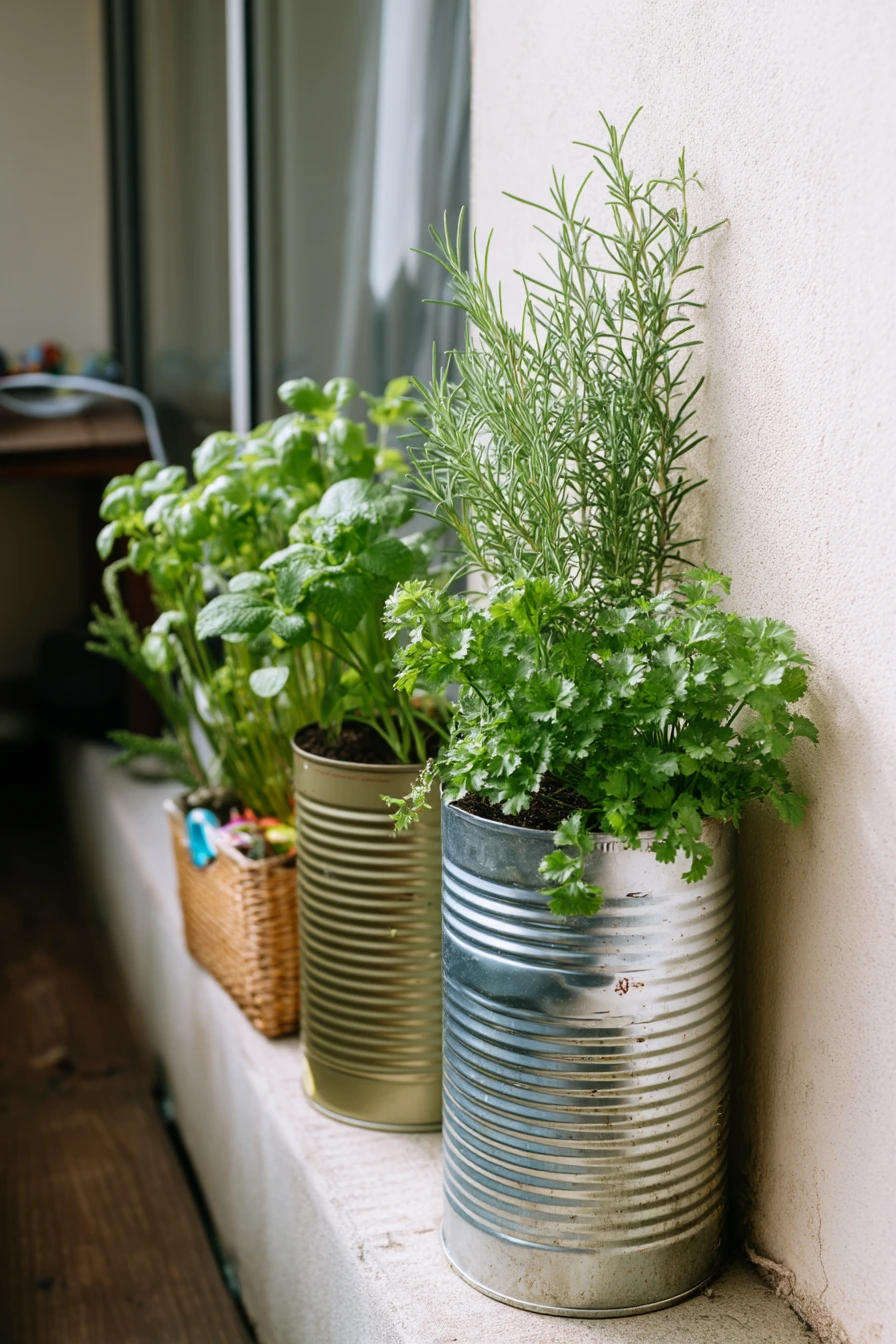
Painted tin cans are an easy DIY indoor herb garden idea when you only have a narrow ledge by a balcony door. Mint and parsley can grow tall in small containers if they get steady light. Brushed metal textures look simple and modern, and the indoor-outdoor feeling near the door keeps the space bright and breezy.
To build it, clean cans well, add drainage holes, and place them on a long saucer to catch water. Choose paint that can handle moisture, and let it cure fully before planting. If your home has daily life nearby, like a kid toy basket tucked near the door, keep the herbs slightly out of the main walkway to prevent bumps.
Since this area may be close to work items like a laptop and a charging cable trailing on a side table, make a clear watering spot. Water over the sink, then return cans to the ledge. Mint grows fast, so pinch it back to stop it from taking over and to keep leaves tender. Parsley likes even moisture, so do not let it dry out fully.
- Use cans that are the same height for a tidy line.
- Add pebbles in the saucer to lift cans above pooled water.
- Label cans with simple tape or a small tag.
- Turn plants every few days so they do not lean toward the door light.
- Style with two paint colors max to keep it clean and calm.
Pro Design Tip: Paint cans in a soft neutral and add one accent color to match your nearby textiles or wall tone.
Budget Considerations: Reuse food cans for free, but buy a small pack of saucers or one long tray to protect the ledge from water damage.
8. Simple Hydroponic Indoor Herb Garden with LED Strip
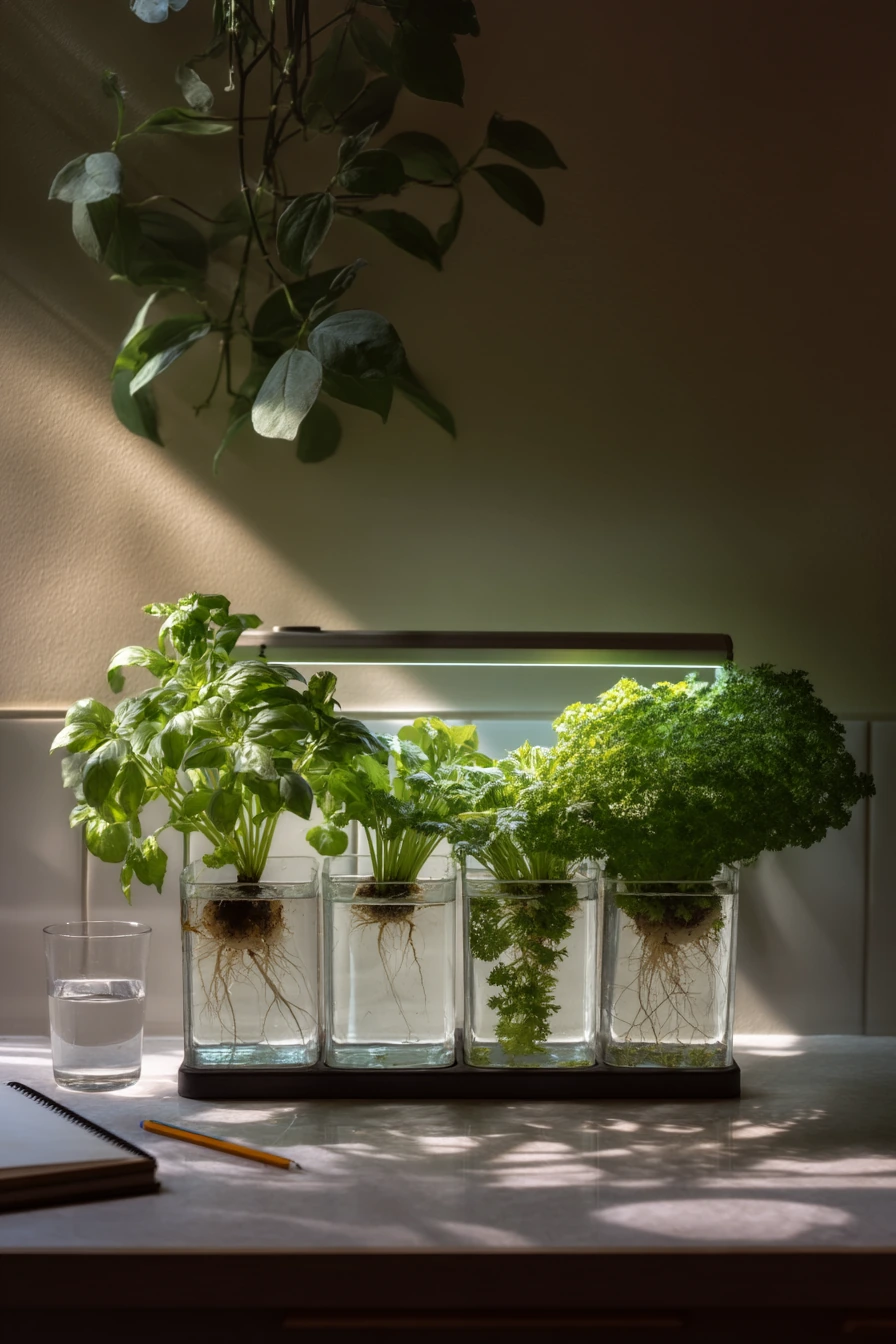
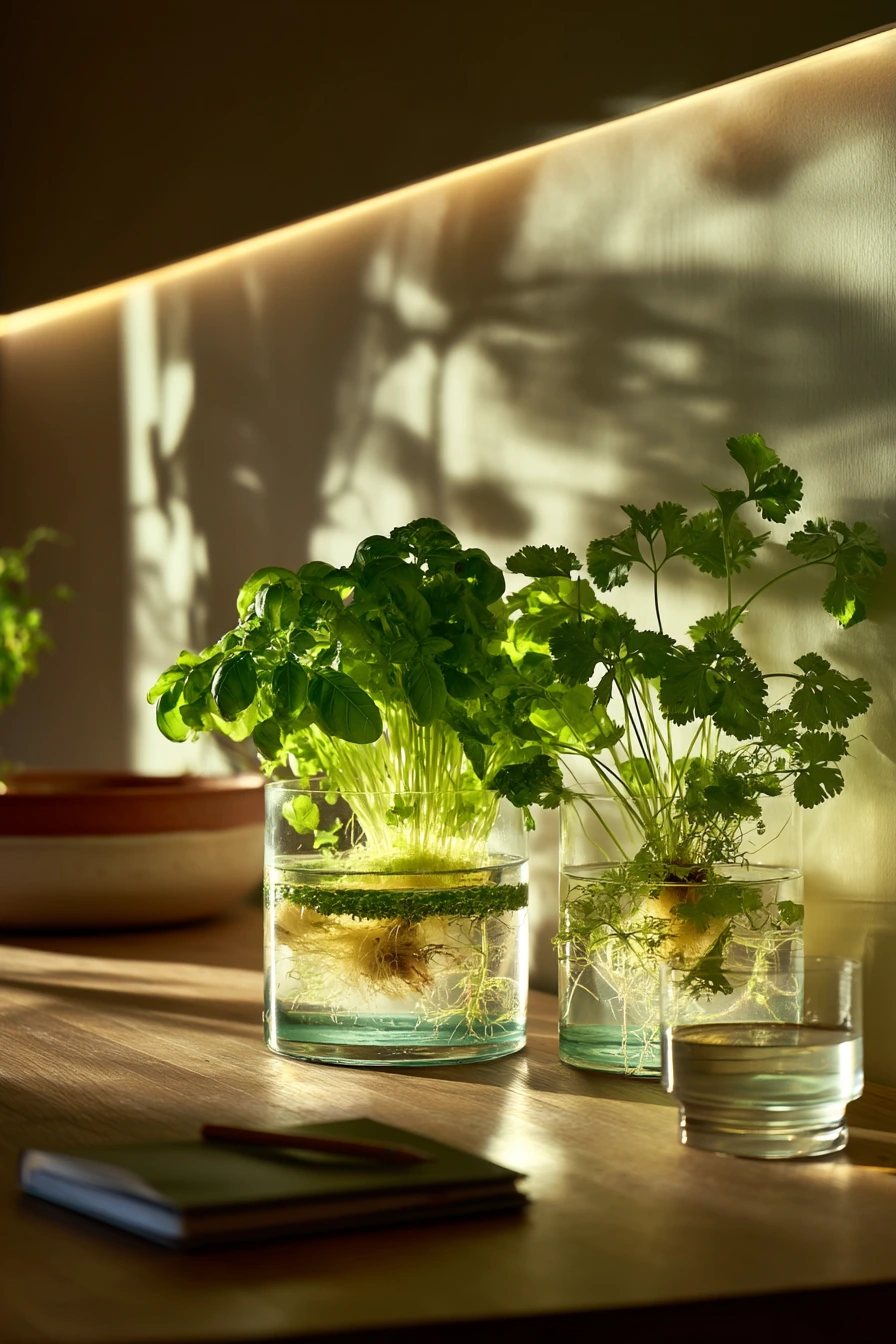
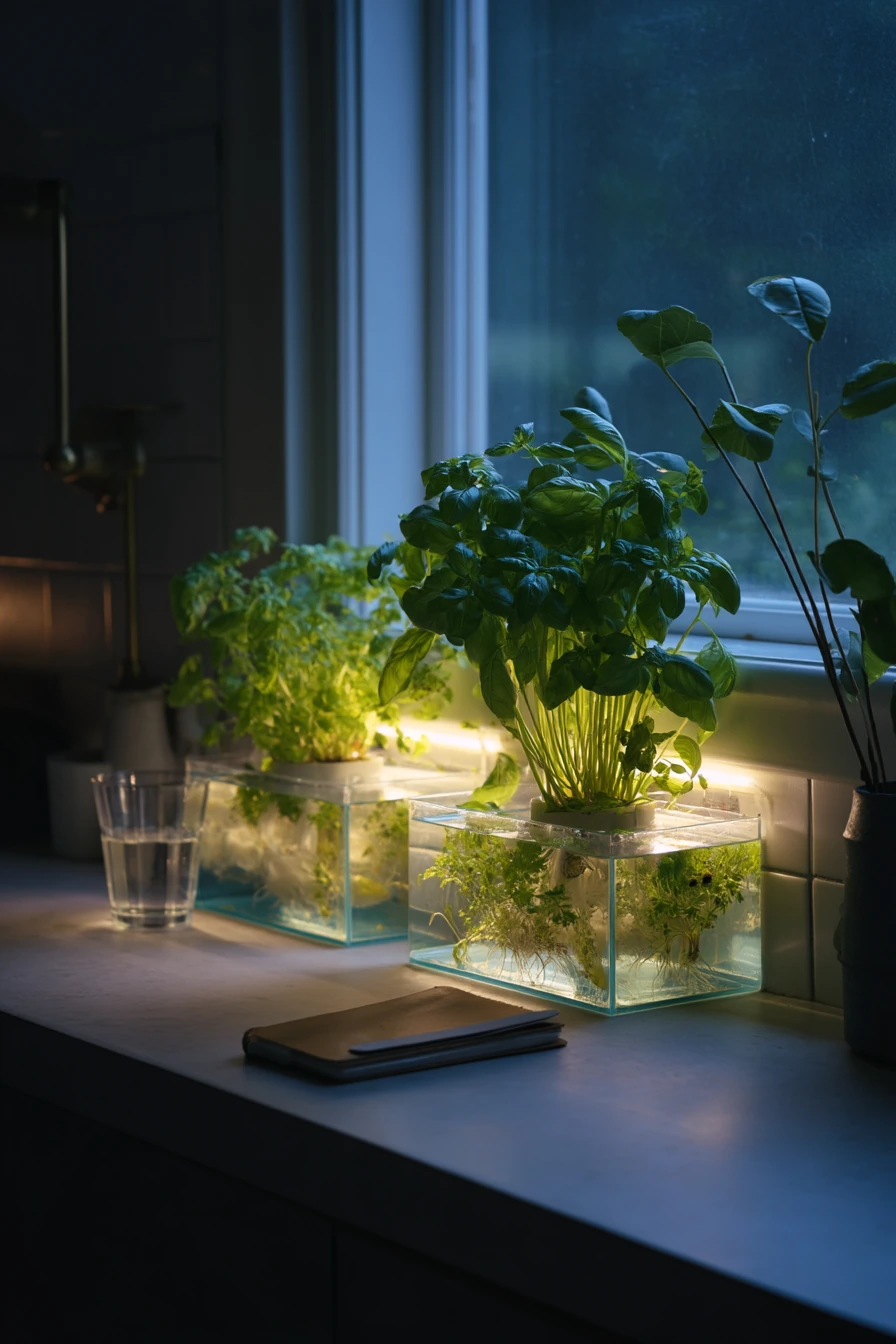
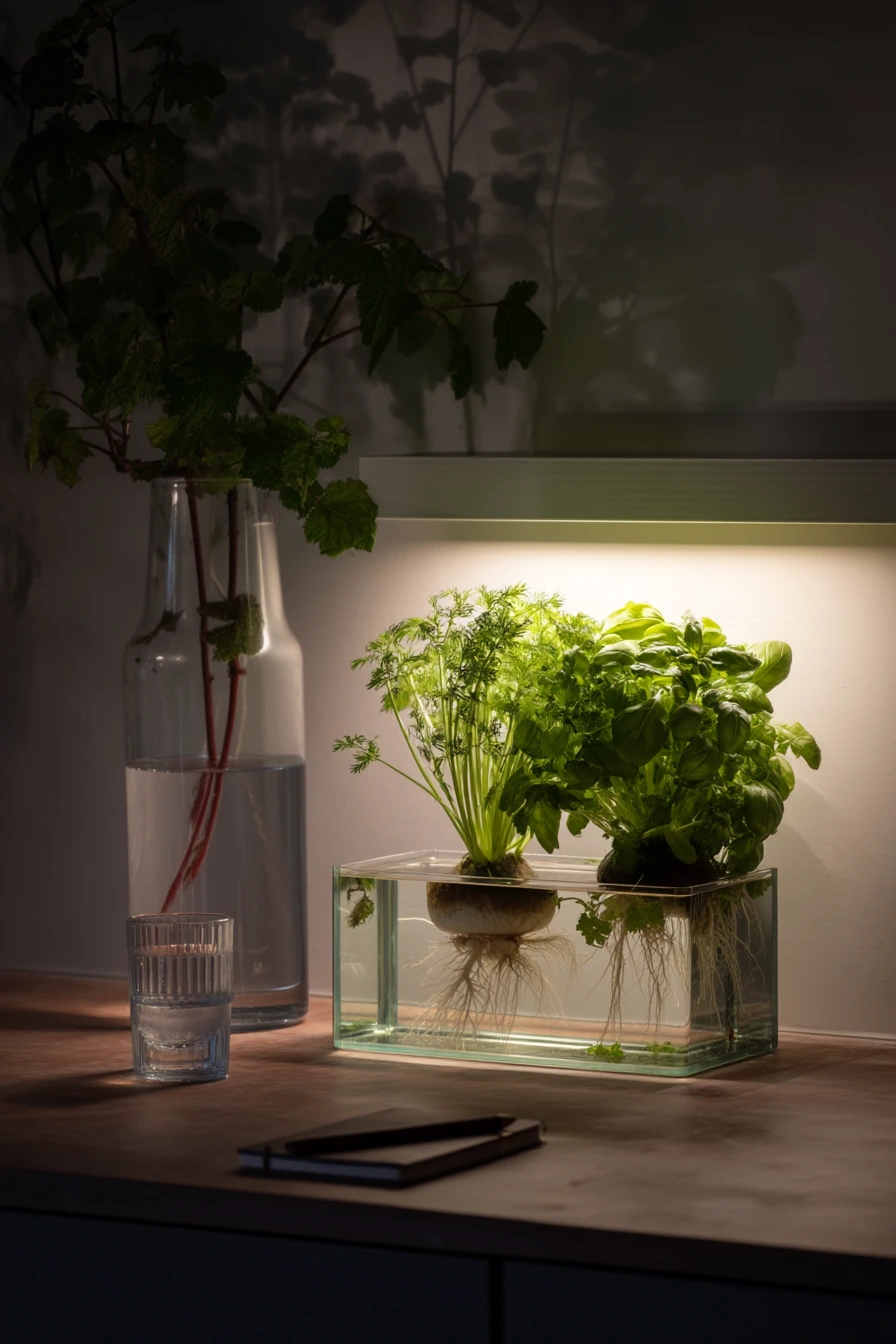
A DIY hydroponic herb garden is a good choice if you dislike soil mess or dealing with gnats. Use simple glass containers on the windowsill and add an LED strip above for consistent light. Basil and cilantro can grow with their roots floating in clear water, and the luminous greenery looks clean and modern, like a small kitchen lab setup.
Keep it practical by placing a slim notebook and pencil nearby to track when you change water and add nutrients. A water glass catching reflections can fit the look, but keep the area uncluttered so you can wipe up spills fast. As evening natural light fades into warm lamp glow, the LED strip helps maintain steady growth.
For plant health, use a basic hydroponic nutrient mix at the recommended strength. Change the water weekly, or top off during the week as it evaporates. Rinse containers to prevent buildup. If you start from cuttings, wait for strong roots before adding nutrients. If you start from seedlings, support stems with a net cup or a DIY collar made from foam so the plant stays upright.
- Pick clear containers with a stable base to prevent tipping.
- Keep leaves out of the water to reduce rot.
- Use an LED strip with a timer for a steady schedule.
- Start with two or three plants, so care stays simple.
- Style with matching glass shapes for a clean, modern line.
Pro Design Tip: Hide cords with a slim cable cover so the setup looks tidy and intentional on camera.
Budget Considerations: LED strips and nutrients add cost; start with one strip and a few jars, then expand after you see what grows best in your light.
9. Dining Nook Shelf Herb Garden with Cookbooks
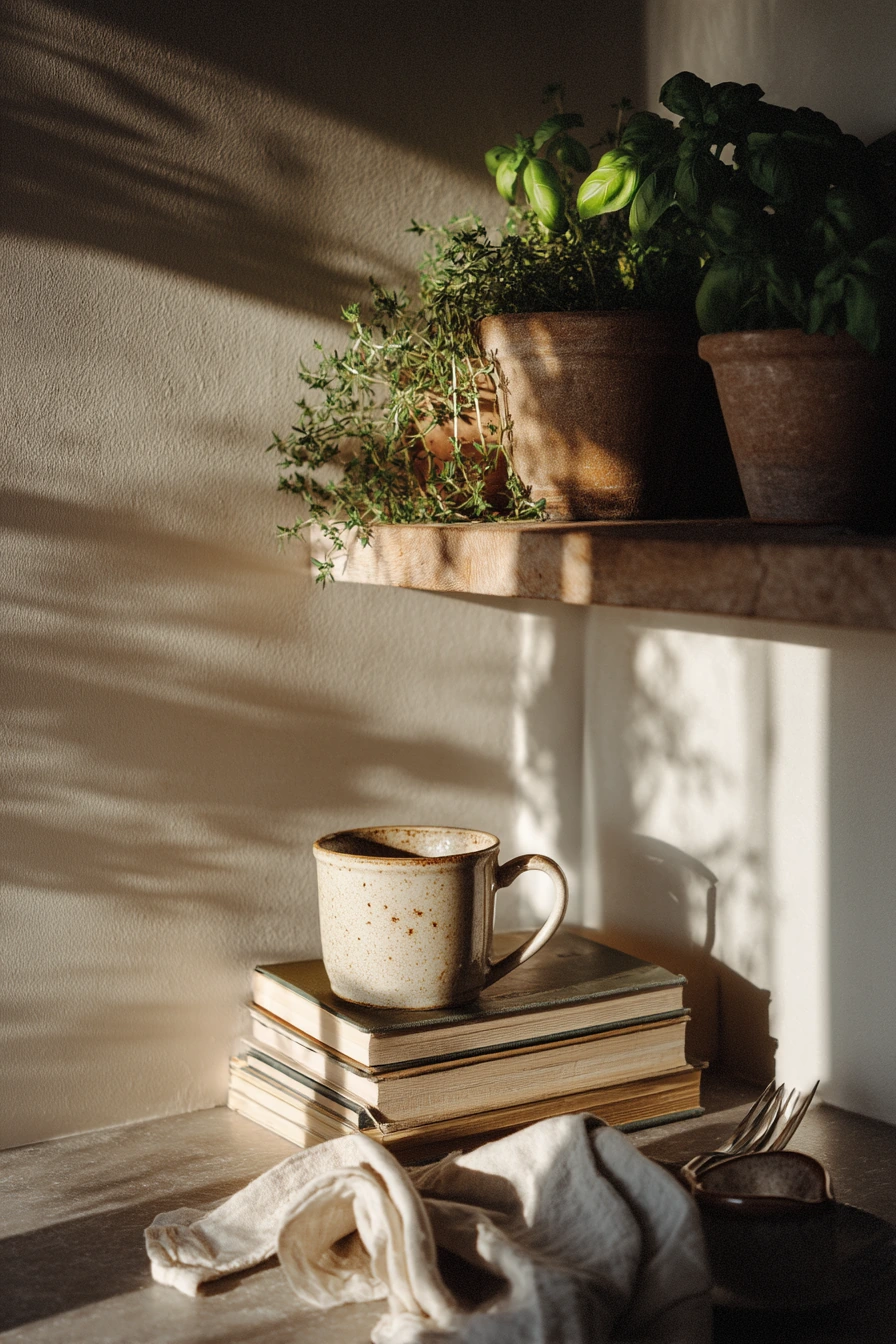

A dining nook shelf herb garden is a cozy DIY indoor herb garden idea for homes where the kitchen is tight. Place clay pots of thyme and basil on a shelf near the table, and tuck stacked cookbooks beside them for a warm, useful look. In mellow golden window light, leafy shadows stretching across the wall make the nook feel calm and lived-in.
This setup works best when it stays tidy. Keep a rumpled linen napkin and a ceramic mug half-empty on the table for a casual breakfast scene, but leave space for eating. If your shelf is above the table, use drip trays to protect books and wood from water. Choose pots that match your shelf depth so nothing hangs over the edge.
For care, pick herbs you use often so the display stays active. Basil needs brighter light and more water than thyme, so place basil closest to the window and thyme slightly back. Rotate pots weekly and prune basil above a leaf pair to encourage branching. If the nook is dim in winter, a small clamp grow light can help without changing the style.
- Use a shelf that can handle weight and add anchors if needed.
- Keep herbs in a shallow tray to catch water and soil bits.
- Place the brightest-light herbs nearest the window side.
- Limit the shelf to 3 to 5 pots so it does not look crowded.
- Style with cookbooks that match your color palette for a calm backdrop.
Pro Design Tip: Group pots in odd numbers and leave a little empty space so the shelf looks balanced, not packed.
Budget Considerations: If you do not have a shelf, use a narrow picture ledge; it is often cheaper, and the lip helps keep pots from sliding.

10. Rolling Cart Indoor Herb Garden for Flexible Cooking Prep

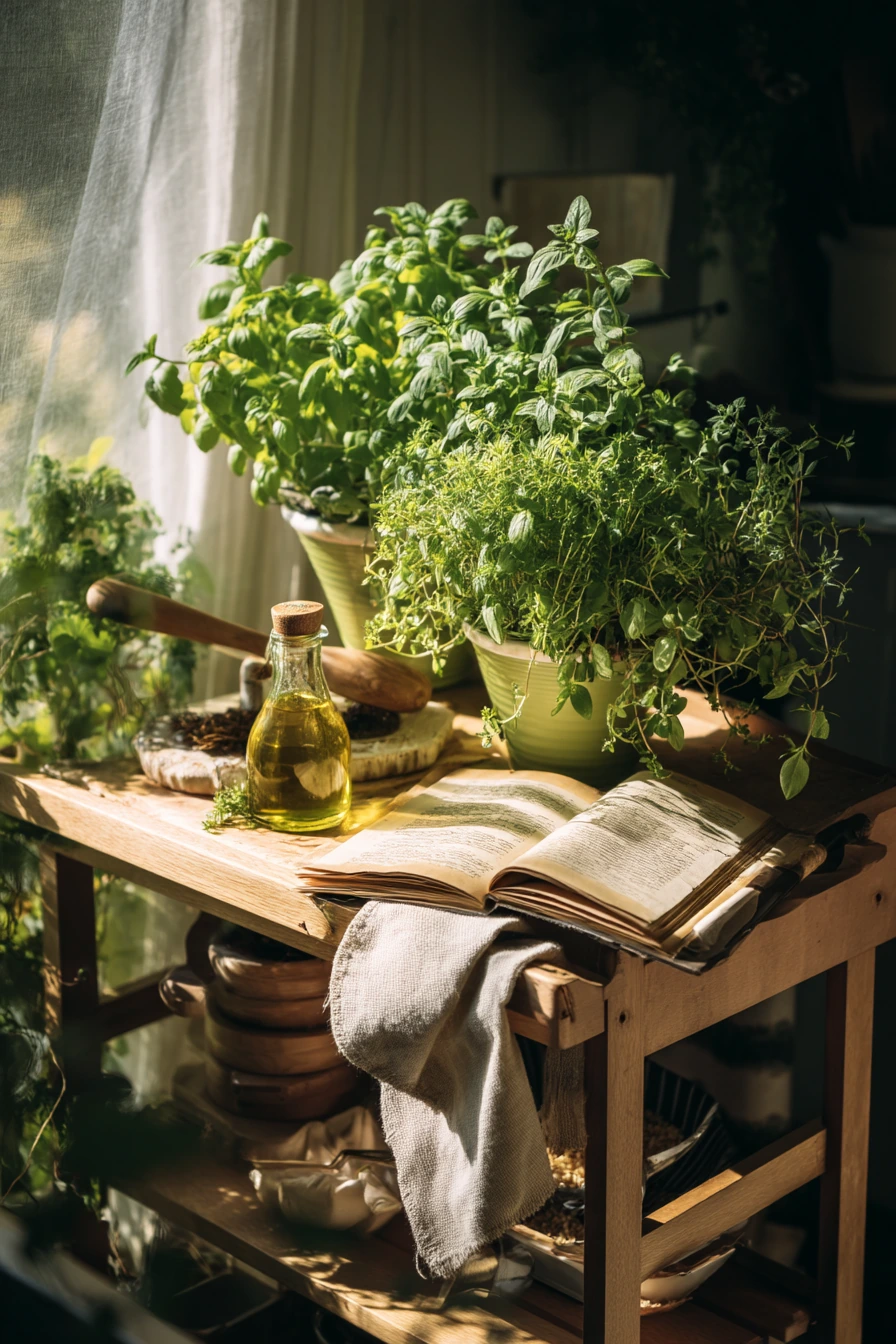
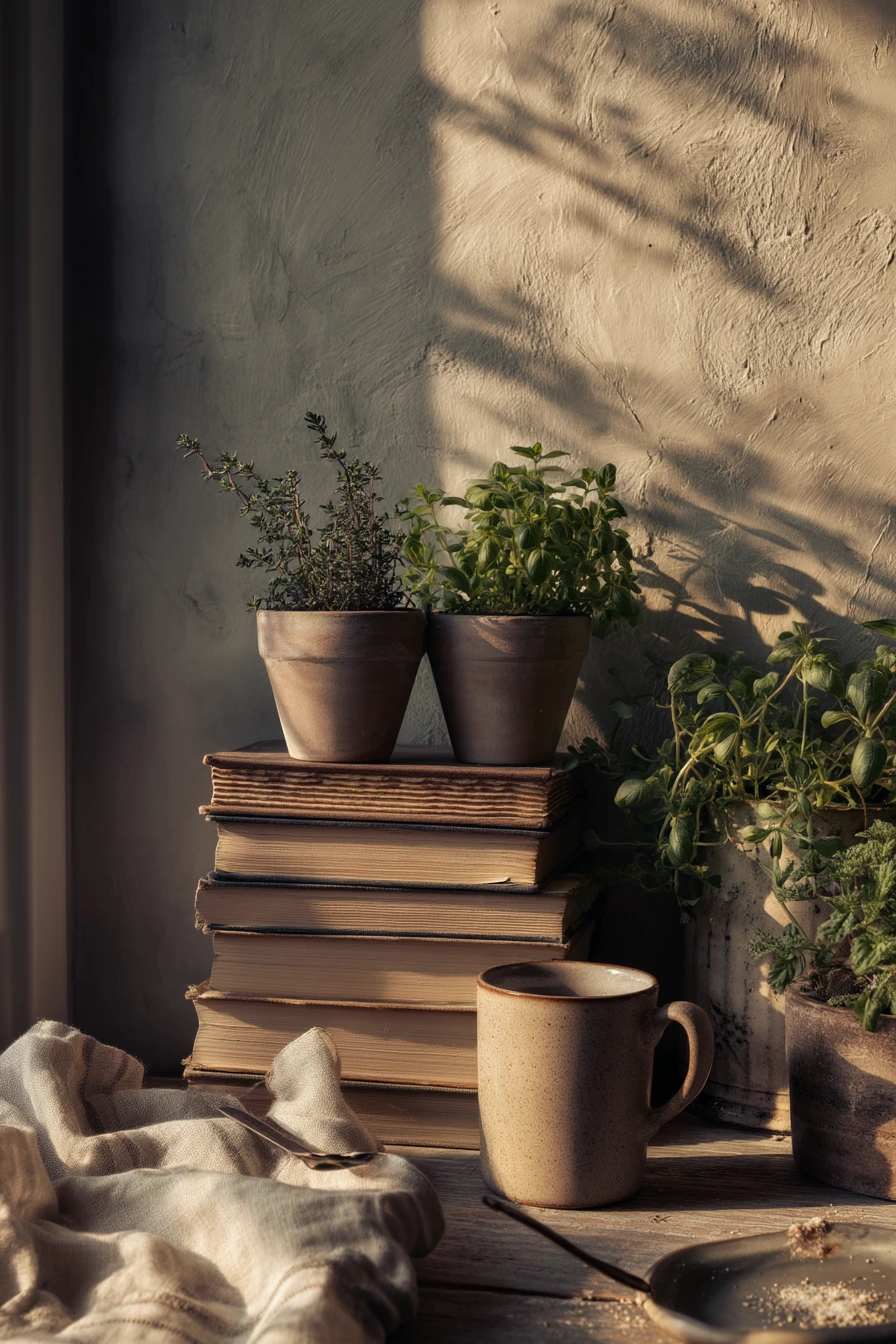
A rolling kitchen cart herb garden is a flexible DIY indoor herb garden idea because you can move it to chase the best light. Layer pots of mint, oregano, and chives on the cart, and keep cooking tools nearby like a wooden spoon jar and an olive oil bottle. The cart becomes a small prep station, and vibrant green foliage looks great in warm afternoon sun.
For a lived-in style, drape a slightly wrinkled apron on the handle and keep an open recipe book on the counter behind. The key is to keep the top shelf useful, not cluttered. Use a tray under pots to catch water, and leave one clear spot where you can set a bowl or cutting board when you cook.
Care is simple when everything is on wheels. Roll the cart closer to the window for a few hours, then move it back if the area gets too hot or crowded. Water herbs based on soil feel, not the calendar. Mint likes more moisture and can spread, so keep it in its own pot. Snip chives low and often to encourage fresh growth.
- Choose a cart with at least two tiers and a lip on each shelf.
- Use lightweight pots so the cart stays easy to move.
- Add plant caddies or felt pads under saucers to prevent scratches.
- Keep frequently used herbs on the top level for quick harvest.
- Style with one wood element and one glass bottle for a simple look.
Pro Design Tip: Use matching trays on each tier to make the cart look cohesive and to contain mess during watering.
Budget Considerations: Rolling carts range widely; check secondhand stores, and repaint an older cart for a clean look at a lower cost.


DIY indoor herb garden ideas can fit almost any home, from a sunny kitchen windowsill to a ladder shelf or a rolling cart. Start with a few easy herbs, set them where you will use them, and keep watering simple.
Pick one setup from this list, copy the container style, and adjust for your light. Once you get steady growth, add one new herb at a time so the garden stays easy to manage.
Frequently Asked Questions
1. What are the best indoor herbs for beginners?
Basil, mint, chives, and parsley are the easiest herbs to grow indoors. They adapt well to containers, sprout quickly from seeds or cuttings, and can be harvested frequently to encourage fuller, bushier growth.
2. How much sunlight do indoor herbs actually need?
Most culinary herbs need at least 4 to 6 hours of bright, direct sunlight daily. South- or east-facing windowsills are ideal. If your home lacks natural light, a simple LED grow light strip or clamp bulb will keep plants thriving year-round.
3. How often should I water my indoor herb garden?
Water based on soil moisture rather than a strict schedule. Check the top inch of soil with your finger; if it feels dry, it is time to water. Herbs like rosemary and thyme prefer drier soil and root rot, while basil and mint prefer consistent moisture.
4. How do I prevent gnats and mess when growing herbs indoors?
To prevent fungus gnats, let the top layer of soil dry out completely between waterings and use a well-draining potting mix. Always place pots on saucers or trays to catch drips, and consider hydroponic water setups if you want to avoid soil entirely.
5. How do I harvest indoor herbs so they keep growing?
Always harvest from the top down or pinch off stem tips just above a set of leaves rather than stripping leaves from the bottom. Regular pruning encourages the plant to branch out instead of growing tall and spindly, keeping your indoor harvest fresh for months.