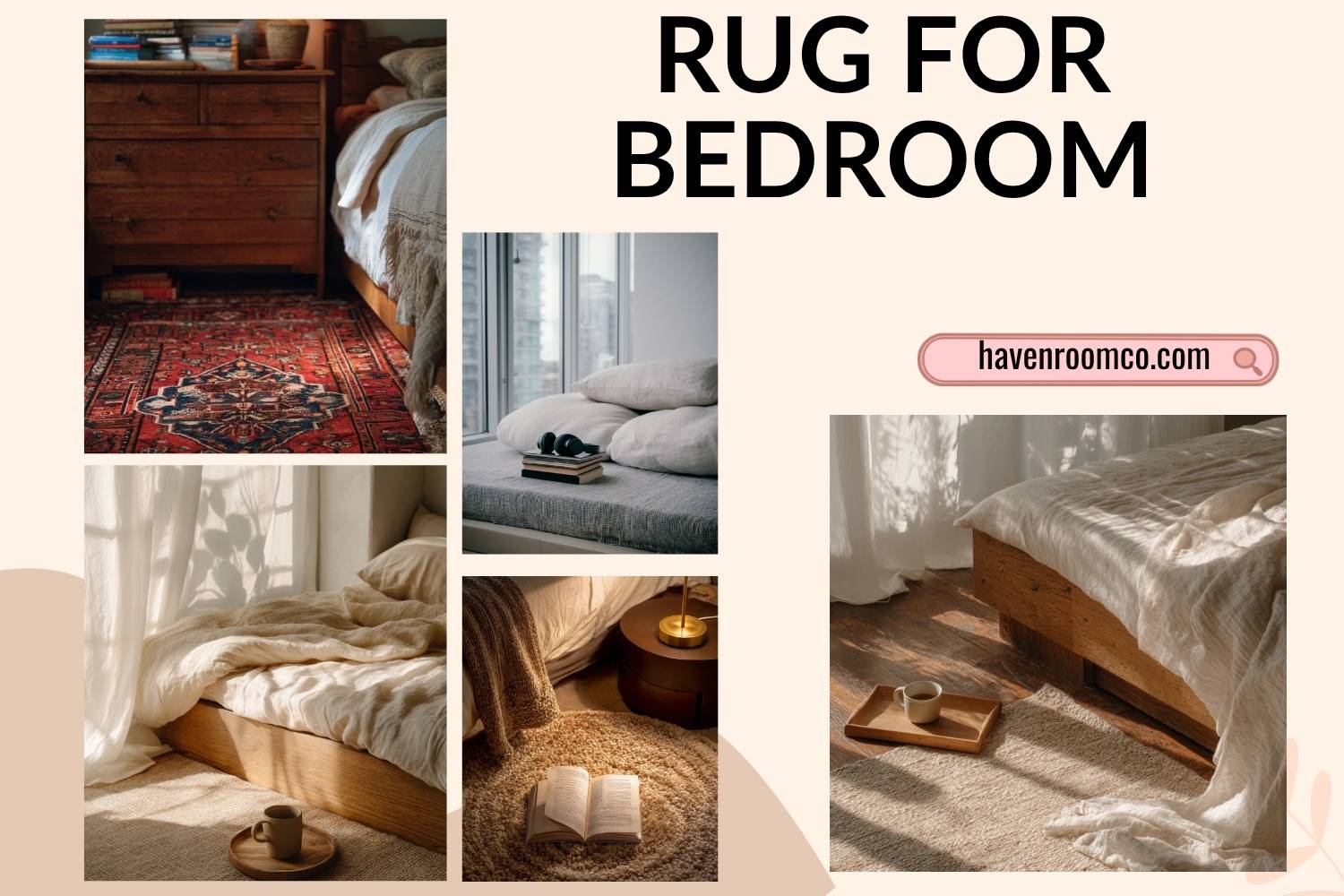
Choosing a rug for bedroom use can change how the whole room feels. It adds warmth under your feet, softens sound, and helps the bed area look finished.
This guide shows how to pick the right rug size, texture, and color for different bedroom moods, from calm morning light to cozy evening reading. You will also get simple styling ideas you can copy from real-life setups like low-pile wool, jute, shag, and flatweave rugs.
Each section matches a bedroom look you may save on Pinterest, with clear tips on where to place the rug, what materials work best, and what to buy if you are on a budget.
By the end, you will know how to make your bedroom rug feel soft, practical, and easy to keep clean.
1. Low-Pile Beige Rug for a Calm Bedroom

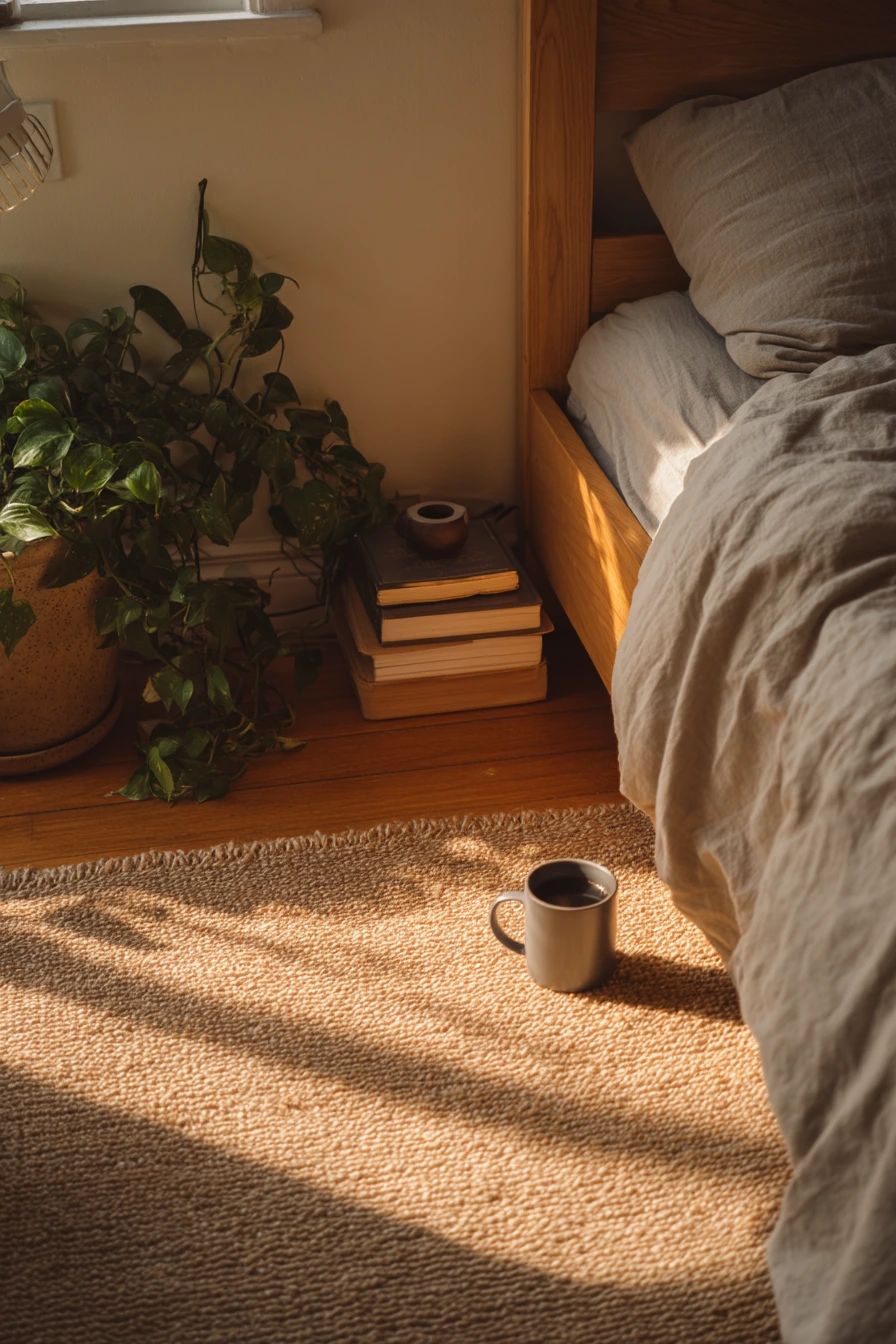
A low-pile beige bedroom rug is a safe choice when you want the room to feel calm and lived-in. Beige works with oak furniture, rumpled linen bedding, and pale walls because it does not fight for attention. Low-pile also makes it easy to slide a chair, a basket, or a bedside table without snagging.
For layout, place the rug partly under the oak bed so the front two legs sit on it. This keeps the bed anchored and gives you a soft landing when you get up. If your room has plants like pothos, the gentle plant shadows on the wall will look even softer against a simple rug tone.
To style it, keep the textures doing the work. A wool or wool-blend surface catches soft window light and looks rich without loud pattern. Add a small stack of books and a ceramic mug on the nightstand for a quiet morning mood, then repeat beige and cream in pillows to keep the palette steady.
- Choose low-pile wool if you want softness and easier vacuuming.
- Pick a beige with a warm undertone to match oak and brass details.
- Size tip: go at least 18 to 24 inches beyond the bed sides if possible.
- Layer linen bedding and one knit throw to add depth without clutter.
- Use a rug pad so the corners stay flat and safe.
Pro Design Tip: Match the rug to the largest “quiet” surface in the room, usually the wall color, then bring contrast with one darker item like an amber reading lamp or a walnut tray.
Budget Considerations: If wool is too costly, look for a low-pile polypropylene rug in a heathered beige, so it still looks like natural fiber.


2. Round Wool Rug Beside the Bed for Cozy Reading


A round wool rug beside a low platform bed makes a small bedroom feel softer and more personal. The circle breaks up straight lines from the bed frame and walls. It also creates a clear spot for a night routine, like reading a paperback under a warm brass lamp.
Place the round rug so it sits where your feet land when you swing out of bed. In tight spaces, this can work better than a large rectangle. If you have a charging cable near the bedside table, route it behind the table leg and keep it off the rug edge so it does not catch when you vacuum.
For color, muted earth tones help the room feel calm at night. Choose wool with a plush texture for comfort, but keep the pile medium so it does not trap too much dust. Add a knit throw slightly wrinkled on the bed corner for a relaxed look, and keep one small basket nearby for books and headphones.
- Use a 4- to 5-foot round rug for most small bedrooms.
- Center the rug with the bedside area, not the whole bed.
- Pick a warm neutral to complement brass lamp light.
- Keep one reading item on the floor, like a book or journal, for a casual feel.
- Add a rug pad to stop sliding on hard floors.
Pro Design Tip: Repeat the rug shape once, like a round tray or round lamp base, to make the circle feel planned and not random.
Budget Considerations: A wool rug costs more, so consider a wool-blend or felted synthetic round rug, then upgrade later when you know the size you love.


3. Ivory Jute Rug Under the Bed for Japandi Style
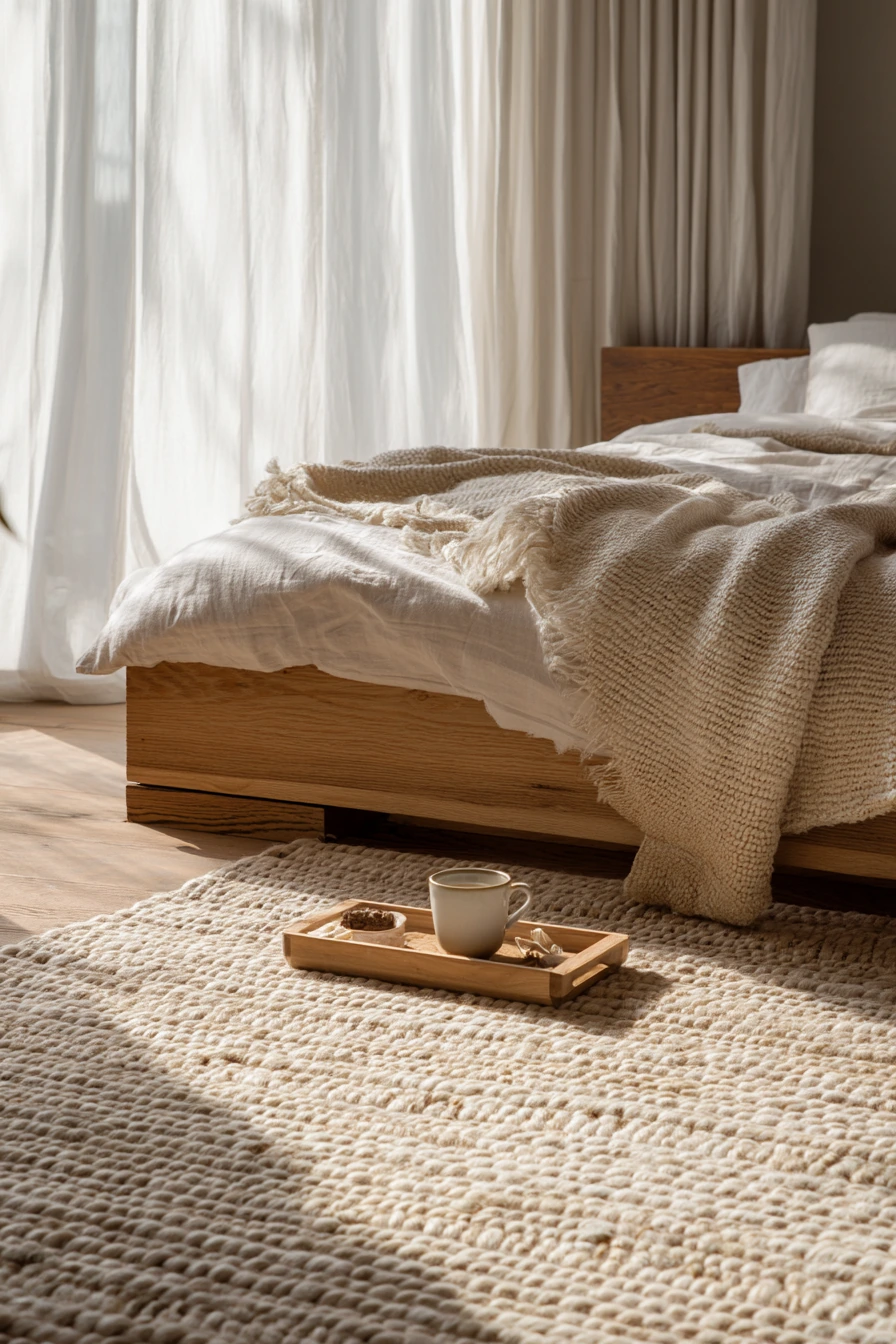

An ivory jute rug is a great rug for bedroom spaces that lean simple and airy. Jute brings natural texture without adding a busy pattern. Under a low oak frame bed, it supports a Japandi palette that mixes warm wood with soft linen and clean lines.
Because jute is firmer than wool, it works well under furniture. Place the rug so it runs under most of the bed and extends past the sides. This makes the bed feel grounded while the room stays light. Morning sun through sheer curtains will highlight the woven fibers and create gentle shadows that look natural, not staged.
Style this look with only a few items. A folded linen blanket draped on the bed corner is enough. Add a small floor tray with a ceramic teacup for a quiet morning routine. If you have plants, keep them in simple pots so the rug remains the main texture. Jute can shed at first, so vacuum lightly and avoid soaking it with water.
- Choose a tightly woven jute for less shedding and a smoother feel.
- Use a rug pad to add cushion and reduce slipping.
- Keep the palette to oak, ivory, and one soft gray or sage accent.
- Skip heavy fringe if you want a cleaner Japandi line.
- Spot clean fast and keep it dry to protect the fibers.
Pro Design Tip: Balance hard and soft by pairing the jute rug with thicker linen bedding and one plush pillow so the room does not feel too rough.
Budget Considerations: Jute is often cheaper than wool; look for end-of-season sales, and choose a standard size instead of custom for the best price.

4. Layered Rugs in a Small Bedroom for Renter-Friendly Style


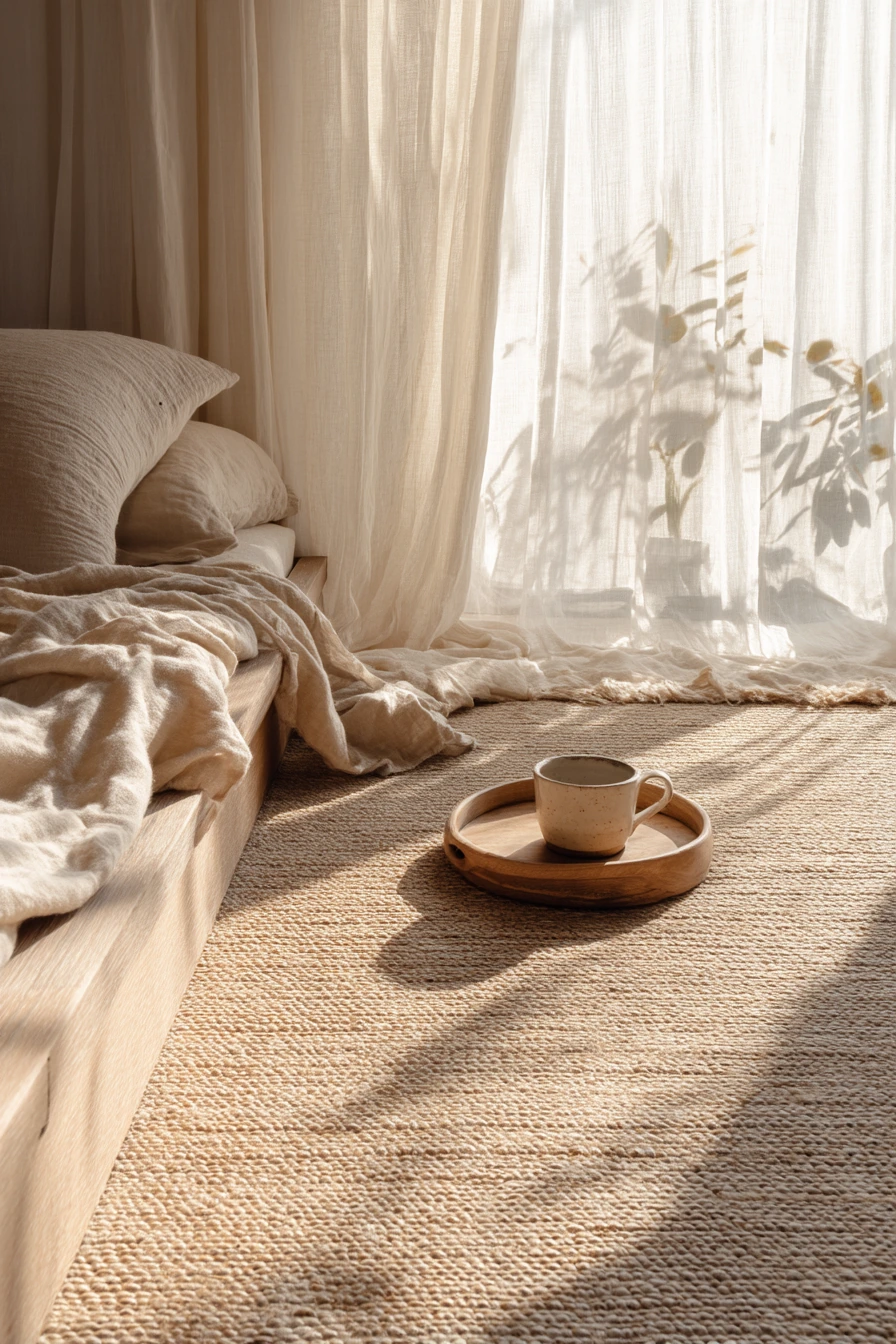
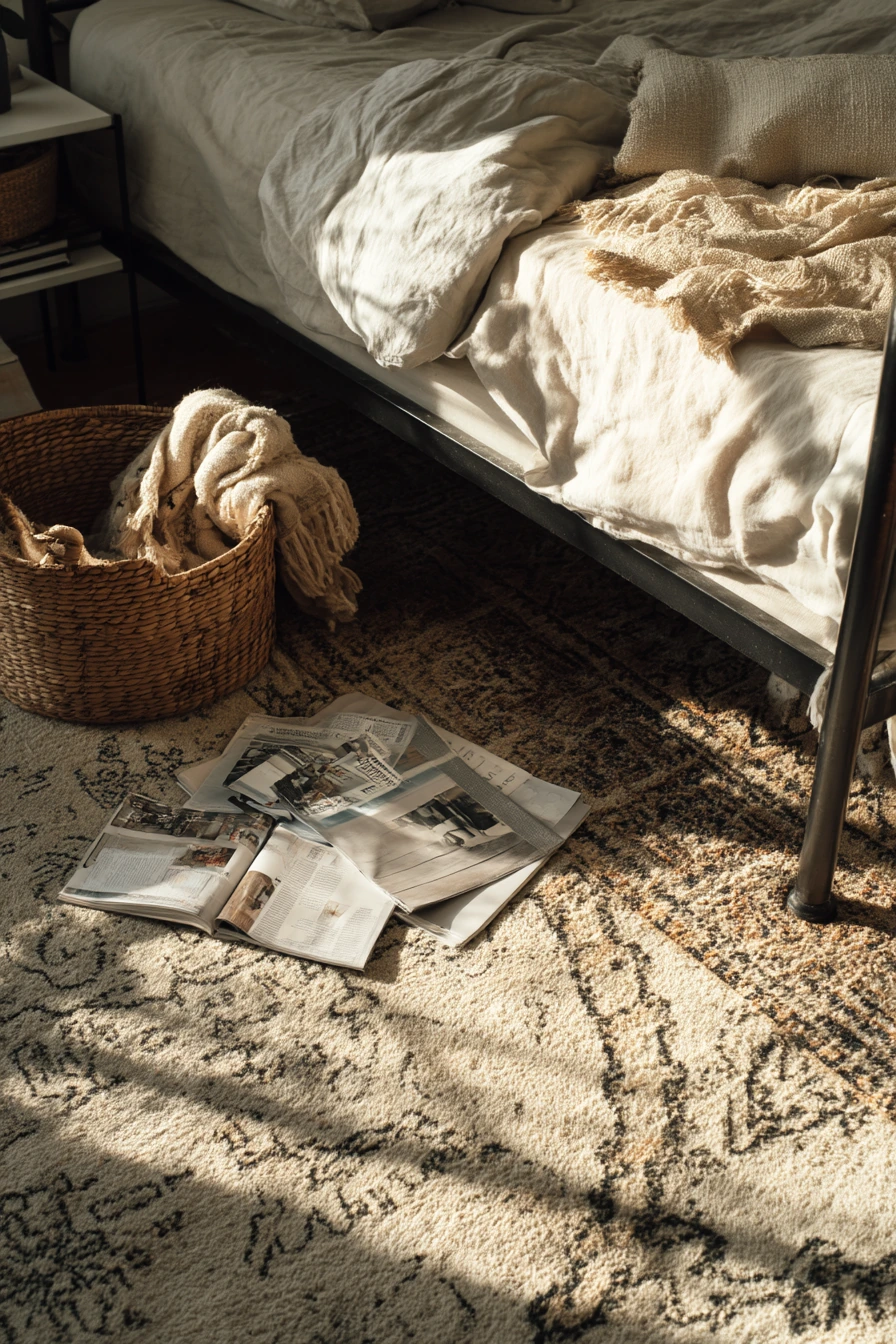
Layering a cotton rug over a faded vintage rug is a smart way to get a designer look in a compact bedroom. The bottom rug adds color and patina, while the top layer keeps the feel soft and clean. This is also renter-friendly because you can cover floors you do not like without replacing anything.
Start with a larger base rug that sits under the bed and reaches past the sides. Then add a smaller cotton rug on top, slightly off-center, so both edges show. The mix of textures helps a narrow metal bed frame feel warmer. Scattered magazines and a woven basket with a cozy throw can make the room look relaxed, not messy, if you keep items grouped in one corner.
For styling, use daylight and simple neutrals. Soft light brings out the fibers and makes layered rugs look intentional. If your room layout is tight, keep walking paths clear by tucking the top rug under the bed edge. Choose colors that match your bedding, like warm whites, faded reds, or soft grays, so the layers look connected.
- Pick a thin top rug so doors and drawers still open easily.
- Use rug tape or a pad between layers to stop sliding.
- Let 6 to 10 inches of the bottom rug show on two sides.
- Match one rug color to bedding to keep the room calm.
- Use a basket to hide extra blankets and reduce clutter.
Pro Design Tip: Keep the top layer lighter and simpler than the bottom layer so the “vintage” pattern reads as the background and does not compete.
Budget Considerations: If a true vintage rug is pricey, use a washable printed rug as the base and layer an inexpensive cotton flatweave on top.

5. Deep Pile Shag Rug for a Soft Landing by the Bed
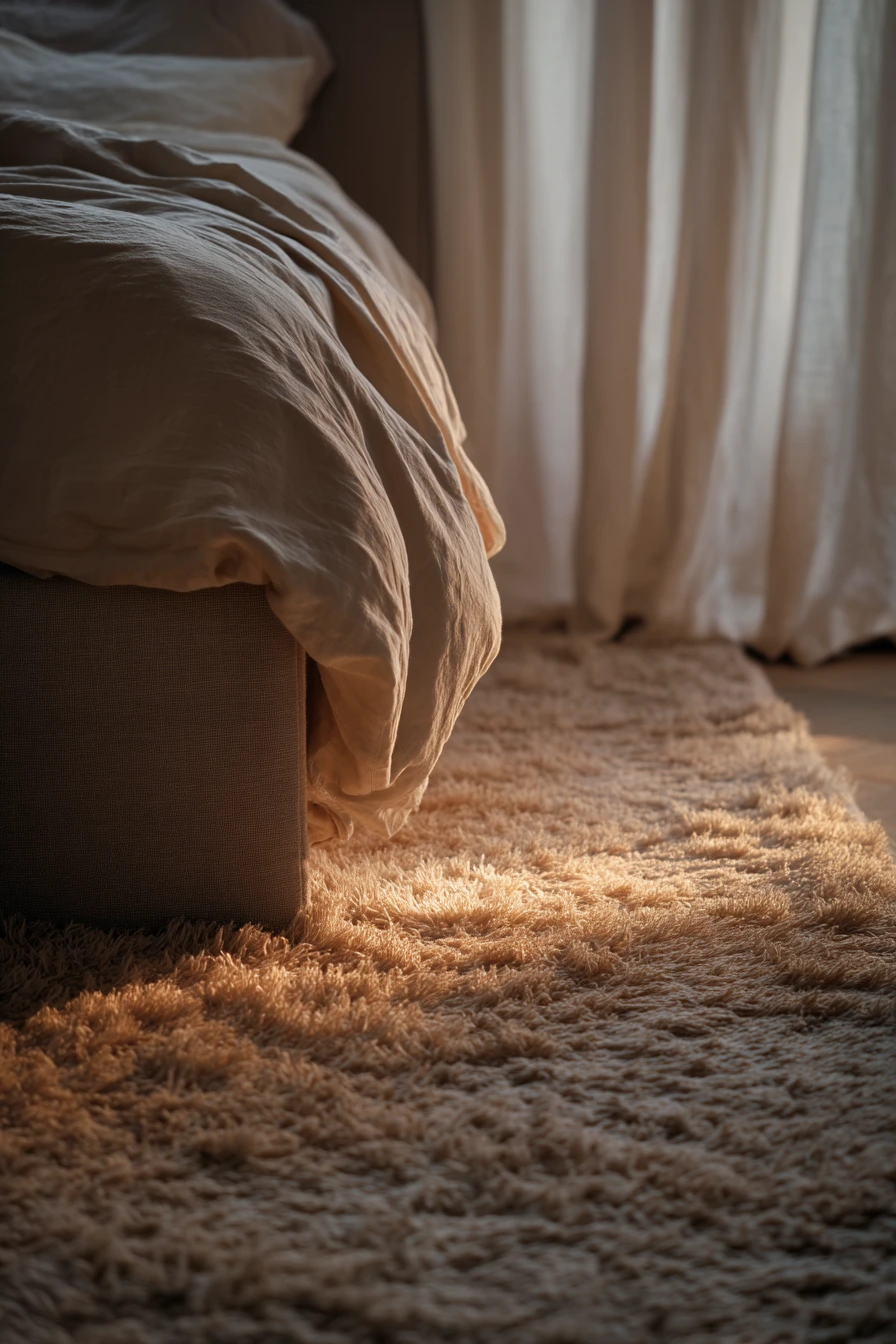
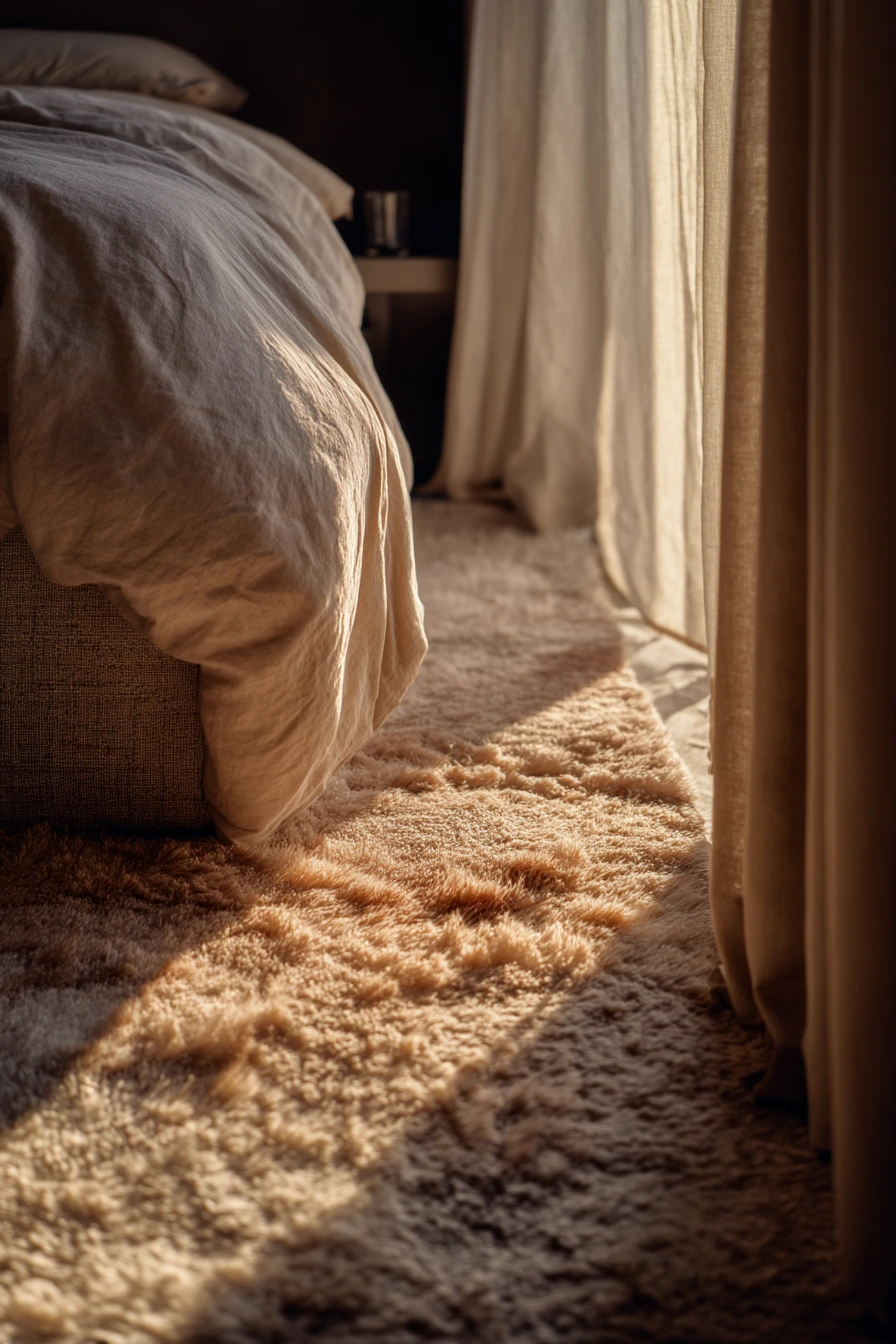
A deep pile shag rug creates a comfort zone right beside an upholstered bed. If you love the feeling of bare feet touching something soft in the morning, shag is hard to beat. It also makes a bedroom feel warmer, especially with linen curtains glowing in pale sunrise light.
Shag works best when it is used with purpose. In most bedrooms, place it on the side where you get out of bed, or use two runners on both sides. Keep it just outside the duvet edge so the rug stays cleaner. A water glass on the bedside table and a slightly crumpled duvet can fit the mood, but make sure you still have a clear path to walk.
To style shag without making the room look heavy, pair it with simple bedding and smooth surfaces. An upholstered headboard, plain linen sheets, and one textured throw are enough. Choose a solid color like cream, oatmeal, or soft gray to keep it calm. For cleaning, plan for regular shaking and vacuuming with a setting made for high pile.
- Use shag as a bedside zone, not always wall-to-wall coverage.
- Pick a neutral tone so the texture is the main detail.
- Choose a thick rug pad to prevent dents and slipping.
- Keep drinks on a stable table, not on the rug, to avoid stains.
- Vacuum gently and spot clean quickly to protect the pile.
Pro Design Tip: To keep shag looking fresh, brush the fibers in one direction after vacuuming so the surface reads smooth and even in natural light.
Budget Considerations: Shag in wool can be expensive; a quality synthetic shag can look similar and is often easier to clean, especially in rentals.


6. Muted Persian Rug to Add Pattern and Warmth


A muted Persian style rug is a classic rug for bedroom spaces that need color without feeling loud. The worn patina and soft pattern hide lint and everyday dust better than a solid light rug. It also pairs well with layered textiles like a wrinkled linen throw and a honeyed ceramic lamp glow in the evening.
To place it, aim to anchor the bed so the rug extends at least halfway under the frame. If you have a wooden dresser, let the rug stop short of the dresser legs so drawers open smoothly. The rug pattern becomes a visual base, so keep other prints small, like one striped pillow or a subtle quilt stitch.
For styling, repeat warm tones from the rug in small items. Stack a few novels on the dresser, add a terracotta vase, or choose bedding with warm white and tan. If your room feels flat, Persian motifs add depth quickly. In low light, the pattern still reads, which helps the room feel cozy late at night.
- Choose a muted palette like rust, clay, sand, and faded navy.
- Use a rug pad to reduce curl and protect floors.
- Keep bedding mostly solid to balance the pattern.
- Add one brass or ceramic lamp for warm evening light.
- Rotate the rug once or twice a year for even wear.
Pro Design Tip: Pull one “quiet” color from the rug, like the light beige background, and use it on curtains or a throw so the rug feels like it belongs.
Budget Considerations: Vintage Persian rugs can be costly; try a printed, low-pile washable rug in a muted Persian design for a similar look with less spend.


7. Flatweave Gray Rug for a Minimalist Bedroom


A flatweave gray rug is a strong choice when you want a crisp, minimalist bedroom. The thin woven texture keeps the room looking clean, especially with a floating platform bed and slim black bedside table. Gray also works with many wall colors, from white to soft taupe.
Flatweave is practical in an urban apartment because it is easier to vacuum and less likely to trap dust. Place it under the bed so it shows on both sides and at the foot. This creates a calm frame around the bedding. If you like to keep items close, a stack of books with wireless headphones can sit neatly on the bedside table without adding visual noise.
To style it, focus on contrast and texture, not extra décor. Pair the gray rug with soft linen bedding that is slightly rumpled for a relaxed look. Add one black accent and one warm wood accent to prevent the room from feeling cold. Diffused daylight from a tall window will highlight the weave in a subtle way.
- Choose a flatweave with a bit of texture, not a plain thin mat.
- Use a non-slip pad to stop shifting on smooth floors.
- Keep the palette simple: gray, black, white, and light wood.
- Use storage that hides clutter, like a closed drawer nightstand.
- Pick a rug with bound edges for a clean finish.
Pro Design Tip: In minimalist rooms, vary materials: pair the flatweave rug with linen, matte metal, and one wood tone so the space feels calm but not flat.
Budget Considerations: Flatweave rugs are often affordable; look for cotton or recycled fiber blends, and spend a little more on a good rug pad for comfort.


8. Fringe Woven Rug for a Boho Bedroom Look

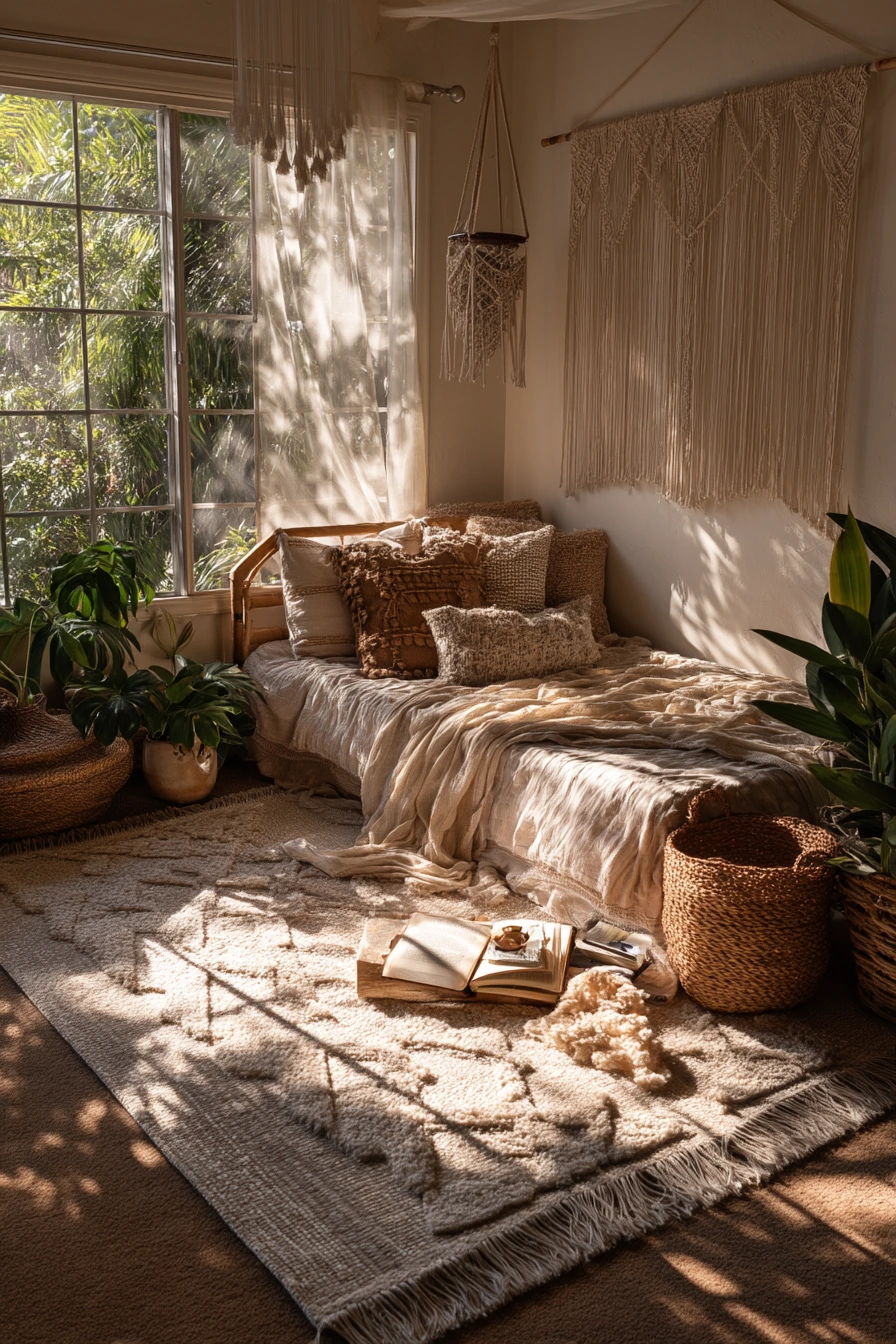
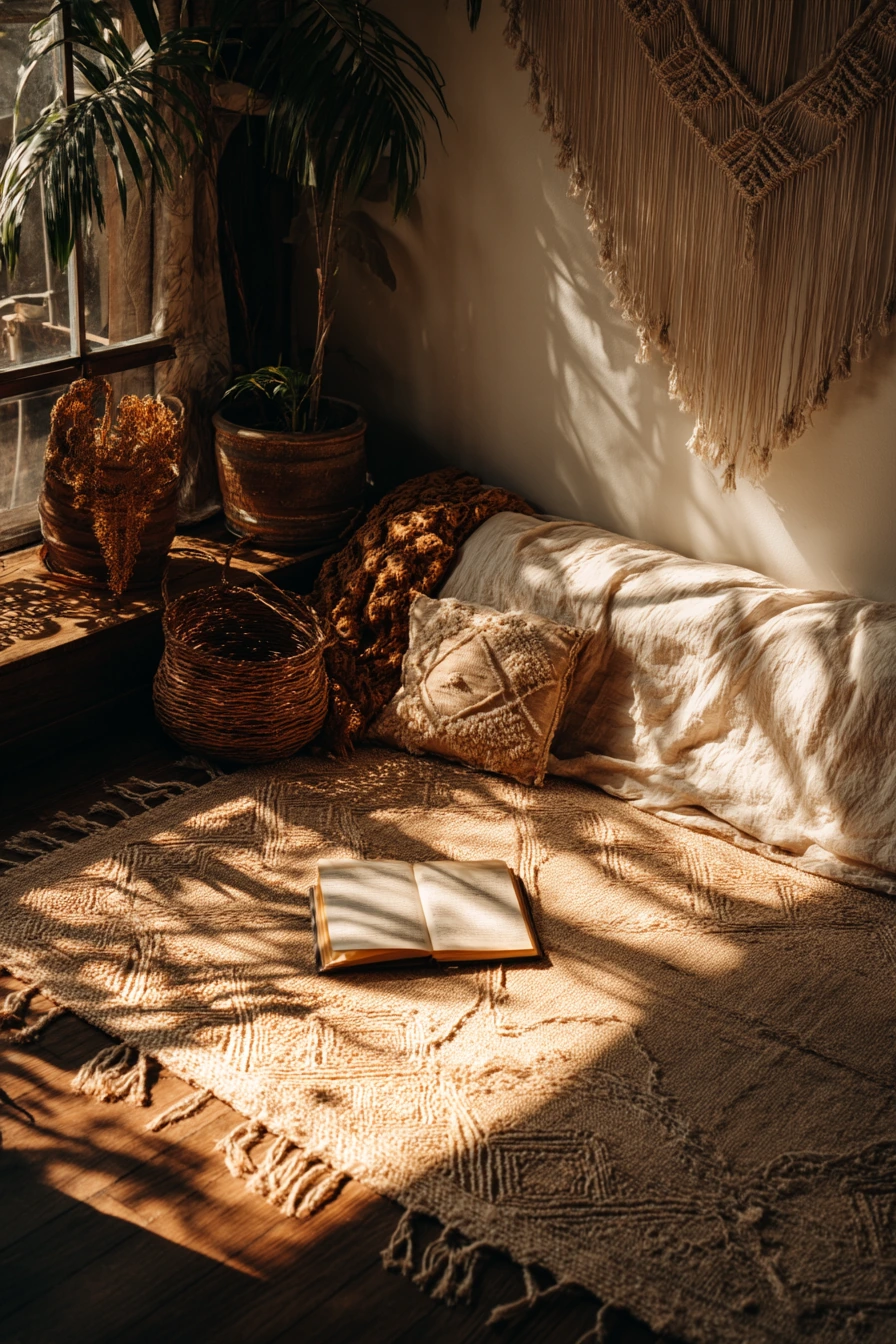
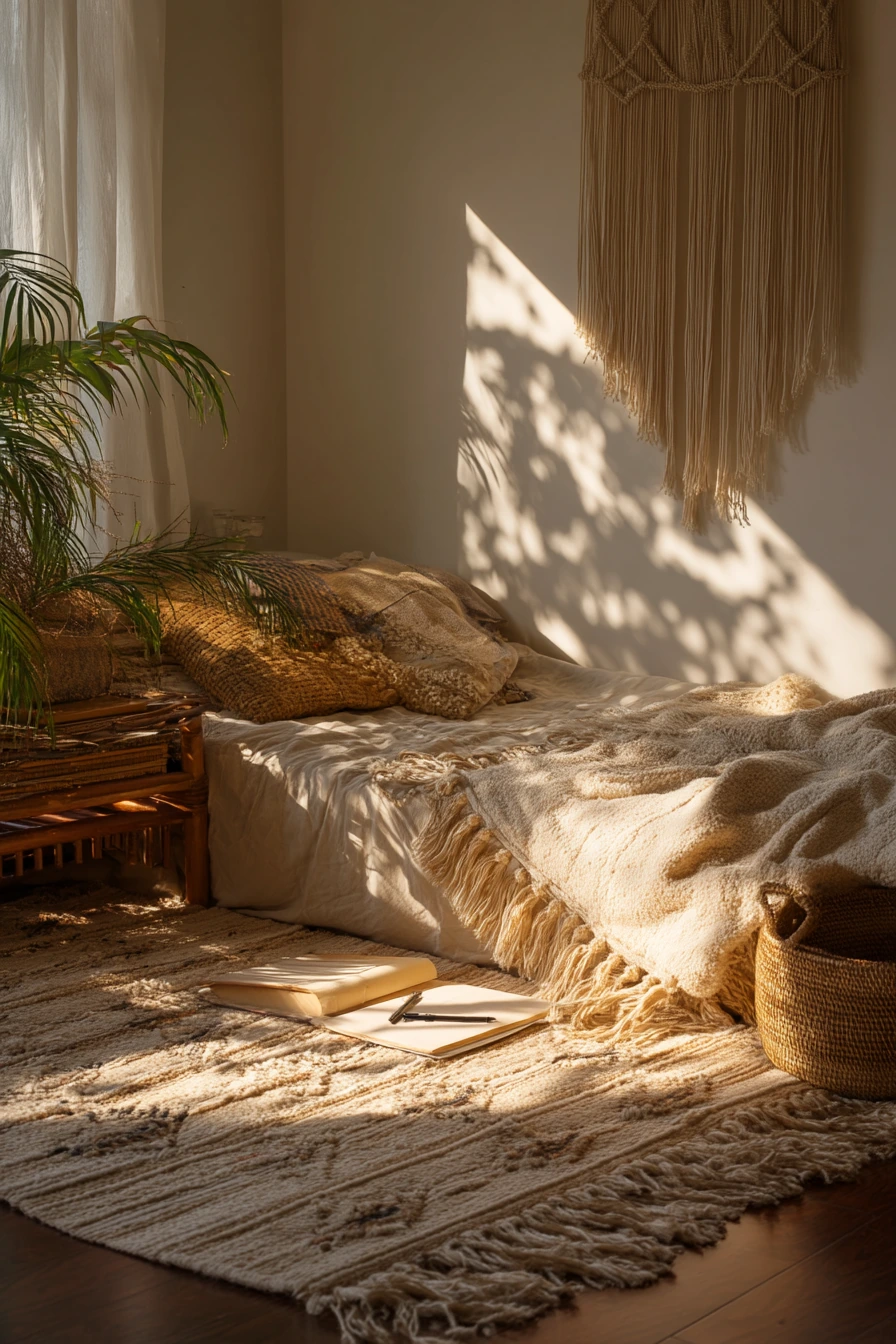
A layered woven rug with fringe fits a relaxed bohemian bedroom. Under a cane bed frame, it adds natural texture and a soft border that makes the room feel casual. Details like a macrame wall hanging and a basket of throws support the look without needing many colors.
For placement, tuck the rug under the bed enough to hold it in place, then let the fringe show at the foot or one side. This keeps the room from feeling too perfect. If you like journaling, an open journal and pen on the rug corner makes the space feel used and personal, especially when golden window light and leafy shadows fall across the fibers.
To style it well, keep your boho layers controlled. Choose two main textures, like woven rug and cane, then add one soft element like a knit blanket. Stick to warm neutrals and a few earthy accents, such as clay, olive, or muted mustard. Since fringe can tangle, keep it out of high-traffic paths.
- Pick a woven rug in warm neutrals for a calm base.
- Show the fringe at the foot of the bed for a styled edge.
- Use baskets for throws so the room looks tidy.
- Add one handmade item, like macrame, to match the natural vibe.
- Shake out the rug outside to remove dust from the weave.
Pro Design Tip: Use one repeating line detail, like fringe, cane weaving, or macrame knots, in at least two spots so the boho look feels connected.
Budget Considerations: Natural fiber rugs can vary in price; if you are on a budget, choose a cotton woven rug with faux fringe and spend on a better-looking cane or wood accent instead.
9. Soft Patterned Rug for a Family Bedroom or Kids Space
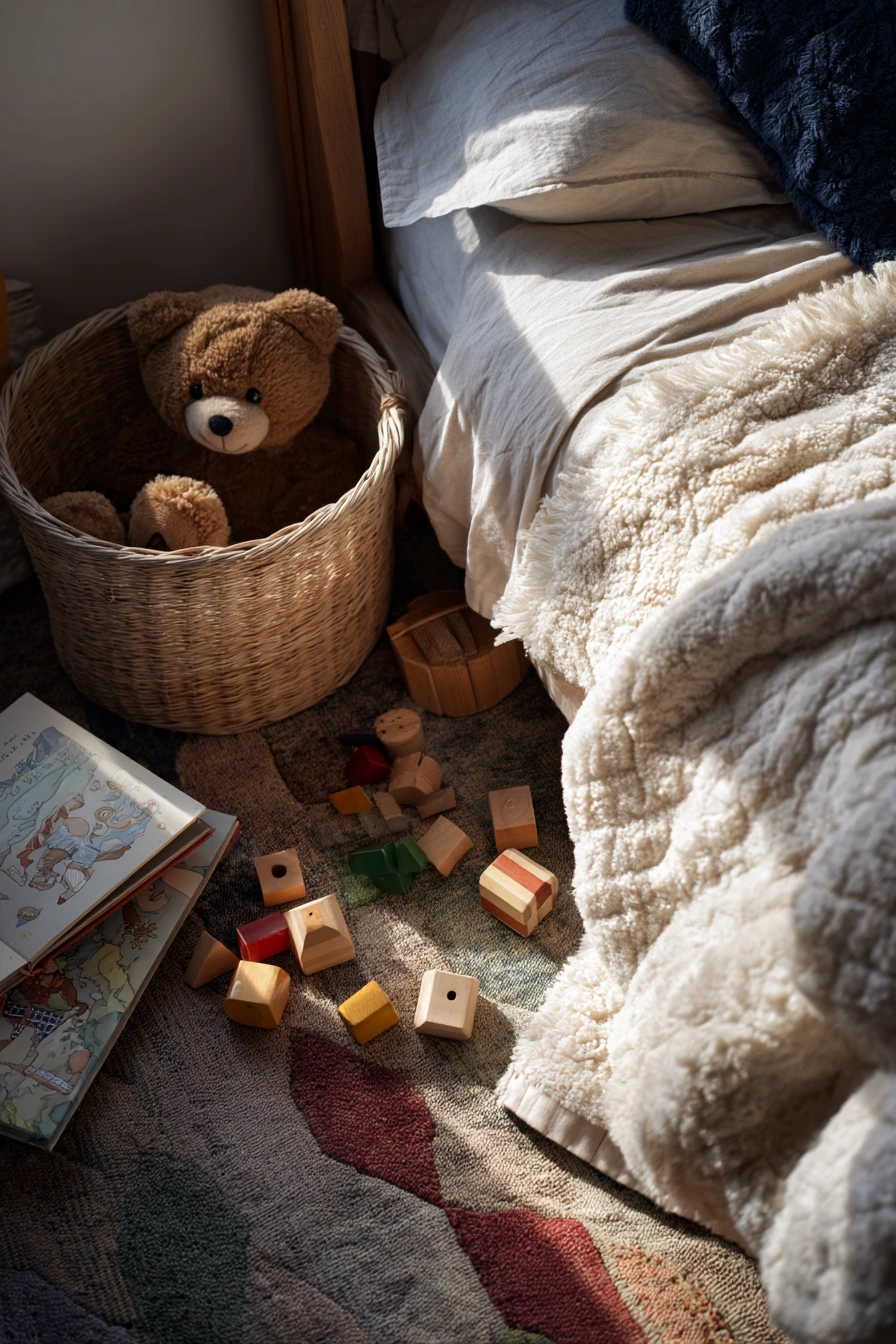
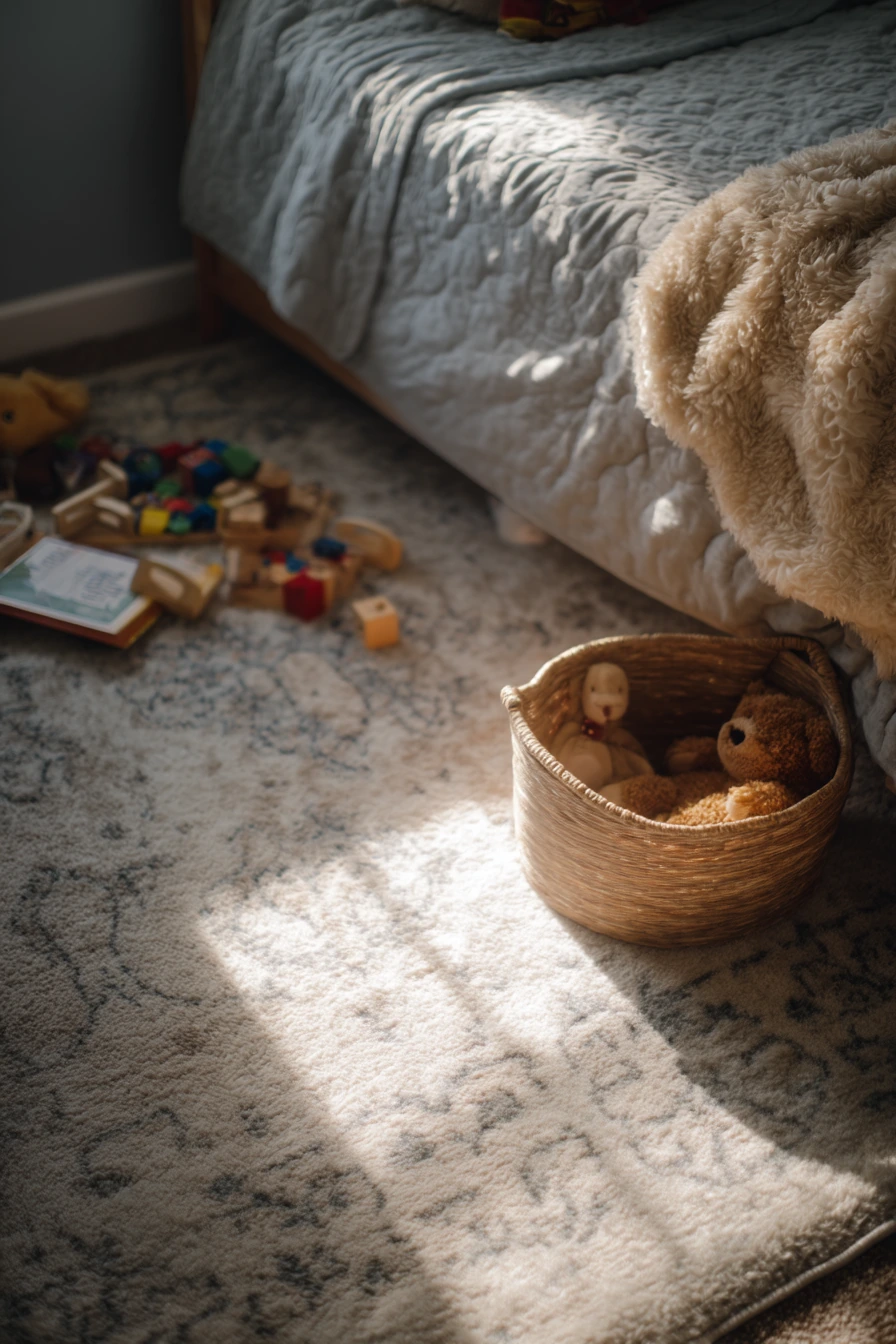
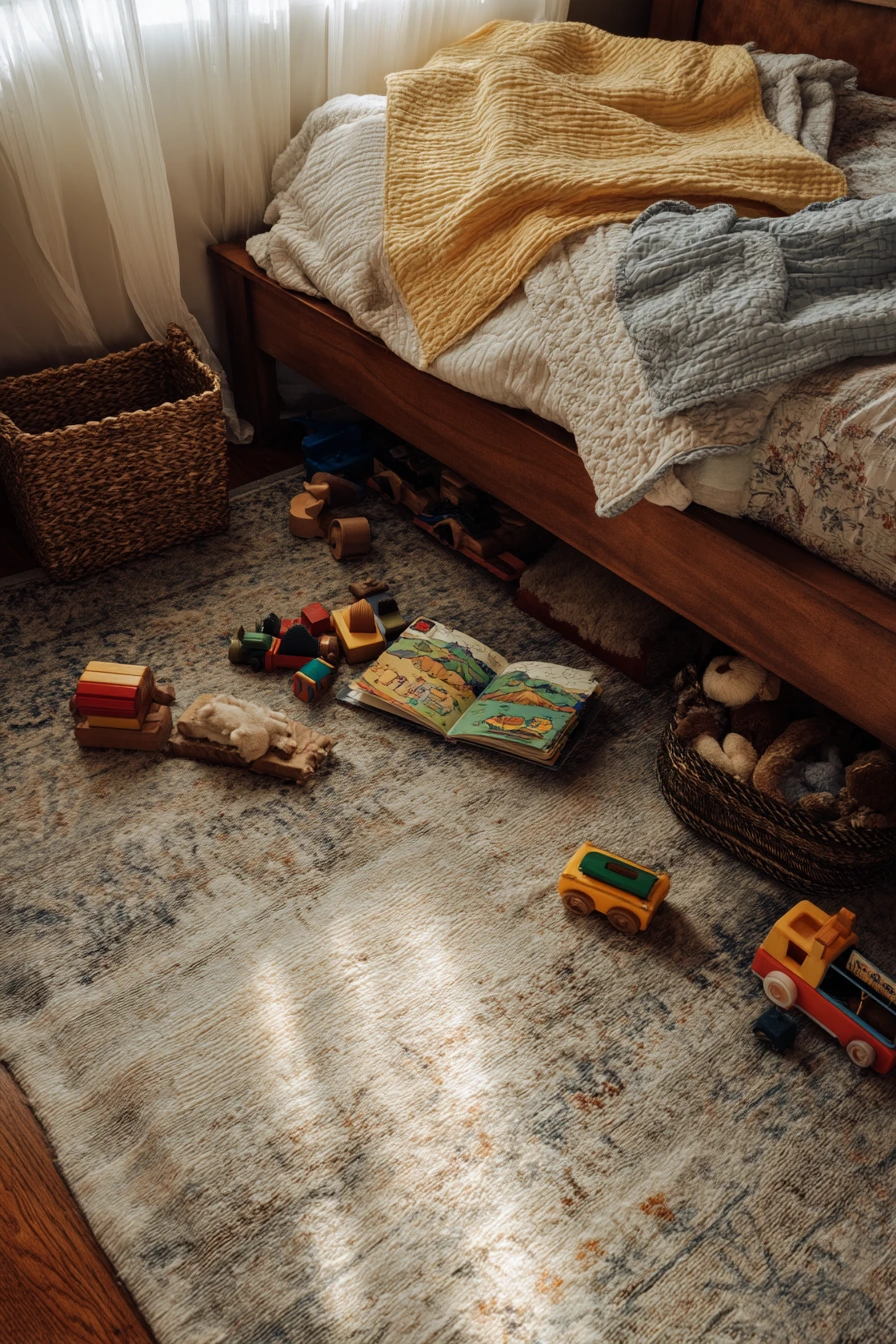
A soft patterned rug beside a small bed is a helpful upgrade in a family bedroom. It creates a play area for wooden toys and makes the room quieter. A gentle pattern also hides small messes better than a plain light rug, while still keeping the space calm.
Place the rug where kids step down and where they play most. If the bed is small, the rug can sit beside it instead of under it. This leaves more of the rug open for blocks, puzzles, and story time. Add a plush basket in the corner for fast cleanup, and keep a cozy quilt slightly rumpled on the bed for a warm, everyday feel.
For styling, use soft colors that work with morning sun, like warm cream, dusty blue, sage, or blush. Avoid high-contrast patterns that can feel busy in a small room. Choose a rug that feels good for sitting, and consider a low pile that is still cushioned. If spills are common, washable options can reduce stress.
- Pick a rug with a small pattern to hide crumbs and lint.
- Use a thick pad to make floor play more comfortable.
- Keep toy storage in one or two baskets to reduce visual clutter.
- Choose rounded furniture corners near the rug zone for safety.
- Spot clean quickly and air out the room to keep it fresh.
Pro Design Tip: Use the rug as the color plan: pull one shade from the rug into the quilt or curtains, and keep the rest of the room simple.
Budget Considerations: Washable rugs can cost more upfront, but they can save money over time by reducing professional cleaning or early replacement.

10. Large Wool Rug Under a King Bed for a Polished Bedroom
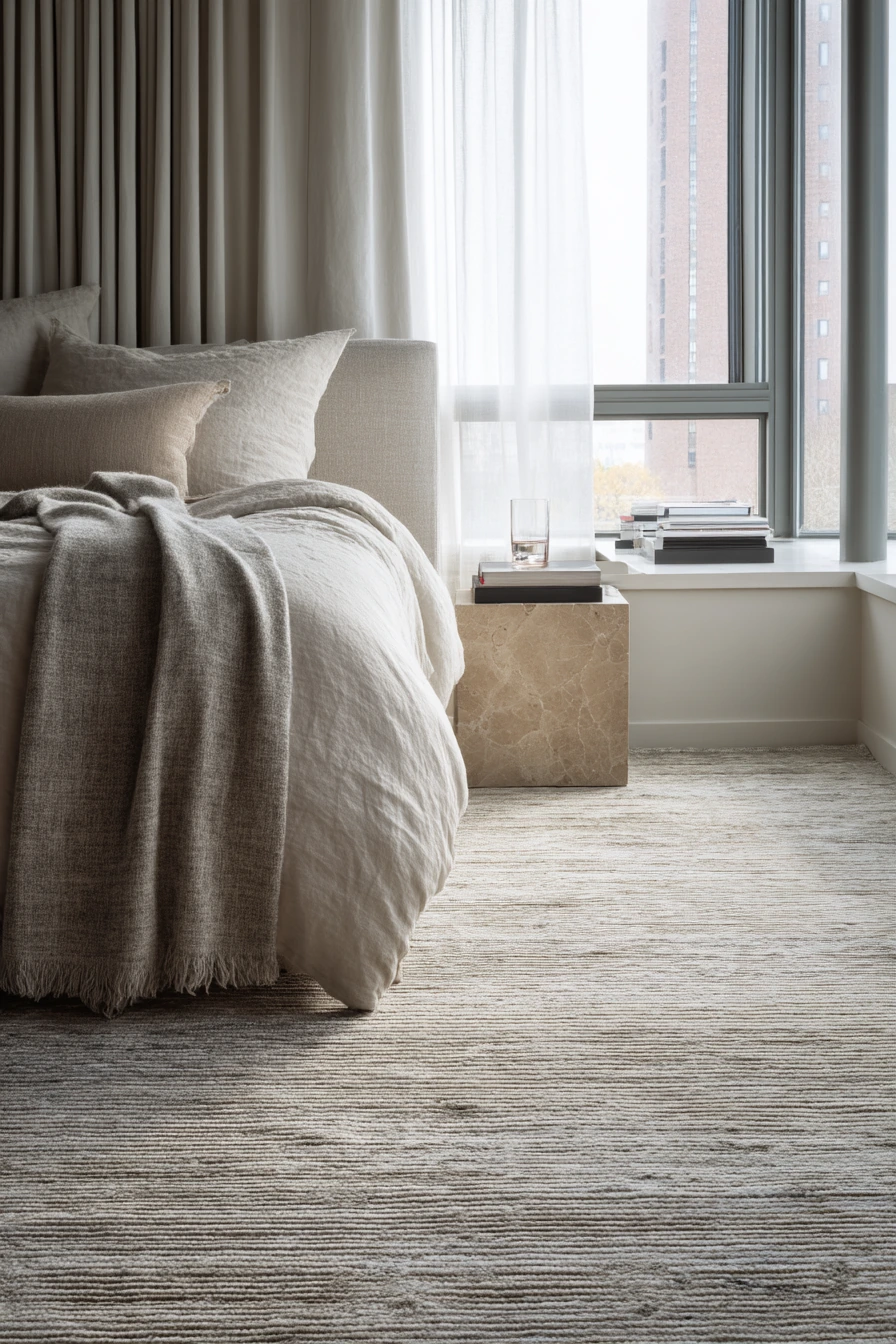
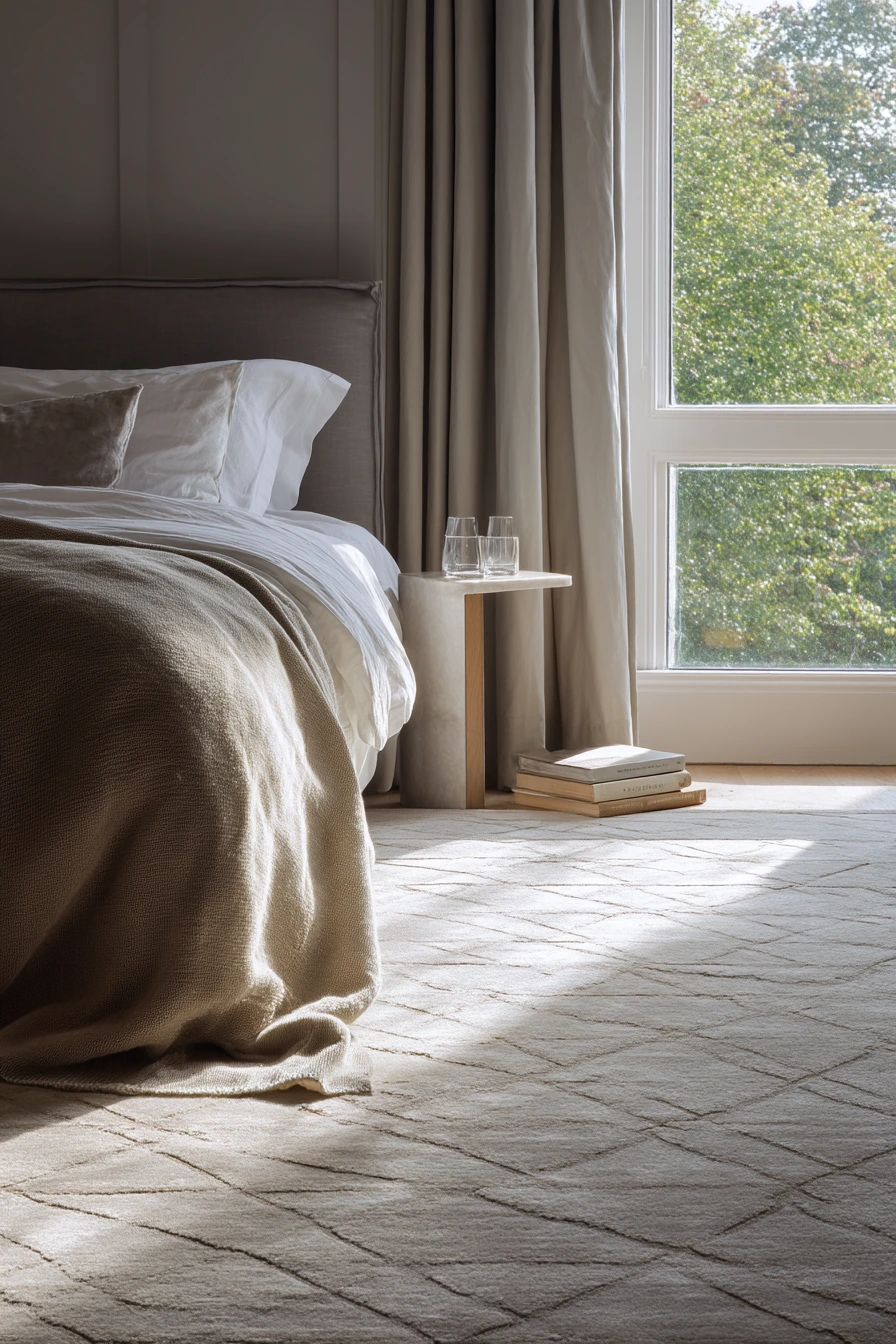
A large wool rug extending beneath a king bed makes the room feel polished and complete. It creates a soft border around the bed, which is important in bigger bedrooms where furniture can feel like it is floating. A subtle geometric texture adds interest without distracting from the calm mood.
For the best fit, choose a rug large enough to extend past both sides and the foot of the bed. This gives you a soft step no matter where you get up. If you have a marble bedside table, the mix of smooth stone and tactile wool looks balanced. In pale afternoon light, wool fibers show gentle shadow depth that makes the space feel refined but still livable.
Style the rug with simple, richer textures. A velvet throw casually folded adds contrast against the wool. Keep bedside items minimal, like a water glass and a novel, so the room stays restful. If you want pattern, keep it tone-on-tone. This helps the rug look expensive and keeps the bedroom easy on the eyes.
- For a king bed, consider 9×12 or larger if the room allows.
- Choose a low- to medium-pile so furniture sits stable.
- Pick a tone-on-tone geometric for quiet texture.
- Use a dense rug pad for comfort and to prevent shifting.
- Keep window treatments light to show the rug texture in daylight.
Pro Design Tip: When using a large rug, match its undertone to the wall color, then add one broader accent, like charcoal or espresso, to keep the room from feeling washed out.
Budget Considerations: Large wool rugs are a big purchase; if needed, buy a slightly smaller size and use upholstered benches or side tables to visually cover the extra floor area.


The right rug for bedroom comfort depends on how you live. Low-pile and flatweave styles are easy to clean, while shag and plush wool feel softer underfoot. Jute and woven options add natural texture, and muted patterned rugs hide wear.
Start by measuring your bed area, then decide if you want the rug under the bed, beside it, or layered. Choose a material that matches your routine, and use simple styling touches like baskets, warm lighting, and a few matching textiles.
FAQ
1. What size rug is best for a bedroom? A common choice is 8×10 for a queen bed and 9×12 for a king bed, but measure your space and aim for the rug to extend beyond the bed sides.
2. Should a bedroom rug go under the bed or beside it? Under the bed looks more finished, while beside the bed works in small rooms and costs less.
3. Is wool a good material for a bedroom rug? Yes, wool is soft and durable, and it handles daily foot traffic well when vacuumed regularly.
4. Are jute rugs comfortable in bedrooms? Jute feels firmer than wool, but it adds great texture and works well under furniture with a rug pad for comfort.
5. How do I keep a rug from sliding on bedroom floors? Use a non-slip rug pad or rug tape, especially on hardwood or tile.
6. What rug pile is easiest to clean in a bedroom? Low-pile and flatweave rugs are usually easiest because they trap less dust and vacuum faster.
7. Can I layer rugs in a bedroom? Yes, layering adds depth and helps with budget; use a larger base rug and a smaller top rug, and secure them with a pad so they do not shift.
A bedroom rug should feel good, fit your layout, and support your daily routine. Pick one clear look, then keep the rest of the room simple so the rug can do its job.