
Patterned bedroom ideas can make a room feel warm, personal, and finished. The right mix of wallpaper, bedding, rugs, and pillows adds style without making the space feel busy.
This post shares 10 real-life pattern looks, from botanical wallpaper behind a linen bed to bold geometric bedding in a teen room. Each idea includes simple ways to layer prints, keep balance, and make the room easy to live in.
You will also get practical styling tips, what to change first, and budget notes so you can copy the look with less stress. Use these ideas to plan a cozy bedroom that looks good in morning light and still works on a normal day.
If you are coming from Pinterest, save your favorite section and start with one pattern, then build from there.
1. Botanical Wallpaper and Linen Bedding
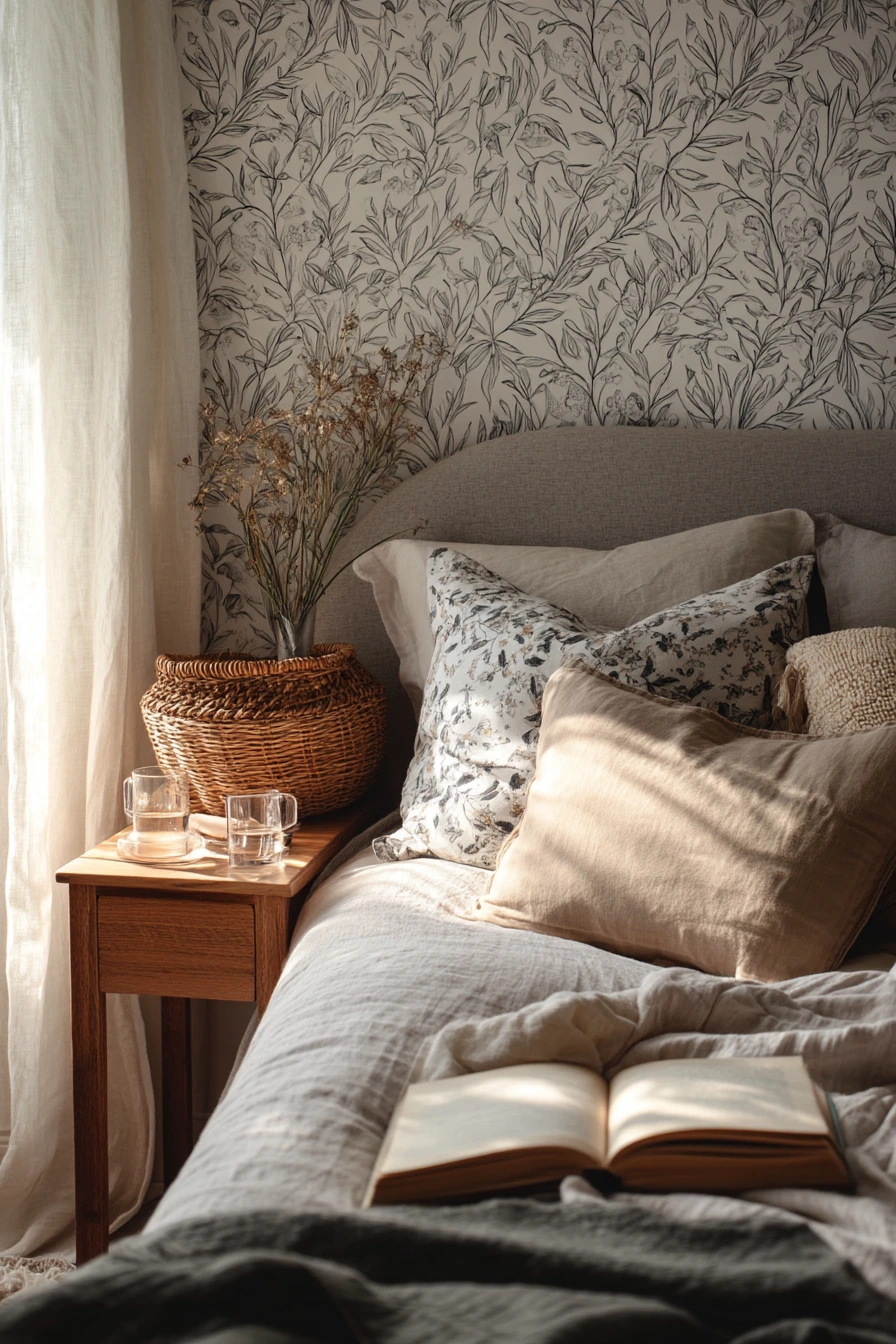

A patterned botanical wallpaper behind a soft linen bed is one of the easiest ways to add interest without adding clutter. The leafy print acts like art, so you do not need many extra decor pieces. Pair it with a leafy green duvet and a few floral pillows to keep the theme clear but still relaxed.
To make the look feel calm, keep the rest of the room light. Pale walls, sheer curtains, and gentle morning sunlight help the greens look fresh. Natural textures matter here: a small wooden nightstand, a woven basket with a folded blanket, and lived-in bedding with soft wrinkles make the room feel real, not staged.
Style it like an everyday moment. Leave an open novel on the nightstand next to a half-full water glass. Add one plant to cast quiet plant shadows on the wall. This kind of detail makes the pattern feel part of daily life, not a theme you must maintain.
- Pick wallpaper with a light background so the room stays bright.
- Repeat the green color in the duvet or one pillow, not in every item.
- Mix one floral pillow with one solid pillow to calm the bed.
- Use warm wood for the nightstand to soften the greens.
- Add a basket for extra blankets so the room stays tidy.
Pro Design Tip: Keep your largest pattern on the wall, then choose medium-pattern pillows and a mostly solid duvet so the bed does not compete with the wallpaper.
Budget Considerations: Peel-and-stick botanical wallpaper can cost less than traditional rolls, and you can wallpaper only the wall behind the bed to reduce materials.


2. Stripes and Small Prints in a Compact City Bedroom

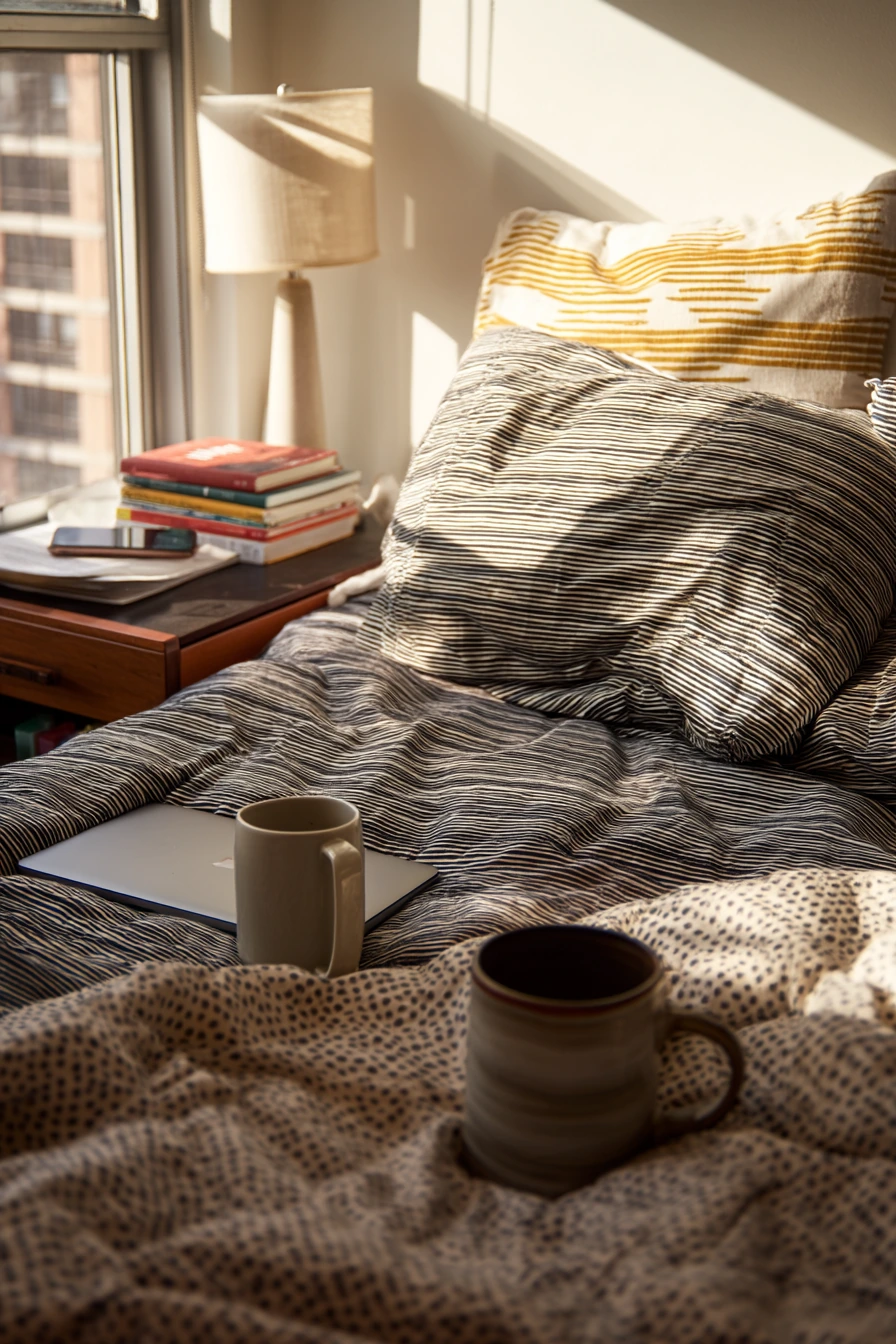
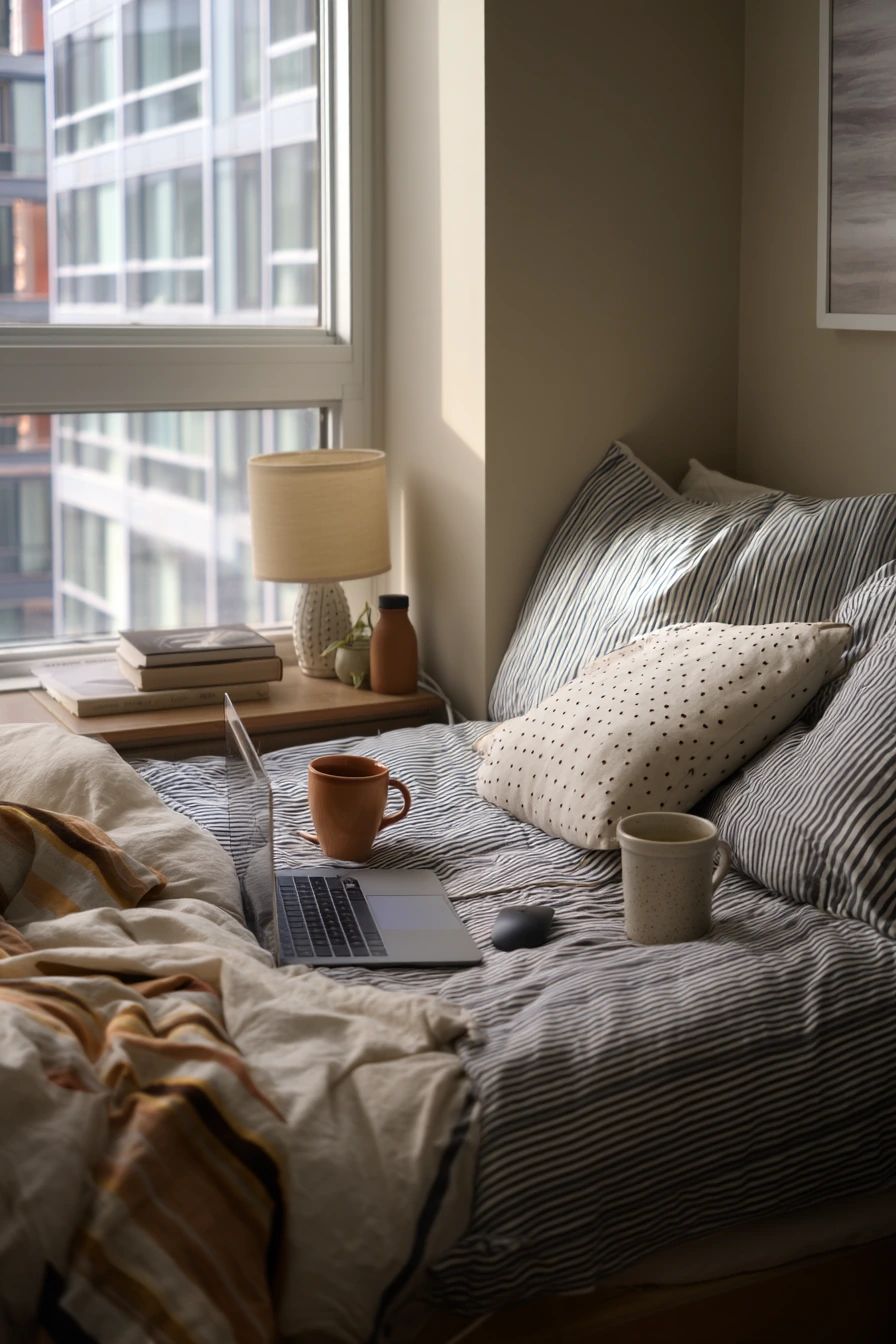
A compact city bedroom can handle pattern when the mix is simple and planned. Start with a striped duvet on a low platform bed, then add a geometric rug to anchor the floor. Finish with small dotted throw pillows for a third pattern that reads as texture from across the room.
This look works best when the colors relate. Choose stripes and geometrics in the same family, like warm neutrals, charcoal, and soft blue. A warm lamp on the nightstand keeps the room cozy in the afternoon light, and it also softens sharp lines in the rug and bedding.
Keep it lived-in and practical. Let a laptop charging cable sit near the nightstand, and style two stacked books with a ceramic mug. A slightly wrinkled blanket edge is fine, because it matches the real apartment vibe. The goal is a balanced patterned mix that still feels easy to maintain in a small space.
- Use stripes as your main pattern and keep them medium width.
- Choose a rug with a geometric design that has at least one color from the duvet.
- Pick dotted pillows in a small scale so they do not overpower.
- Stick to 2 to 3 main colors to avoid a crowded look.
- Add one warm light source to make patterns feel softer.
Pro Design Tip: In small rooms, repeat one shape across items, like stripes on the bed and a linear pattern in the rug, to make the mix feel planned.
Budget Considerations: If a new rug is too costly, try a patterned flatweave or layer a smaller geometric rug over a plain carpet remnant.

3. Cottage Floral Wallpaper with a Patchwork Quilt
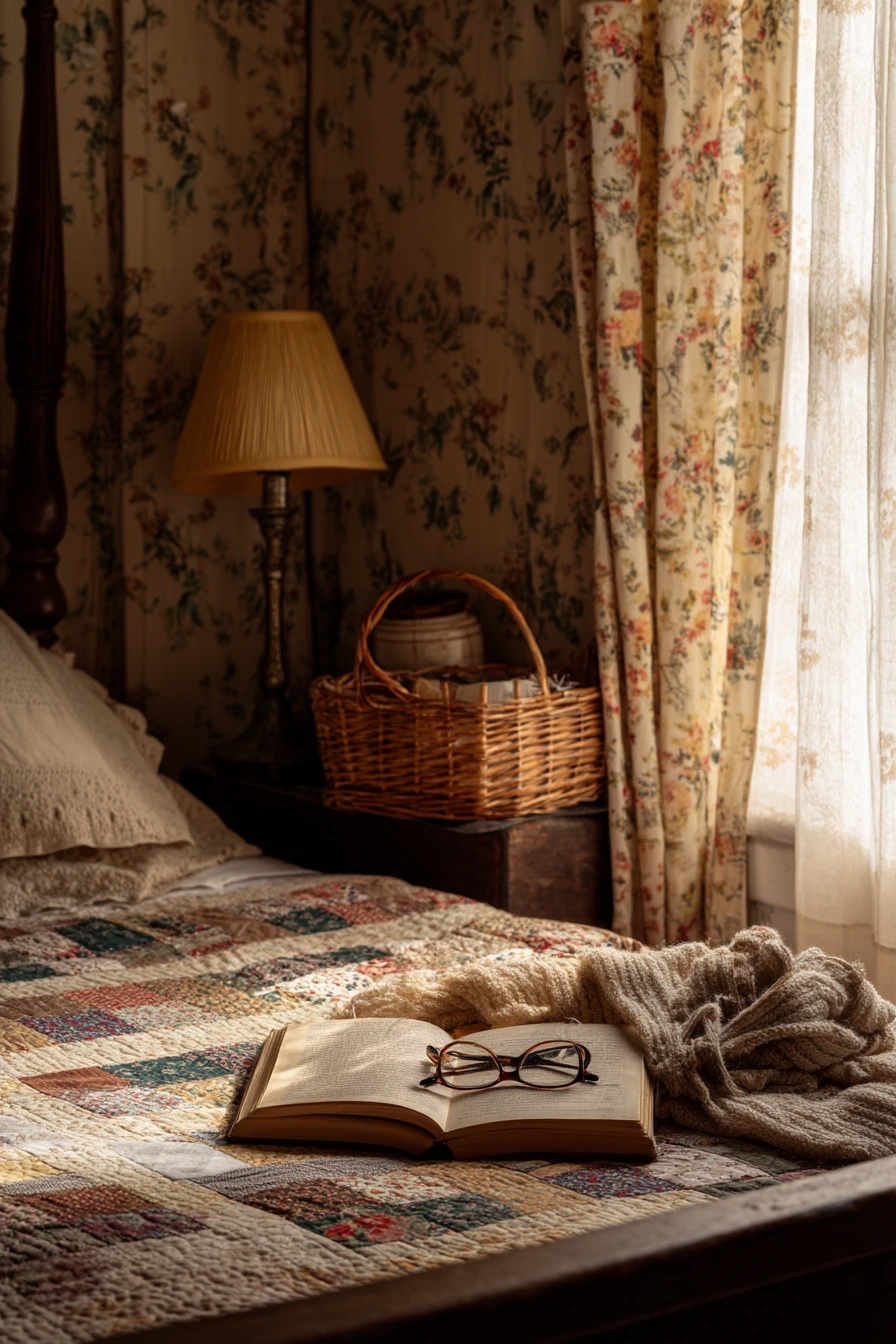
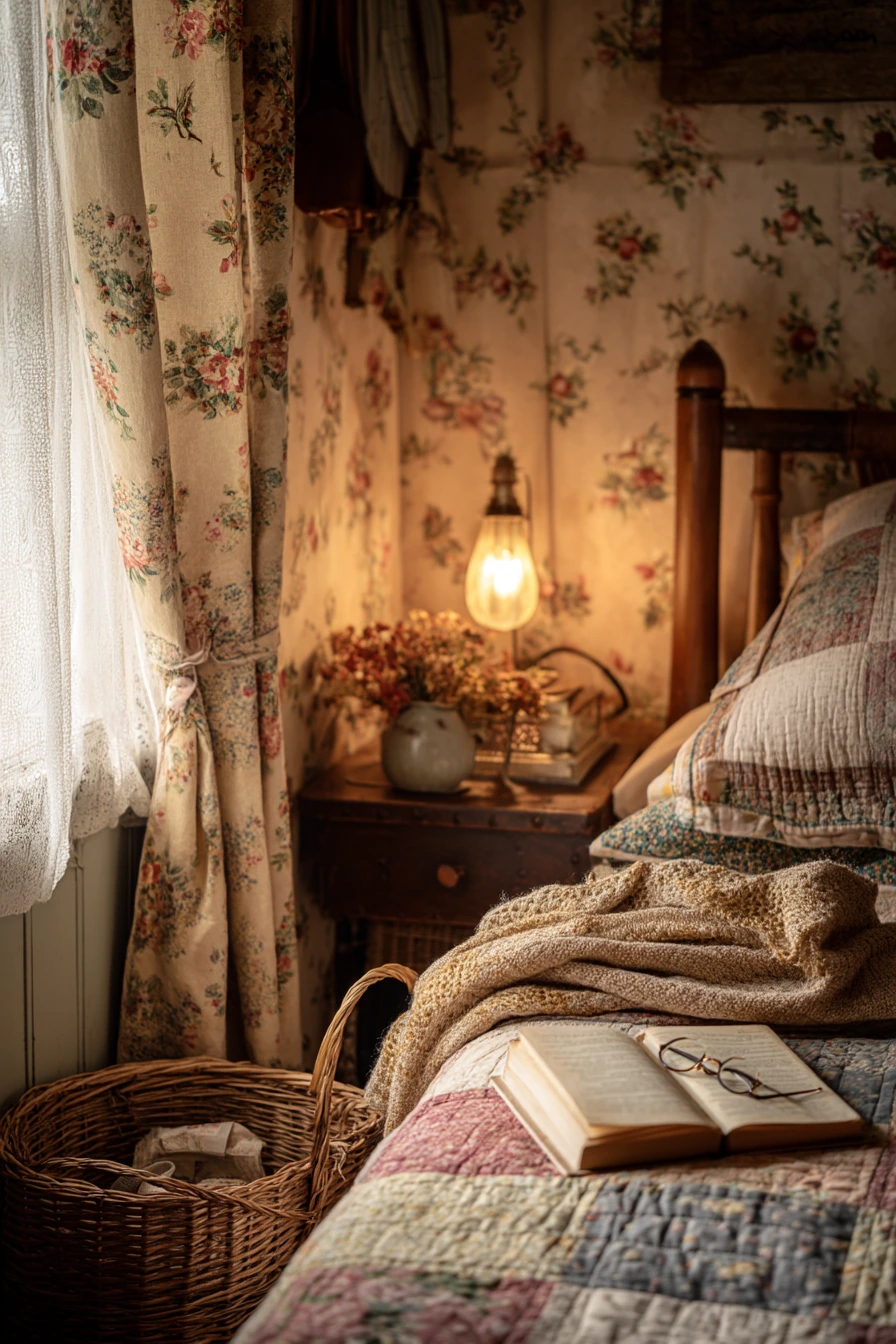
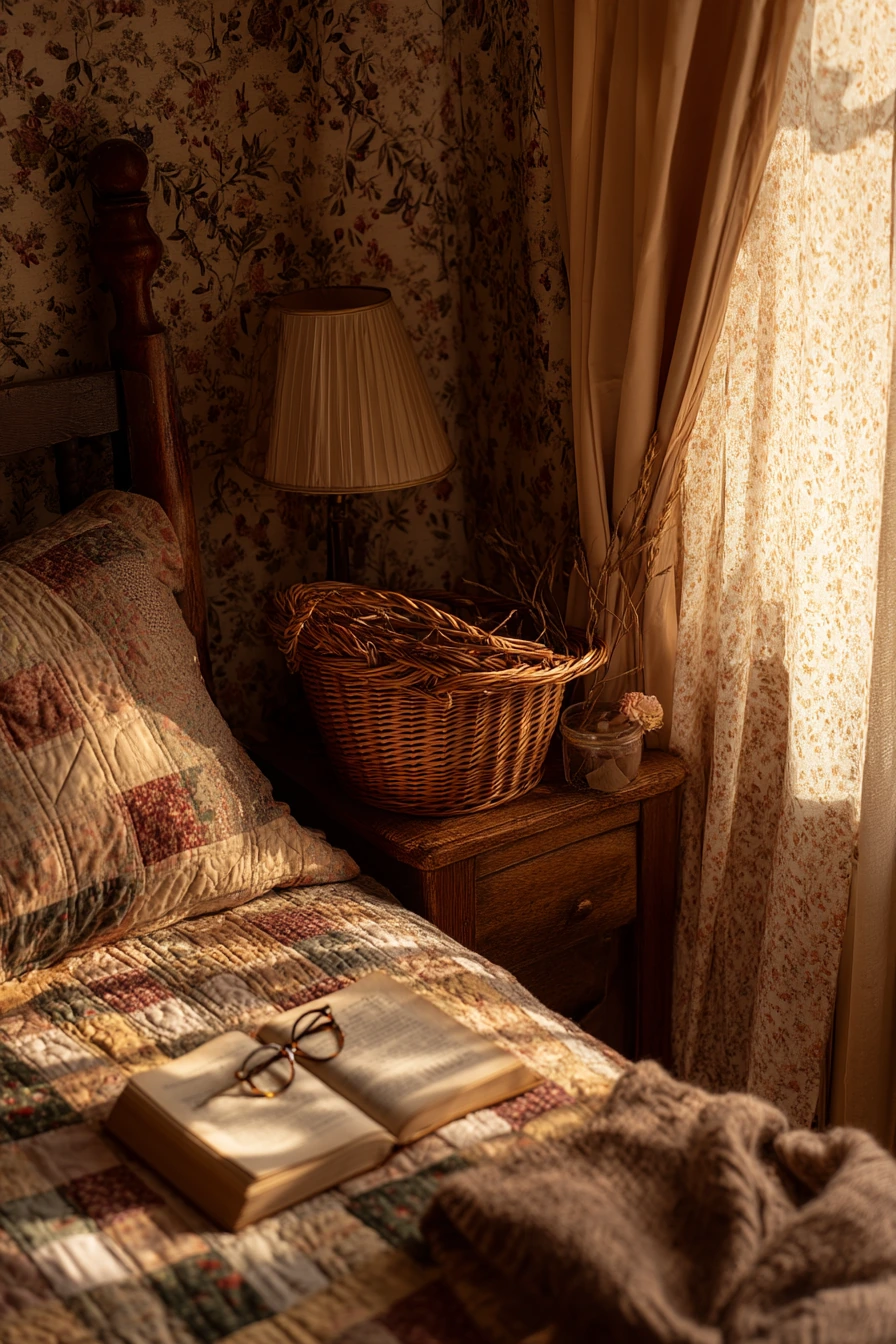
A small cottage bedroom looks best with a soft, worn-in pattern. Faded floral wallpaper brings a gentle background, and a patchwork quilt adds color without feeling bright. The mix feels cozy because both patterns look aged and warm, not sharp and new.
To style it, keep the furniture simple. A wooden bed frame and a vintage lamp with a warm amber glow make the room feel settled. Add delicate patterned curtains that move a little in the breeze. That soft motion makes the space feel calm and slow, especially in sun-washed morning light.
Small details help the room feel real. Place reading glasses on an open book, and keep a wicker basket nearby with a folded cardigan. If you worry about too much pattern, use plain sheets in a soft cream and let the quilt be the hero. This keeps the floral wallpaper from fighting with the patchwork blocks.
- Choose floral wallpaper with muted colors like dusty rose, sage, or cream.
- Use a patchwork quilt that shares at least one color with the wallpaper.
- Add solid pillow shams to break up the bed surface.
- Pick curtains with a tiny print or subtle stripe to stay light.
- Use warm lighting to make the prints feel softer at night.
Pro Design Tip: Mix patterns that look “aged” together, like faded florals and washed cotton patchwork, so the room feels unified even with many prints.
Budget Considerations: Check thrift stores for quilts and vintage-style lamps, or use a new quilt and wash it a few times to soften the look.

4. Deep Patterned Accent Wall with Graphic Bedding

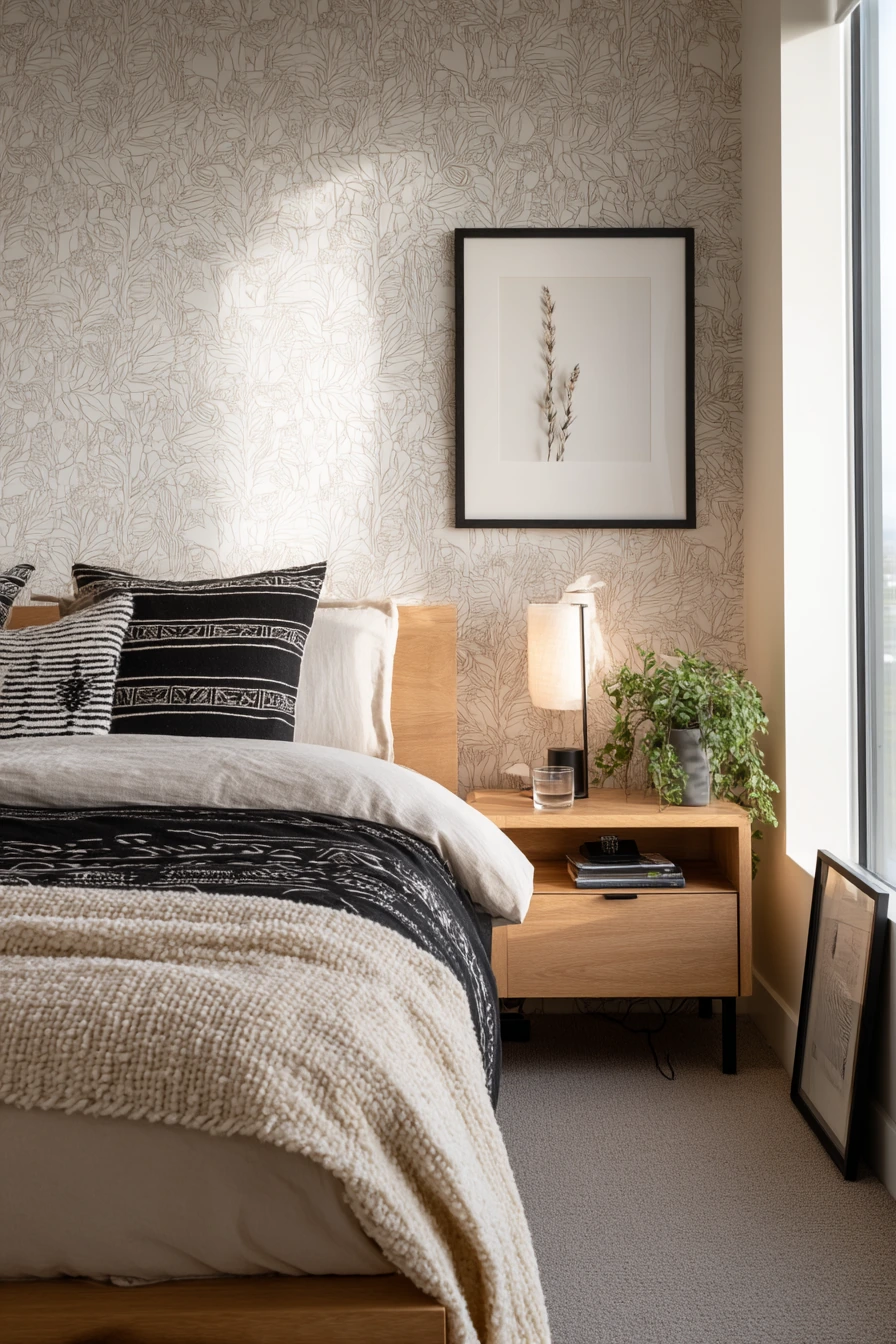
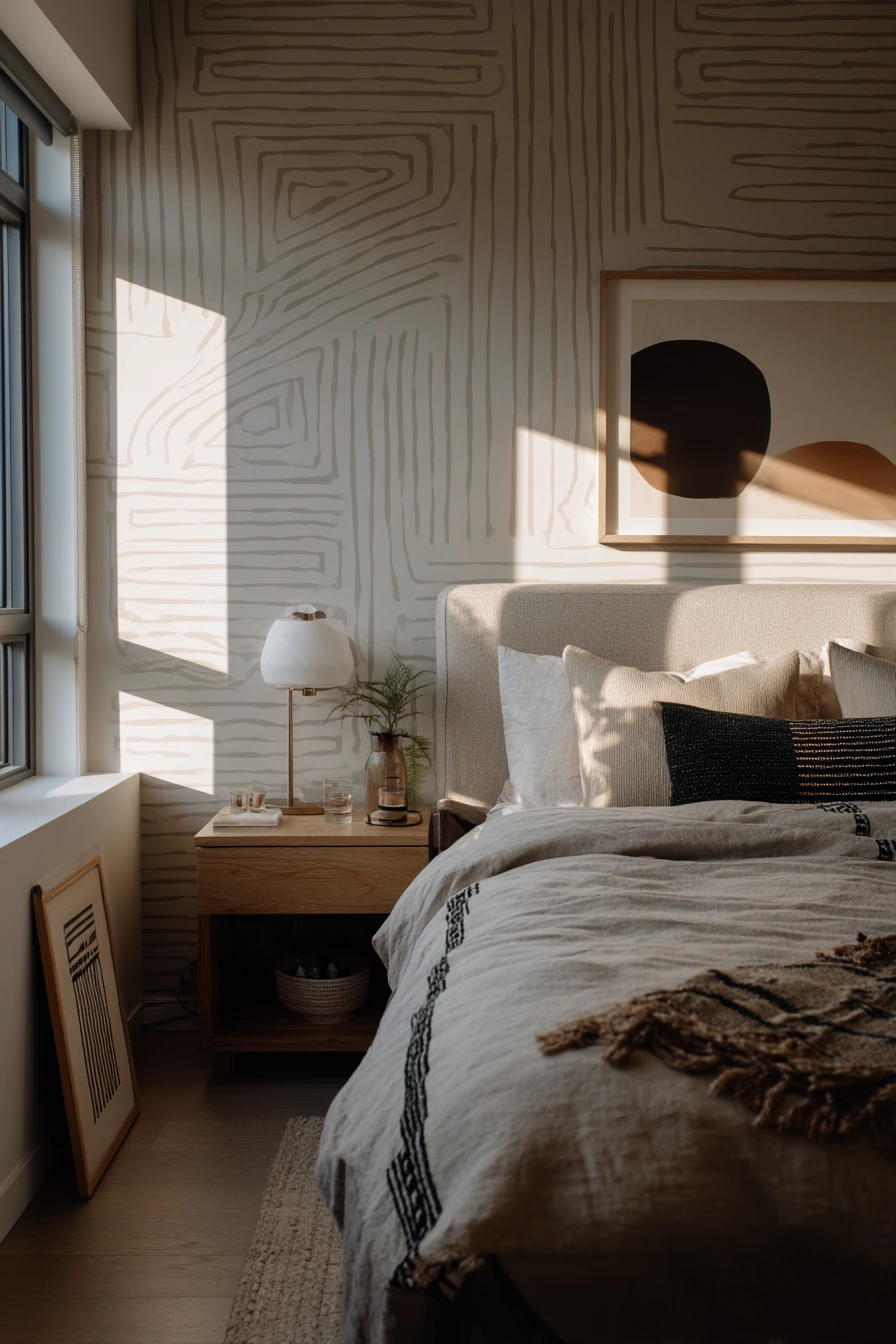
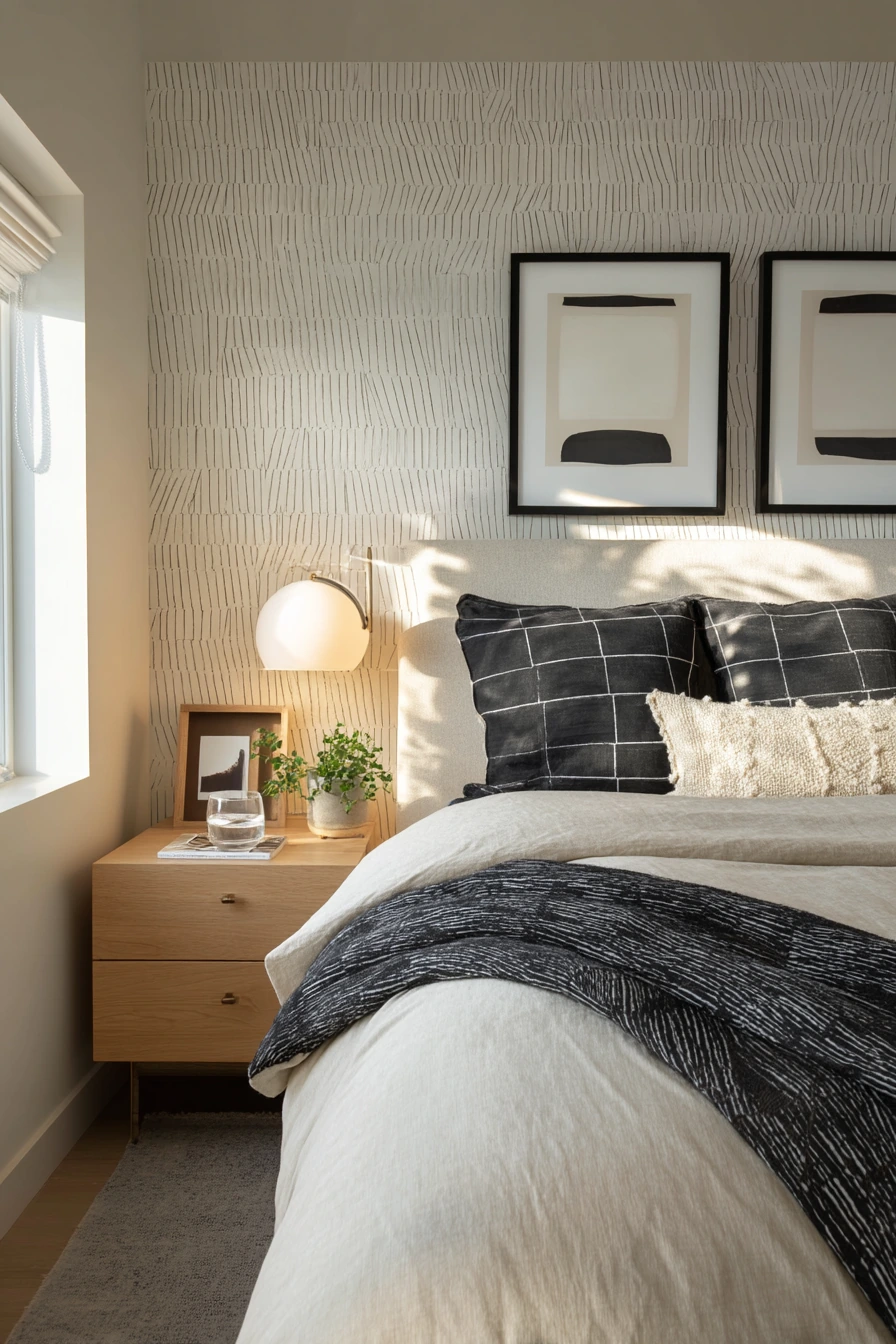
A modern bedroom can feel bold and calm at the same time when you use one strong pattern in one place. A deep patterned accent wall behind a neutral bed creates a clear focal point. Pair it with graphic black-and-cream bedding to echo the contrast without adding more colors.
Keep the rest simple so the wall stands out. A minimal oak nightstand works well because its warm tone balances the black and cream. A water glass and a phone charger cable on the table keep the room grounded in real life, not a showroom. Add a textured throw for softness, and let it sit a little rumpled.
For styling, use casual art placement. A framed print leaning on the floor can look intentional and relaxed. Subtle plant shadows across the wall also help the pattern feel less flat. At dusk, mix warm bedside lamp glow with soft window light so the room stays comfortable and not harsh.
- Use the accent wall as the main pattern and keep other prints limited.
- Choose bedding with large, simple shapes instead of tiny busy prints.
- Add one textured item like a knit or boucle throw for depth.
- Use oak or light wood furniture to warm up dark walls.
- Keep decor low and minimal so the pattern reads clean.
Pro Design Tip: If your accent wall pattern is high contrast, choose bedding with big shapes and lots of solid space to avoid visual noise.
Budget Considerations: Paint plus a stencil can mimic a patterned wall for less than wallpaper, and you can stencil only the area behind the headboard.
5. Playful Patterns for a Shared Kids Bedroom
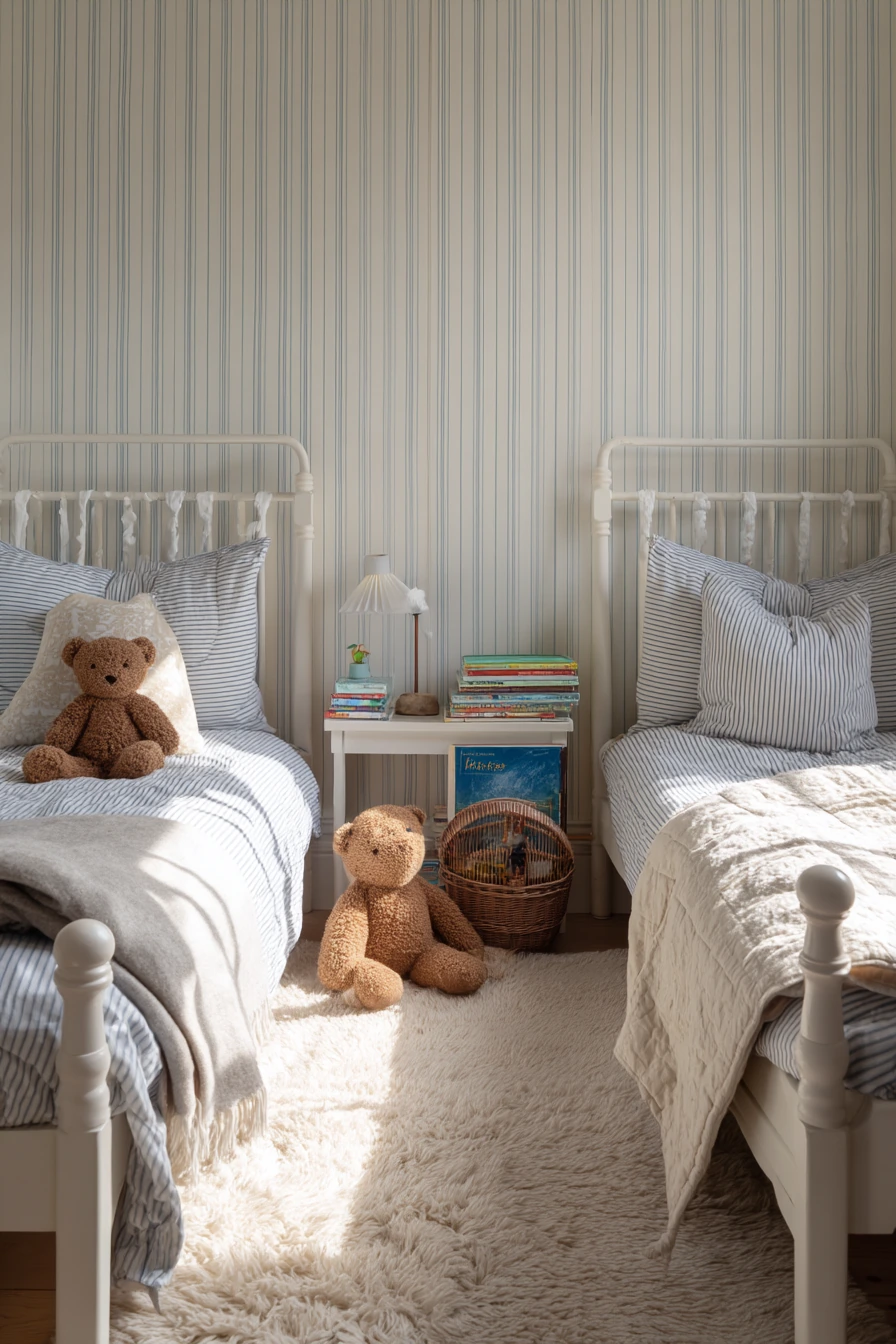
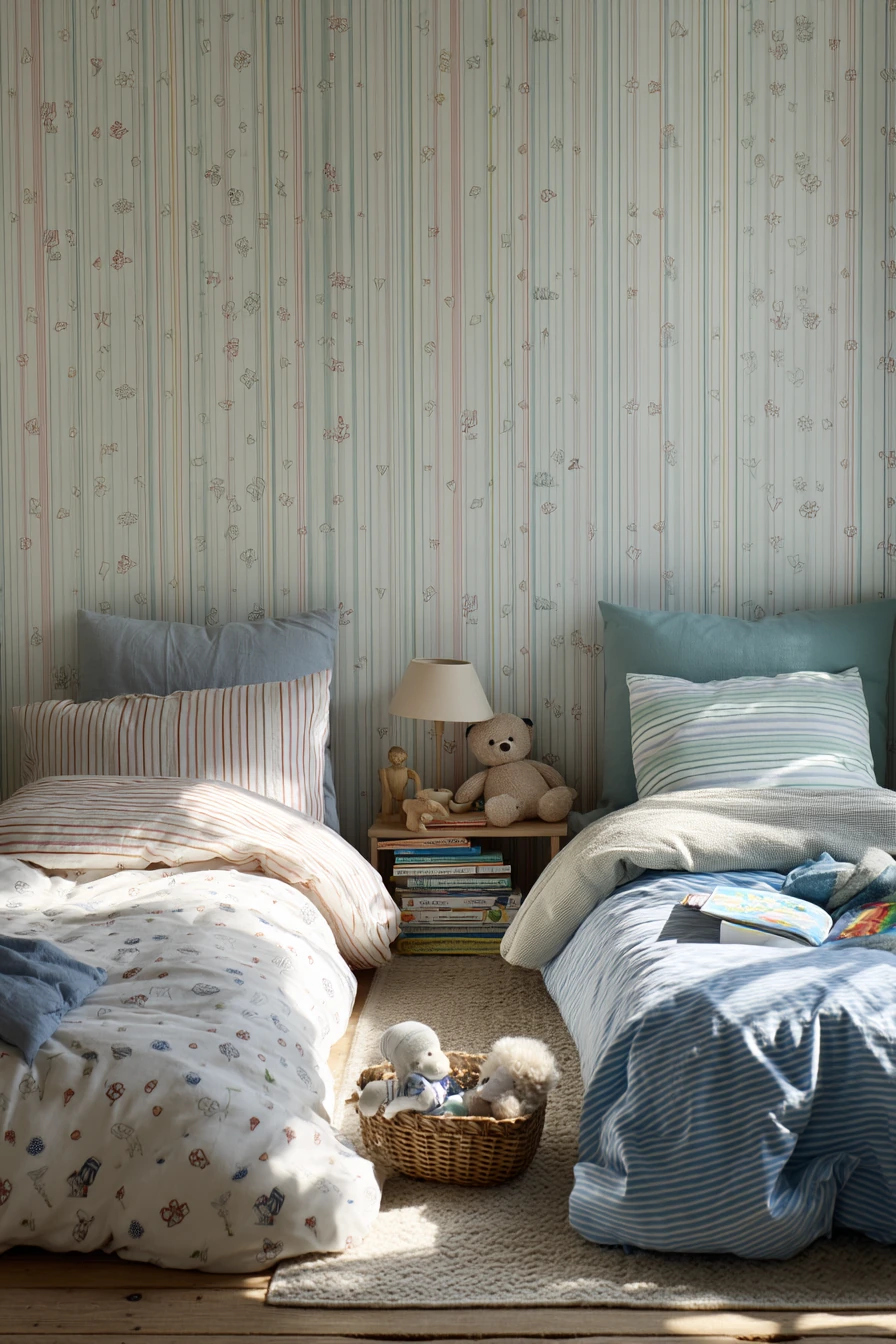
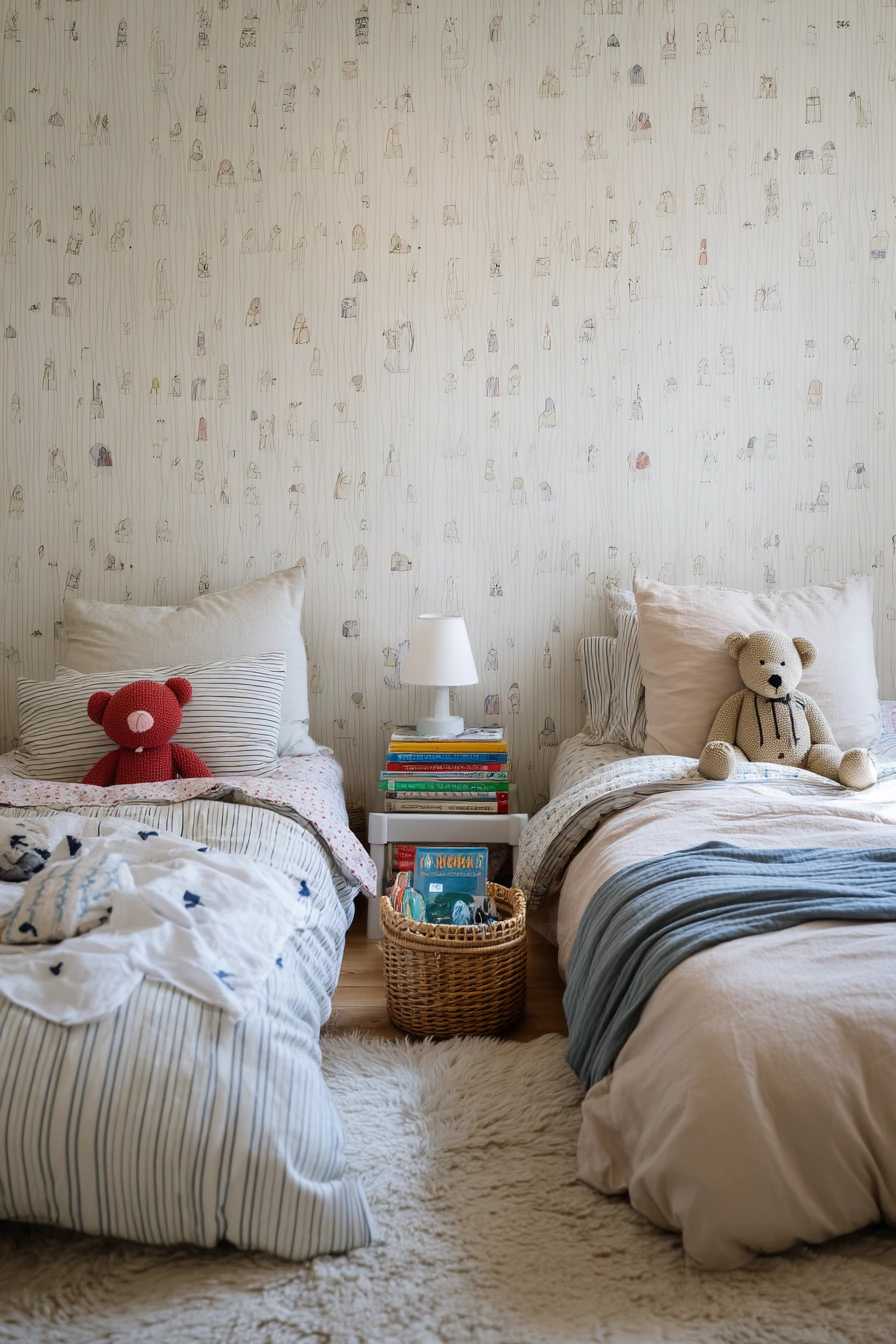
A bright shared kids bedroom can use pattern in a cheerful way, but it still needs calm. Playful patterned wallpaper works well when the bedding stays simple, like striped bedding on twin beds. Stripes feel fun and classic, and they help the room look tidy even when quilts are slightly rumpled from morning play.
Choose one main wallpaper theme and keep the rest of the patterns in the same mood. Add a soft rug that can handle playtime, and keep a small toy basket on the floor so cleanup is easy. A plush bear and a few children’s books stacked beside a simple night lamp make the room feel lived in, not over-decorated.
To style this room for everyday use, keep surfaces clear and use storage that kids can reach. If the wallpaper is colorful, repeat only one or two of those colors in the bedding. Warm natural daylight will brighten the patterns, so avoid adding too many neon tones. The goal is a family home moment that still photographs well.
- Pick wallpaper with a friendly print and a light background.
- Use stripes on bedding to add order to a busy wall.
- Add matching baskets so toys have a clear home.
- Choose washable rugs and quilts for easy care.
- Use simple lamps and keep cords tucked for safety.
Pro Design Tip: In shared rooms, repeat the same pattern type on both beds, like matching stripes, so the space feels fair and balanced.
Budget Considerations: Wallpaper one feature wall only, and use removable wall decals for the rest so you can update the look as kids grow.
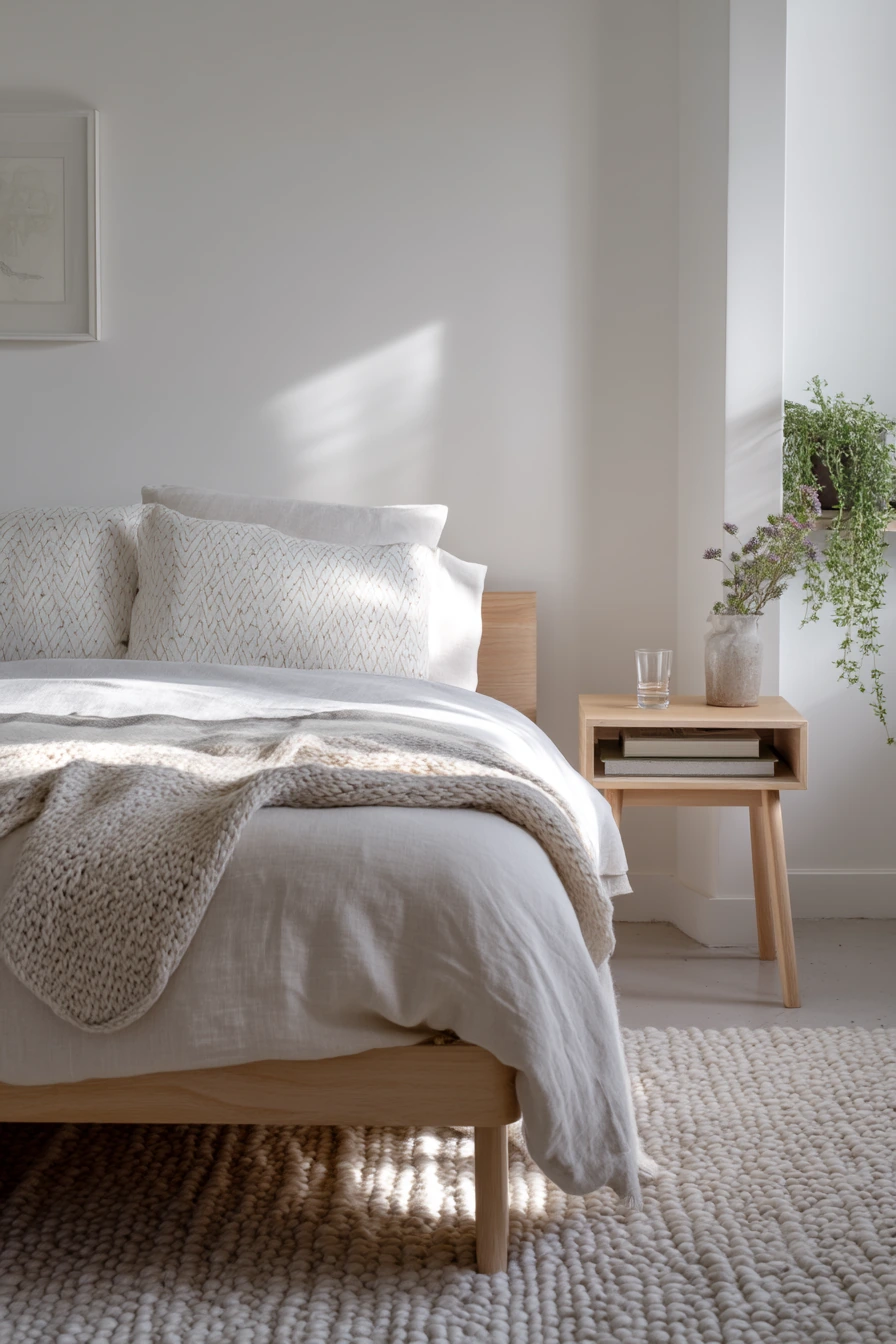
6. Scandinavian Pattern Layering with Linen and a Woven Rug
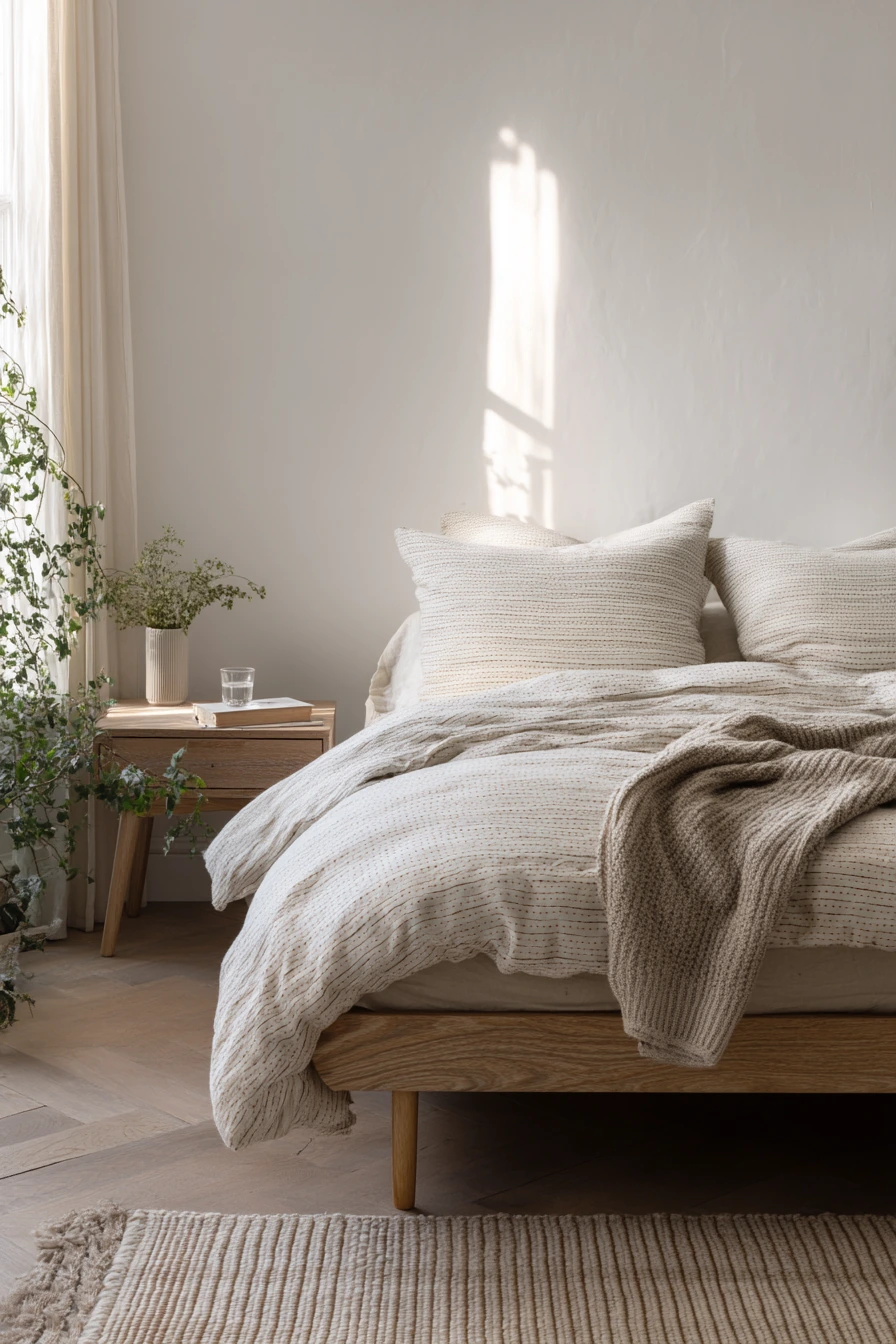
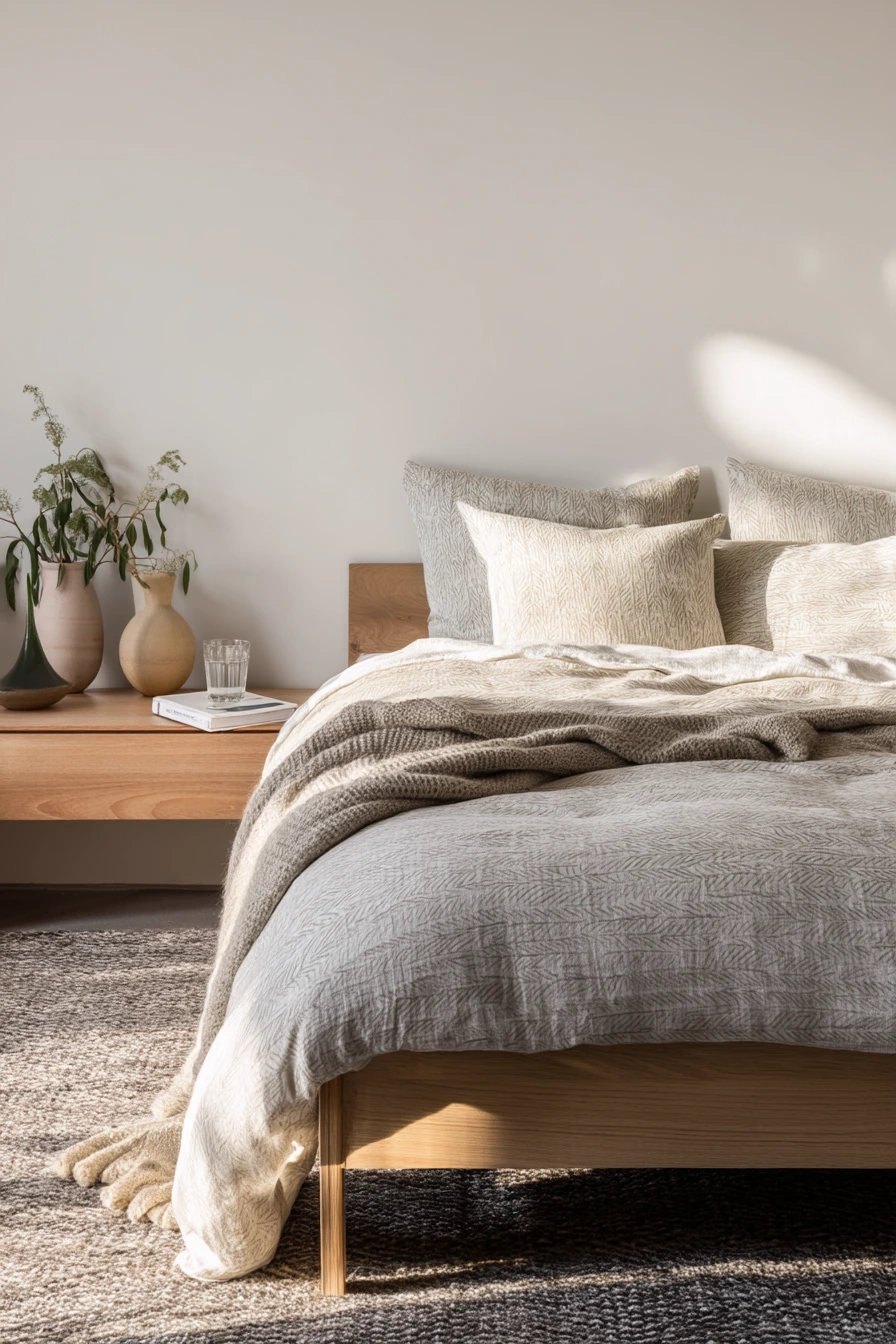
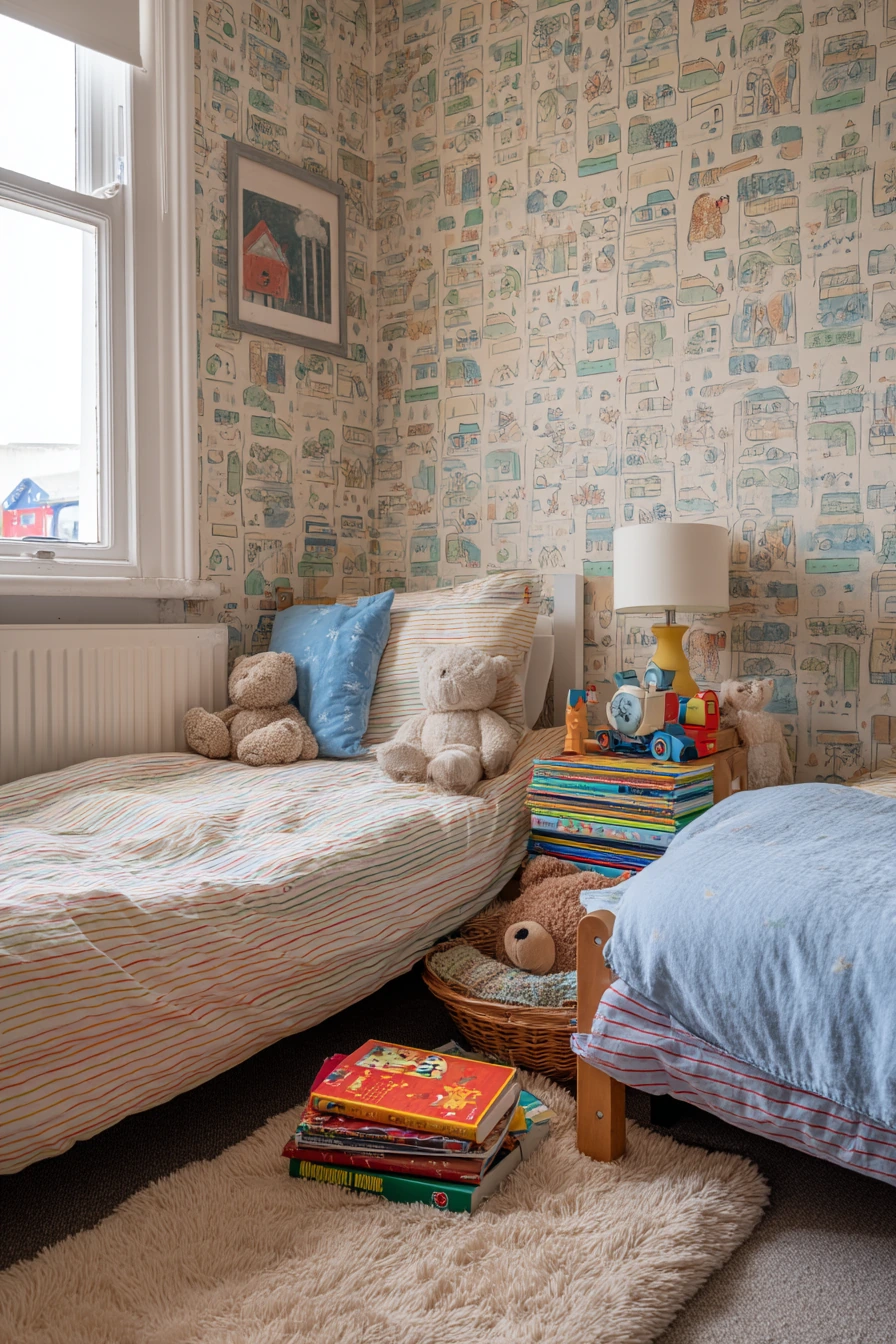
A serene Scandinavian bedroom proves you can use pattern and still keep a minimalist feel. Start with a subtle patterned linen duvet in soft neutrals, then add a textured woven rug to bring warmth underfoot. The patterns should be quiet, more like gentle texture than bold print.
Pale wood furniture keeps the room light. A simple bed frame and nightstand look clean, and they work well with white walls. Add a small water glass and a poetry book for a calm bedside setup. A folded knit throw draped loosely adds another layer without adding a new print.
Plant shadows across the wall give the room depth without more decor. Keep the color palette tight, like white, beige, soft gray, and light wood. If you want a bit more interest, choose one small item with a tiny pattern, like a cushion with a simple stitch. The goal is restrained pattern layering with tactile warmth that still feels easy to clean and easy to sleep in.
- Choose low-contrast patterns that read as texture from a distance.
- Use natural fibers like linen, wool, and cotton for a soft look.
- Keep the walls plain white to give patterns room to breathe.
- Limit yourself to one or two patterned items in the whole room.
- Add warmth with wood tones and soft lighting.
Pro Design Tip: Use “texture as pattern” in Scandinavian rooms, like herringbone weaves and subtle checks, so the space stays calm.
Budget Considerations: A simple flatweave rug and a patterned duvet cover can create this look without buying new furniture.
7. Boho Bedroom with Tribal Rug and Mixed Textiles
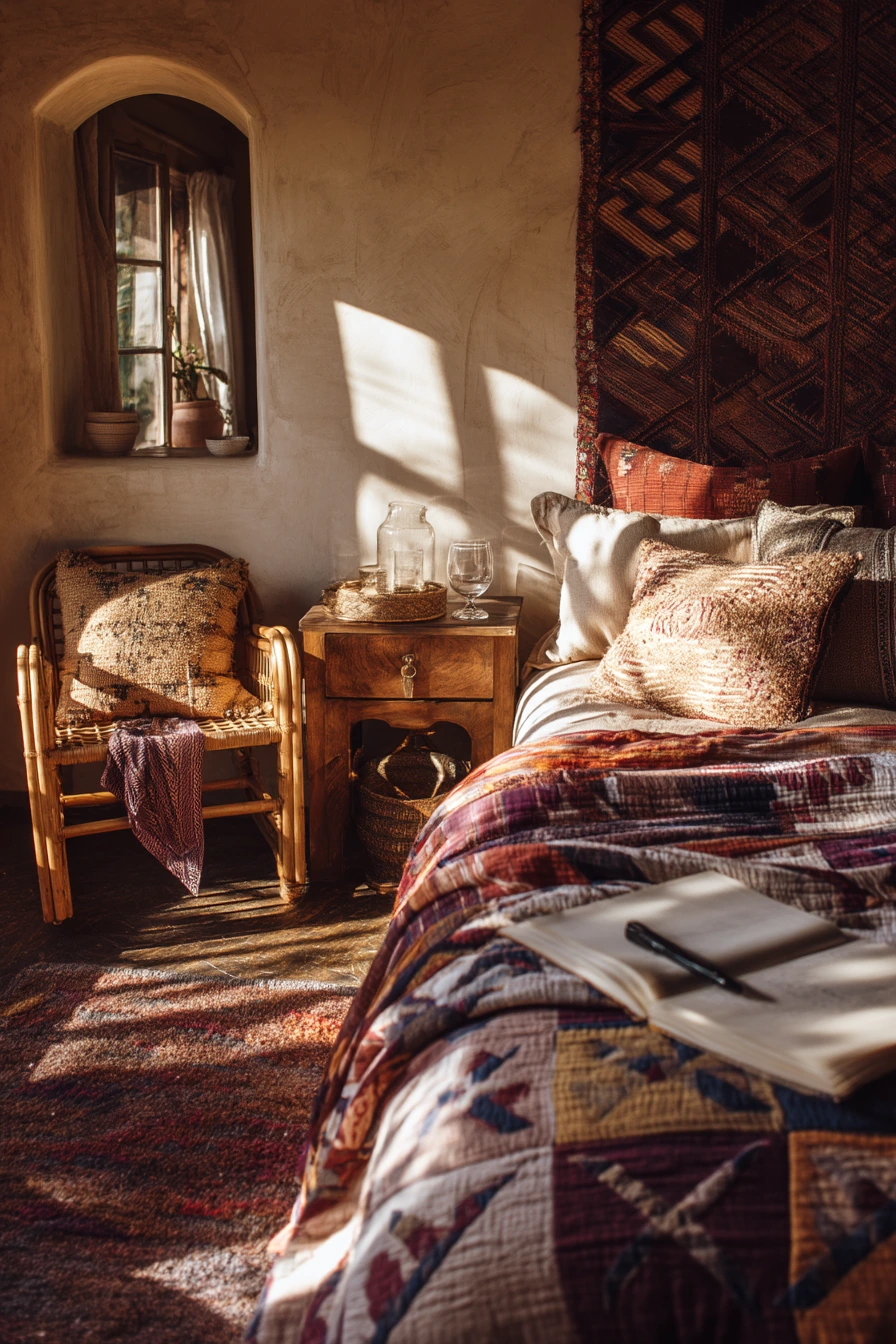
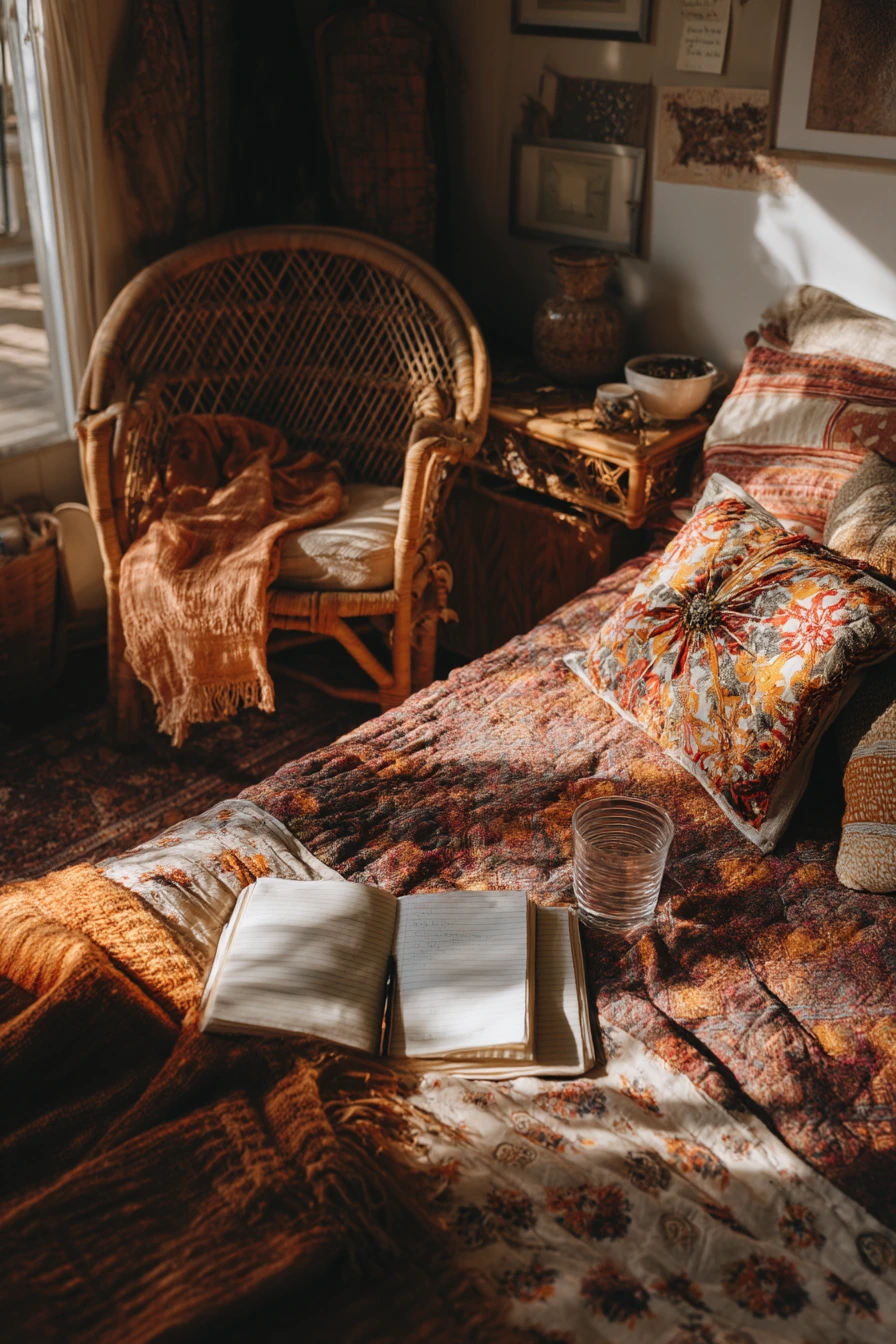
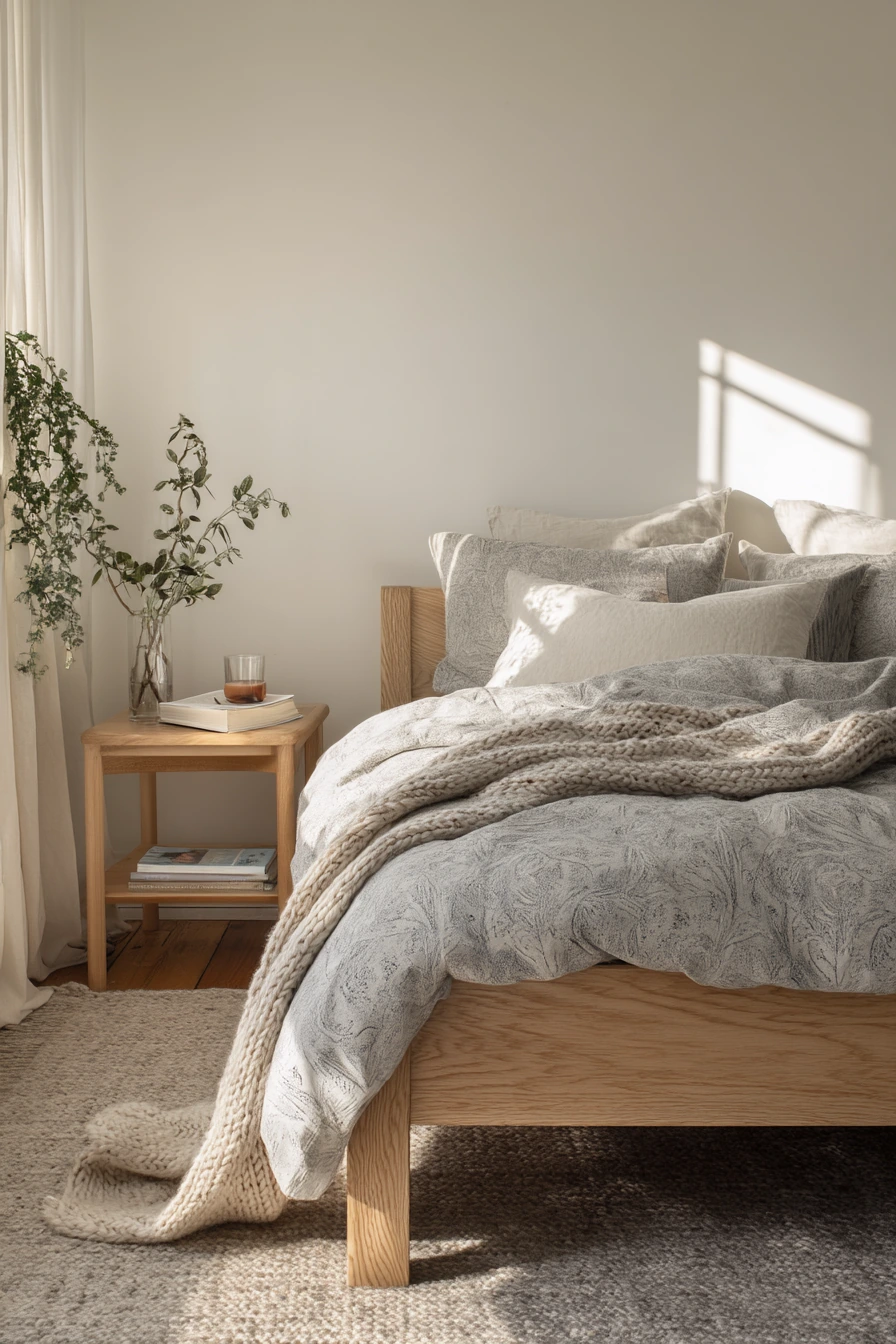
A bohemian bedroom is built on layered patterns, but it still needs a plan. Start from the floor with a tribal rug under a low bed. Then add a patterned quilt and embroidered pillows to create a rich, collected look. The key is to keep the color story consistent, even if the prints are different.
Use natural materials to keep it grounded. A rattan chair beside the bed with a draped shawl adds shape and extra texture. On the nightstand, style an open journal and pen to match the relaxed creative mood. A water glass catching sunlight adds a small sparkle and keeps the scene feeling real.
For balance, use a few solids to give the eye a break. If your quilt is busy, choose one or two pillows in a single color. Let golden afternoon light do part of the work, because it softens strong patterns and makes the room feel warm. Keep the wall decor simple, so the textiles remain the main feature.
- Start with one “anchor” pattern, usually the rug, then build upward.
- Repeat two or three colors across the rug, pillows, and quilt.
- Add solids in between patterned items to reduce clutter.
- Use mixed textures like rattan, linen, and embroidery for depth.
- Keep nightstand styling simple and functional.
Pro Design Tip: Mix pattern scales on purpose: large pattern rug, medium pattern quilt, and small pattern pillows to keep the layers readable.
Budget Considerations: Shop for rugs and pillows secondhand, and mix in a few new solid covers to make older pieces feel fresh.

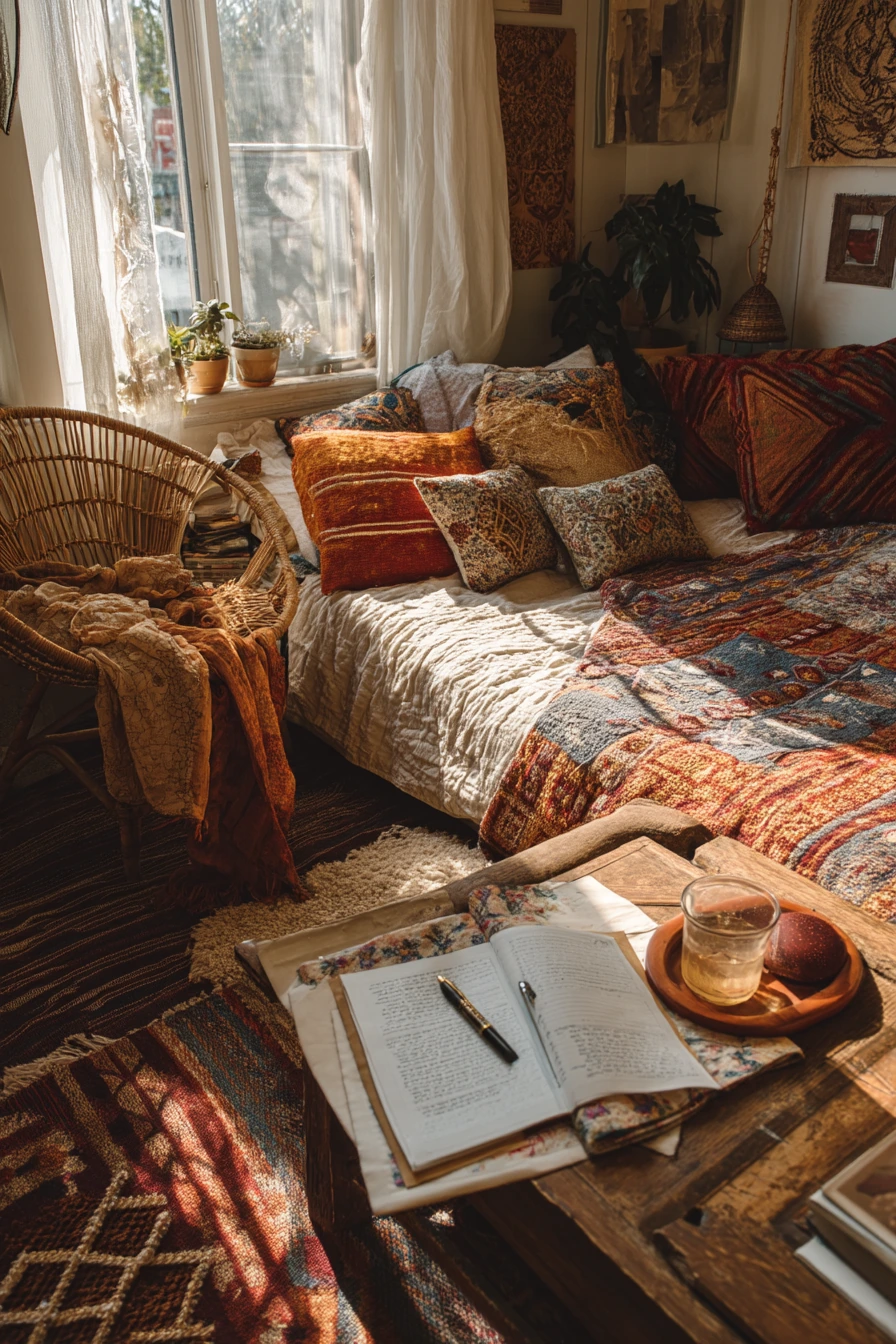
8. Romantic Canopy Bedroom with Soft Prints

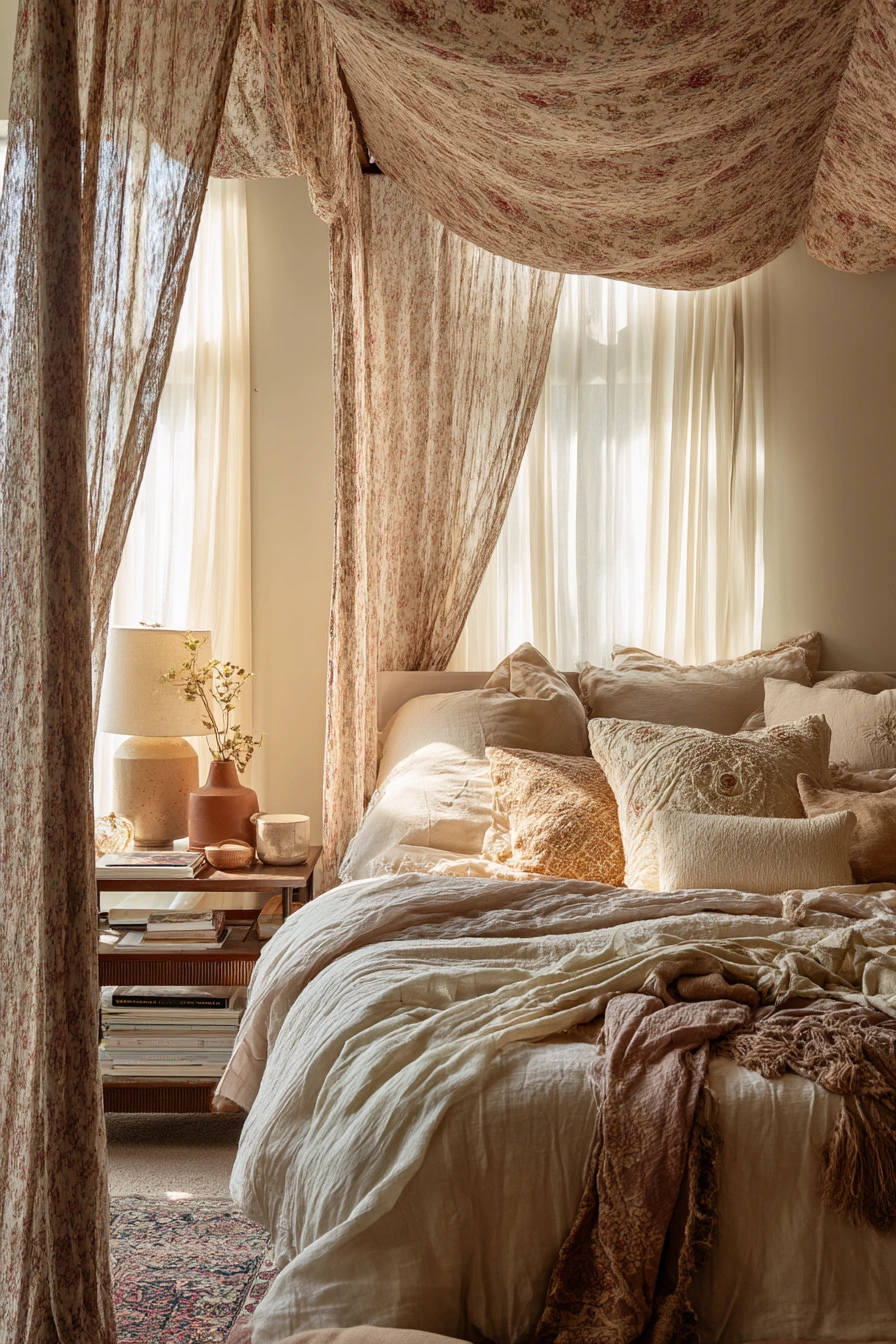
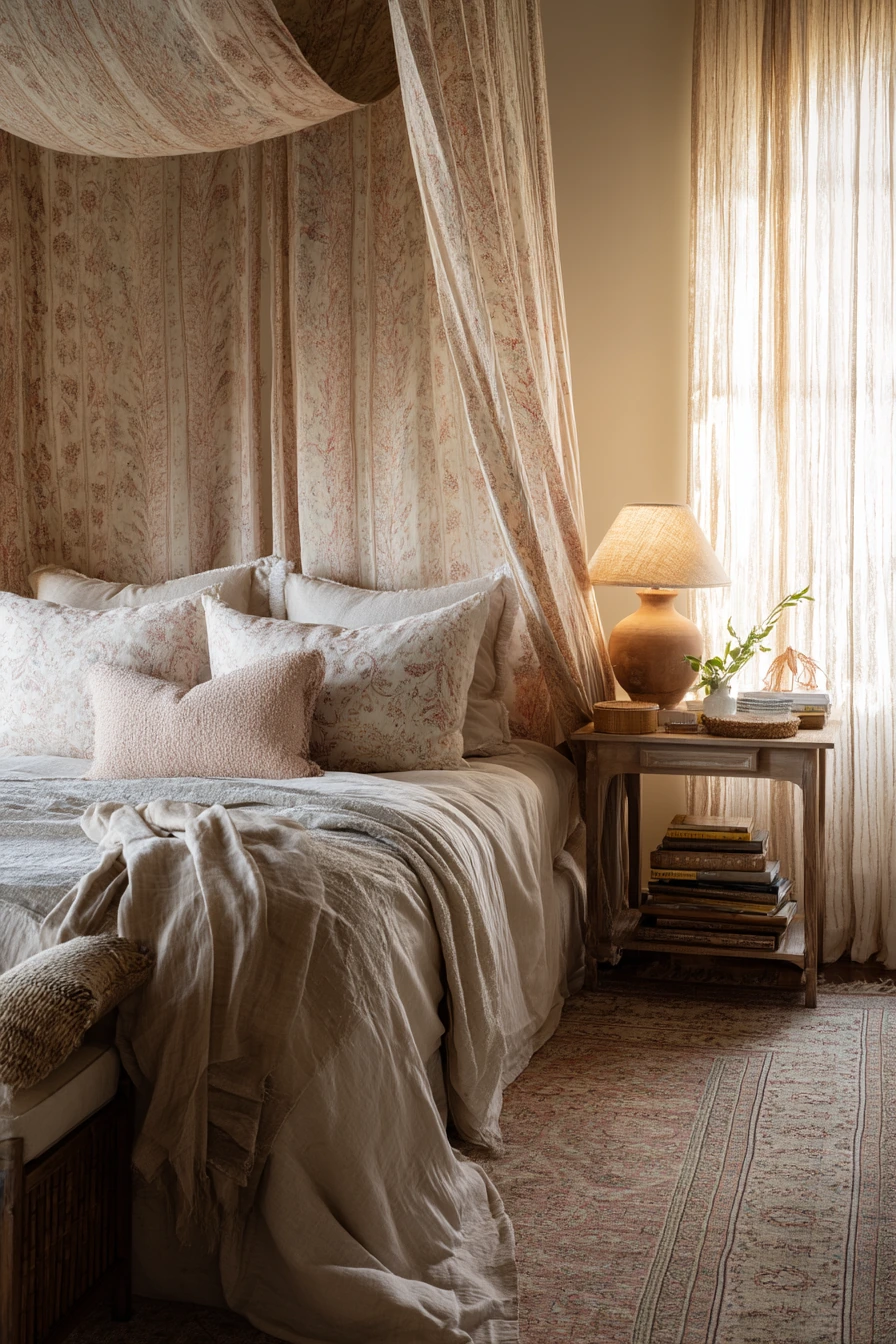
A romantic bedroom can feel dreamy without being fussy when you focus on soft patterns and flowy fabric. Patterned canopy fabric above a neutral bed adds height and movement. Keep the bed itself calm with light bedding, then layer in delicate printed pillows for gentle detail.
Add a subtle patterned rug beneath the bed so the pattern shows up in more than one place. This helps the room feel finished, especially when the throw blanket at the foot of the bed is slightly wrinkled. A bedside table with a book stack and a warm ceramic lamp keeps the mood cozy and practical.
Filtered daylight through curtains is part of this style. Choose materials that catch light well, like cotton voile, linen blends, and soft quilts. If the canopy print is noticeable, keep the rug pattern very quiet, like a faded border or tiny motif. The goal is layered textiles that feel lived-in and calm, not perfect.
- Choose a canopy fabric with a small, soft print to avoid heaviness.
- Use a neutral base on the bed to keep the room airy.
- Add two printed pillows and two solid pillows for balance.
- Pick a rug with low contrast so it does not fight the canopy.
- Use warm lighting to make the room feel gentle at night.
Pro Design Tip: Hang canopy fabric wider than the bed so it frames the space like curtains, which makes the room feel larger and softer.
Budget Considerations: Use curtain panels and a ceiling hook to create a canopy look without buying a full canopy bed frame.

9. Teen Bedroom with Bold Geometric Patterns
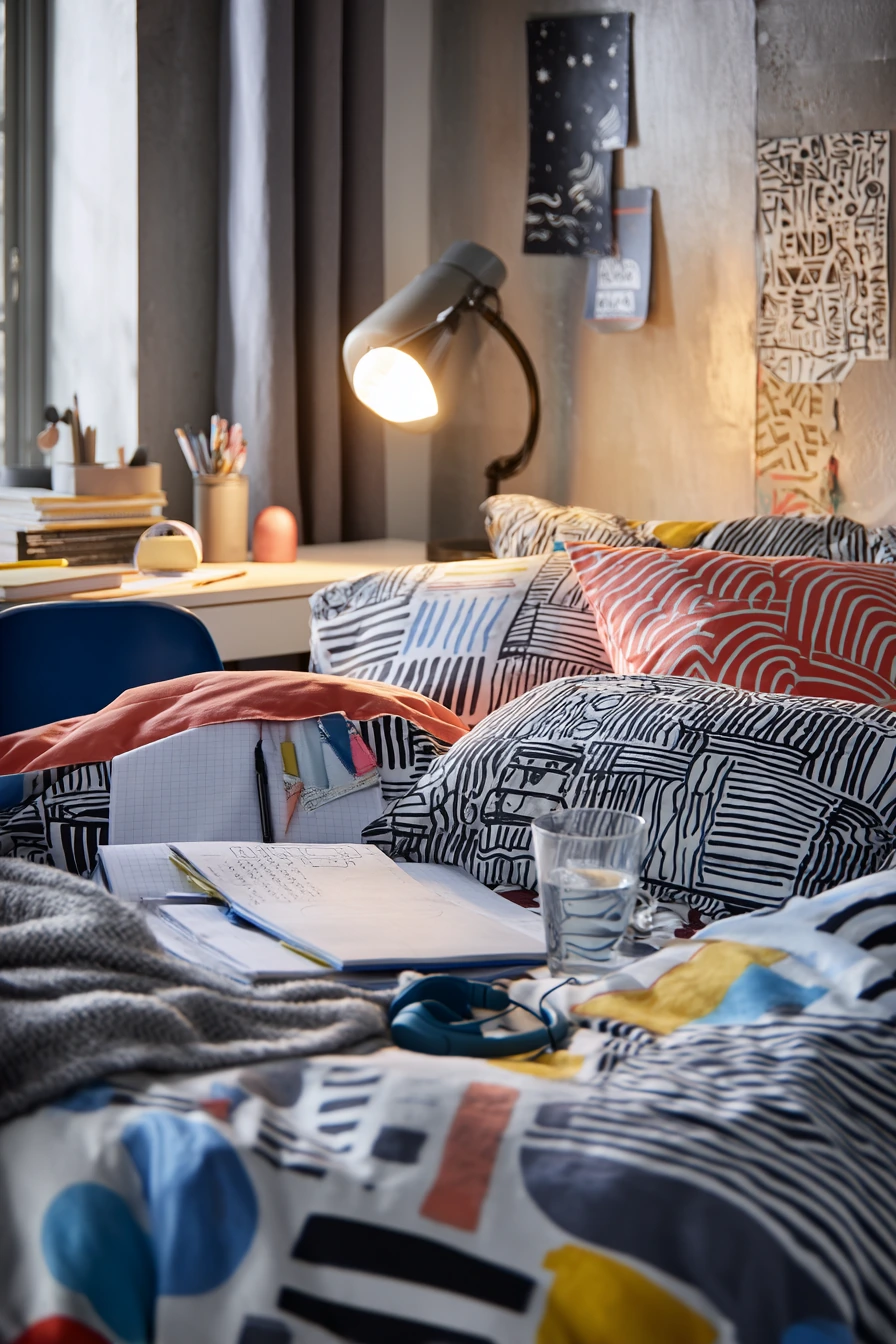
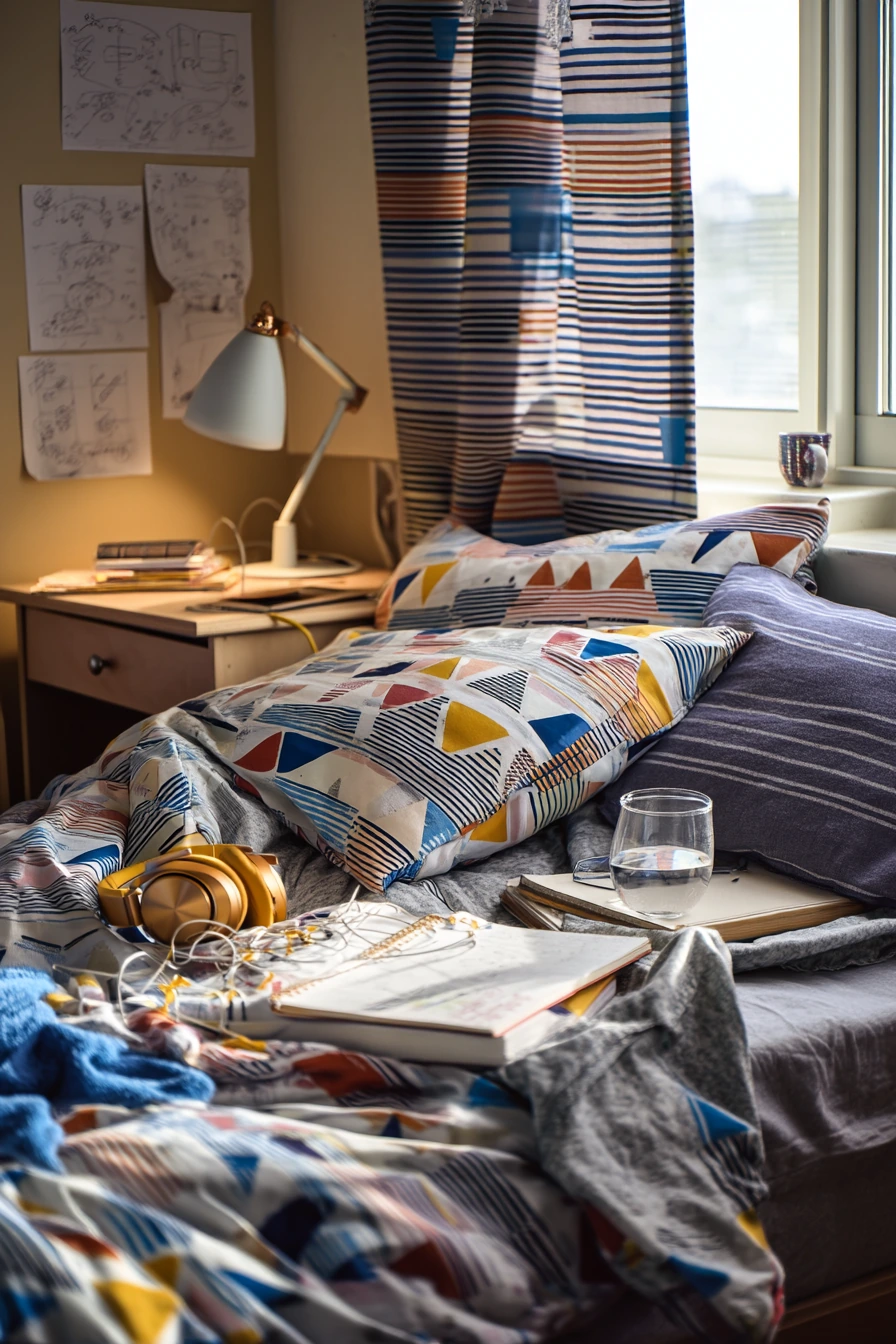
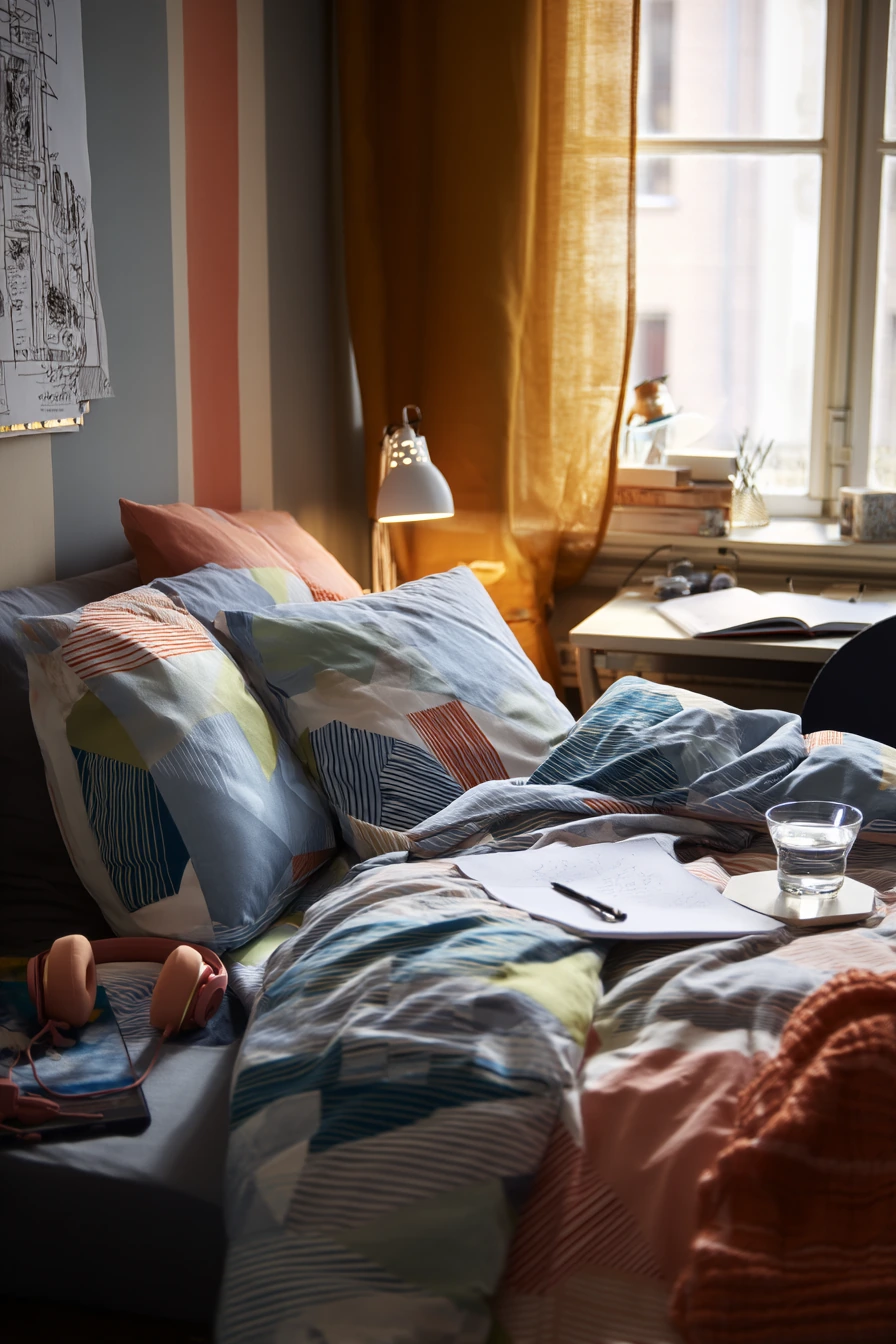
A teen bedroom can handle bold patterns when it is balanced with function. Start with bold geometric bedding, then add a striped accent wall for energy. To keep it from feeling too loud, choose one shared color between the bedding and the wall, like black and tan, navy and white, or green and cream.
Make room for daily life. A desk corner with headphones and a charging cable is normal, so plan storage and outlets around it. Add a sketchbook open on the desk beside a glass of water to support creative habits. Slightly messy blanket edges on the bed can still look good when the patterns are strong, and the colors match.
To style it, keep the rest of the room simple. Use plain curtains, a solid rug, and clean-lined furniture. Add one or two pieces of art that pull colors from the bedding. Warm desk lamp glow mixed with late afternoon window light keeps the space comfortable for homework and relaxing.
- Limit bold patterns to two main areas: bed and one wall.
- Use a solid rug to calm the floor and reduce visual noise.
- Choose storage that hides clutter so patterns can shine.
- Add one color accent with a throw or pillow to tie the room together.
- Use layered lighting for study and for wind-down time.
Pro Design Tip: When using bold geometry, keep furniture shapes simple and modern so the patterns look sharp, not messy.
Budget Considerations: Paint stripes instead of buying wallpaper, and update the room with a new duvet cover rather than replacing larger furniture.

10. Master Bedroom with Damask Wallpaper and Patterned Headboard
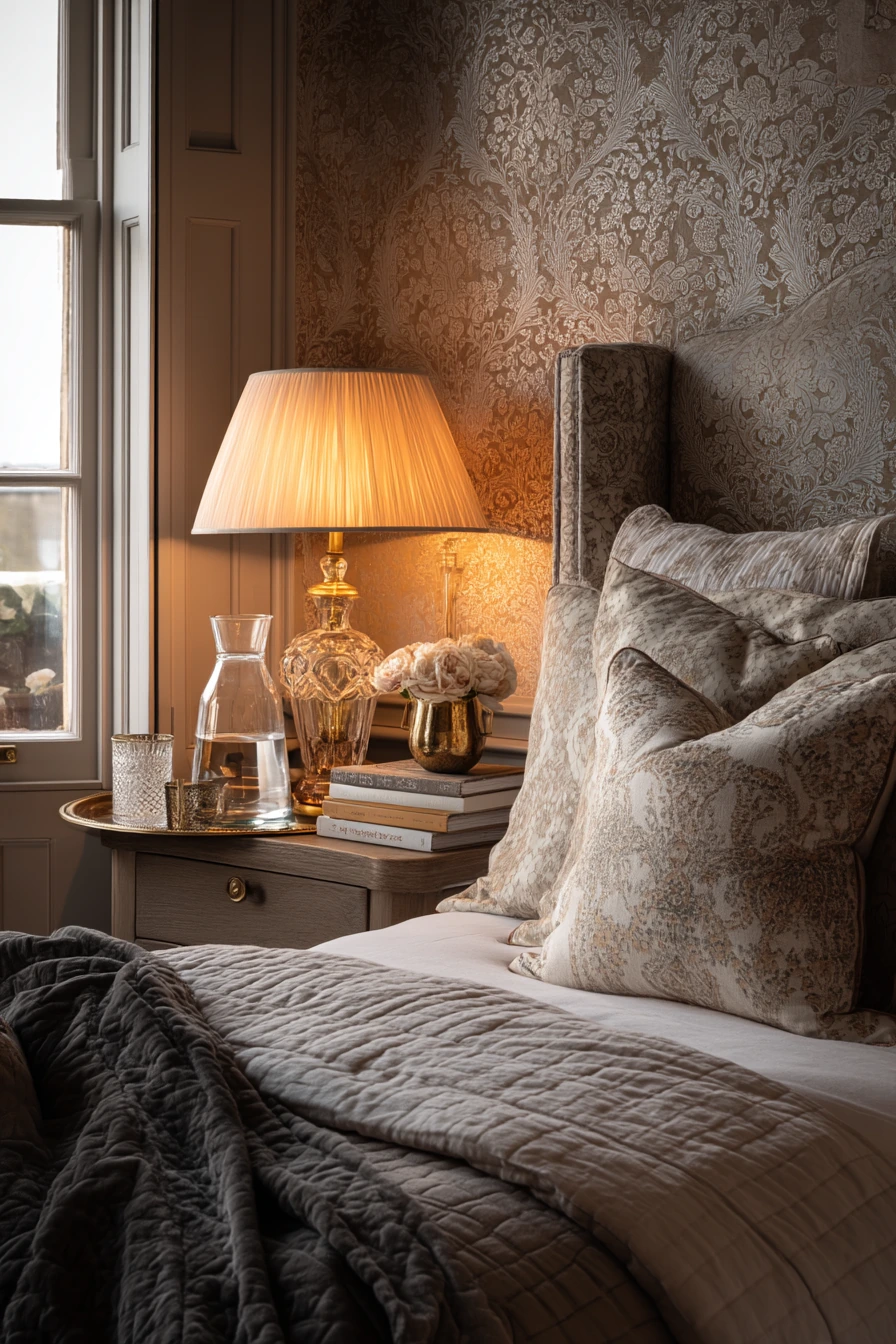
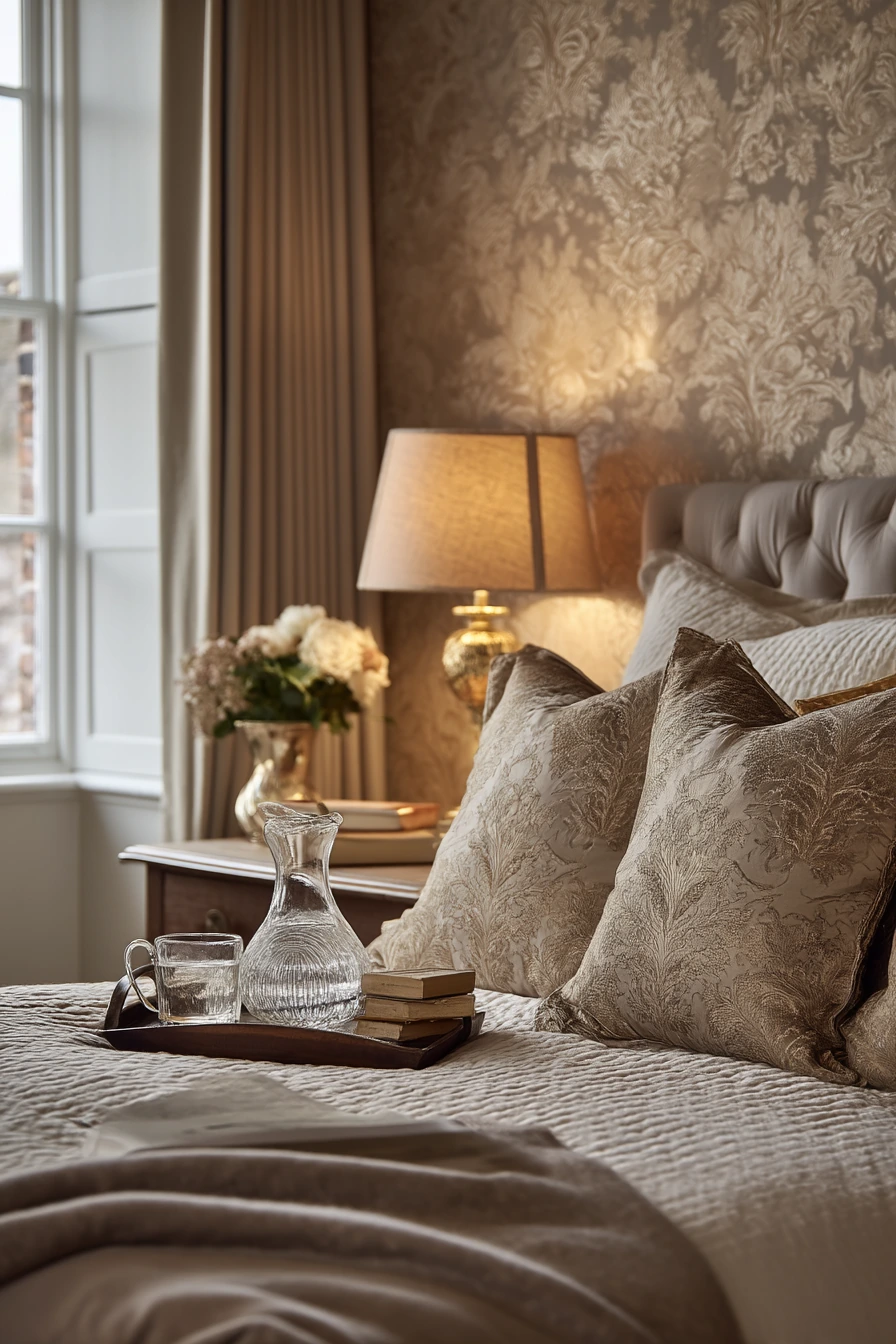
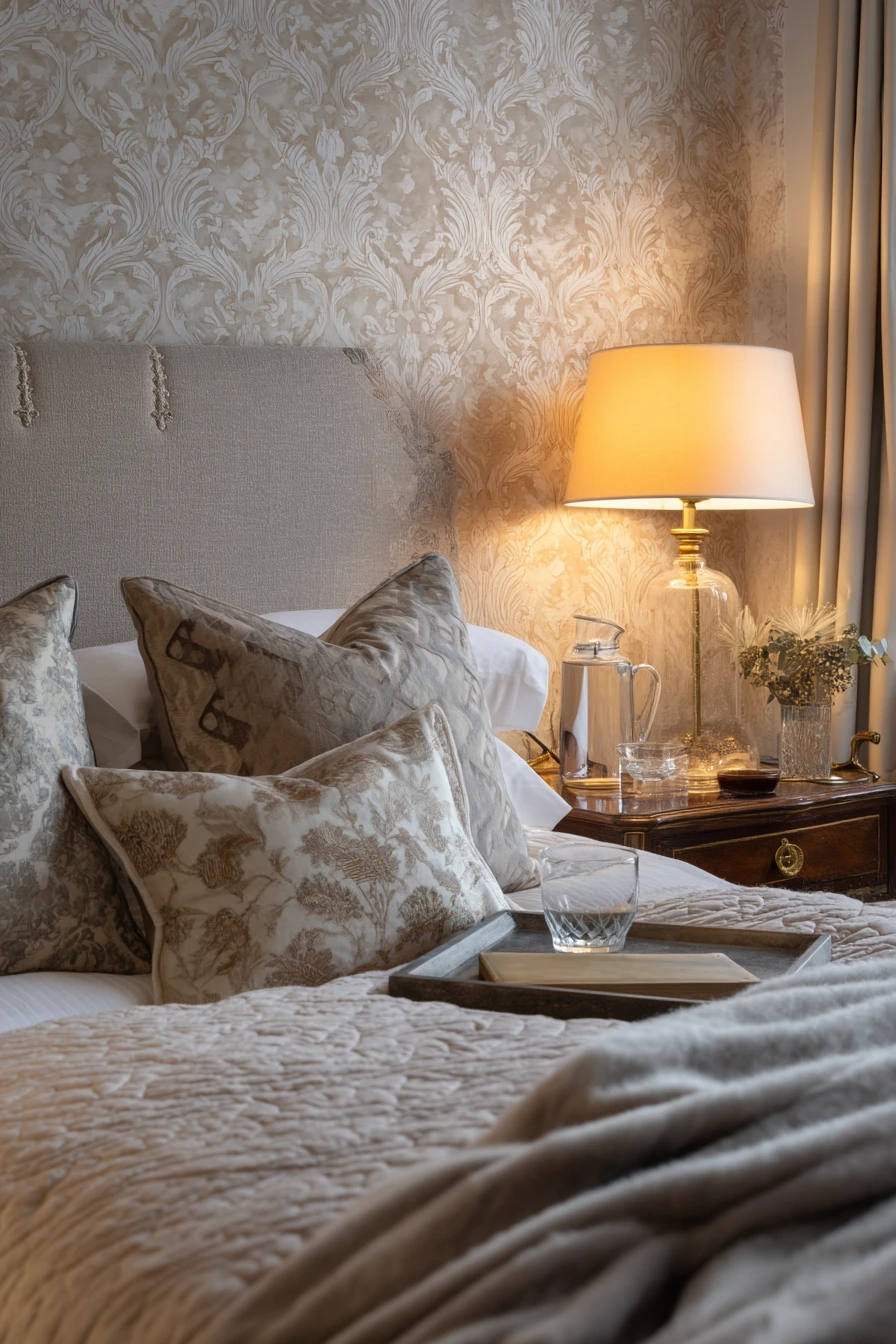
A refined master bedroom can feel calm and high-end with subtle pattern. Damask wallpaper adds depth because the design shows up more in certain light. Pair it with a patterned upholstered headboard so the pattern layering feels intentional, not random.
Keep the rest of the bedding in soft neutrals. A layered quilt in beige, cream, or warm gray helps the room feel restful. Add patterned cushions in a similar tone so they connect to the wallpaper without turning the bed into a collage. A velvet throw at the edge of the bed adds a smooth texture, even if it is gently rumpled.
Style the nightstand with a tray, a glass carafe, and a novel to keep the space functional. Warm lamplight mixed with soft evening window glow makes subtle patterns more noticeable and more relaxing. If you want an extra finish, choose curtains with a very small texture weave rather than another strong print.
- Choose damask in a low-contrast color for a quiet look.
- Match headboard fabric tones to the wallpaper, not the exact pattern.
- Use mostly solid bedding and add pattern with two to three cushions.
- Add one luxe texture like velvet or silk to deepen the layers.
- Keep bedside styling minimal and neat for a hotel-like feel.
Pro Design Tip: Use tone-on-tone patterns in master bedrooms so the room feels rich while still helping you rest.
Budget Considerations: If wallpaper is expensive, use a damask stencil or apply wallpaper only above wainscoting to cut costs.

Patterned bedroom ideas work best when you choose one main print and support it with smaller, calmer patterns. Use natural light, warm lamps, and cozy textures to keep the room soft and livable.
If you feel stuck, start with bedding first, then add a rug, then decide if you want wallpaper or an accent wall. Small changes can make a big difference.
Frequently Asked Questions
1. How do I mix different patterns in a bedroom without making the space look messy or overwhelming?
Follow the scale and contrast rule. Combine patterns of different sizes so they don’t compete: pair one large-scale pattern (like botanical wallpaper or a bold rug), one medium-scale pattern (like a striped or floral duvet), and one small-scale pattern (like dotted or geometric pillows). Keeping a tight, cohesive color palette (limiting your room to 2 or 3 core colors) will instantly unify mixed prints.
2. What is the best way to start introducing patterns if my bedroom is currently all neutral?
Start small with easy, low-commitment items before committing to permanent features like wallpaper. Swap out your solid throw pillows for a couple of patterned ones, add a patterned runner or area rug, or change your duvet cover. Once you feel comfortable with those layers, you can move on to larger statements like accent walls.
3. How do I balance a busy patterned wallpaper or accent wall with my bedding and furniture?
Let your accent wall be the star of the show. If your wall features a high-contrast or busy print, keep your bedding mostly solid or choose very simple, quiet prints (like subtle stripes or small-scale dots). Pairing patterned walls with warm wood or neutral furniture also gives the eye a place to rest and keeps the room feeling calm.
4. How can I get a high-end, designer pattern-layered look on a tight budget?
Focus on high-impact, renter-friendly DIYs. Instead of expensive traditional wallpaper, use peel-and-stick wallpaper or stencils behind the bed. You can also mix budget-friendly solid bedding with a few statement patterned pillow shams, or layer a smaller geometric rug over a plain carpet remnant to anchor the space for less.
5. How do I choose a lighting strategy that complements a bedroom with rich patterns?
Layered lighting is key to preventing patterns from looking harsh or flat. Combine soft, diffused daylight through sheer window treatments with warm-toned evening lighting (around 2700K) from bedside table lamps or wall sconces. Warm, amber glow softens lines and makes complex patterns feel cozy and inviting at night.
Would you like me to help generate social media captions or Pinterest pin text to go along with this patterned bedroom guide?