
Japandi bedroom ideas mix Japanese calm with Scandinavian comfort. The look is simple, warm, and easy to live with. Think low beds, natural wood, linen bedding, and soft light.
In this guide, you will see 10 Japandi bedroom themes you can copy. Each one uses practical details like shoji-style panels, tatami-style rugs, paper lanterns, and clean storage.
You will also get small styling steps for each space, plus a pro design tip and a budget note. Use these ideas to make your bedroom feel quieter, airier, and more organized.
If you are coming from Pinterest, save the layouts you like, then follow the checklists to recreate them with items you already own.
1. Japandi Bedroom With Low Oak Bed and Shoji-Inspired Panels

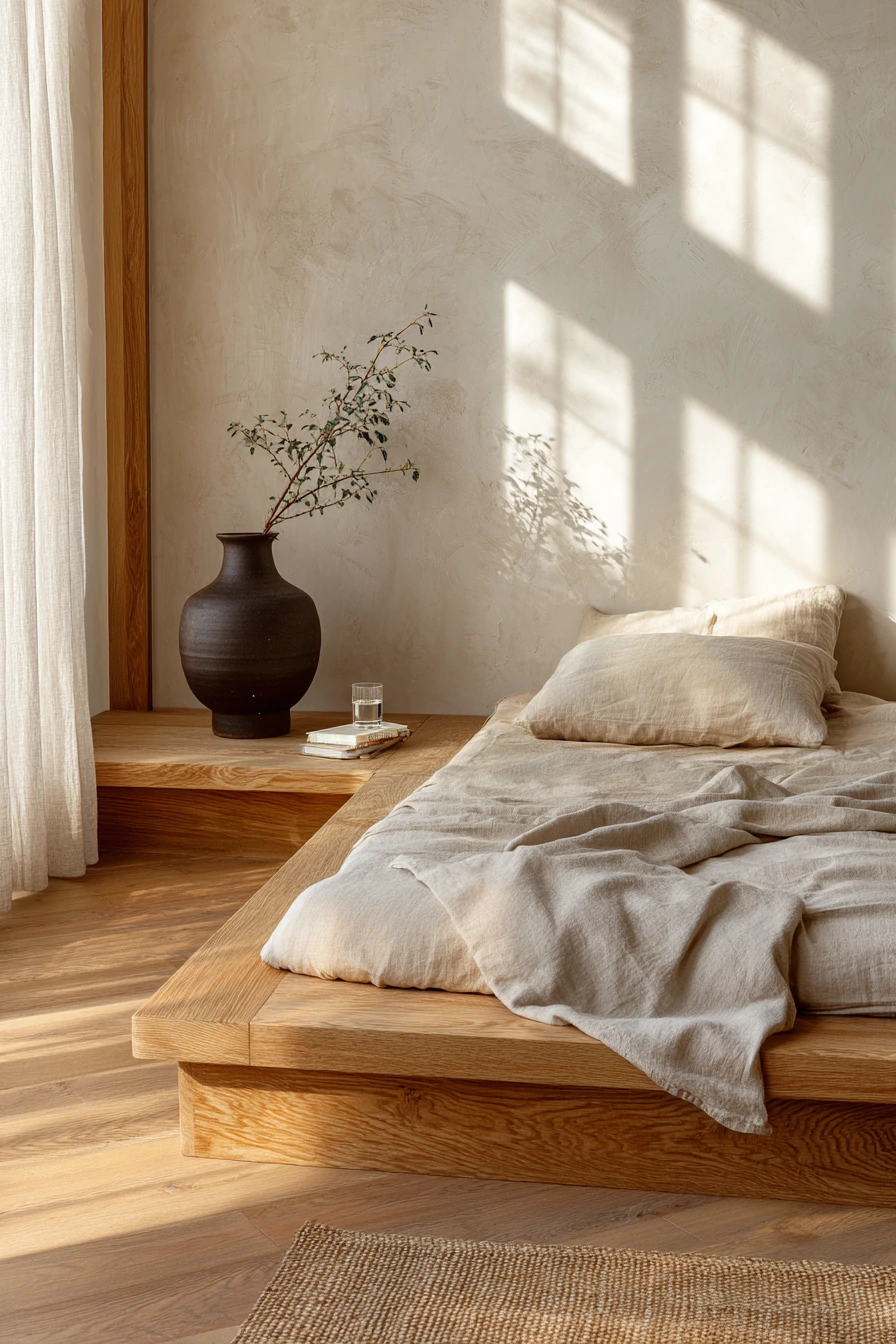
This Japandi bedroom idea starts with a low oak platform bed and linen bedding. The room feels airy because the shapes are simple and the palette stays neutral. Shoji-inspired wall panels add calm structure without making the space feel busy.
Small lived-in details make it feel real, not staged. A clay vase with a single branch, a bedside book stack, and a half-full water glass suggest a quiet morning routine. A slightly wrinkled throw and soft plant shadows on a plaster wall add texture, so the minimal look does not feel cold.
To style this in your own home, keep the bed low and let the wood grain show. Use one or two natural materials around the bed, like a woven jute rug and a matte ceramic vase. Aim for gentle sun-drenched window light by using light-filtering curtains instead of heavy drapes.
- Choose linen bedding in warm white, sand, or light gray for an easy base.
- Add shoji-style panels as a headboard feature, screen, or closet cover.
- Place a jute rug so it extends at least 18 inches around the bed.
- Keep the nightstand surface simple: one book stack, one glass, one vase.
- Include one plant nearby to cast soft shadows and add life.
Pro Design Tip: Repeat the same wood tone (oak) in at least two places, like the bed and a small stool, to make the room feel intentional and calm.
Budget Considerations: Shoji-style panels can be pricey; use a DIY wood grid with rice paper look film, or try a simple folding screen to get the same effect.

2. Small Japandi Bedroom in a City Apartment With Walnut Bed

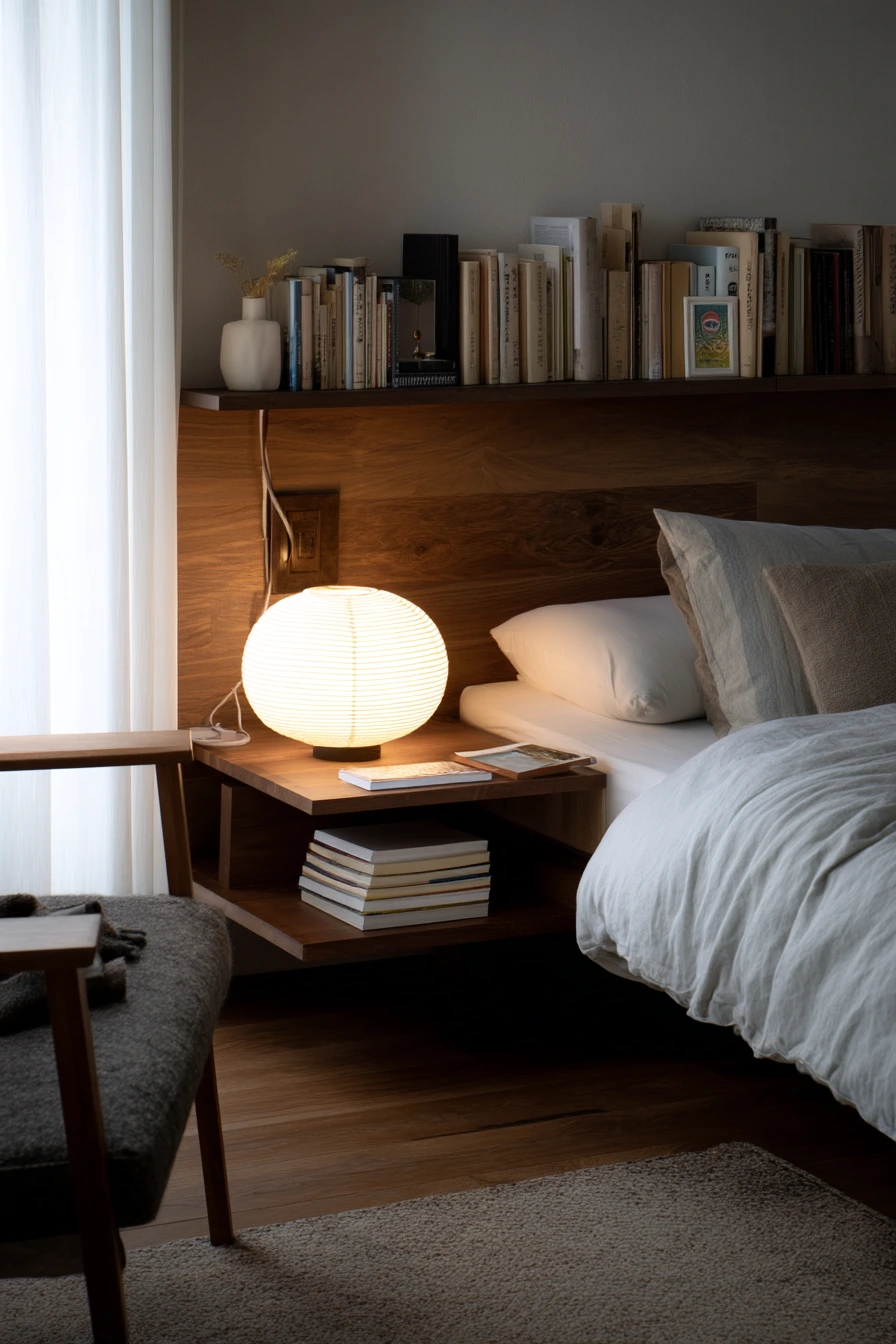
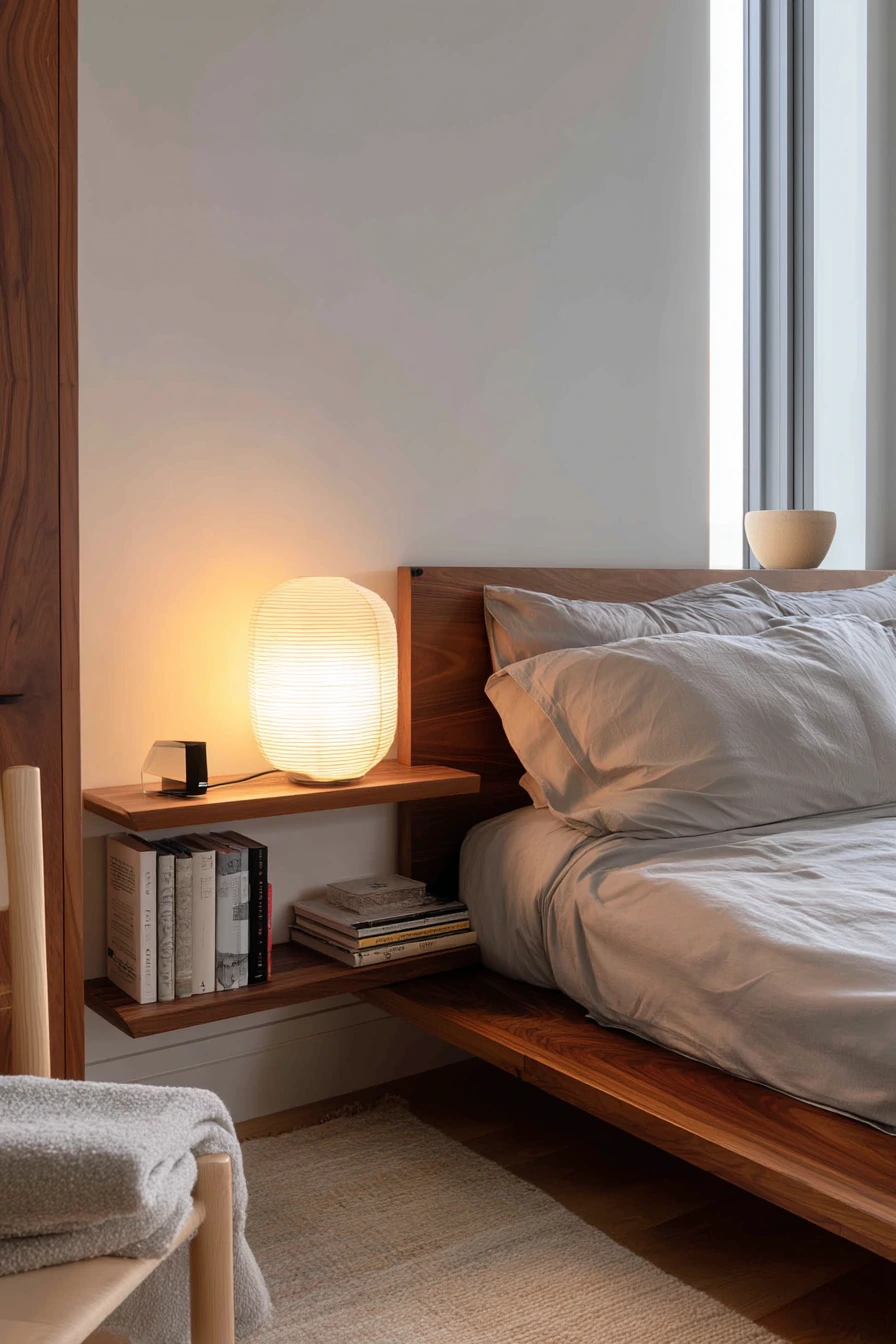
A small Japandi bedroom can still feel open if you keep the furniture low and the floor clear. A low walnut bed anchors the room, while a floating wood shelf nightstand saves space. The look stays uncluttered, which is key in a city apartment.
Lighting sets the mood here. A paper lantern lamp gives a soft glow that mixes well with faint window daylight. Add real-life touches like folded pajamas on a chair and a phone charging cable tucked near an outlet. These details keep the room practical while still calm.
To style this layout, pick a calm minimalist palette and limit the number of items on display. Use stacked design books as a single decor moment instead of many small objects. A textured tatami-style rug helps define the sleep zone and adds warmth underfoot without adding visual noise.
- Mount a floating shelf nightstand so the floor stays easy to clean.
- Hide cords with a simple cable box or paintable cord cover.
- Use one chair as a “landing spot” for pajamas, not a pile zone.
- Choose a paper lantern or globe shade for softer, flatter light.
- Layer a tatami-style rug under the bed to make a small room feel grounded.
Pro Design Tip: In tight bedrooms, keep the top of your nightstand at mattress height so the setup looks clean and balanced.
Budget Considerations: A real walnut bed costs more; look for walnut veneer or a stained wood frame and spend the savings on good linen sheets.
3. Japandi Bedroom With Plant Nook, Bonsai, and Pale Wood Frame
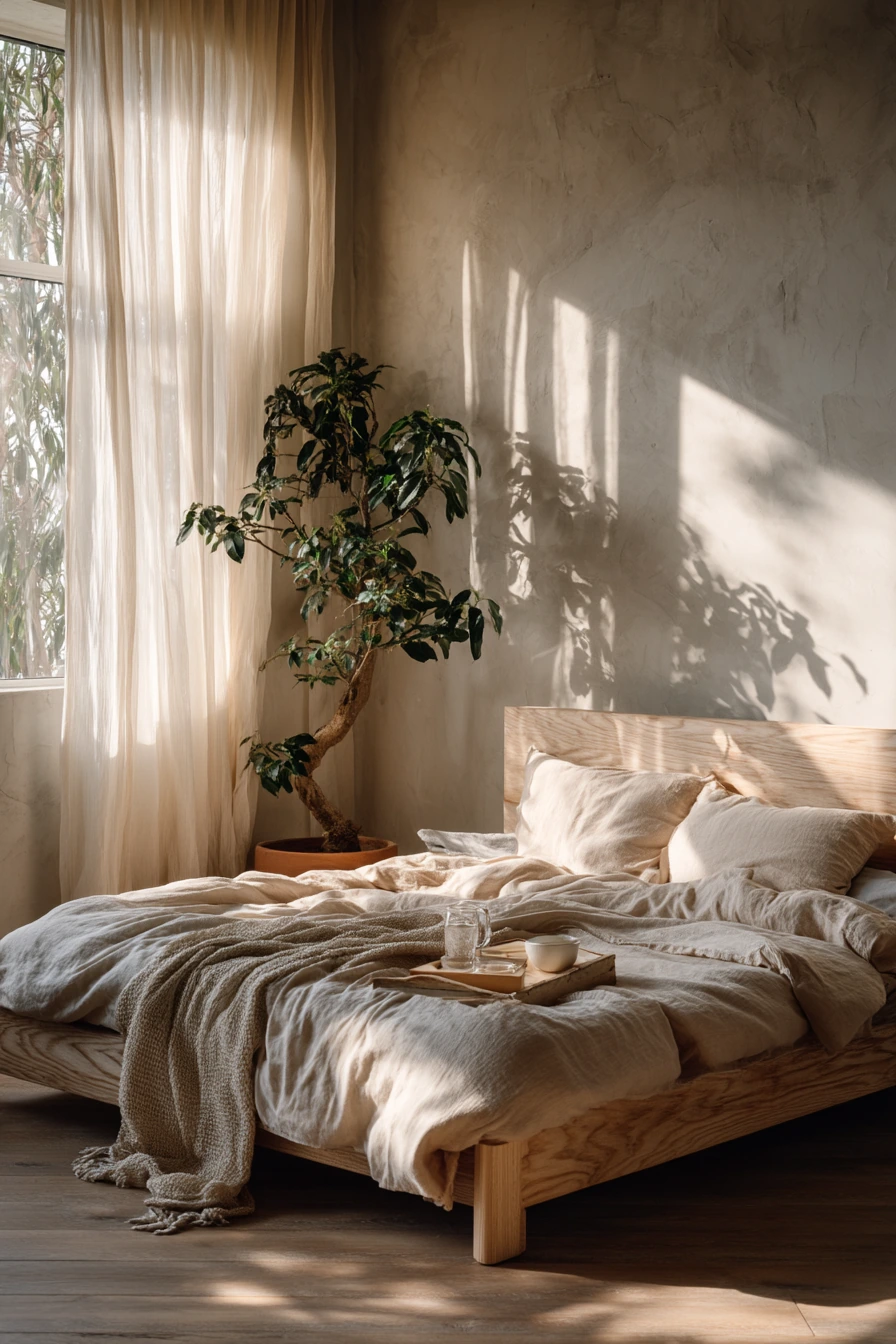
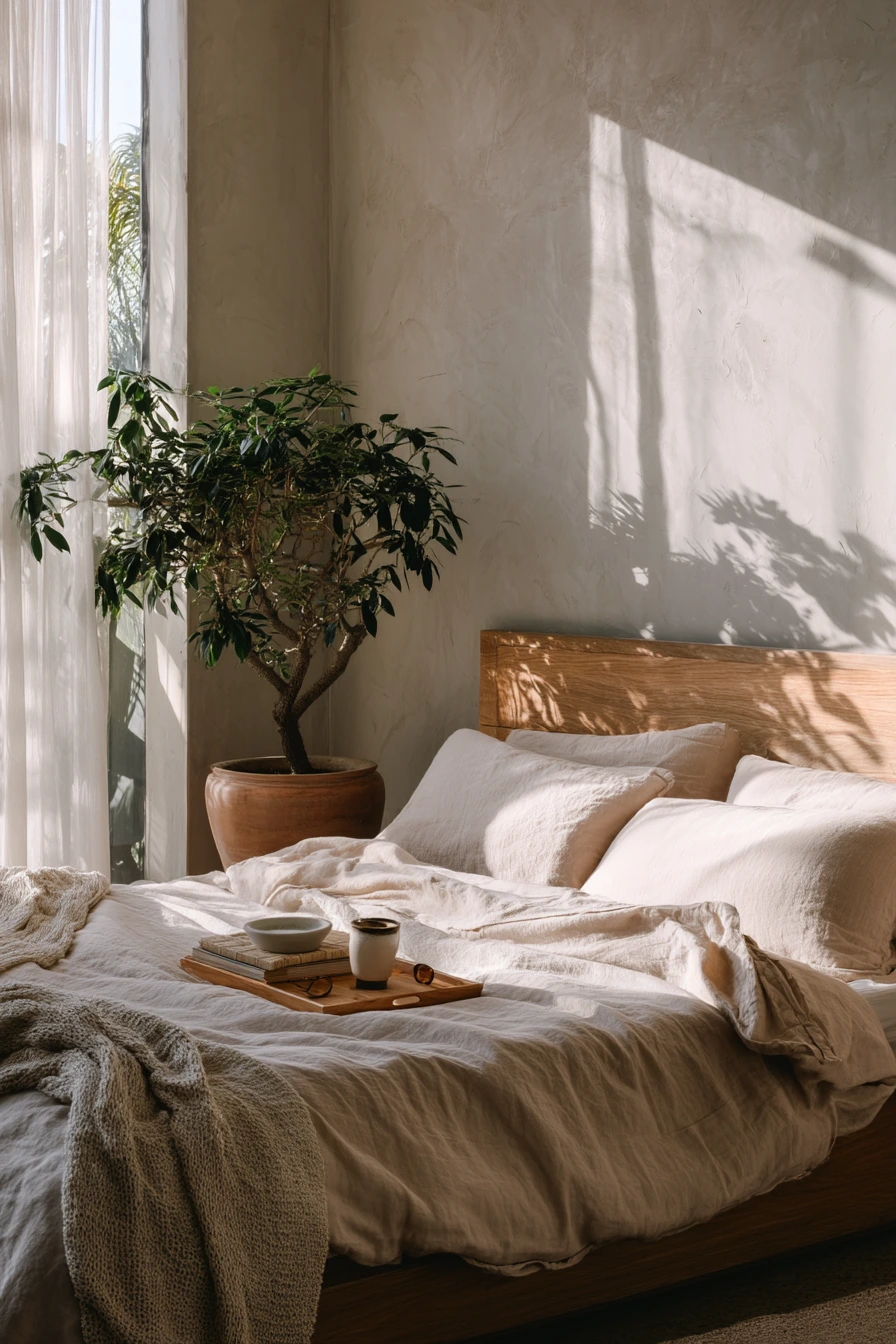
This Japandi bedroom idea uses a pale wood bed frame with a linen duvet for a light, calm base. The room feels fresh because the textures do the work instead of bold color. A rumpled knit throw at the foot of the bed adds a soft layer that still fits the minimal style.
A plant nook by the window makes the space feel alive. Pair a small bonsai with a taller fiddle leaf fig to create height contrast. Soft diffused sunlight through sheer curtains keeps the mood gentle and helps the plants look their best. Plant shadows drifting across a plaster wall add depth without needing wall art.
To recreate this look, keep decor low and useful. A ceramic tray with glasses and a book is a simple morning setup. Choose ceramics with a matte finish and rounded shapes. If your room is small, limit plants to two or three so the space stays airy.
- Use sheer curtains to soften daylight and protect fabric and wood.
- Group plants by the window to avoid scattered visual clutter.
- Pick one knit throw in a neutral tone to add texture, not contrast.
- Keep bedside items on a single tray to look tidy fast.
- Choose pottery in clay, off-white, or charcoal for a calm mix.
Pro Design Tip: Mix plant sizes on purpose: one tall plant, one small sculptural plant, and empty space between them for a clean Japandi shape.
Budget Considerations: Real bonsai can be expensive; try a small juniper or a simple potted ficus and use a nice ceramic pot to upgrade the look.
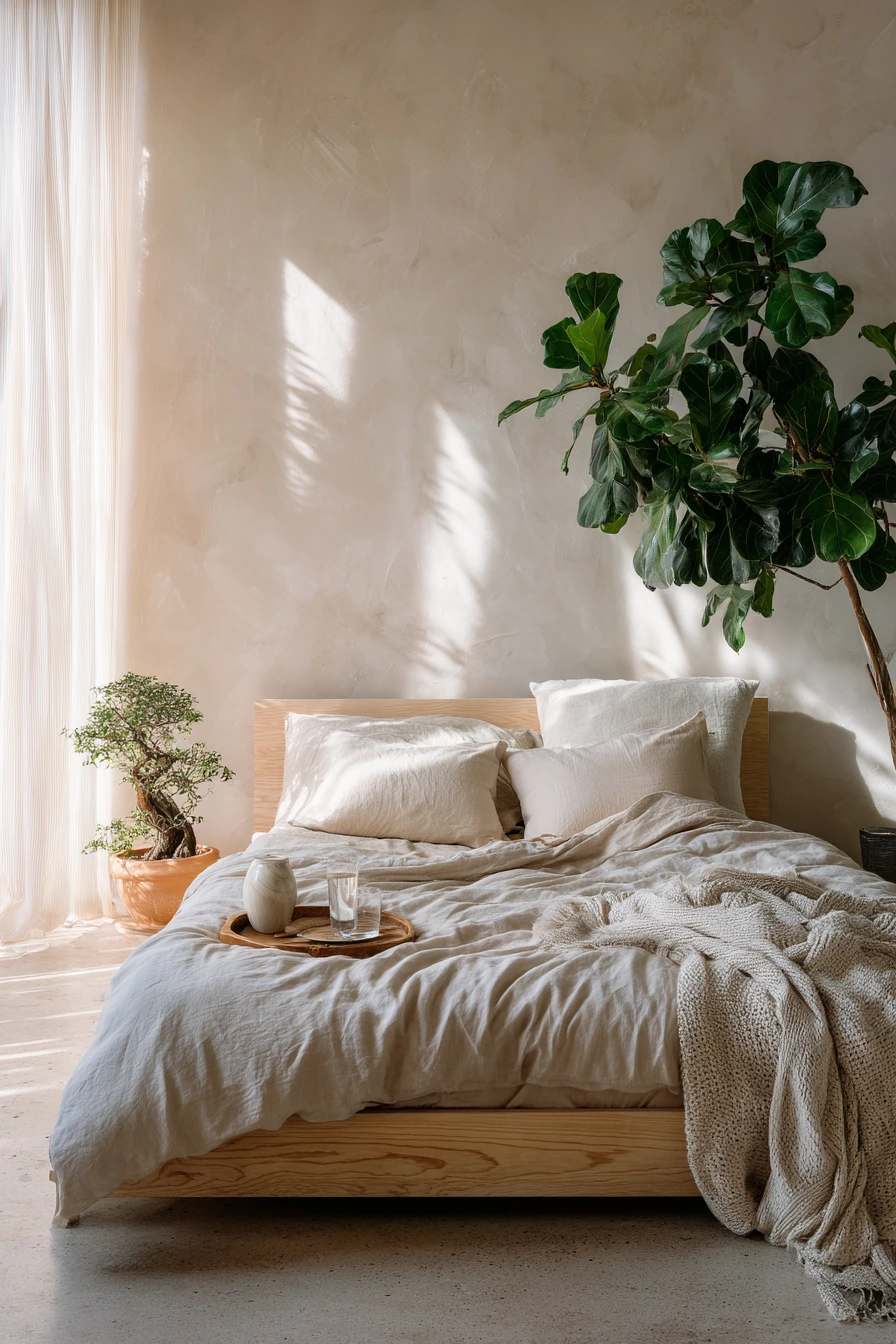
4. Japandi Bedroom at Night With Charcoal Linen and Paper Lantern Glow
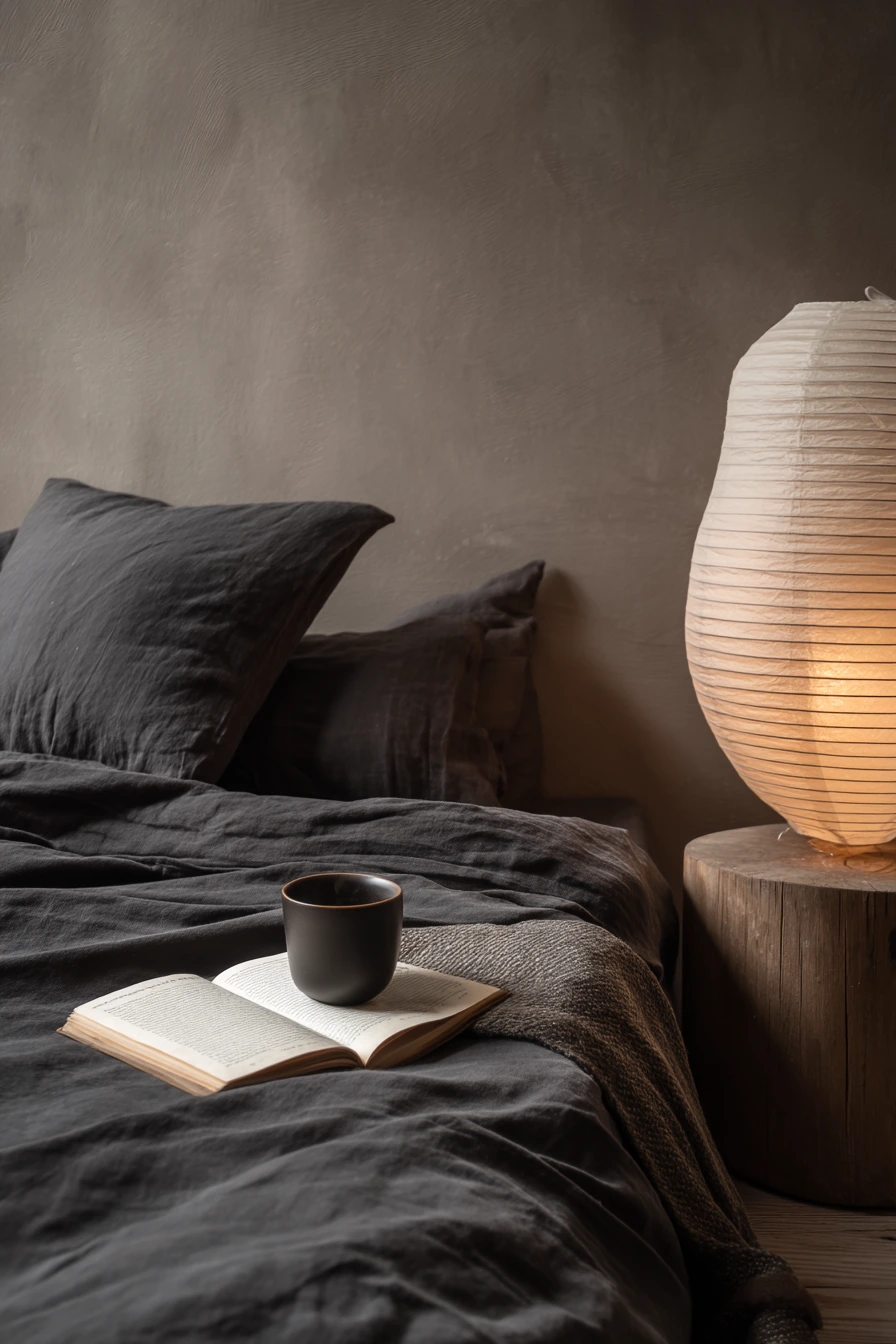

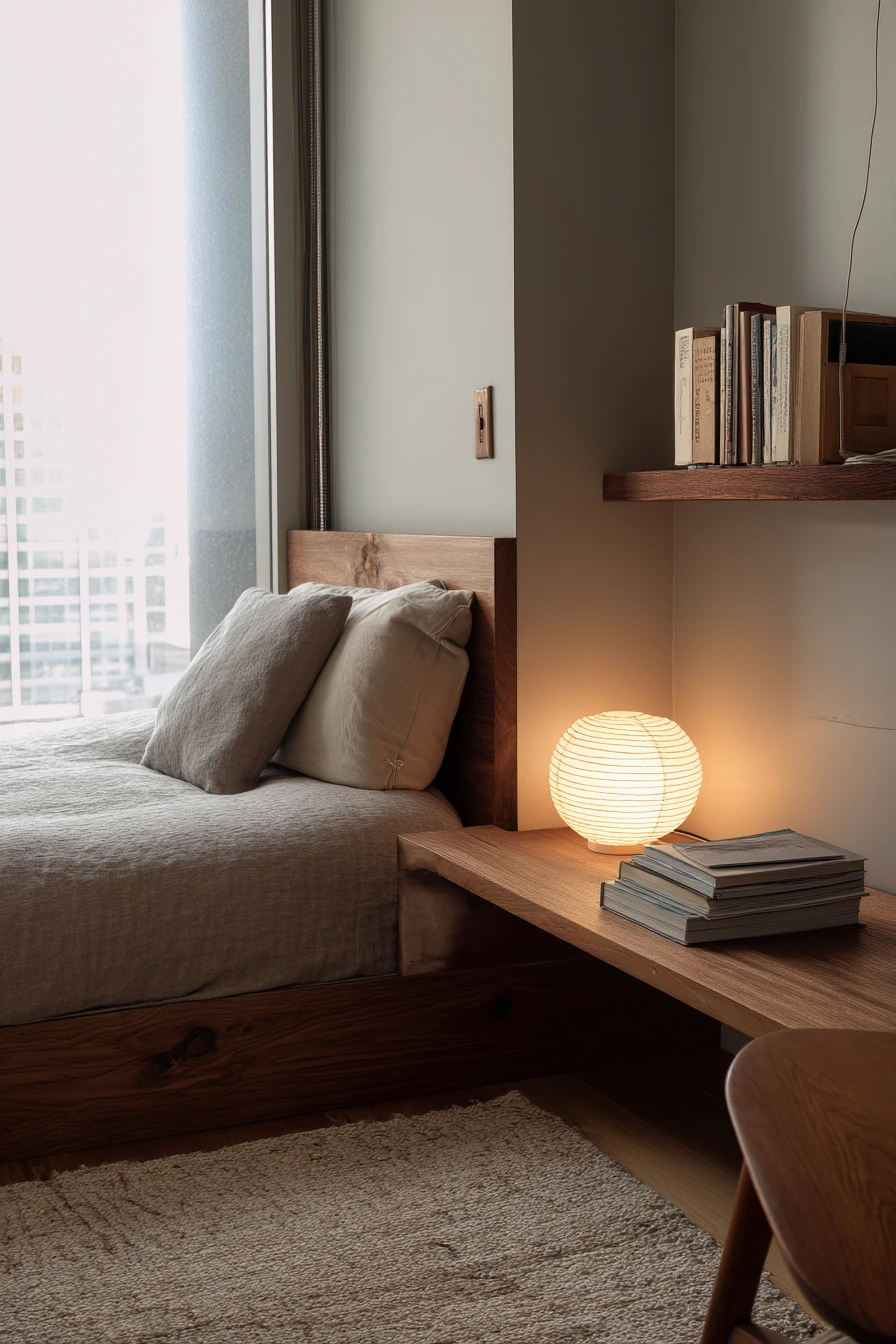
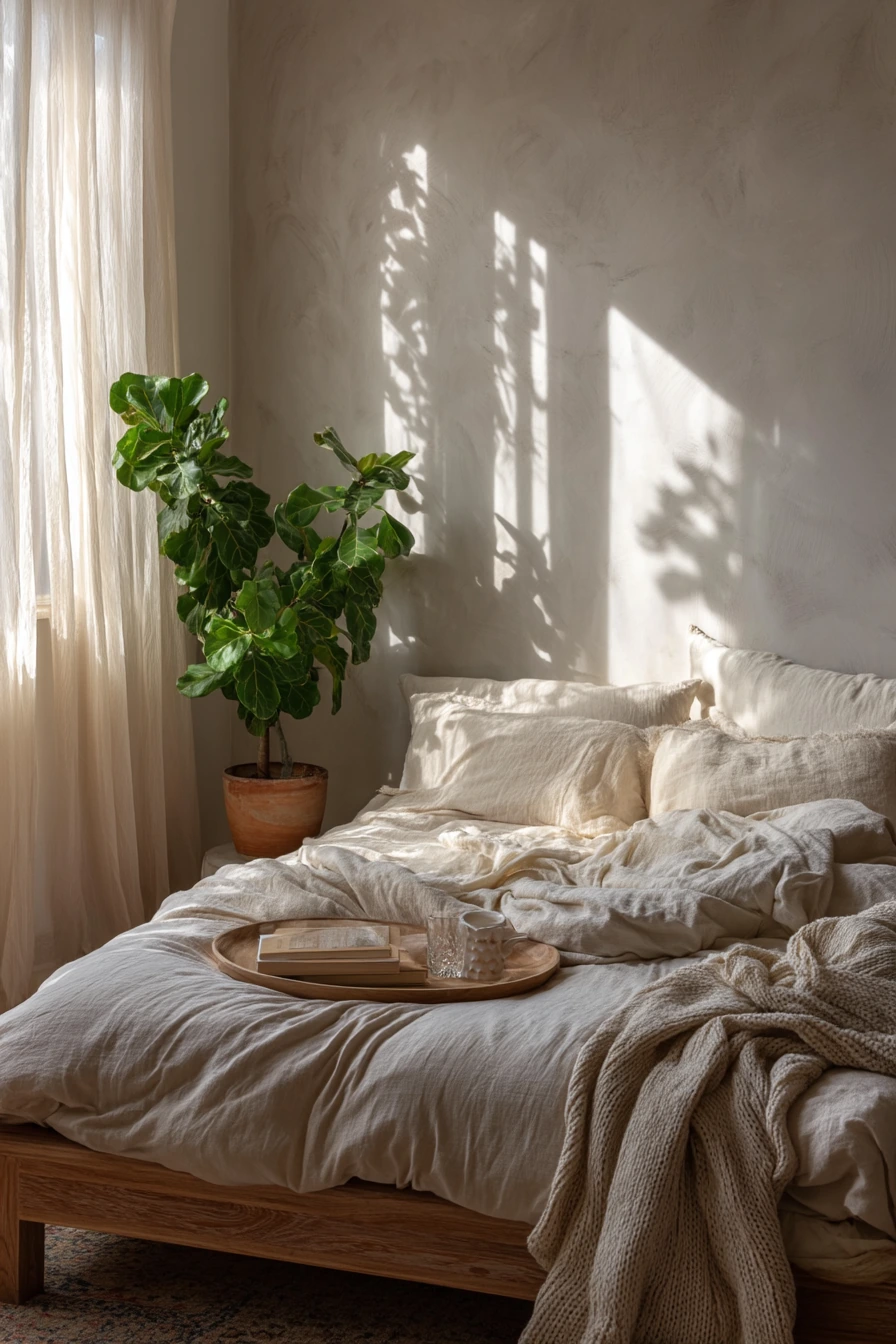
A Japandi bedroom at night should feel quiet and soft, not bright. Start with a low ash wood bed and charcoal linen bedding. Darker linens can still feel light when the rest of the room stays simple and matte, like plaster walls and natural wood.
Warm lighting is the main styling tool here. A sculptural paper lantern casts an amber glow that feels gentle on the eyes. Add a ceramic tea cup on a wooden stool and an open book beside the pillow for an easy wind-down setup. A wool throw, slightly creased, keeps the look relaxed and real.
To style this mood, reduce sharp contrasts and avoid shiny finishes. Use one main lamp and skip overhead lighting at night. Keep the bedside surface clear except for one or two items you use daily. This makes the room feel more restful and helps you keep the habit.
- Choose charcoal or deep gray linen to add depth without patterns.
- Use a paper lantern or fabric shade for softer shadows.
- Keep a small stool as a flexible table for tea and books.
- Pick a wool or cotton throw in a close shade to the bedding.
- Use matte ceramics to match plaster and wood textures.
Pro Design Tip: Use warm bulbs around 2700K and place the lamp lower than eye level to create a calm, evening-only glow.
Budget Considerations: Designer lanterns cost more; a basic rice paper shade and a warm LED bulb can give a similar look for less.


5. Minimal Japandi Bedroom With Wall-Length Oak Storage Cabinet


This minimal Japandi bedroom focuses on smart storage. A wall-length oak storage cabinet keeps clutter hidden, which is a big part of the calm look. A low bed centered on a textured plaster wall creates a balanced focal point without needing extra decor.
Styling is about a few clear moments. Folded blankets on an open shelf add warmth and make the cabinet feel less heavy. A ceramic incense tray brings a simple ritual to the room. A small stack of magazines near the mattress edge adds a lived-in touch, while linen curtains drifting in the light keep the space soft.
To copy this, plan storage first, then decorate with what you use. Keep shelves at eye level mostly empty so the room can breathe. Use matching hangers and bins inside the cabinet to keep it easy to maintain. Let gentle window light graze the wood surfaces by using light curtains and keeping the window area clear.
- Choose flat-front cabinetry to keep lines clean and modern.
- Store daily items behind doors and display only a few folded textiles.
- Center the bed and leave equal space on both sides if possible.
- Use one scent item, like incense, and keep it in a ceramic tray.
- Stack reading materials in one neat pile, not scattered.
Pro Design Tip: Keep cabinet hardware minimal or use push-latch doors so the storage wall reads as one calm wood surface.
Budget Considerations: Custom cabinetry is costly; use ready-made wardrobes placed side by side and add matching wood trim to look built-in.


6. Japandi Bedroom With Layered Tatami-Style Mats and Bamboo Stool
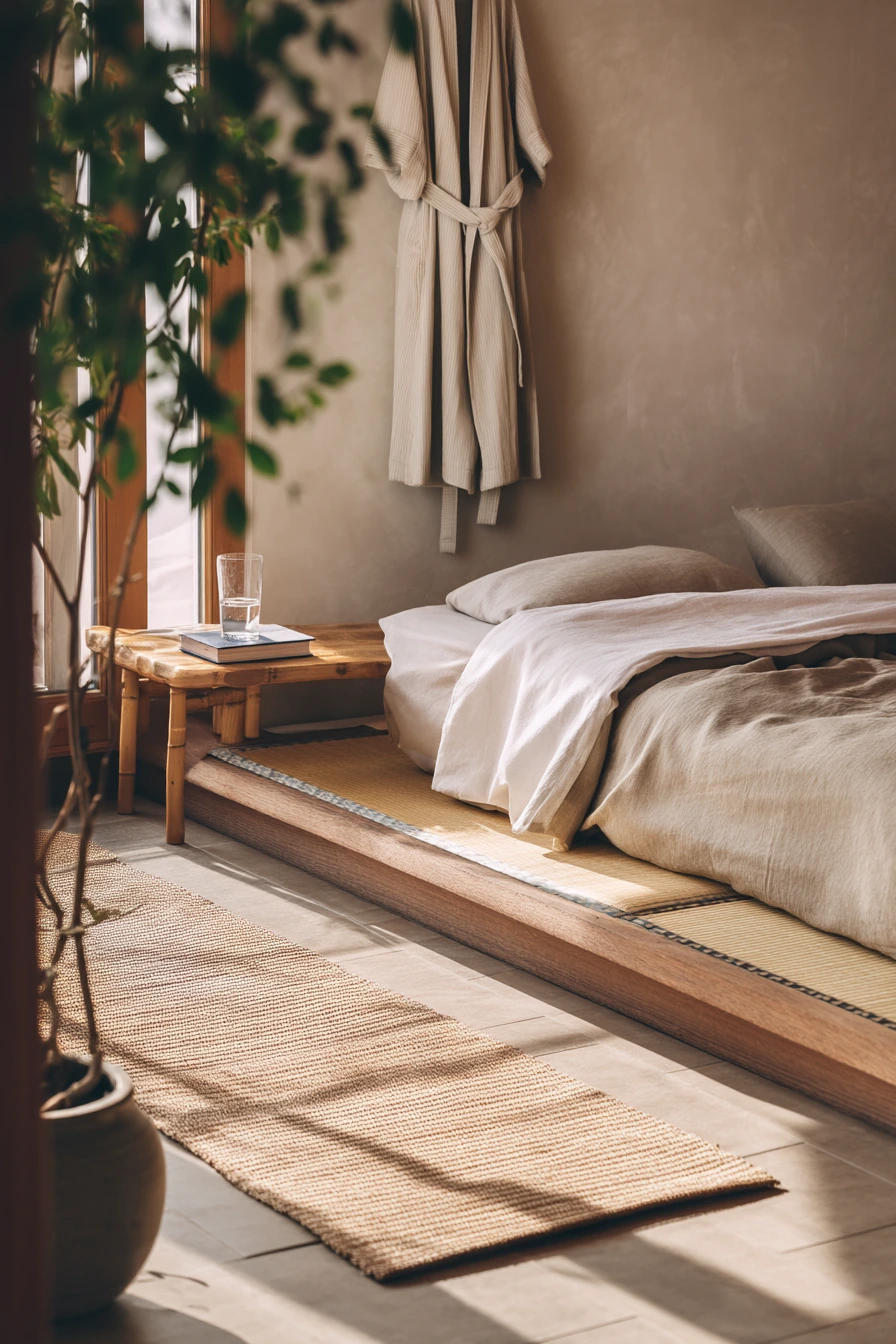

This Japandi bedroom idea feels grounded because it starts at the floor. Layered tatami-style mats under a low platform bed add texture and a soft, natural pattern. Sand-colored linen bedding keeps the look warm and calm without looking yellow or flat.
A bamboo stool nightstand is simple and functional. Style it with a water glass and a small poetry book, nothing more. A cotton robe draped on a peg hook adds a daily-life detail and keeps the room from feeling too perfect. Delicate shadows from nearby plant leaves bring movement while still staying quiet.
To style this setup, focus on touchable materials: linen, bamboo, cotton, and woven mats. Keep colors close together so the textures stand out. If your room gets strong sun, use light-filtering shades to create calm sun-filtered light, not harsh glare. The goal is meditative and easy to maintain.
- Layer tatami-style mats with clean edges for a neat, framed look.
- Use sand, oatmeal, and warm white linens for soft contrast.
- Hang one robe on a peg hook to keep chairs and floors clear.
- Choose a small stool nightstand that can move where you need it.
- Add one plant nearby to cast gentle leaf shadows on the wall.
Pro Design Tip: Keep the bed frame and mats aligned in straight lines so the layered textures look calm, not messy.
Budget Considerations: Tatami mats vary in price and shipping can add cost; try a woven rush rug or seagrass mat as a lower-cost swap.

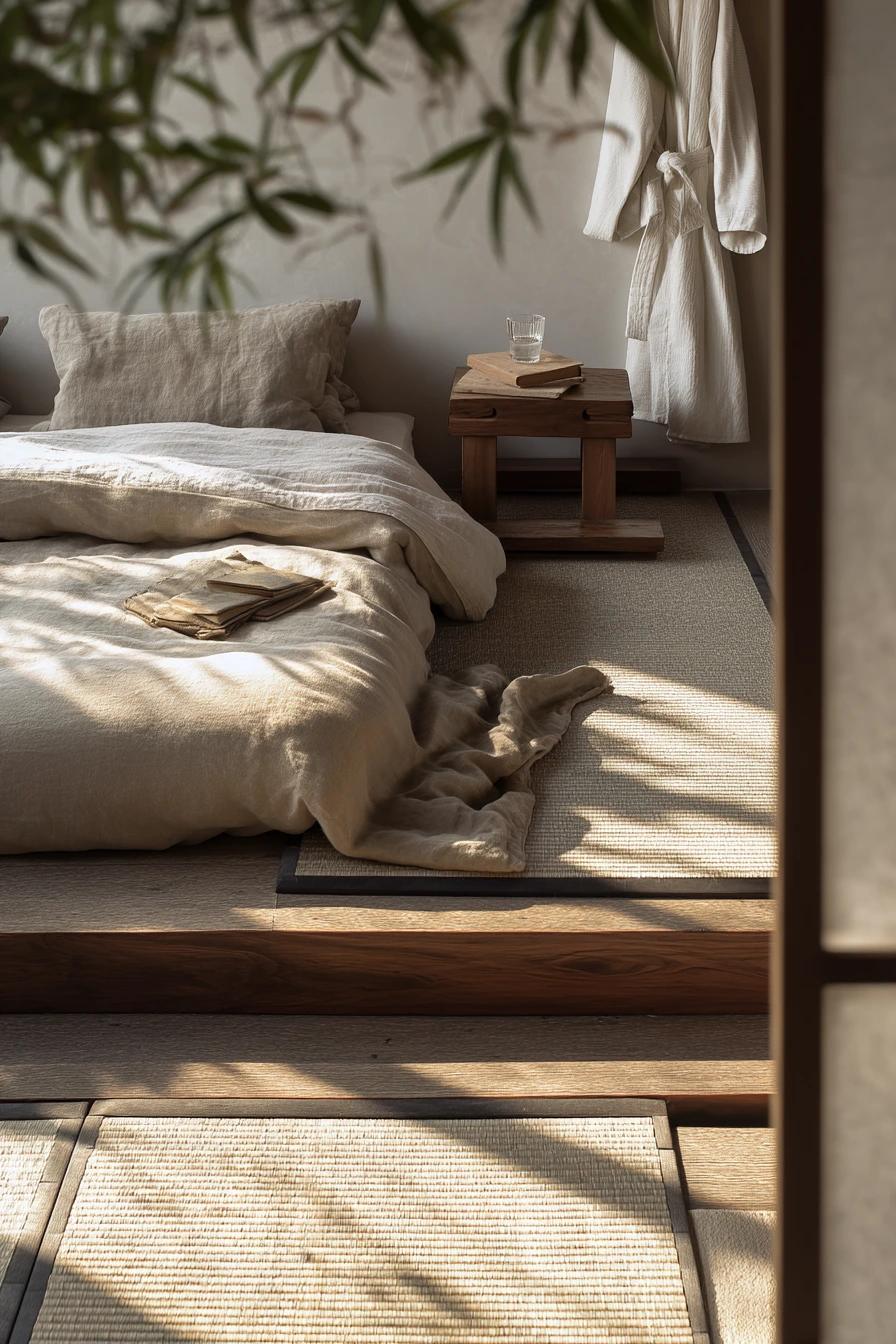
7. Japandi Bedroom With Window Reading Nook and Woven Chair
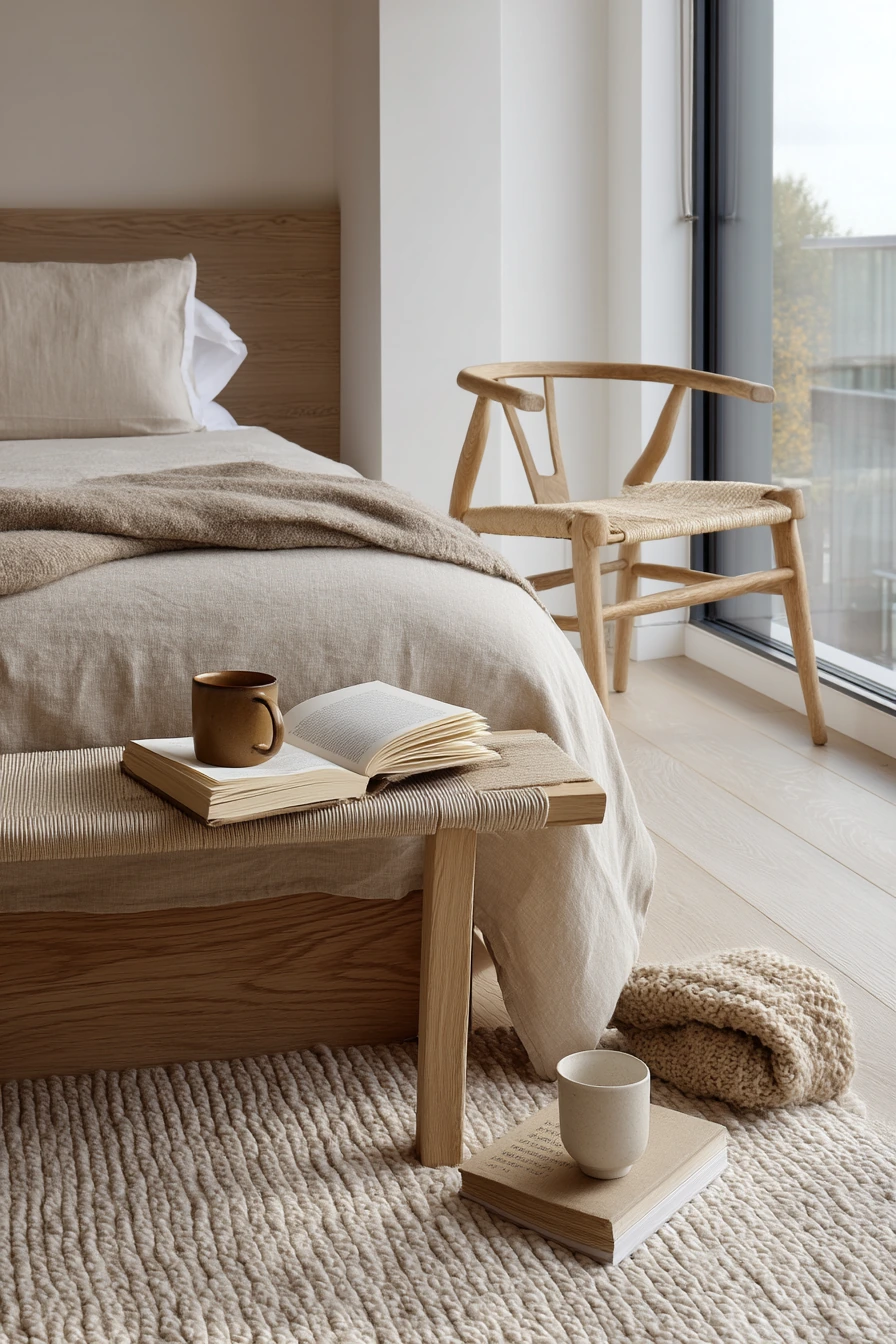
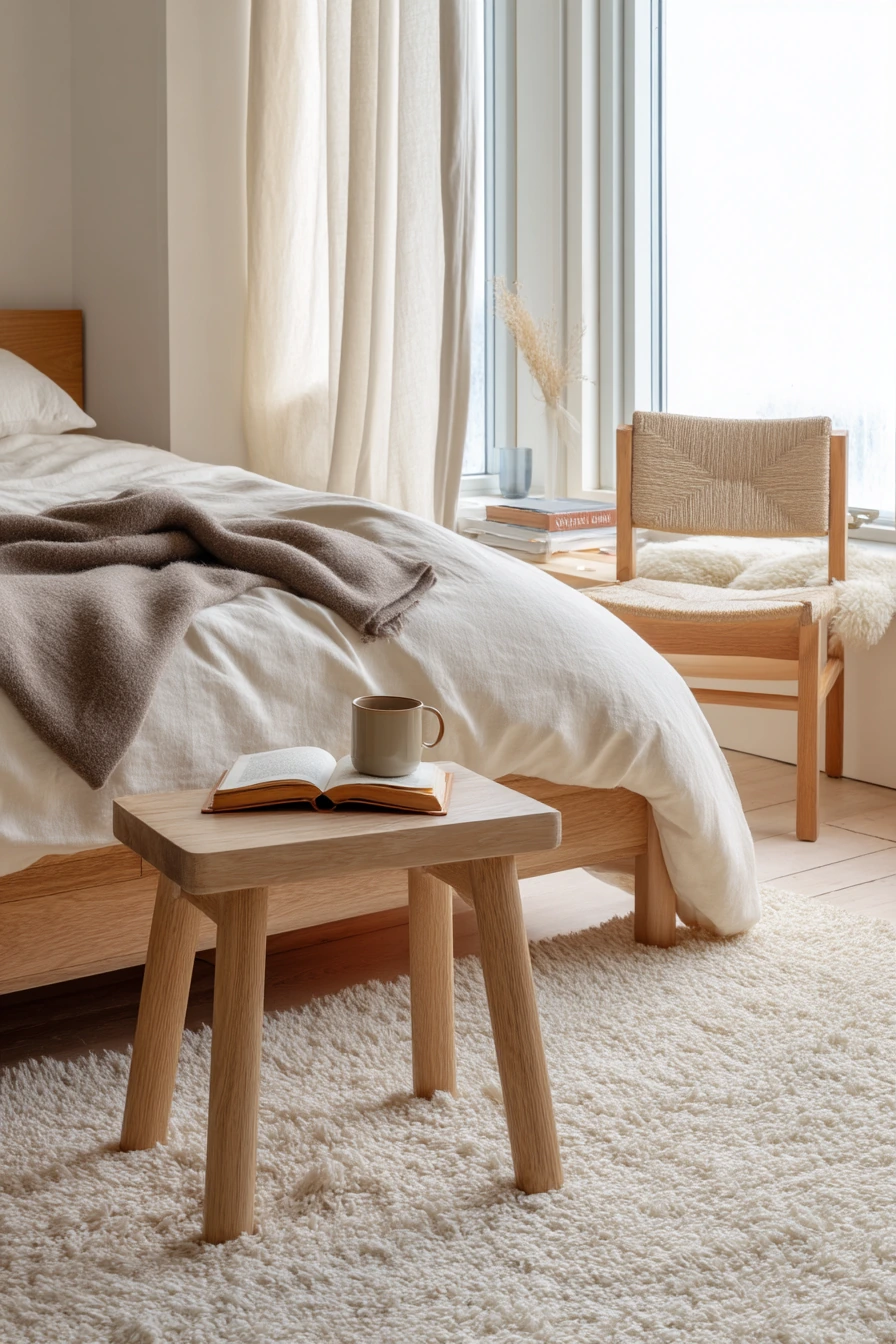
A Japandi bedroom can include a cozy reading nook without losing the minimalist feel. Start with a low oak bed and simple linen bedding. Then create a small corner by the window with a woven chair and one soft cushion. The slight cushion indentation makes it feel used and welcoming.
Keep the nook easy and relaxed. An open novel on the seat, a ceramic mug on a wood stool, and a folded wool blanket placed casually are enough. Natural afternoon window light spilling across rug fibers adds warmth and shows off texture, which is a core part of Japandi style.
To style this in your home, pick one corner and give it a clear job: reading, tea, or journaling. Avoid adding extra side tables and baskets that can crowd the area. Use a rug that reaches the nook so it feels connected to the bed zone. Choose ceramics and textiles in warm neutrals to keep the mood soft.
- Place the chair near the window but leave space for curtains to move.
- Use one stool as a table for a mug and a single book.
- Pick a woven chair to add natural texture without heavy upholstery.
- Keep the blanket folded or draped once, not piled.
- Choose a calm rug with visible fibers for a cozy, tactile base.
Pro Design Tip: Angle the chair slightly toward the bed so the nook feels part of the room, not a leftover corner.
Budget Considerations: Woven chairs can be expensive; look for secondhand rattan or a simple wood chair and add a linen seat cushion.
8. Neutral Japandi Bedroom With Oatmeal Linen and Lived-In Layers
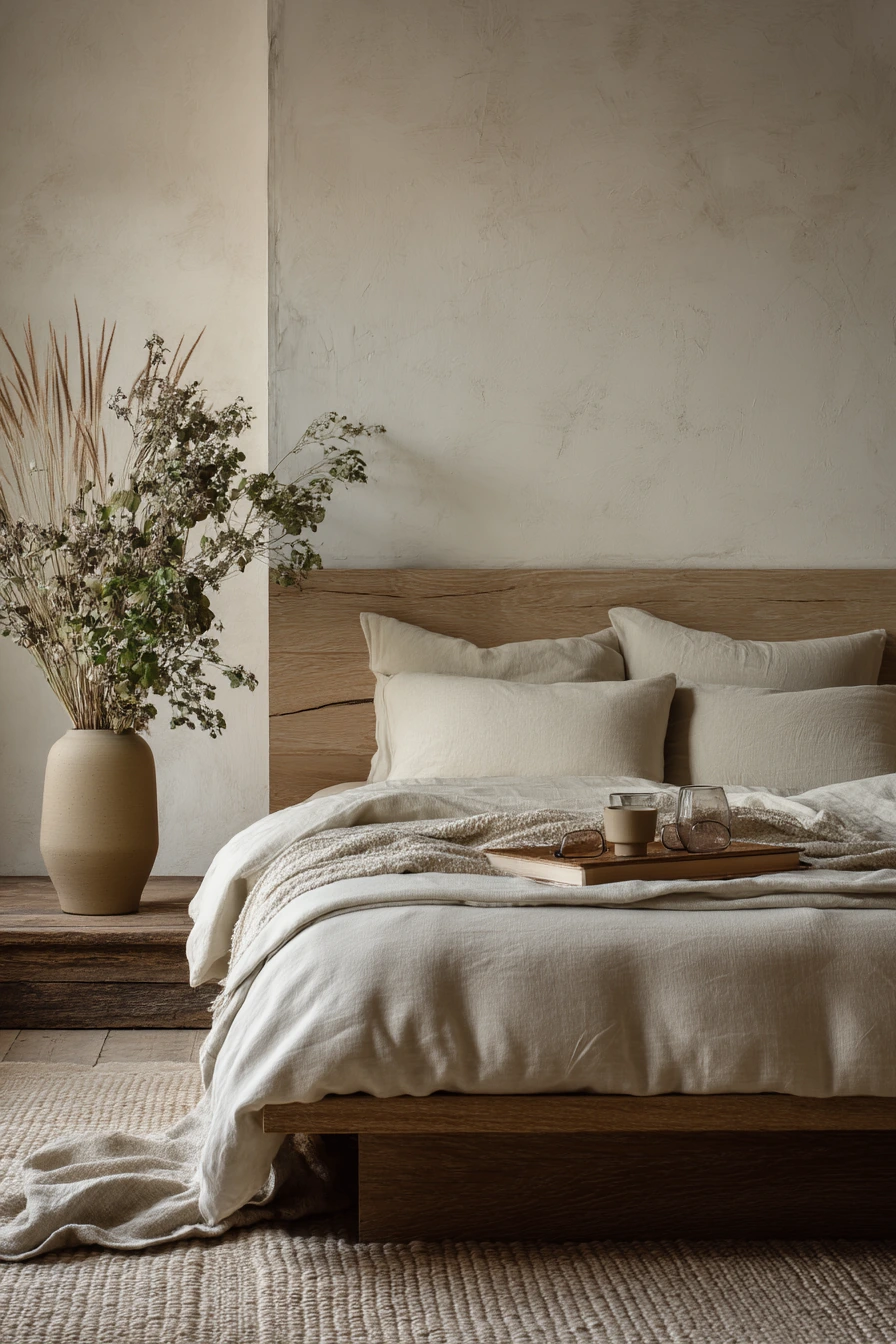

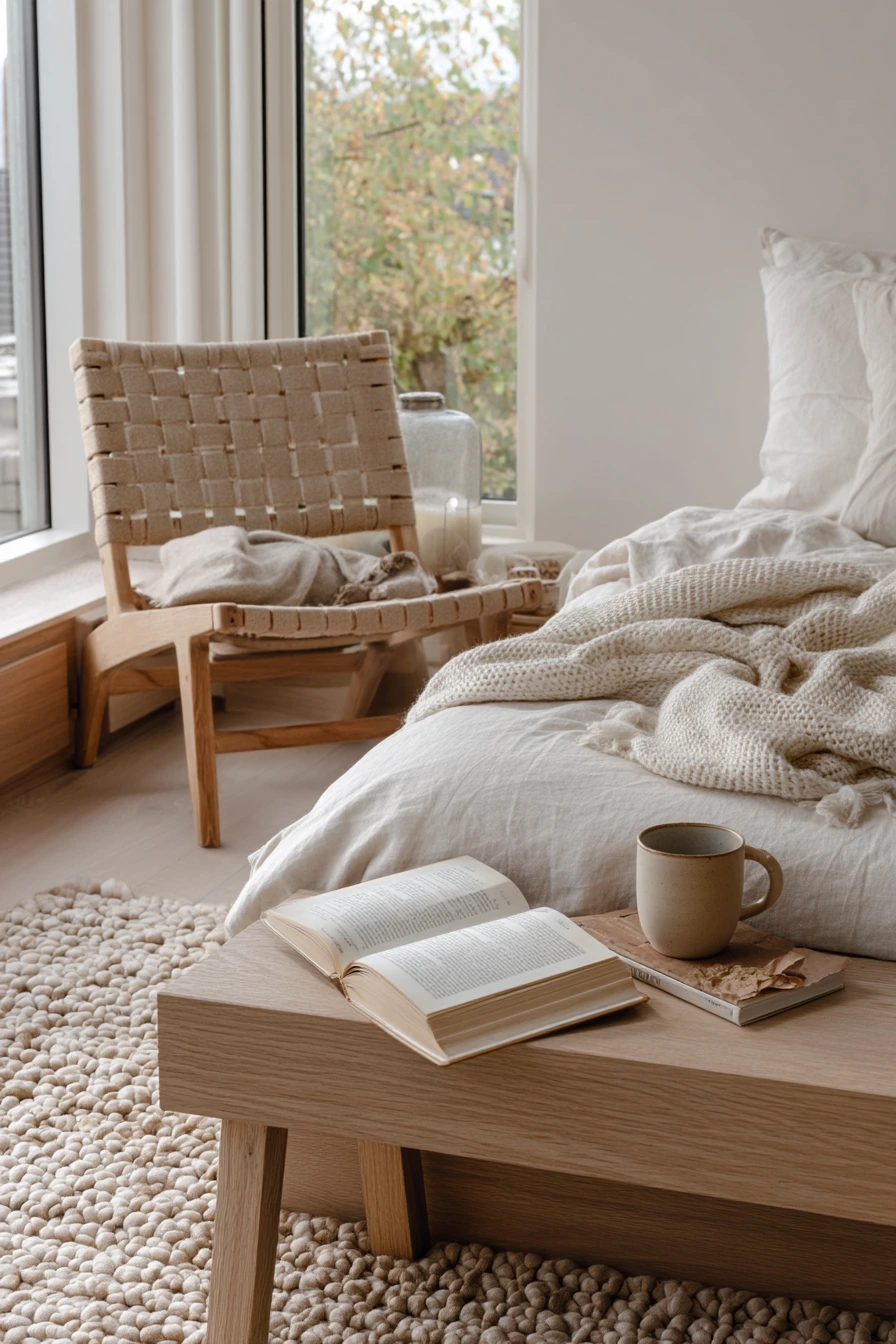
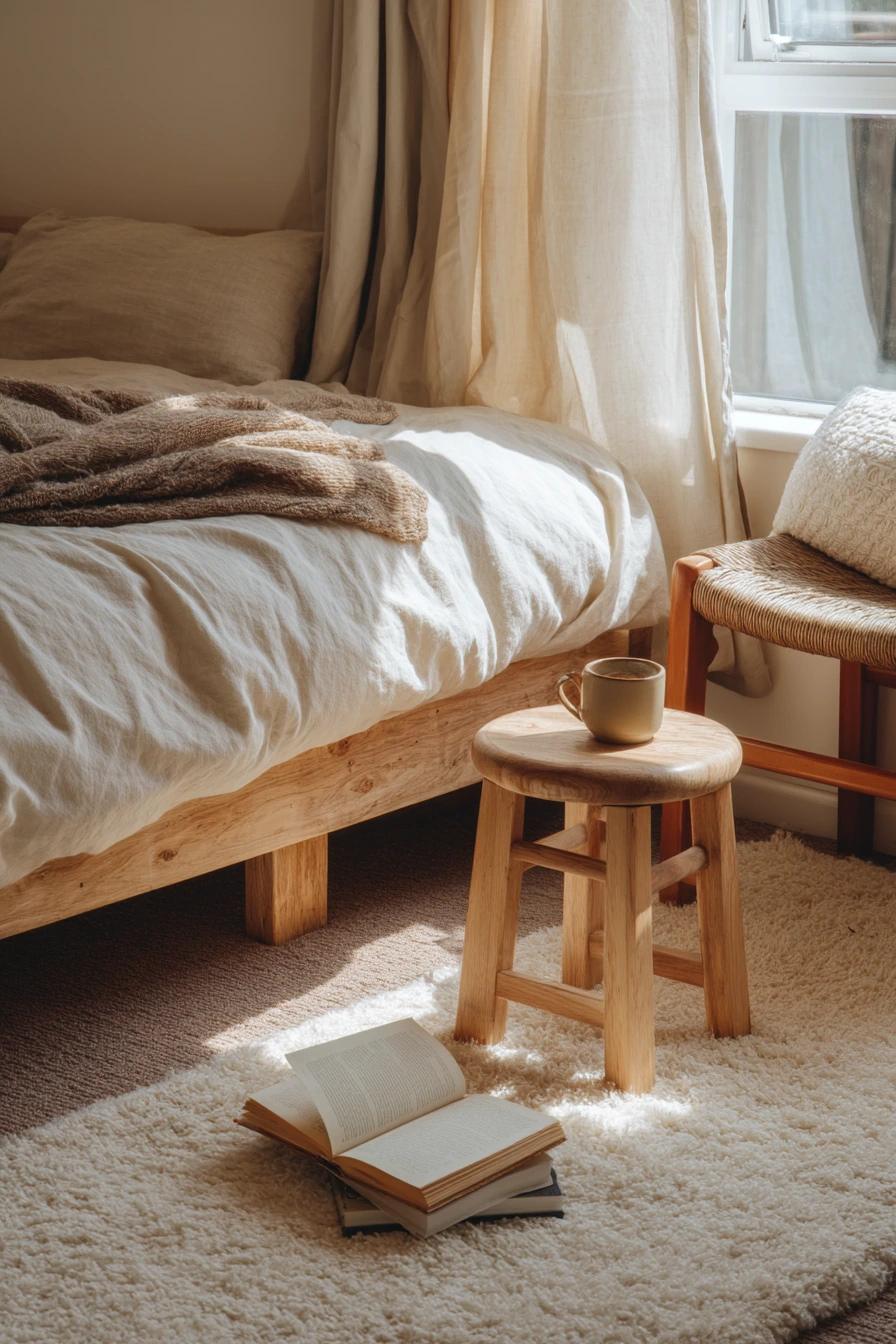
This neutral Japandi bedroom idea is all about soft layers that still look tidy. Oatmeal linen bedding and a pale wood headboard create a calm base. The goal is serene lived-in stillness, where the bed looks comfortable but not chaotic.
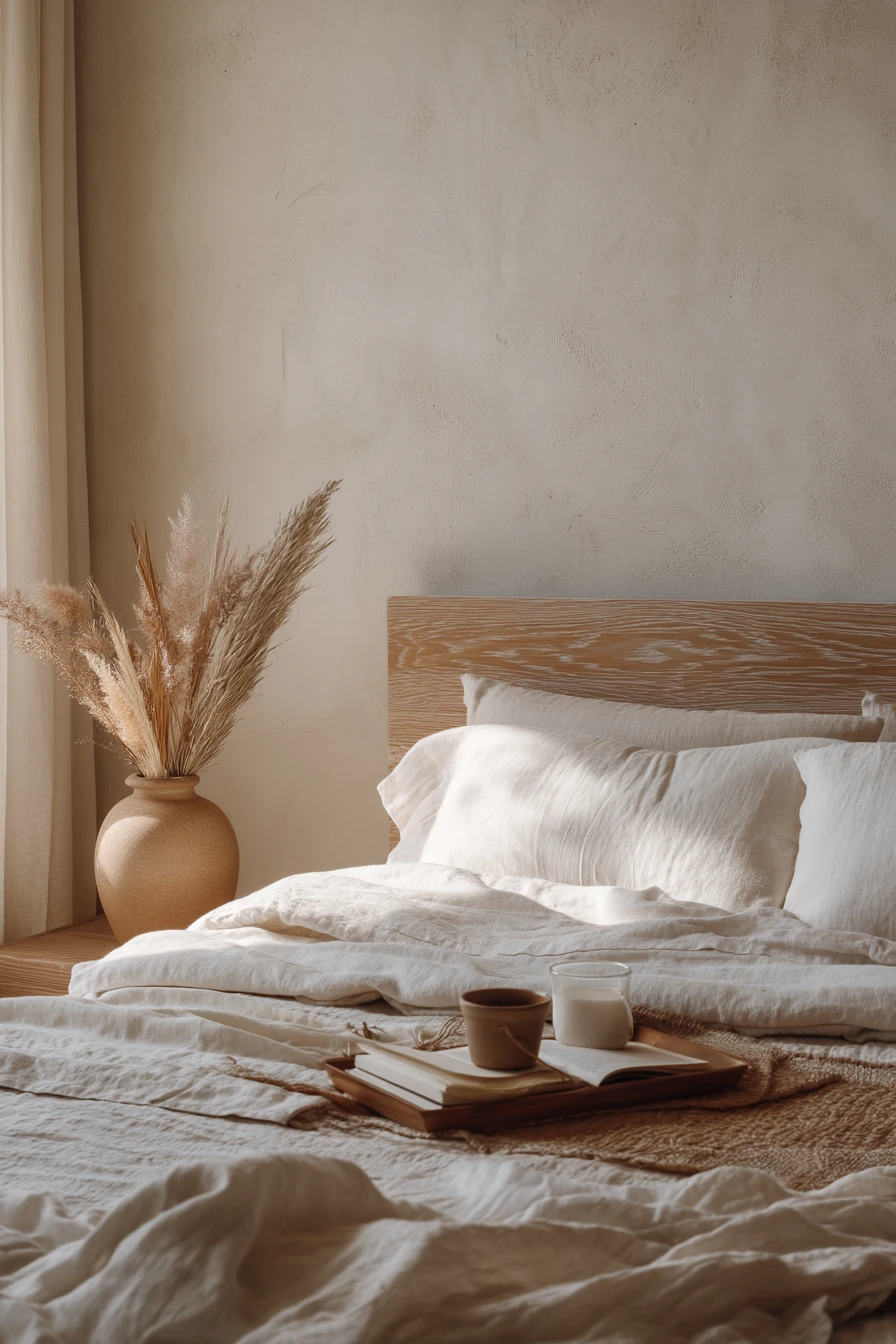
Add a clay vase with dried grass for a gentle, earthy detail. A textured wool rug under the bed adds warmth and helps the room feel quieter. On a small tray, place glasses and a journal to support a simple routine. A lightly rumpled throw cascading to the floor adds movement and makes the space feel human.
To style this look, keep your palette tight: oatmeal, cream, pale wood, and a little clay tone. Use different textures to avoid a flat feel. Keep surfaces clear and group items on trays. Let diffused daylight wash over the plaster wall by using simple window coverings and avoiding heavy patterns.
- Use one main bedding color and add texture through linen and knit.
- Choose dried grass or branches for low-maintenance natural decor.
- Add a wool rug for softness and sound control.
- Use a tray to hold small daily items like glasses and a pen.
- Let one throw drape for a relaxed look, then stop there.
Pro Design Tip: Use three textures in the bed zone, like linen, wool, and raw wood, so the neutral palette feels rich without extra decor.
Budget Considerations: Linen sets can add up; start with linen pillowcases and a duvet cover, then mix in cotton sheets underneath.

9. Japandi Bedroom With Sliding Shoji Panels and Balcony Light
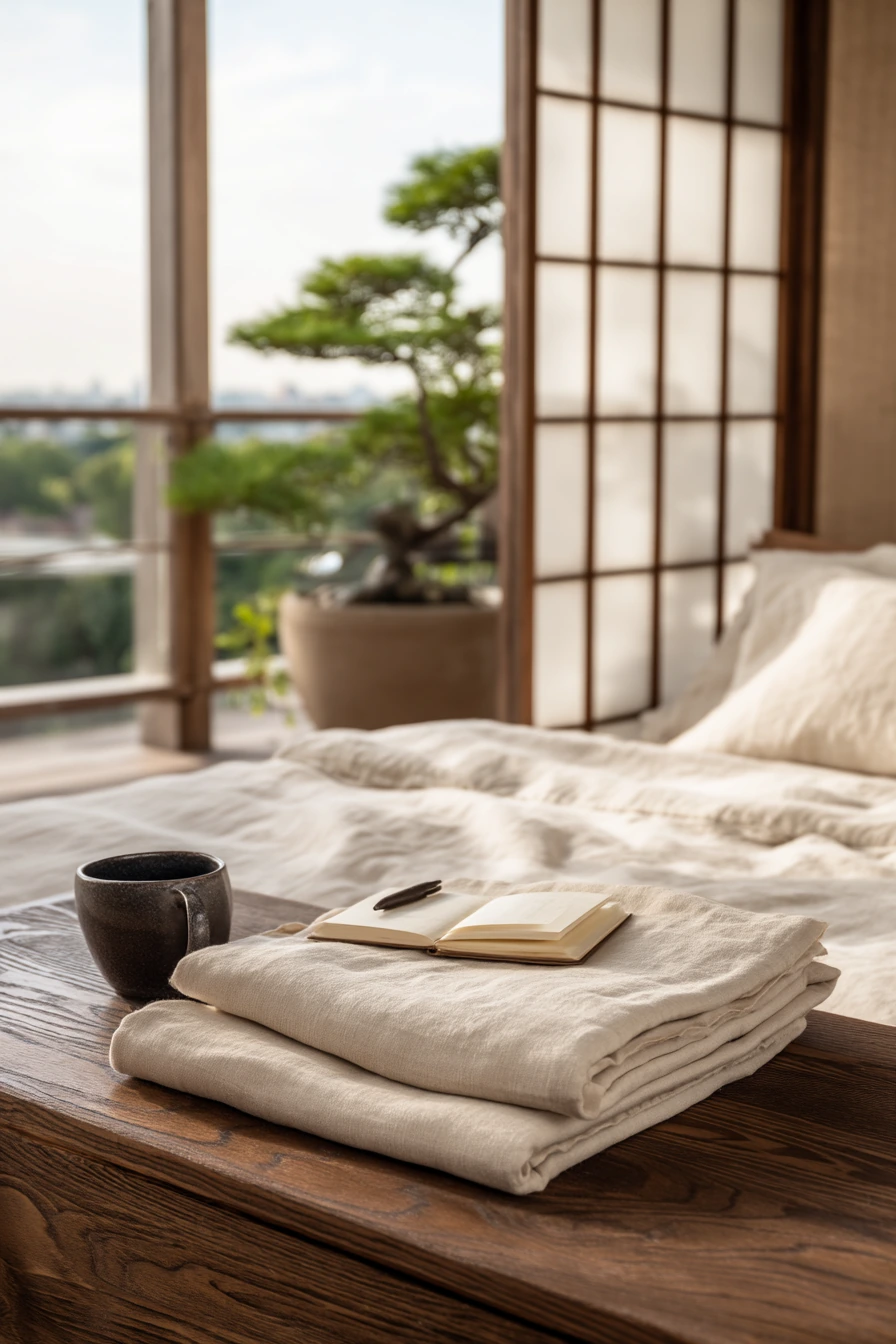
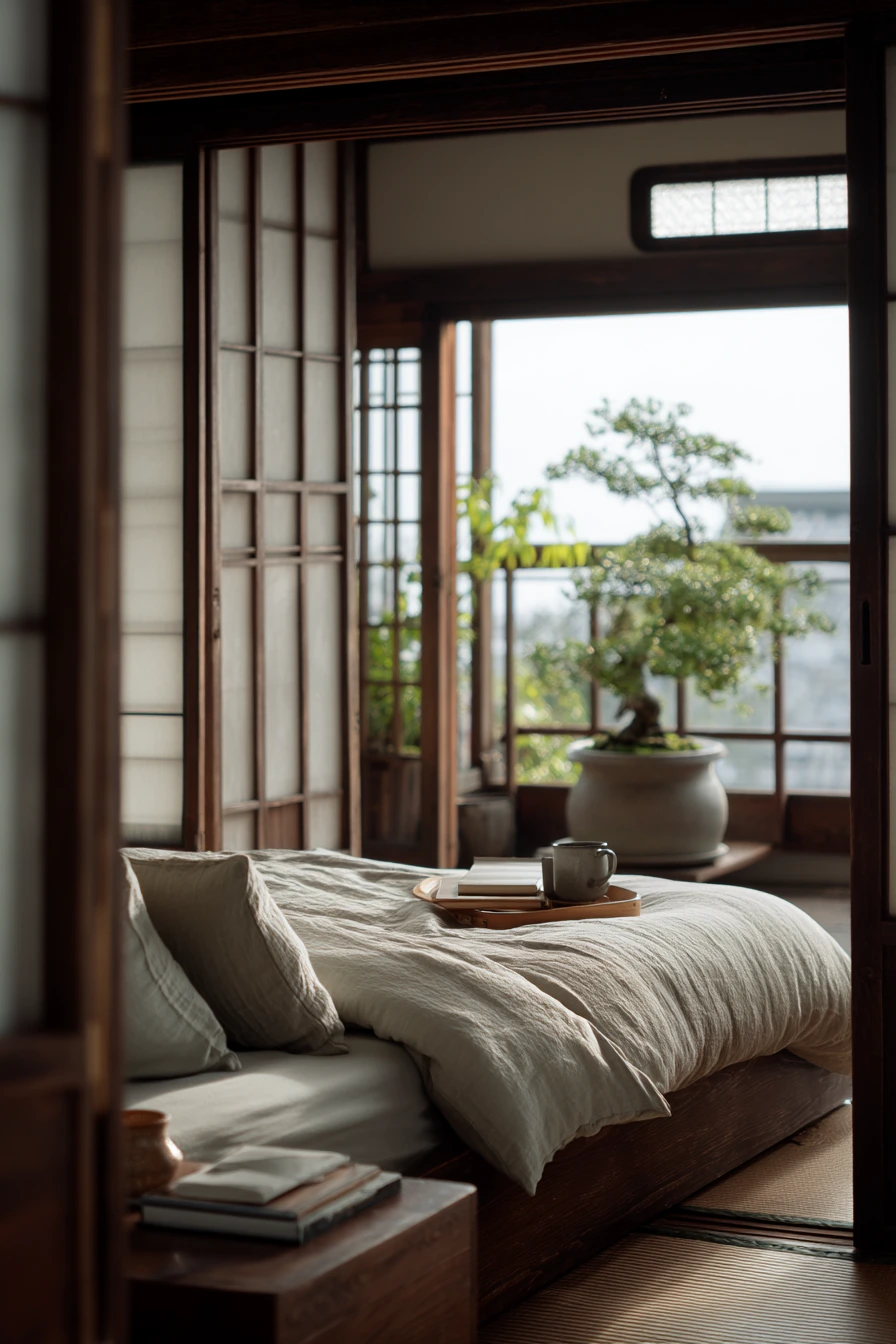
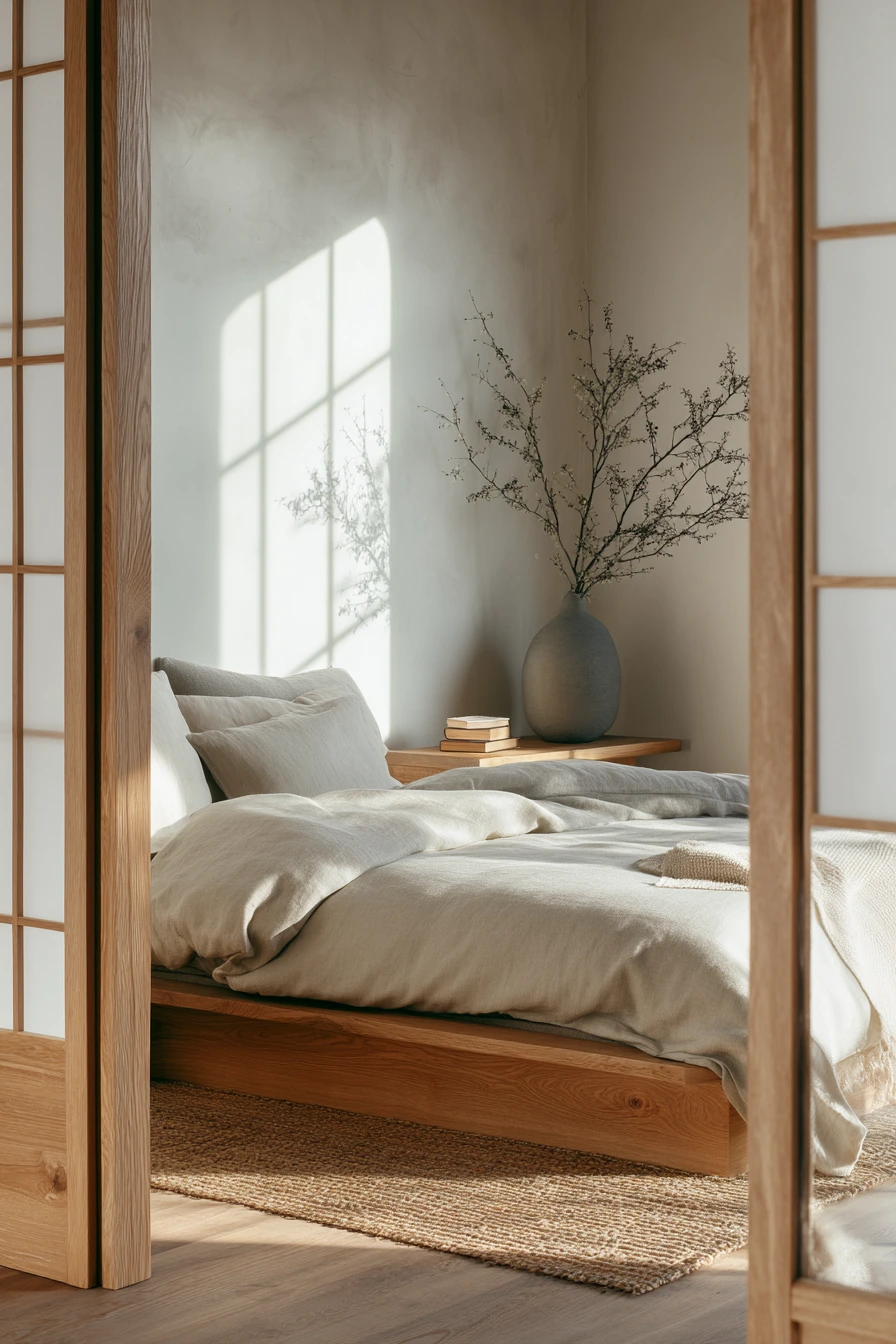
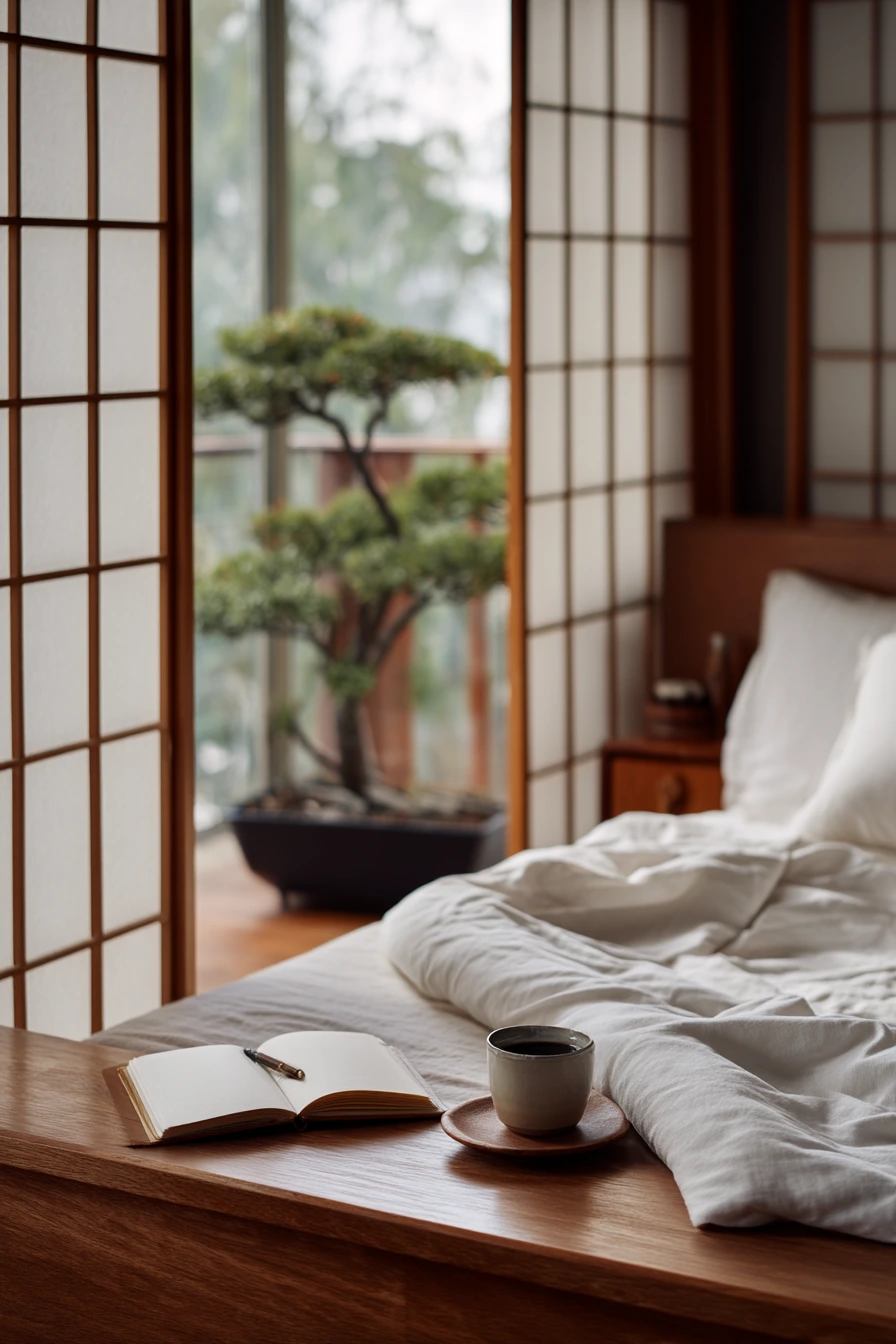
Sliding shoji-style panels can change the whole mood of a Japandi bedroom. They filter light softly and make the room feel balanced and airy. When they open to a balcony, the space feels bigger without adding furniture or decor.
Keep the bed simple: a low walnut bed with crisp linen sheets. Add a folded blanket with a slightly creased edge for a natural, lived-in detail. On a wood nightstand, style a small bonsai, plus a ceramic cup and a notebook for a quiet morning journaling moment. This setup makes the room feel calm and useful.
To recreate this, focus on clean lines and clear pathways to the door or balcony. Use wide room framing in your layout by keeping taller items near the corners and leaving the center open. If you do not have shoji panels, use light wood frames with paper-look inserts or translucent curtains that slide on a track.
- Use sliding panels or light curtains to soften daylight and add privacy.
- Keep bedding crisp and plain to match the clean architecture.
- Style the nightstand with one plant and one journaling set, not more.
- Choose a low bed to keep the sightline open toward the balcony.
- Limit wall decor so the panels and light stay the focus.
Pro Design Tip: Match the panel frame tone to the bed wood tone so the room reads as one calm, connected set.
Budget Considerations: Installing real shoji doors is a bigger project; a ceiling track with sheer panels can give a similar soft-light effect for less.

10. Japandi Bedroom for a Young Family With Warm Minimal Comfort
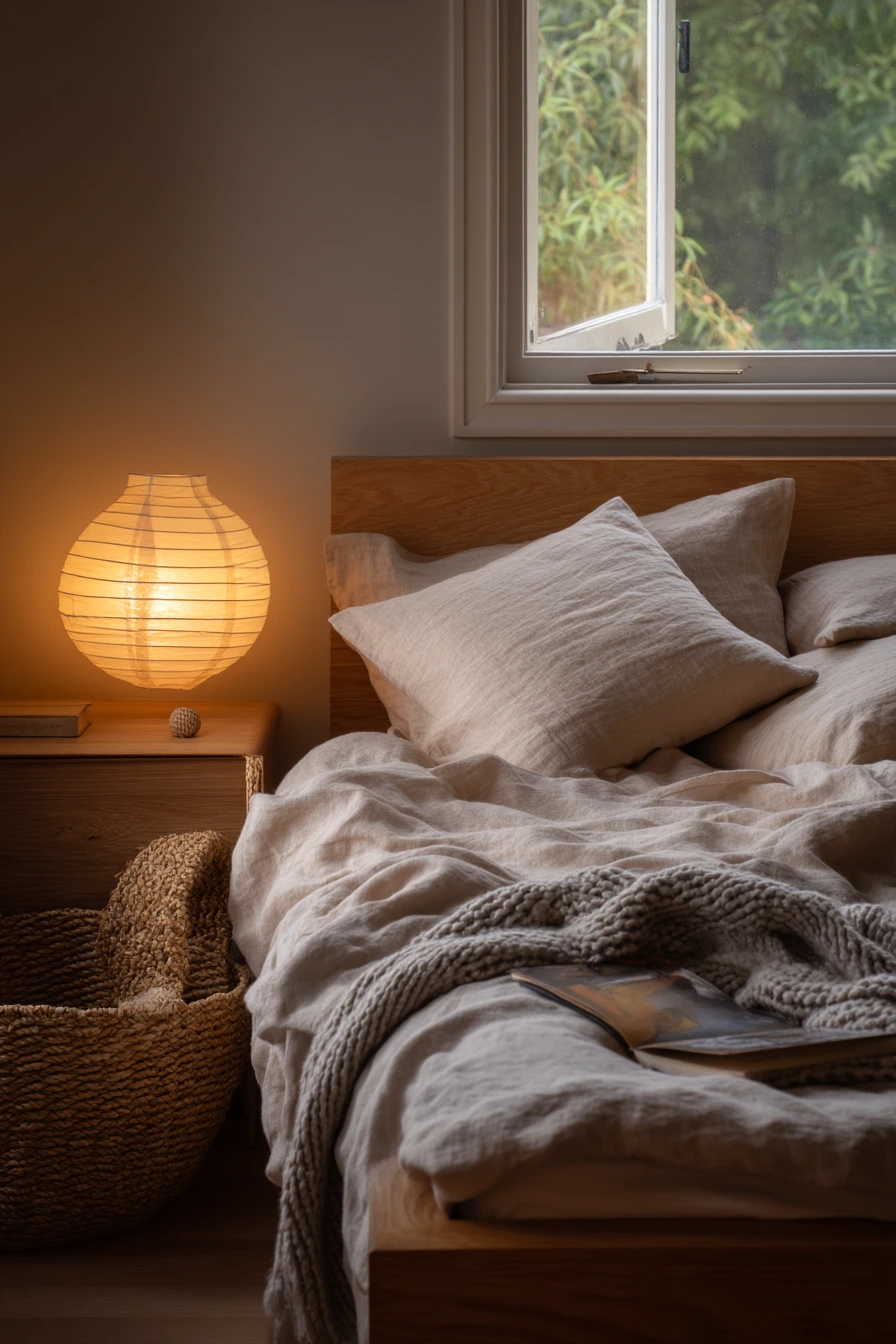
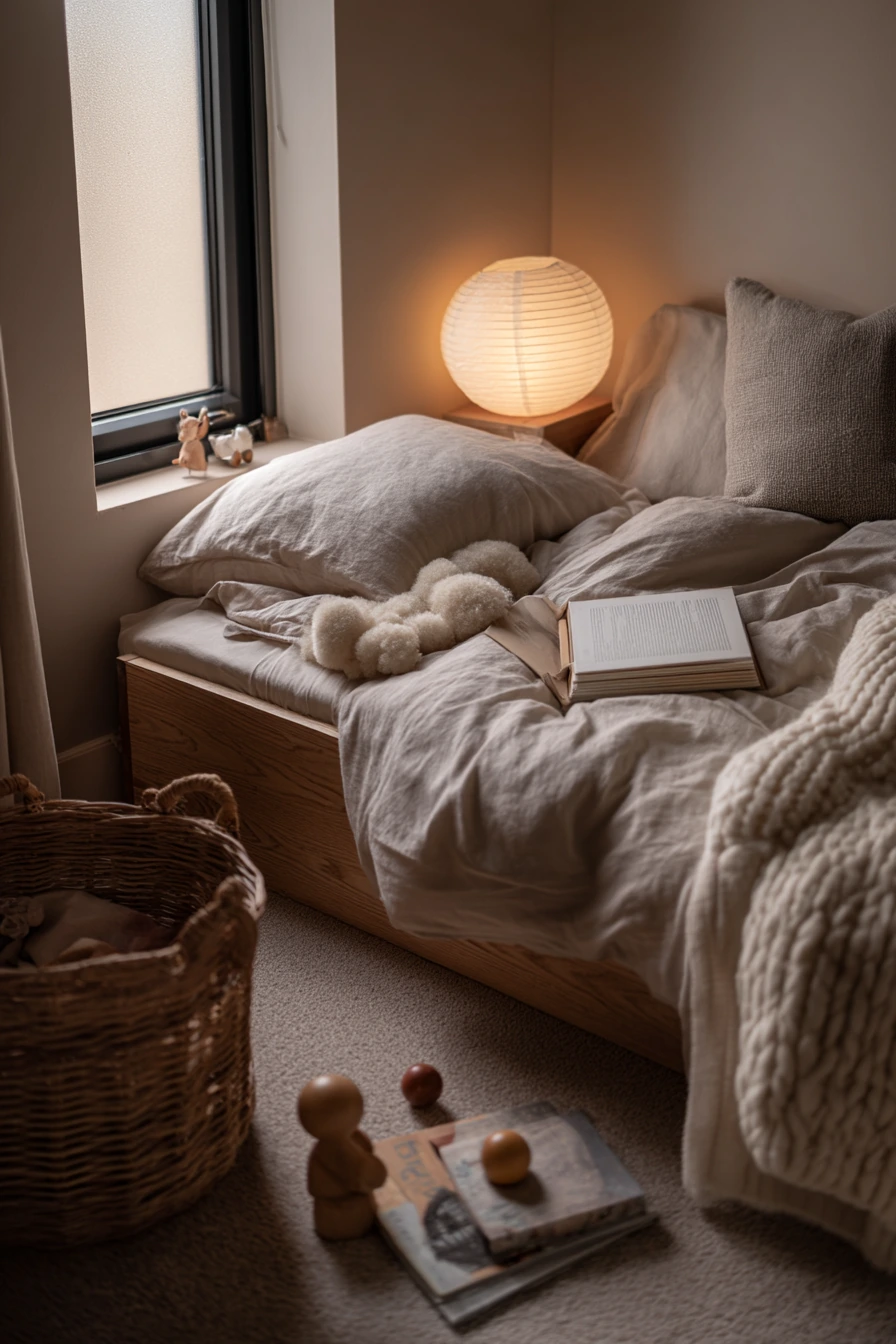
A Japandi bedroom can work well in a young family home because it values calm, easy routines, and less clutter. Start with a low oak bed and soft linen bedding. Keep the room warm and simple, so it feels good at the end of a busy day.
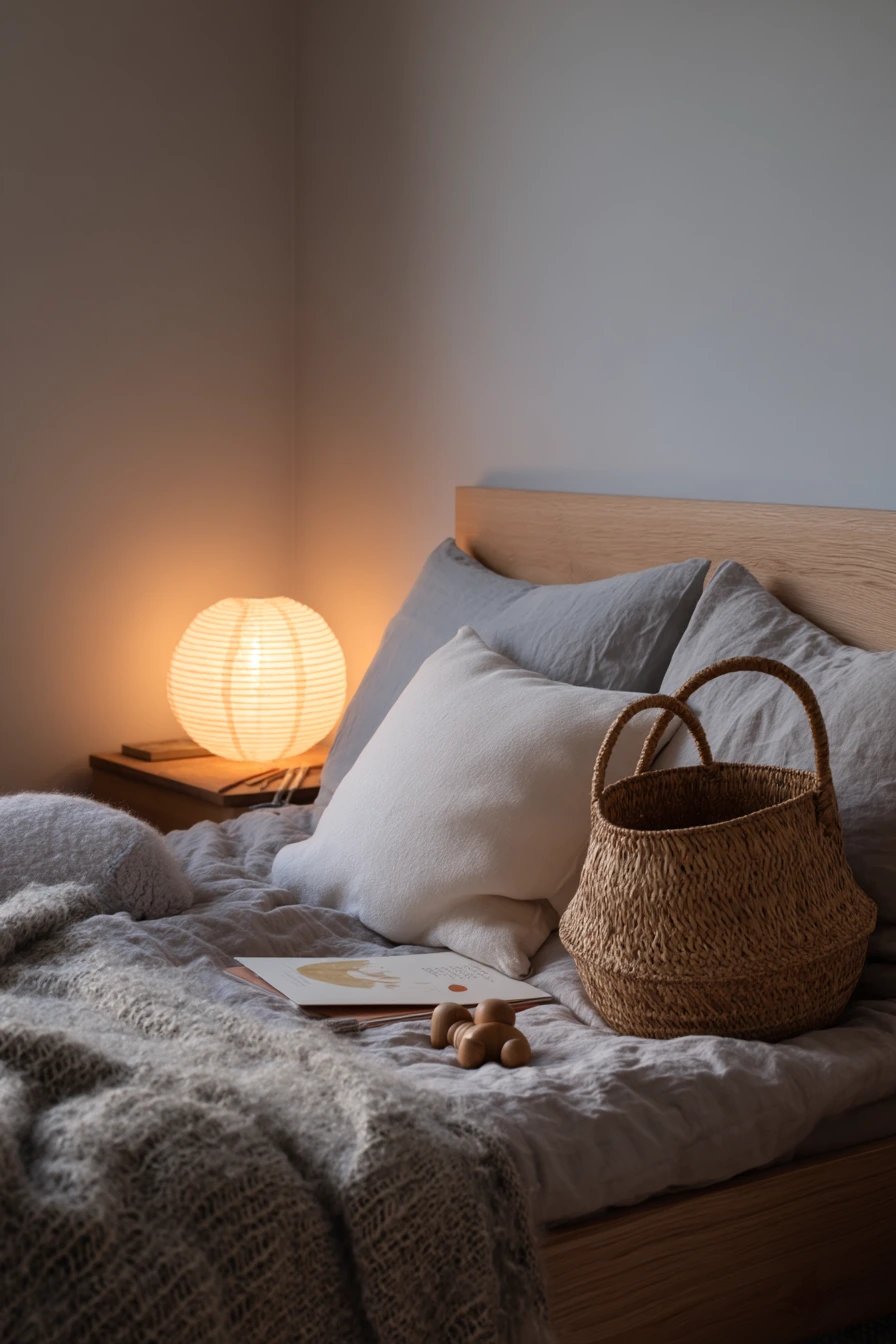
Add family-friendly details without turning the room into a play space. A woven basket with a few kid toys near a corner keeps things contained. A bedtime storybook resting on the duvet supports a calm evening settling moment. A simple paper lantern glowing warmly makes the space feel gentle and safe, especially when lamplight blends with fading dusk light from the window.
To style this, set clear limits: one basket, one reading spot, and one soft throw. Choose washable textiles and avoid fragile decor on low surfaces. Keep a small routine shelf or nightstand for books and a water glass. The goal is nurturing minimalist warmth that still looks clean in the morning.
- Use a lidded or woven basket to store a small set of toys.
- Keep bedtime books in one stack so cleanup is fast.
- Choose a paper lantern for soft, kid-friendly lighting.
- Pick linen or cotton bedding that can handle frequent washing.
- Leave floor space open for movement and easy vacuuming.
Pro Design Tip: Create a “drop zone” that is not the bed, like a basket and one hook, so items do not spread across the room.
Budget Considerations: If you are upgrading for family use, spend on a good mattress and simple dimmable lighting, then keep decor basic and durable.

Japandi bedroom ideas work because they balance comfort and simplicity. Low beds, natural wood, linen bedding, and soft light help the room feel calm.
Start with one change that makes a big difference, like better bedding, a paper lantern lamp, or improved storage. Then add texture with a jute rug, tatami-style mat, or wool throw.
Frequently Asked Questions
1. How do I achieve a Japandi design style in my bedroom without making the space feel cold or sterile?
Focus on organic textures and warmth rather than stark minimalism. Blend minimalist layouts with the rustic comfort of Wabi-Sabi by layering in natural woods (like oak or walnut), tactile textiles (like linen, wool, and jute), handmade ceramics, and living plants. Using warm-toned bulbs (around 2700K) also keeps the room feeling cozy and inviting.
2. What are the best color palettes for a Japandi bedroom?
Stick to a muted, nature-inspired palette that combines Scandinavian neutrals with Japanese earth tones. Think warm whites, creamy sand, oatmeal, taupe, soft grays, and charcoal, accented by muted greens, warm clay, and rich wood tones. Avoid loud patterns or bright, saturated colors to keep the environment serene and restful.
3. How can I keep a small apartment Japandi bedroom from feeling cluttered?
Prioritize closed storage and multi-functional, low-profile furniture. Use wall-length cabinets with flat-front doors, floating oak nightstands, and under-bed storage bins to keep daily items out of sight. Leaving open shelf surfaces mostly empty ensures the room retains its signature airy and breathable feel.
4. What type of lighting works best to create a calming Japandi atmosphere?
Layer your lighting by combining soft, diffused natural daylight with low-level ambient fixtures. Swap harsh overhead lights for sculptural paper lanterns, fabric globe shades, or warm bedside lamps that cast gentle shadows. Dimmable bulbs allow you to easily transition the room into a peaceful evening wind-down zone.
5. How can I get a high-end Japandi look on a tight budget?
Invest in high-impact foundations like affordable linen pillowcases or a duvet cover, and supplement your space with smart DIY swaps. You can create shoji-style panels using basic wood grids with rice-paper film, use a basic rice-paper lantern shade, and incorporate budget-friendly natural elements like thrifted ceramics and branches from your yard.
Would you like me to help generate social media captions or Pinterest pin text to go along with this Japandi bedroom guide?