Industrial home office ideas are popular because they mix function with a relaxed, creative look. You can use reclaimed wood, exposed brick, black metal shelving, and warm light to make a space that feels focused but not stiff.
This post walks you through 10 industrial office setups inspired by real work scenes like a designer at a reclaimed wood desk, an entrepreneur at a drafting table, and a photographer editing on dual monitors. Each section includes easy styling steps you can copy at home.
You will also get practical tips for cable control, lighting, storage, and adding softness with rugs, throws, and plants. These small details help the room feel comfortable for long workdays.
Whether you have a full room or just a corner, these ideas help you build an industrial home office that looks good in photos and works well in daily life.
1. Reclaimed Wood Desk With Exposed Brick and Black Metal Shelving


A reclaimed wood desk in front of exposed brick is a classic industrial home office look. The wood adds warmth, while the brick and black metal shelving bring structure. This setup works well for a designer or remote worker who needs a simple surface for a laptop, a notebook, and a few tools. If you have large factory-style windows, let warm sunlight do most of the work. It makes the textures stand out and keeps the room from feeling heavy.
Start with the desk as the anchor. Keep the desktop mostly clear so you have space to type and sketch. Add a small potted plant near the screen to soften the hard lines of brick and metal. A knitted throw on the chair helps too, especially if your chair is wood or metal. On the shelving, mix books with a few work items like a tape measure, brush cup, or small bins. The goal is “used and useful,” not cluttered.
To style it for photos and real life, keep a tight color palette: warm wood, black, and a little green. Use one tray or shallow box for daily items like earbuds, pens, and sticky notes. If the room looks flat, add one warm bulb in a desk lamp or wall sconce to balance the daylight. Dust and texture are part of the industrial vibe, but the work zone should still feel clean and calm.
- Choose a reclaimed wood top with visible grain for a worn-in look.
- Use black metal shelving to hold books, boxes, and tools.
- Add a knitted throw to make the chair more comfortable.
- Place one small plant on the desk for a softer edge.
- Use warm light bulbs to highlight brick and wood textures.
Pro Design Tip: Keep the shelving 70 percent practical and 30 percent decorative, so it looks styled but still supports your daily workflow.
Budget Considerations: Reclaimed wood desks can cost more; try a butcher block top with black pipe legs, or look for a used table you can sand and stain.


2. Drafting Table Office With Concrete Floor and Steel Bookshelf
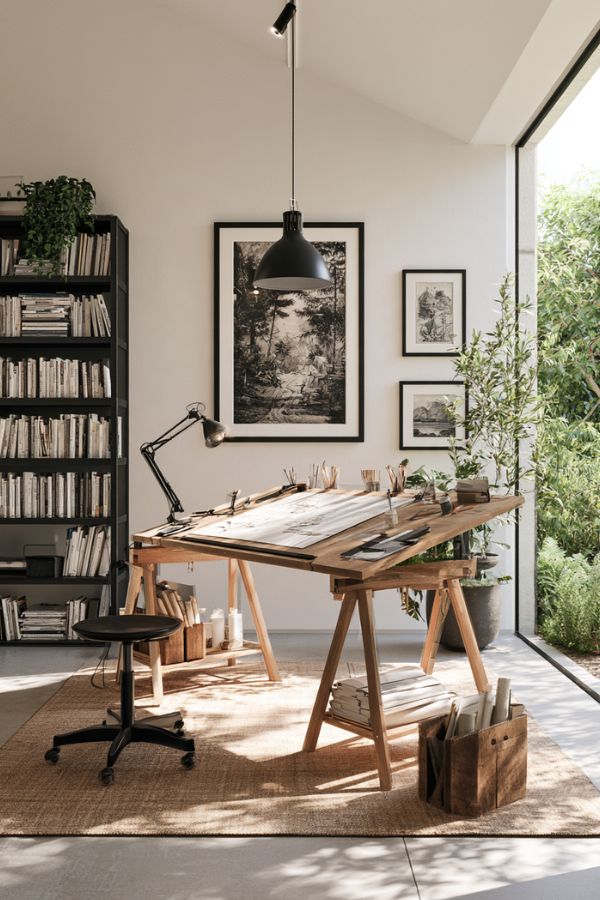

A drafting table setup is perfect for planning, sketching, and big paper projects. The industrial feel comes from the concrete floor, the steel-framed bookshelf, and a simple work lamp that casts strong shadows. This look fits a young entrepreneur or anyone who works with layouts, diagrams, or handmade notes. It also works well in a corner, because the table itself becomes the visual focus.
Keep the drafting surface clear except for the tools you use often. A coffee mug, a few open binders, and a ruler can look natural, but too many loose items will make the space feel messy. If you have a cable charger dangling, fix it with a stick-on cable clip under the table edge. That one small change makes the room feel more finished, and it keeps cords from getting caught when you move the chair.
Balance the hard materials with a tactile leather chair. Leather adds warmth, and it also fits the industrial style. For morning light, place the table near a window and angle the lamp to fill in shadows on cloudy days. Add one small catchall tray for erasers, leads, and paper clips. On the steel bookshelf, store binders upright and add one box for small tech items. This keeps the “open shelf” look without turning into visual noise.
- Angle the drafting table toward the window for natural light.
- Use a warm desk lamp to reduce harsh shadows on paper.
- Group binders by size for a cleaner shelf look.
- Clip chargers and cords under the edge to stop dangling cables.
- Add one leather chair to warm up concrete and steel.
Pro Design Tip: Pick one “work zone” on the table for tools and one “clear zone” for drawing, so you always have space to spread out.
Budget Considerations: Drafting tables vary a lot in price; try a sturdy used table with an adjustable drawing board on top to get the same function for less.


3. Matte Black Desk With Metal Shelving and Evening Light


A matte black desk gives an industrial home office a clean, modern base. Pair it with matte metal shelving and a few art prints for a creative but organized feel. This setup works well for a freelancer who reviews documents, answers emails, and needs a calm space at the end of the day. Evening sunlight through tall windows can look soft and golden, which helps black furniture feel less dark.
To style this look, use contrast and texture. Add a wrinkled linen throw on the chair for a relaxed, lived-in touch. Use a terracotta pot plant to bring in a warm, earthy tone that plays well with black and gray. On the shelves, stack paper trays, simple stationery cups, and a few framed prints. Keep the frames thin and dark so they blend in, then let the artwork add the color.
For daily function, create a clear system for documents. Use one vertical file holder for “today,” one for “this week,” and one for “archive.” This stops piles from forming. If you work at night, add a desk lamp with a warm bulb and a shade that points light down to the paper. Keep the desktop simple: one notebook, one pen cup, and one plant is enough. The industrial style looks best when the shapes are bold, and the surfaces have room to breathe.
- Choose a matte black desk to hide glare and fingerprints.
- Use terracotta planters to add warm color against black.
- Hang or lean a few art prints for a creative feel.
- Store paperwork in labeled file holders to avoid stacks.
- Add a linen throw to soften the chair and reduce echo.
Pro Design Tip: Repeat one accent color, like terracotta or warm tan, in two places to make the black-and-metal palette feel balanced.
Budget Considerations: Matte black desks can be affordable; you can also paint a basic desk with a durable matte finish and swap in simple black hardware.


4. Vintage Typewriter Desk With Exposed Pipe Lighting


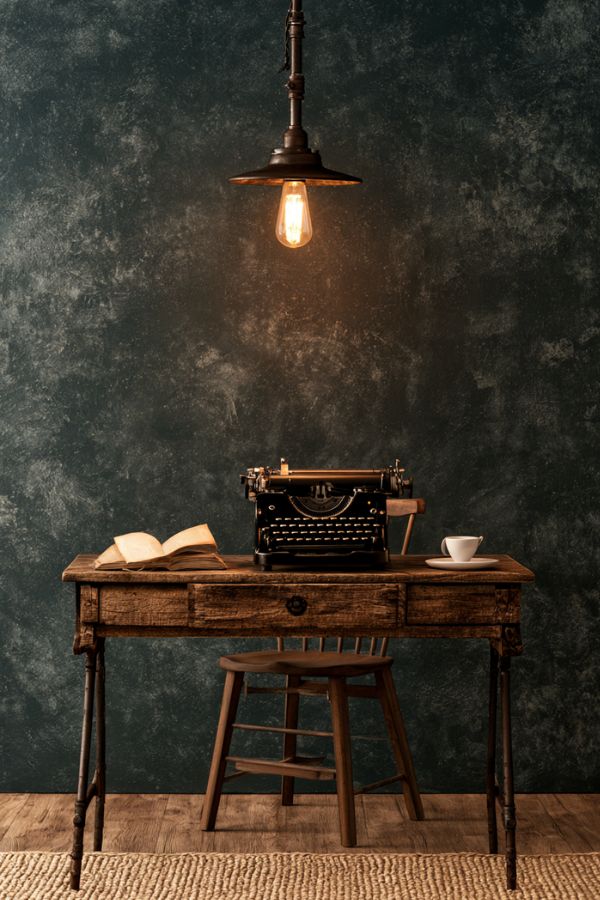
A vintage typewriter on a reclaimed wood desk creates a strong industrial home office story. The look is part workshop, part writing nook. Exposed pipe lighting overhead adds that warehouse feel without needing a full renovation. This setup is great for writers, journaling, or anyone who wants a screen-free corner for focused work.
Start with the desk surface. Reclaimed wood looks best when you let the marks and grain show. Keep the typewriter centered, then place a small stack of notebooks to one side. Add a half-full glass of water for real-life comfort, but keep liquids away from paper by using a small coaster or tray. An industrial stool tucked under the desk saves space and fits the style, but add a thin seat cushion if you sit for long sessions.
Lighting matters here. Use soft ambient daylight during the day, then rely on the pipe light in the evening. Choose a warm bulb so the wood looks rich instead of dull. If you want this area to feel more inviting, hang one simple print above the desk or lean it on a shelf nearby. Add one small container for pens, clips, and extra ribbons. The key is to keep the setup usable, not just decorative, so the space supports writing habits every day.
- Center the typewriter or keyboard to create a clear focal point.
- Use exposed pipe lighting with warm bulbs for a vintage mood.
- Keep notebooks in one stack to stop paper spread.
- Choose an industrial stool that can tuck fully under the desk.
- Add a tray or coaster to protect wood from water rings.
Pro Design Tip: Mount the pipe light on a dimmer so you can switch from bright editing light to softer evening writing light.
Budget Considerations: Pipe lighting can be DIY with basic parts; if that feels hard, use a metal wall sconce or clamp lamp to get a similar look.

5. Brick Wall Office With Steel Shelving and Warm Afternoon Sun
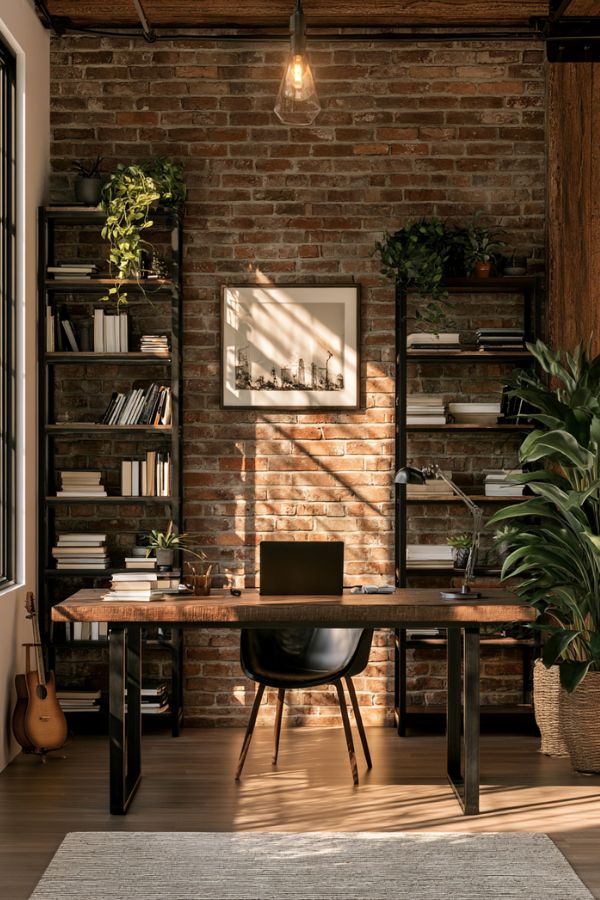

A raw brick wall with steel-framed shelving creates a bold industrial home office backdrop. It works well for a creative professional who takes calls, manages projects, and needs both tech and display space. Warm afternoon sun through large factory windows makes the brick glow and helps the room feel friendly instead of harsh.
Keep the main work area simple: a laptop, a phone charger, and a clear spot for notes. If your laptop charger is trailing, route it along the wall or behind the shelf leg using clips. This keeps the floor clear and makes the room look more polished in photos. On the steel shelves, mix magazines with a few small decor objects like a candle, a small bowl, or a framed photo. Leave open space so the shelf does not feel packed.
Add softness with a slightly wrinkled throw over a metal chair. A throw helps with comfort and also breaks up the cold look of steel. If the room echoes, add a low rug or fabric curtains near the windows. For a quick style upgrade, choose one accent color from the magazine covers and repeat it in one other item, like a desk mat or notebook. This creates a planned look without buying a full set of matching items.
- Use brick as a feature wall behind the desk for depth.
- Style steel shelving with magazines and a few small objects.
- Control cords with clips so chargers do not trail on the floor.
- Add a throw to make a metal chair more comfortable.
- Repeat one accent color to make the shelf styling feel intentional.
Pro Design Tip: Keep the shelf styling in “groups of three” (books, object, empty space) so the display looks balanced and easy to scan.
Budget Considerations: If you cannot add real brick, use removable brick panels or peel-and-stick wallpaper on one wall for a similar effect.

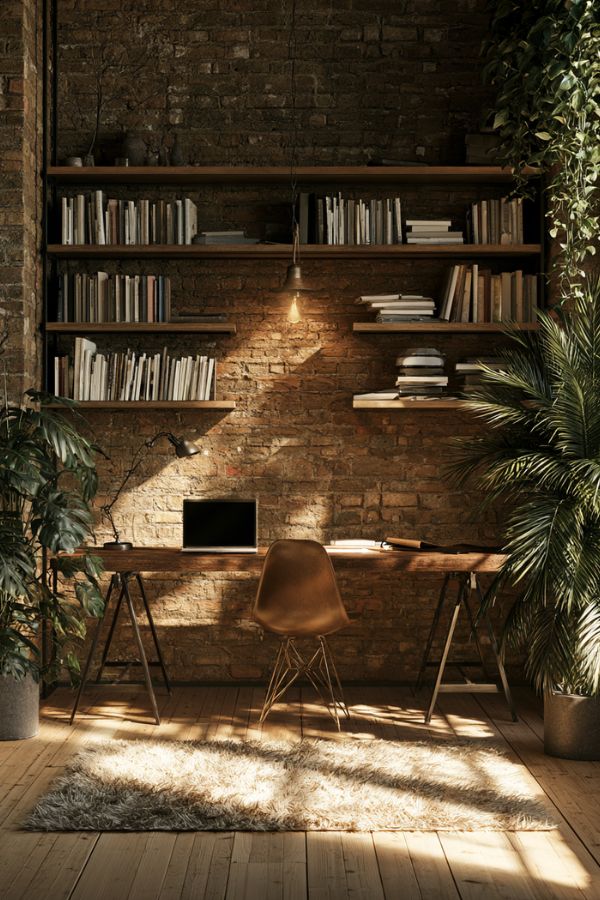
6. Dual Monitor Editing Station With Concrete Floor and Timber Desk


A dual monitor setup is ideal for photographers, video editors, and anyone who manages large files. The industrial feel comes from a polished concrete floor, a timber desk, and simple decor like scattered prints and a small sketchbook. This kind of office should feel efficient first, then stylish. When your tech setup is neat, the whole room looks more high-end.
Start by placing the monitors at eye level and keeping the keyboard centered. Use a monitor arm if possible to free up desk space. Add a potted snake plant near the corner of the desk. It is tough, it looks sculptural, and it fits the industrial style. Keep printed photos in one shallow tray instead of spreading them across the desk. A tactile rug underfoot adds comfort and helps soften sound, especially in rooms with concrete.
Lighting should be gentle to reduce screen glare. Use subtle sunlight and add a bias light behind the monitors if you work at night. For a clean look, hide cables in a sleeve and mount a power strip under the desk. Keep tools close but controlled: one drawer unit or one desktop organizer is enough. Style the space with one or two framed prints leaning on the wall, so it feels personal without turning into a gallery wall.
- Raise monitors to eye level to reduce neck strain.
- Hide cables with sleeves and an under-desk power strip.
- Use a snake plant for an easy, sculptural accent.
- Add a rug to warm up concrete and improve comfort.
- Store prints in a tray to keep the desk surface clear.
Pro Design Tip: Use matching monitor sizes and align the top edges, because even small height differences can make the setup look messy.
Budget Considerations: Monitor arms and cable kits can add up; start with basic adhesive clips and a simple stand, then upgrade only if you need more space.

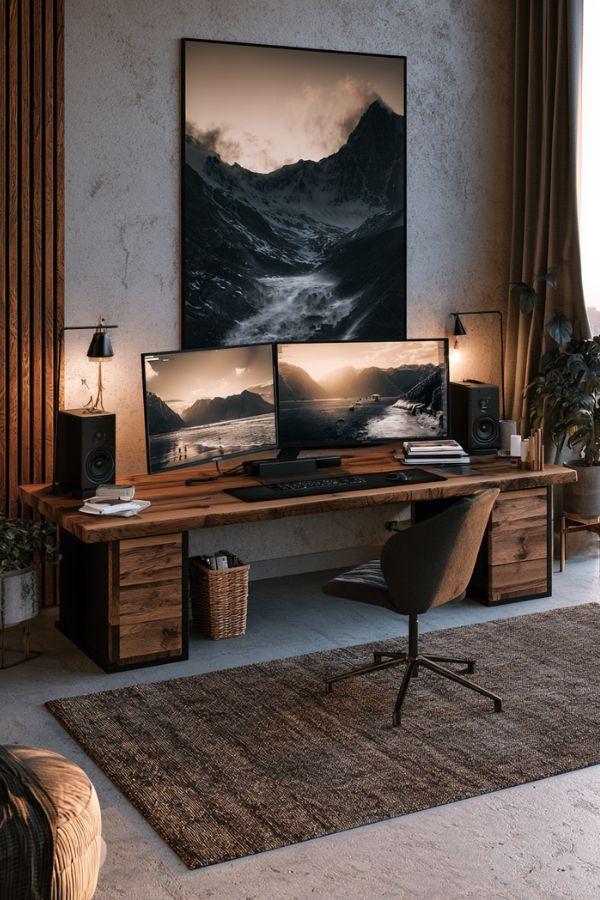
7. Multi-Level Desk Setup With Exposed Ductwork and Black Metal Storage

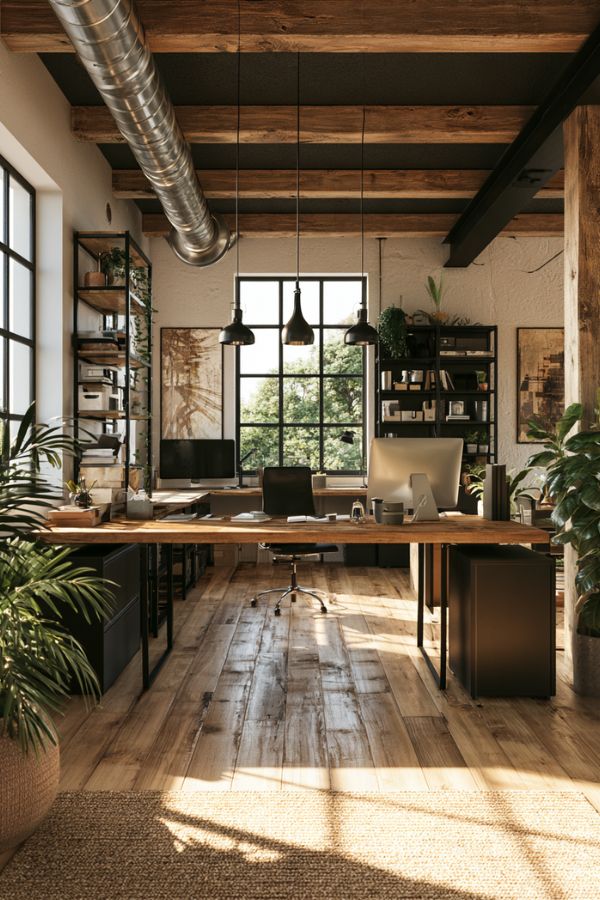
A multi-level desk is a smart industrial home office idea for people who juggle tasks, like a tech startup owner. The extra shelf level can hold a monitor, router, or a notebook station, while the main level stays open for typing. Exposed ductwork above adds an industrial ceiling detail, even in a modern building.
Because tech setups can get messy fast, storage is key. Black metal bookcases work well, especially when you mix wires, notebooks, and a few closed boxes. Keep a half-empty coffee cup off the main work zone by giving it a single “drink spot,” like a small side table or coaster area. Add a soft throw over the chair to balance the metal and make the space feel less sharp.
Late afternoon light can create strong shadows, so plan where the screen sits. Angle the desk so light hits from the side, not straight behind you. Use a desk lamp with a simple metal shade for evening work. For styling, keep your wall decor minimal and let the shapes of the desk and shelving stand out. Use labels on boxes for cables and adapters. This helps you find things fast and keeps the shelves looking calm.
- Use the upper shelf for the monitor to free desk space.
- Sort cables into labeled boxes on the bookcase.
- Give drinks a set spot to avoid spills near tech.
- Add a throw to soften the chair and add texture.
- Angle the desk to reduce screen glare from windows.
Pro Design Tip: Group tech by purpose (charging, audio, network) and store each group in its own bin, so the shelf looks tidy and stays easy to maintain.
Budget Considerations: Multi-level desks can be pricey; you can copy the look with a basic desk plus a sturdy monitor riser or a small shelf unit placed on top.


8. Student Industrial Study Space With Matte Black Shelving and Headphones


An industrial study space can be simple and small, which makes it great for students. Matte black shelving with art supplies sets a focused tone, and a clean desk surface supports reading and homework. Headphones are part of the daily routine, so plan for them with a hook or stand instead of leaving them on the chair.
Morning light through a steel-framed window looks crisp and helps with energy. Place the desk near the window, then use the shelving to the side for pens, paper, and tools. If there is a slightly wrinkled jacket on the chair, add a wall hook or a slim coat rack so the chair stays ready for studying. A small plant casting a shadow can make the corner feel alive, even if the rest is simple. Choose a plant that can handle indoor light, like pothos or a small snake plant.
For styling, keep the colors limited: black, gray, and one warm tone like tan or olive. Use matching containers on the shelves so small items look organized. Keep one tray for daily pens and one bin for extra supplies. If you have lots of paper, add a vertical file sorter to stop piles. This setup is easy to keep clean, which matters when you share space with a bedroom or living room.
- Hang headphones on a hook to clear desk space.
- Use matching cups or bins for pens, markers, and tools.
- Add a plant to soften black shelving and add contrast.
- Set a jacket hook so the chair stays clutter-free.
- Use a vertical file sorter to manage papers and notes.
Pro Design Tip: Keep one shelf empty or lightly styled, because open space makes the whole study area feel less stressful.
Budget Considerations: Matte black shelves can be found secondhand; you can also paint basic shelving with a durable matte spray paint for a similar look.


9. Architect Blueprint Corner With Brick, Concrete, and Leather Chair
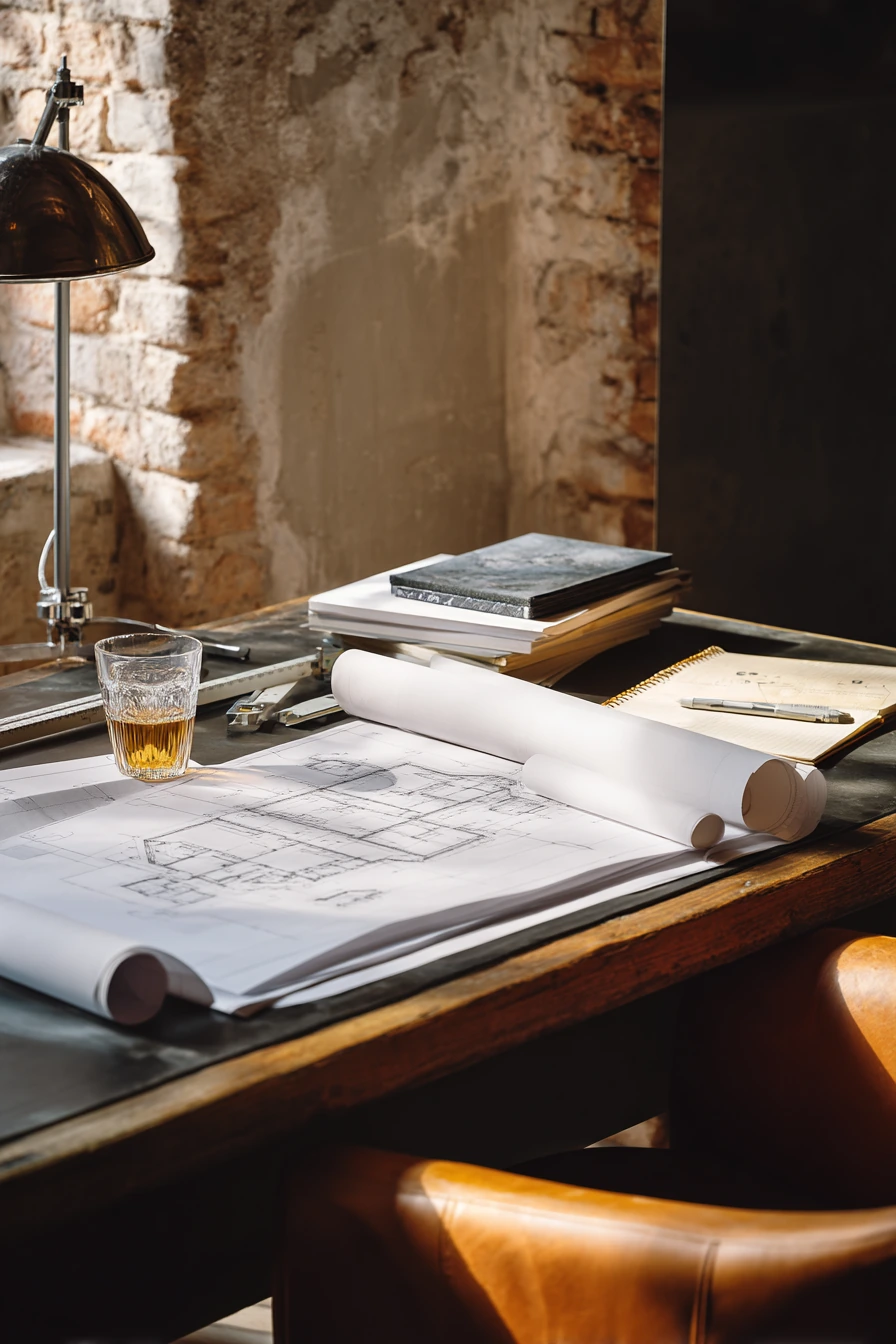

An architect-style blueprint corner is a strong industrial home office idea because it mixes work tools with rich materials. Exposed brick and concrete walls create a studio vibe, while a wooden desk keeps the space warm. A leather armchair adds comfort for reading plans, reviewing notes, or taking a break from the desk.
To style the desktop, keep the items practical: scattered rulers, an open notebook, and a water glass. Use one large desk lamp with a warm bulb so the work surface is bright without looking harsh. If you work with blueprints, add a wide desk mat or a smooth board so paper slides easily and stays flat. Keep extra tools in a shallow drawer insert or a tray, so you can find them fast without leaving piles out.
This kind of office looks best when it feels intentional. Choose storage that matches the materials, like a metal file cabinet or a black cart. Add one framed print or one small model on a shelf to show your work without turning the room into a display. If the walls are both brick and concrete, add softness with a rug or curtains. That balance makes the space comfortable for long planning sessions.
- Use a warm desk lamp to light plans and reduce shadows.
- Add a desk mat to protect wood and help paper lay flat.
- Store rulers and tools in a tray to avoid clutter.
- Choose a leather chair for a soft, durable seating option.
- Balance brick and concrete with a rug or fabric curtain.
Pro Design Tip: Pick one main texture to lead (brick, concrete, or wood) and let the others support it, so the room feels layered but not busy.
Budget Considerations: Real leather can be costly; look for a used leather chair, or choose faux leather with a matte finish that still fits the industrial look.


10. Graphic Designer Workspace With Steel and Reclaimed Wood Desk
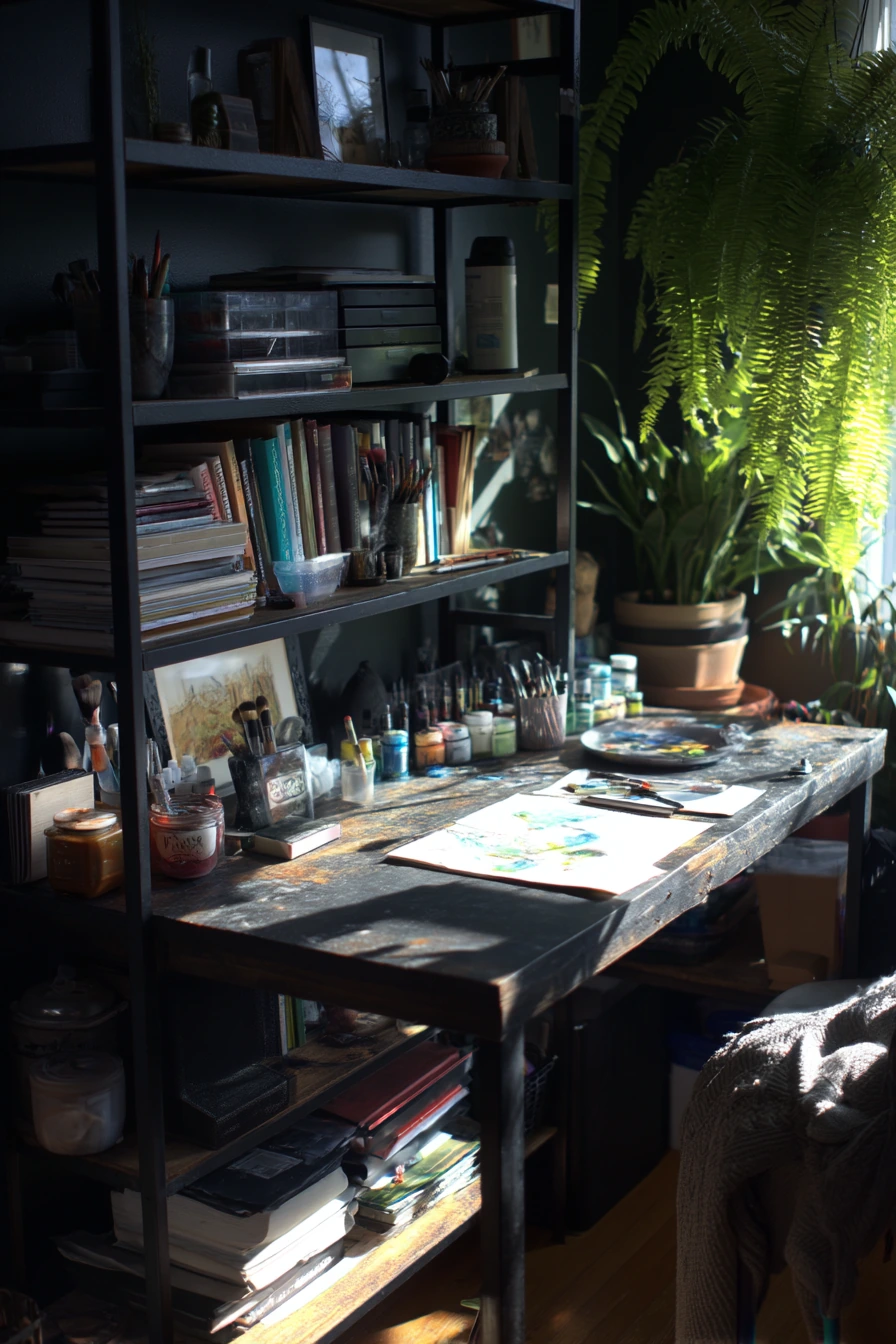

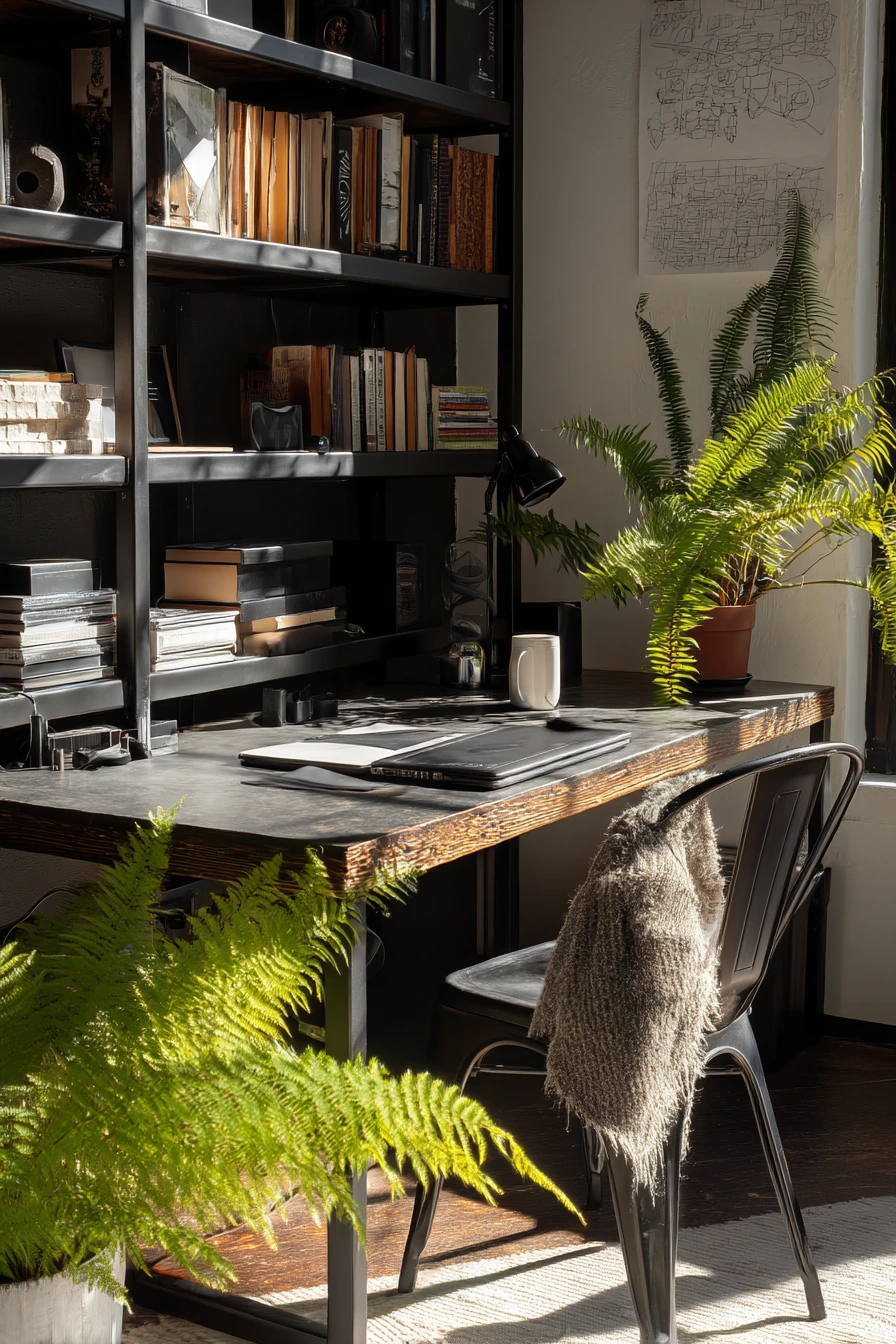
A steel and reclaimed wood desk is a strong base for a graphic designer workspace. It combines sturdy lines with a warm top, which suits both digital work and sketching. Black shelving with books and tech gadgets keeps the room functional, while natural mid-morning sunlight makes the space feel fresh and clear.
Style the desk for both work and photos. Keep sketch tools in one container, and use a simple desk mat to define the work zone. If you like a cozy feel, add a slightly rumpled throw on the chair, but keep it in a neutral color so it does not fight the shelving. Place a potted fern nearby for soft, full greenery that contrasts with the metal edges. Ferns also look good in pictures because the leaves add movement.
For storage, use the black shelving for books, a printer, and a few gadgets, but hide small items in boxes. Tech looks better when grouped, not scattered. Add one charging station on the shelf or in a drawer so cords stay in one area. If you want a quick industrial upgrade, swap basic knobs for black metal pulls, and add one task lamp with a metal shade. The goal is a workspace that feels creative, tidy, and easy to keep up with.
- Choose a desk that mixes steel legs with a reclaimed wood top.
- Use black shelving for books, gadgets, and closed storage boxes.
- Add a fern to soften metal lines with fuller greenery.
- Create a single charging station to control cords.
- Use a desk mat and one tool cup to keep sketch items contained.
Pro Design Tip: Use one “hero” item on the shelf, like a framed print or a favorite book stack, and keep the rest simple so your work stays the focus.
Budget Considerations: Reclaimed wood and steel furniture can be expensive; try a budget desk with a wood-look top and add industrial style with a black lamp, shelf brackets, and hardware.

Industrial home office ideas work because they blend strong materials like brick, steel, and concrete with warm wood, soft throws, and plants. You can start small with one reclaimed wood desk or black metal shelf and build from there.
Focus on comfort and function first: good lighting, clear surfaces, and simple storage. Then add industrial details like matte black finishes, steel-framed shelving, and factory-style window styling.
Frequently Asked Questions
1. How do I soften an industrial home office so it doesn’t feel too cold, dark, or harsh?
Balance hard industrial materials like steel, concrete, and brick by layering in warm, organic textures. Add a plush or woven rug underfoot, a chunky knit throw or a genuine leather chair for seating comfort, warm wood tones (like reclaimed timber), and living plants like pothos, ferns, or snake plants to bring natural movement into the room.
2. What are the best ways to manage wires and tech clutter in an industrial workspace?
Use targeted cord management tools to keep exposed wires looking intentional rather than messy. Try adhesive cable clips or sleeves routed along the underside of desks and shelf legs, mount power strips directly beneath the desktop, and corral chargers and adapters inside labeled metal bins or boxes on your shelves.
3. How do I choose the right lighting for an industrial-style office?
Layer your lighting to avoid eye strain and highlight rich architectural textures like brick and wood. Combine bright natural window light with warm-toned bulbs (around 2700K) in desk lamps, adjustable drafting lights, wall sconces, or exposed-pipe fixtures. Using a dimmer switch also lets you transition easily from bright daytime task lighting to cozy evening illumination.
4. How can I get an authentic industrial office look on a budget?
Instead of expensive custom commercial furniture, focus on smart DIY swaps and thrifted finds. Combine affordable butcher-block wood tops with black steel pipe legs for a custom desk, use sturdy metal shelving brackets with basic pine boards, and add industrial character with matte black spray paint, vintage-style task lamps, and peel-and-stick brick accent panels.
5. How do I style open metal shelves so they look organized and professional?
Follow the practical-to-decorative rule: keep about 70 percent of your shelving functional (storing books, binders, and closed storage boxes) and 20 to 30 percent open for curated decor items like framed art prints, small plants, or pottery. Grouping items in visual triads (height variations of three) keeps the display looking balanced and clean.
Would you like me to help generate social media captions or Pinterest pin text to go along with this industrial home office guide?