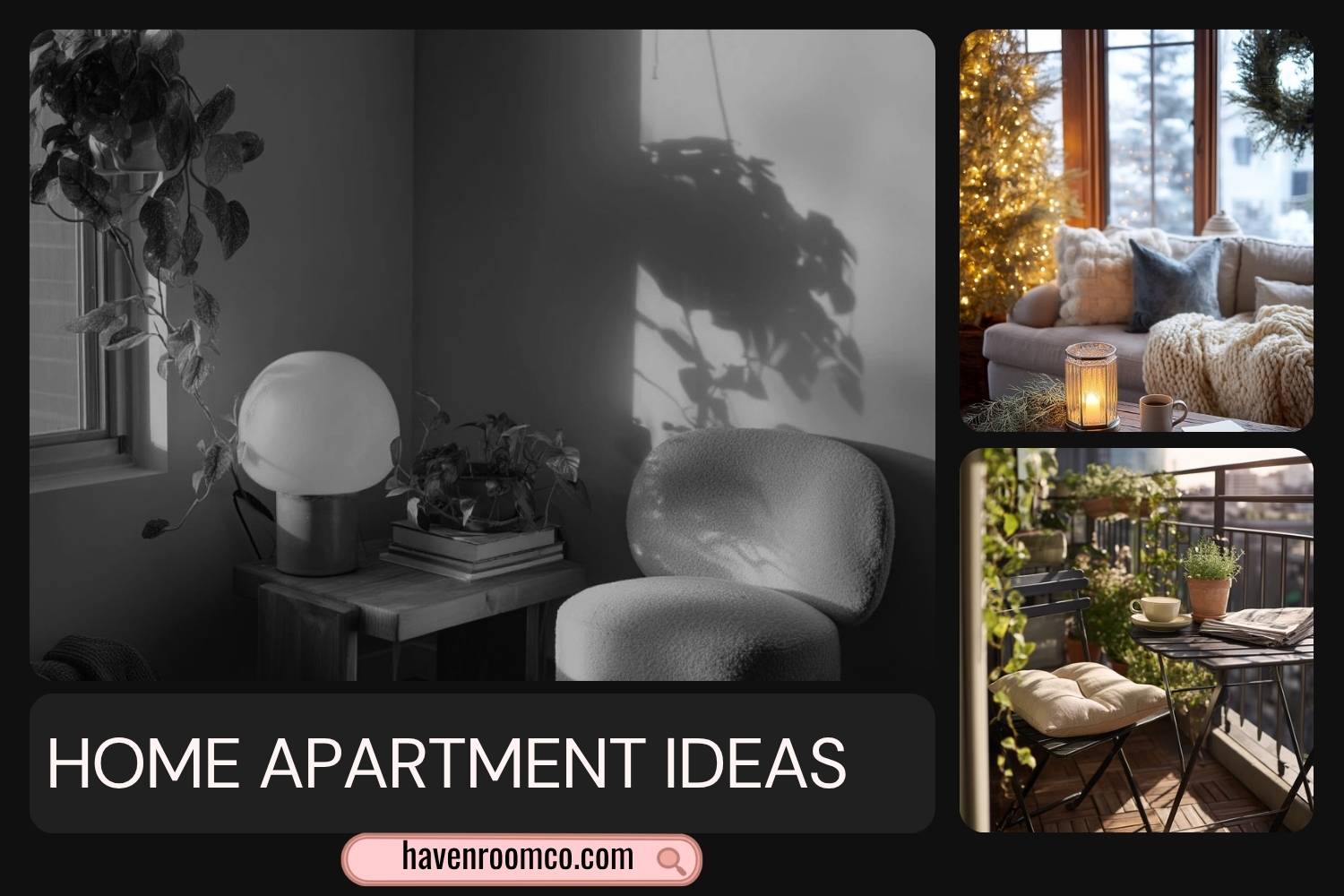
Looking for home apartment ideas that feel calm, useful, and easy to copy from a photo? Small spaces can look better and work better when you focus on light, layout, and a few cozy textures.
This guide uses real-life apartment scenes like a linen sofa by a sun-drenched window, a tiny dining nook, a narrow kitchen counter, and a compact entryway. Each section gives small changes that make a big difference without a full remodel.
You will get practical steps, quick styling ideas, and simple ways to keep your apartment feeling lived-in, not staged. These tips also help you take better photos for Pinterest, because clean corners and good window light show up well.
Use the sections that fit your home now, then save the rest for later. Even one shelf, one rug, or one lamp can shift the mood.
1. Compact Studio Living Room With Linen Sofa

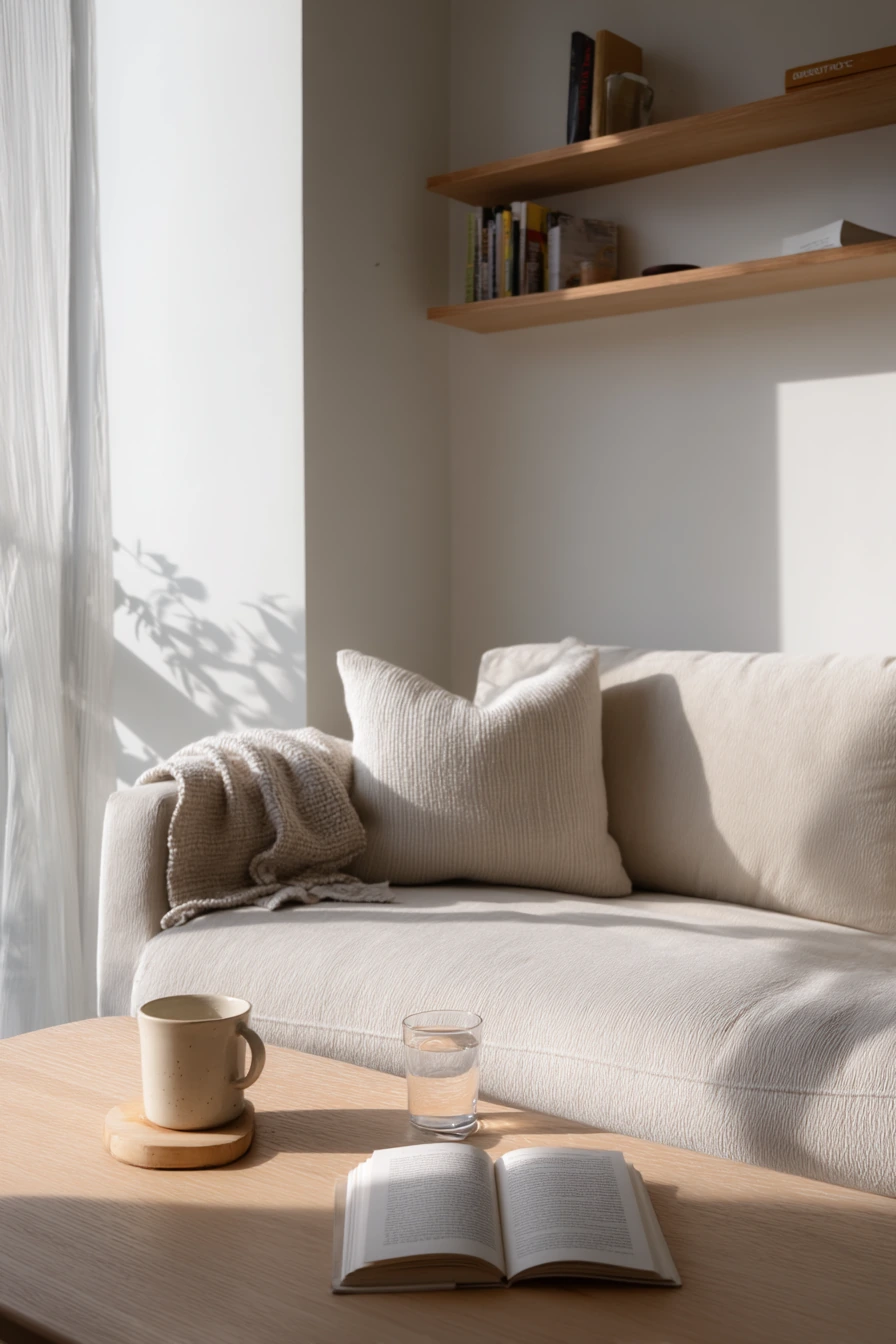
A compact city studio can feel open when you keep the main pieces light and low. Start with a linen sofa in a soft neutral color. Pair it with a pale oak coffee table so the center of the room stays airy. A folded knit throw and an open paperback add a real morning routine feel, while a half-full water glass keeps it honest and lived-in.
Floating wall shelves are your best friend in a small apartment. They give you storage without taking floor space. Keep the shelf styling simple: a small stack of books, one ceramic mug, and one plant. Let the sun-drenched window light do the work. Sheer curtains soften the light and make the room feel bigger, and plant shadows across a white wall add texture without clutter.
For a tiny dining nook, choose a small table or a wall-mounted drop-leaf. Keep one chair tucked in and use the second as extra seating by the sofa when friends come over. Stick to tactile neutral textures like linen, knit, and light wood so everything mixes well even if you buy items over time.
- Place the coffee table closer to the sofa to shorten the walking path.
- Use one tray on the table to hold the book and glass so it looks tidy fast.
- Hang shelves above the sofa arm to replace a bulky side table.
- Choose one plant with soft leaves to cast gentle shadows in the light.
- Keep decor to groups of three items so the eye can rest.
Pro Design Tip: Pick a rug that is large enough for the front legs of the sofa to sit on it, because this makes the studio feel like a real living room zone.
Budget Considerations: Floating shelves and sheer curtains have many low-cost options; use basic brackets and paint them the wall color for a built-in look.


2. Cozy Living Room Corner With Bouclé Chair
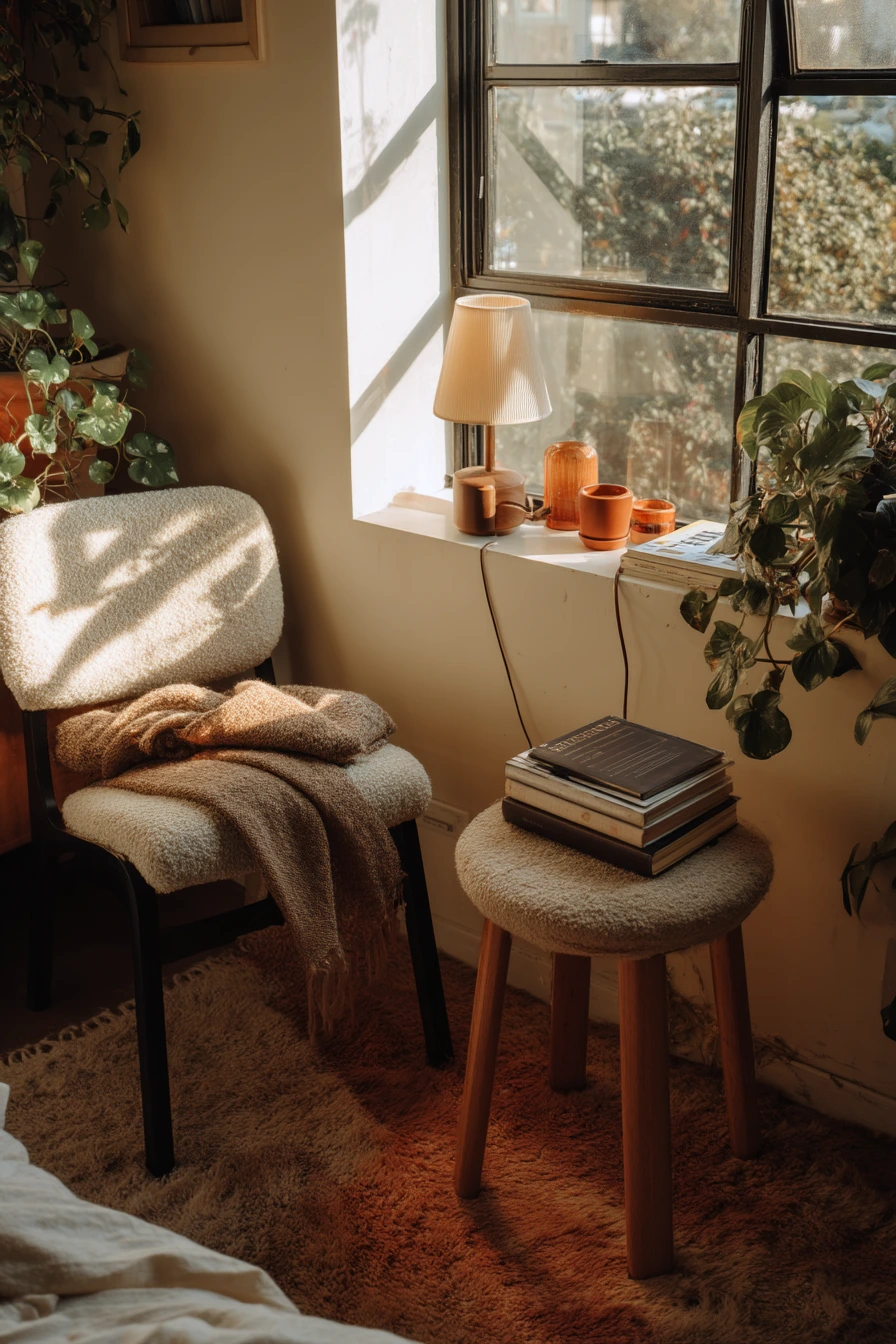

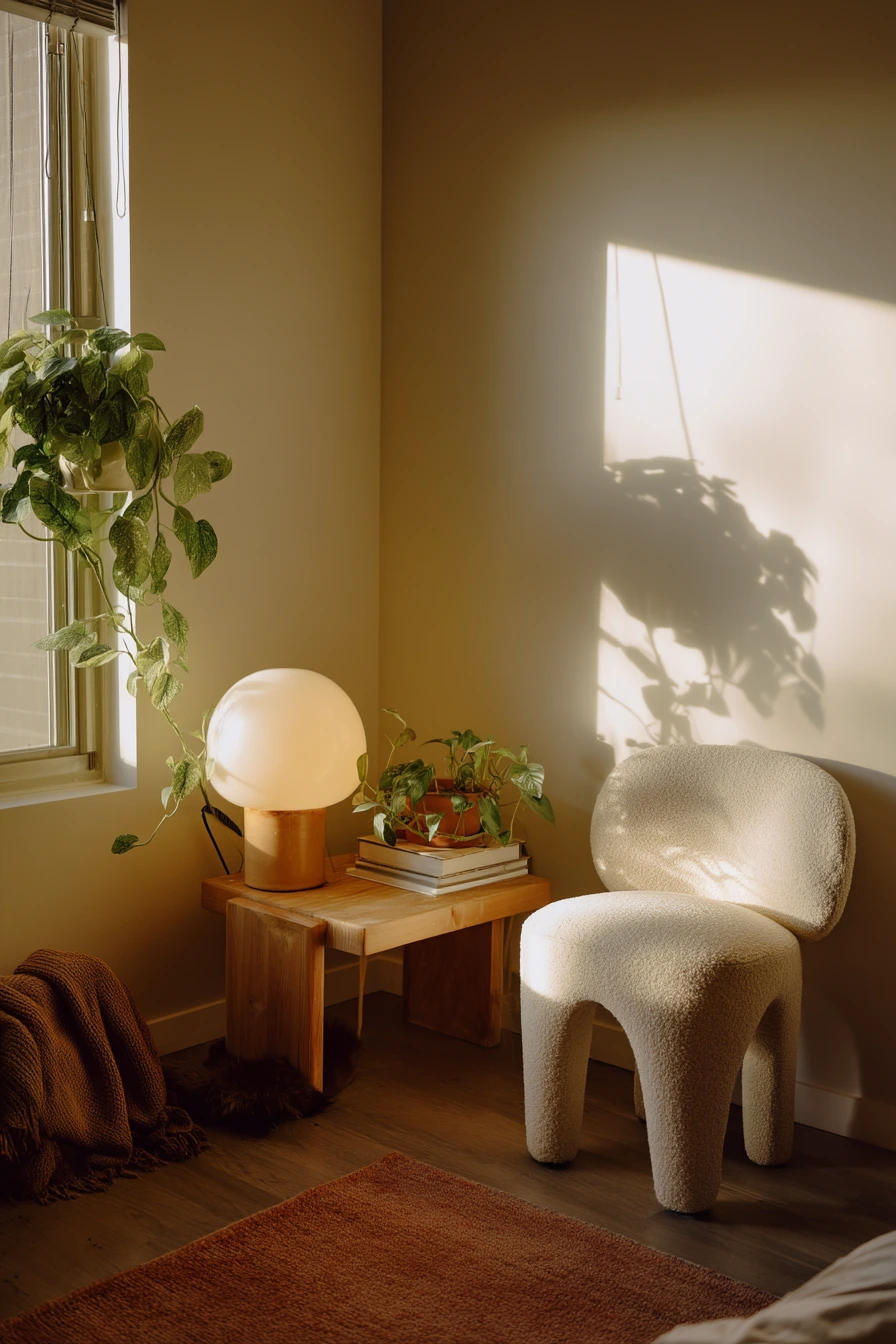
A small apartment living room corner can become your favorite spot when it has one comfortable chair, warm light, and a simple place to set a book. A low boucle chair works well because it feels soft but does not look heavy. Put it beside a narrow window to catch late afternoon daylight, then layer a warm wool blanket that looks slightly wrinkled, not perfect.
Use a wooden stool as a tiny table. Stack a few books and leave the top one open or bookmarked to show it is used. Add a charging cable in a neat loop so you can plug in your phone without the mess. A leafy houseplant that brushes the wall adds life and also softens hard corners.
Finish the corner with a soft terracotta rug to warm up neutral floors. Add an amber table lamp glow for evening, especially if the overhead light is harsh. This is a hygge-style setup, but you do not need a lot of items. The key is texture: boucle, wool, wood grain, and a plant.
- Angle the chair slightly toward the room so it feels inviting.
- Use a small bulb with a warm color to avoid a blue, cold lamp look.
- Hide extra cords with adhesive clips under the stool edge.
- Keep one small basket nearby for a blanket and a magazine.
- Pick a rug that is at least as wide as the chair so it looks grounded.
Pro Design Tip: Layer two light sources, window light plus a table lamp, to create depth and make the corner look cozy in photos and in real life.
Budget Considerations: A stool can replace a side table, and you can find affordable boucle-style covers or chairs secondhand with a simple slipcover.

3. Small Apartment Dining Nook By the Window


A compact apartment dining nook feels special when it is near a window and set up for easy meals. A round walnut table is great in tight spaces because it has no sharp corners. Two mismatched chairs can look intentional when they share one link, like a similar wood tone or the same seat height.
Style the table like a calm morning ritual. Stack ceramic plates, add fresh bread on a linen cloth, and place a small vase with wildflowers. Leave an open cookbook resting beside a water glass so the nook looks used, not staged. Sunlight streaking across a textured wall adds warmth and makes even simple meals feel slower and nicer.
Keep the earthy palette simple: walnut, cream linen, white ceramics, and a small green stem. If you need storage, use a slim wall shelf or a narrow cabinet near the table. If space is very tight, consider one chair and a bench that slides under the table. The goal is a spot you actually use, not a corner that collects clutter.
- Use a round table under 36 inches wide for most small apartments.
- Choose chairs with open backs to keep the view light.
- Put one small runner or placemats to protect the table and add texture.
- Keep a small tray for salt, pepper, and a candle so it is easy to clear.
- Hang a simple mirror on the wall to bounce window light.
Pro Design Tip: Keep the center of the table mostly open, then group items at one side so you still have room to eat without moving decor.
Budget Considerations: Mismatched chairs can save money; shop thrift stores and repaint or stain them so they relate to the table.


4. Small Apartment Balcony Garden With Café Table
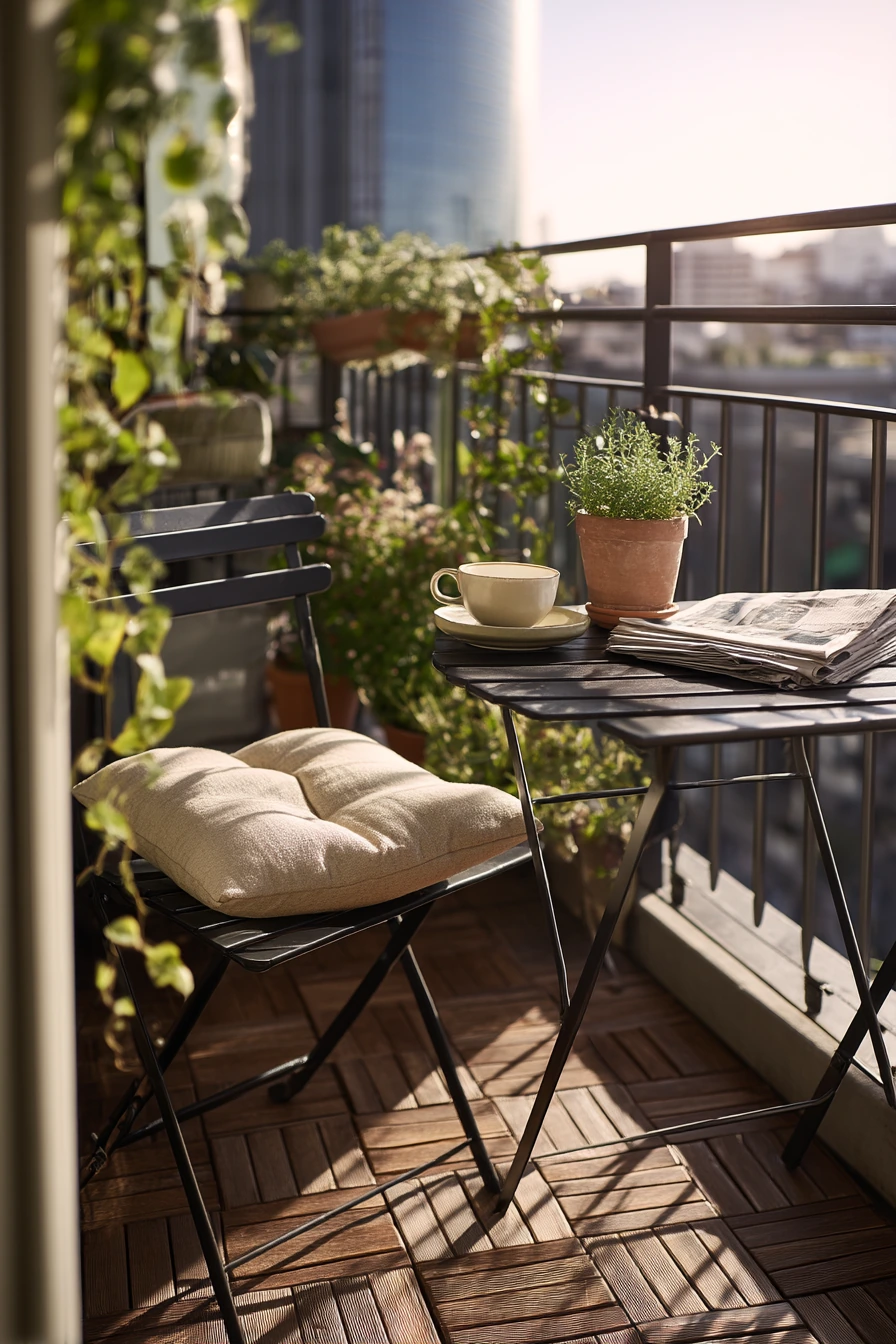

A small apartment balcony can feel like an extra room when you treat it like a tiny outdoor lounge. Start with warm wooden deck tiles to cover plain concrete. Add a slim metal café table so you have a place for a morning coffee mug and a folded newspaper without blocking the walkway.
Choose one woven chair with a rumpled linen cushion. The rumple is good because it reads relaxed and real. Build your balcony garden with potted herbs you will use, like basil, mint, and rosemary. Add trailing ivy or another spill-over plant to soften the railing and make the view feel greener, even with a city skyline beyond.
For a breezy urban sanctuary mood, keep the colors simple: black or white metal, light wood, and green plants. Use golden morning sunlight by placing taller plants where they can cast soft shadows. Add a small outdoor lantern or a battery candle for evenings, and store extras in a weatherproof bin so the balcony stays clear.
- Group pots in threes, with one tall, one medium, and one trailing plant.
- Use saucers under herb pots to protect the deck tiles from stains.
- Hang one rail planter to add greens without using floor space.
- Choose a foldable chair if your balcony is very narrow.
- Keep a small watering can outside so plant care is easy.
Pro Design Tip: Place your tallest plant in the corner farthest from the door to create a green backdrop and make the balcony feel deeper.
Budget Considerations: Deck tiles and planters add up; start with two large pots and one herb set, then expand as you learn what grows well in your light.


5. Tiny Apartment Kitchen With Matte Cabinets
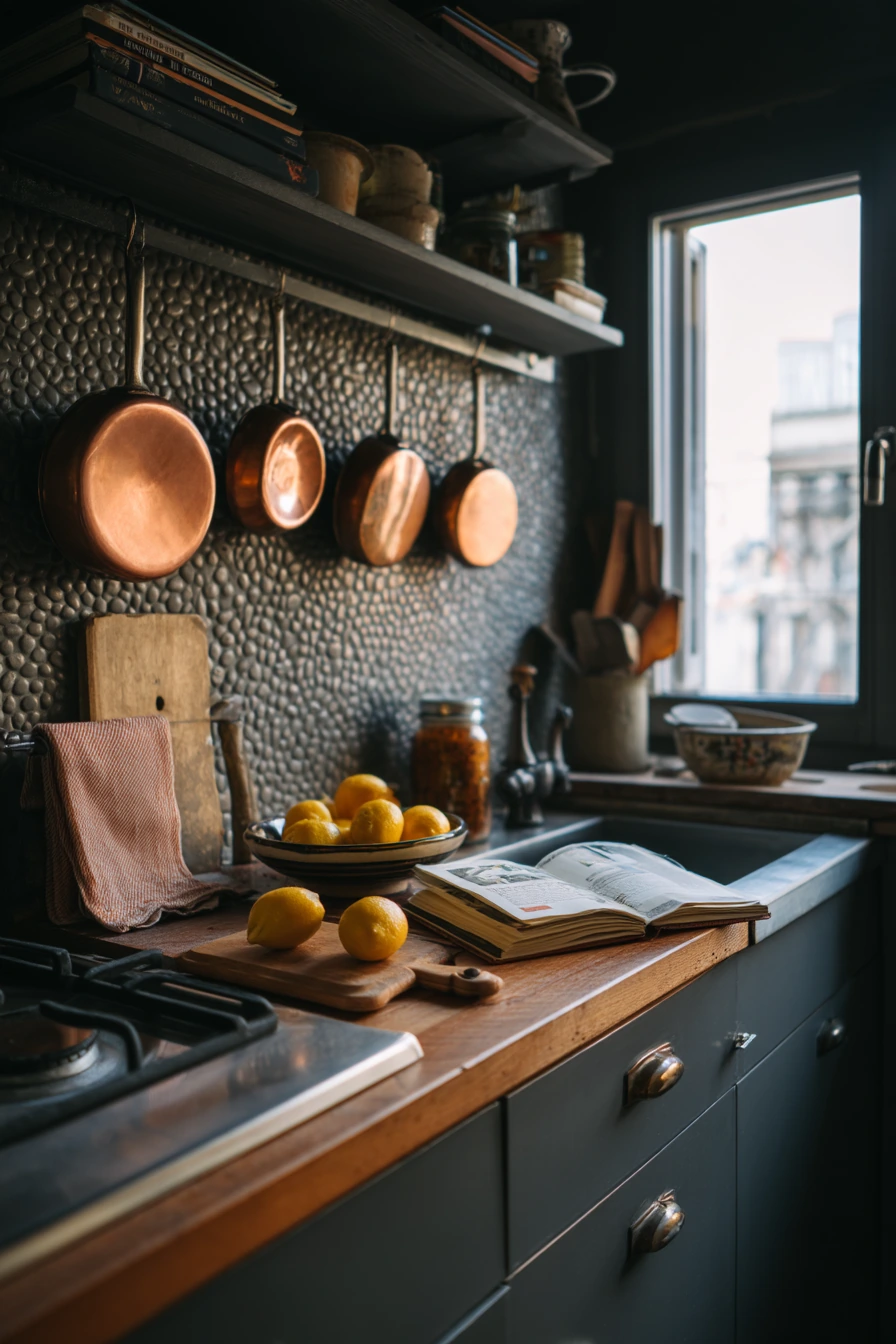

A tiny apartment kitchen works best when your counter stays mostly clear and your tools are easy to grab. Matte cabinets look calm and hide fingerprints better than glossy ones. On a narrow butcher-block counter, keep only daily items out, like a ceramic bowl of fresh lemons and a dish towel casually draped near the sink.
Use vertical space to free the work surface. Hanging copper pans add warmth and save cabinet room. Keep a small cutting board and one open spice jar near the stove when you cook, then return them to a tray or drawer after. A cookbook propped near the stove makes the space feel active, like a warm domestic cooking moment, not a showroom.
Soft daylight from a small window helps a lot. If your window is tiny, add an under-cabinet light or a warm bulb to brighten the textured backsplash. For styling, keep the color story tight: copper, wood, cream ceramics, and green herbs. For function, add hooks for oven mitts and a slim rolling cart if you need extra storage.
- Store oils and spices on one small tray so they move together.
- Use a magnetic strip for knives to clear drawer space.
- Add a narrow shelf above the backsplash for salt and a small plant.
- Choose matching containers for dry goods to reduce visual clutter.
- Keep one towel hook by the sink to avoid towels on the counter.
Pro Design Tip: Keep the most-used zone clear by treating one section of counter as a no-storage prep area, even if it is only 18 inches wide.
Budget Considerations: If hanging copper pans are too pricey, use inexpensive hooks and display your current pans, then upgrade one piece at a time.


6. Apartment Work Corner by the Window
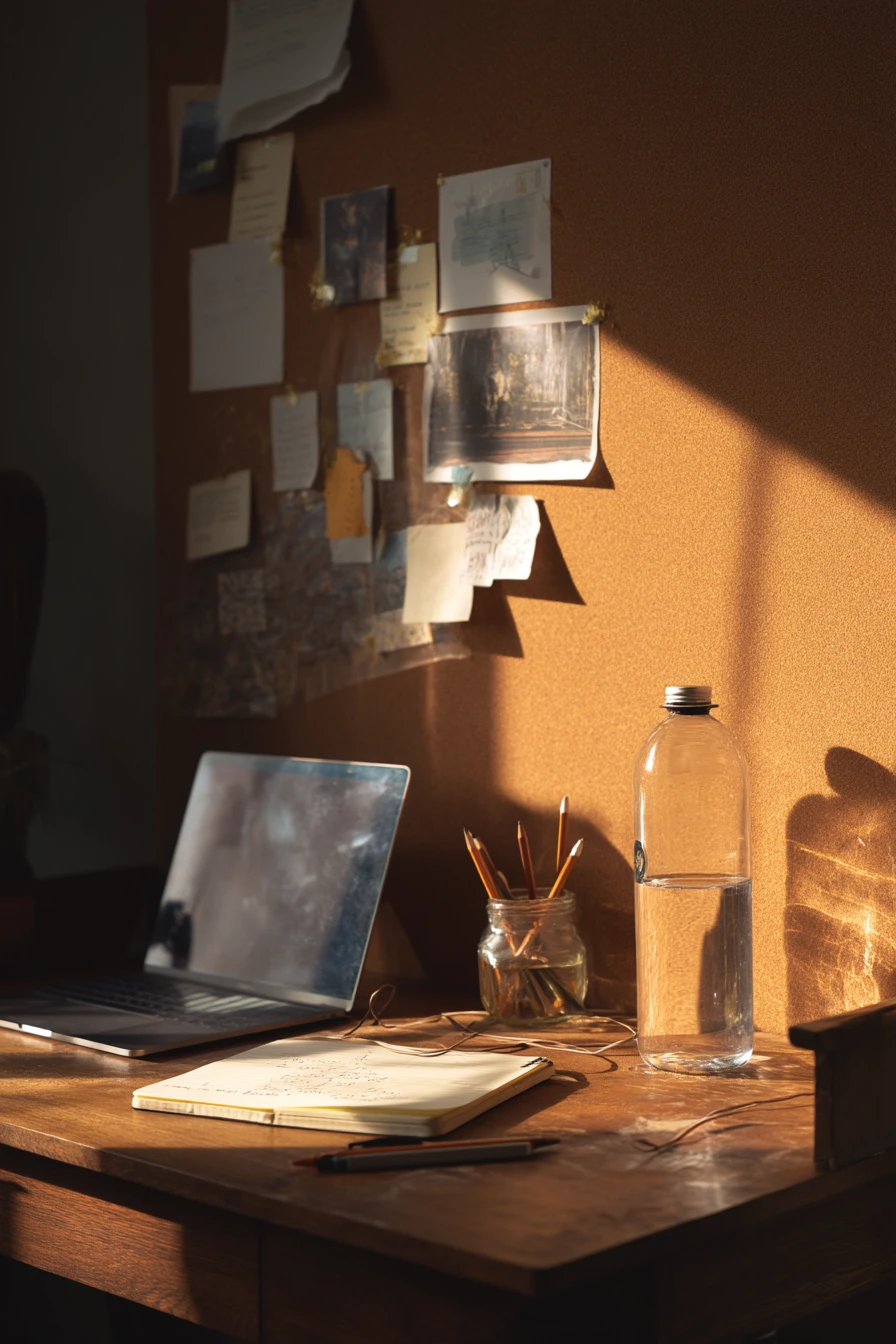
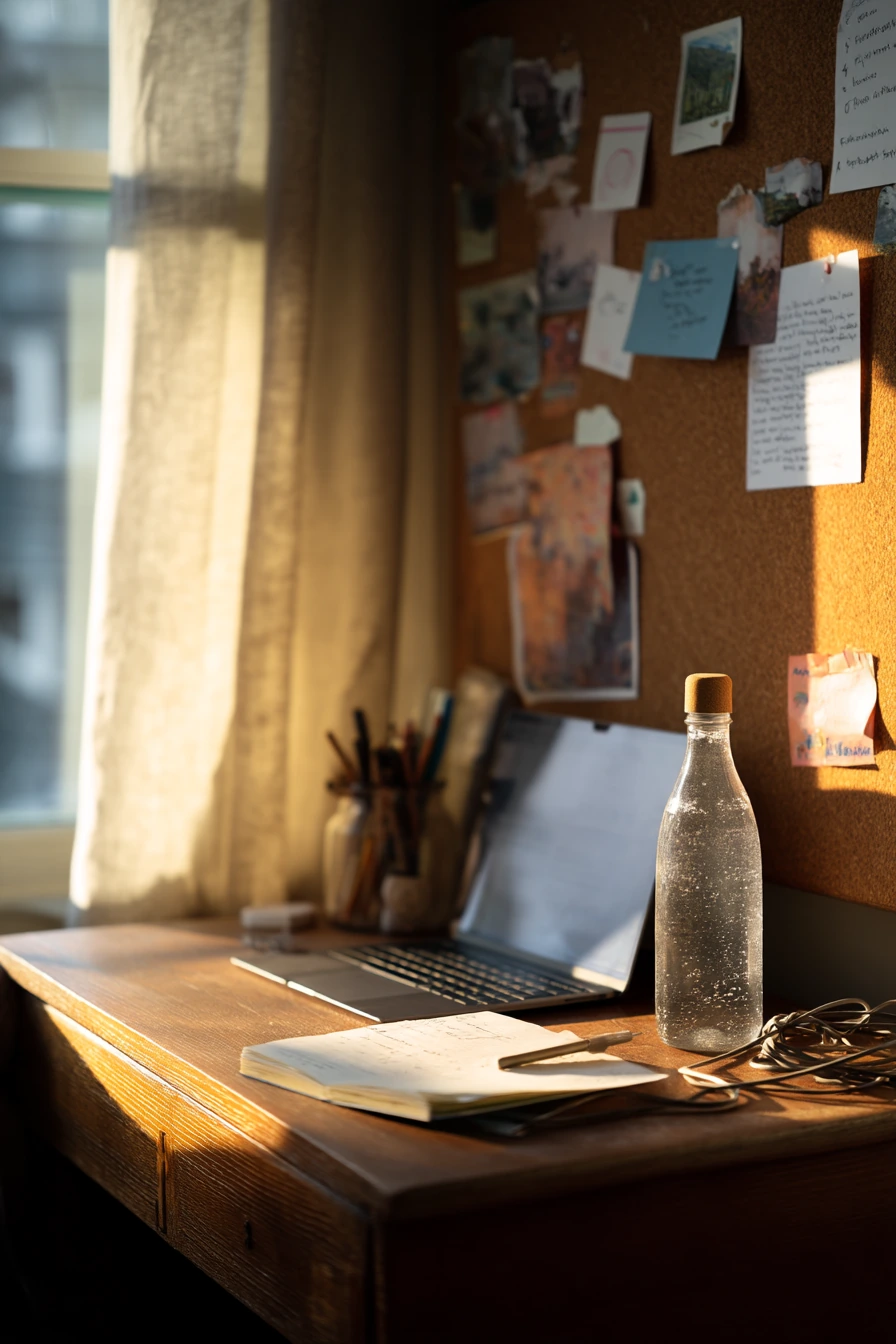
An apartment work corner can feel calm when it is simple and close to natural light. Place a slim wooden desk beside the window so the morning sun washes across the wall and desk surface. A laptop with a soft glow is enough for most tasks, and a glass water bottle keeps the setup practical.
Add tools that match your routine. If you sketch or plan, keep a sketchbook and pencils in a cup, not spread across the whole desk. Use a cork board for notes and postcards so papers do not pile up. A charging cable looping across the desk edge can look messy, so guide it with a clip under the desk and leave just enough slack to plug in.
For texture, mix wood, cork, and paper. Keep the color palette light so the corner does not feel heavy in the room. If you work in calls, add a small lamp for cloudy days and a soft background behind you, like a plain wall or a simple print. This creates a thoughtful productivity atmosphere without needing a full home office.
- Use a small desk mat to define the work zone and protect the surface.
- Add a slim drawer unit or a lidded box for cords and small tools.
- Place the cork board at eye level so it is easy to read.
- Keep one notebook open to your current page to reduce start-up time.
- Use a small plant to soften the corner without taking much space.
Pro Design Tip: Face the desk toward the light at a slight angle to reduce screen glare while still getting bright, flattering daylight.
Budget Considerations: A simple table can act as a desk; add an affordable chair cushion and a basic lamp before investing in storage pieces.


7. Evening Apartment Living Room Styling


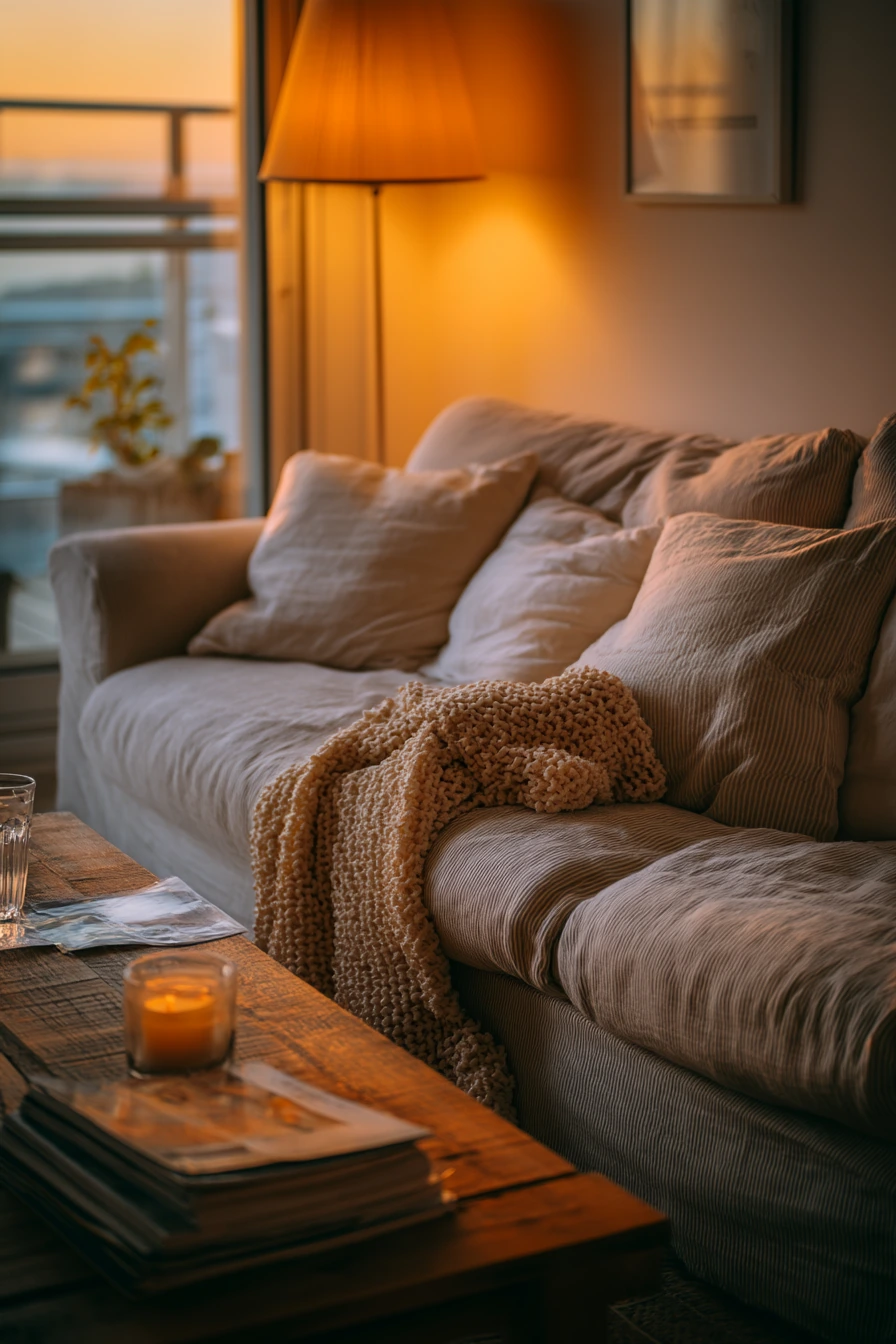
An apartment living room feels most comforting at night when the lighting is soft and the surfaces are not crowded. A linen sofa with rumpled cushions looks welcoming, and a knitted throw tossed casually makes it feel ready for relaxing. Keep a low coffee table with just a few items: a candle, a water glass, and a small stack of magazines that can be slightly crooked.
To get that calm cinematic warmth, avoid bright overhead lights. Use a warm amber floor lamp glow and, if you can, one smaller lamp across the room. This mixes well with fading twilight through the window and makes the space feel deeper. If your windows face neighbors, add light-filtering curtains so you still get that evening glow without feeling exposed.
For styling, use soft contrast. Pair light linens with one darker wood piece or a black metal lamp. Add one textured pillow, not five. Keep the coffee table clear enough that you can actually set down a snack. The best small space trick is to make it easy to reset the room in two minutes before bed.
- Use warm bulbs around 2700K for a softer look.
- Place a candle on a small coaster to protect the table finish.
- Store magazines in one basket to reduce piles.
- Keep one throw and rotate it by season for a fresh feel.
- Add a small rug or runner to soften footstep noise in apartments.
Pro Design Tip: Create a triangle of light with two lamps and one candle so the room feels balanced from any seat.
Budget Considerations: If you cannot buy new lamps, swap in warm bulbs and use a plug-in dimmer to control brightness.

8. Minimalist Small Apartment Bedroom Retreat

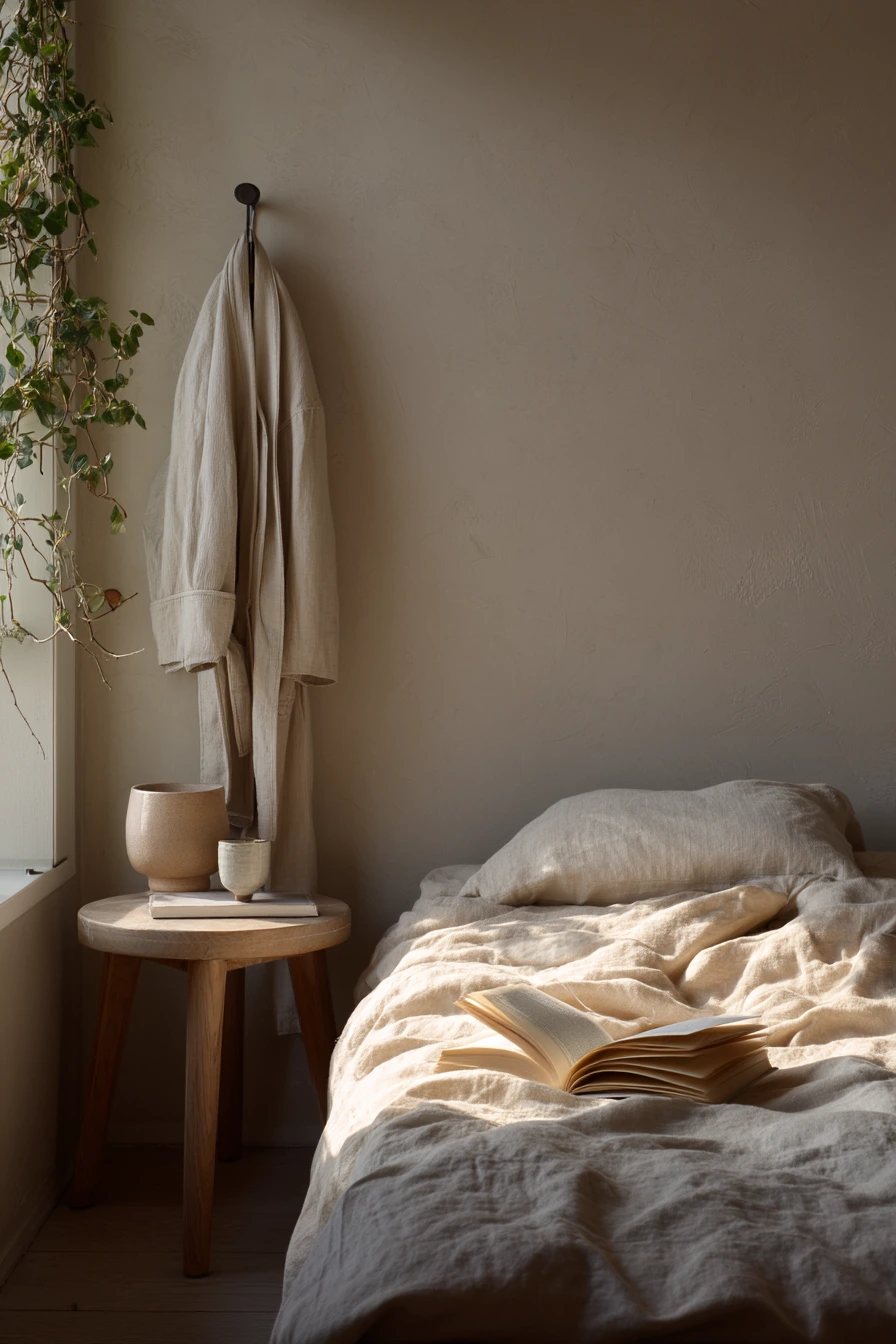
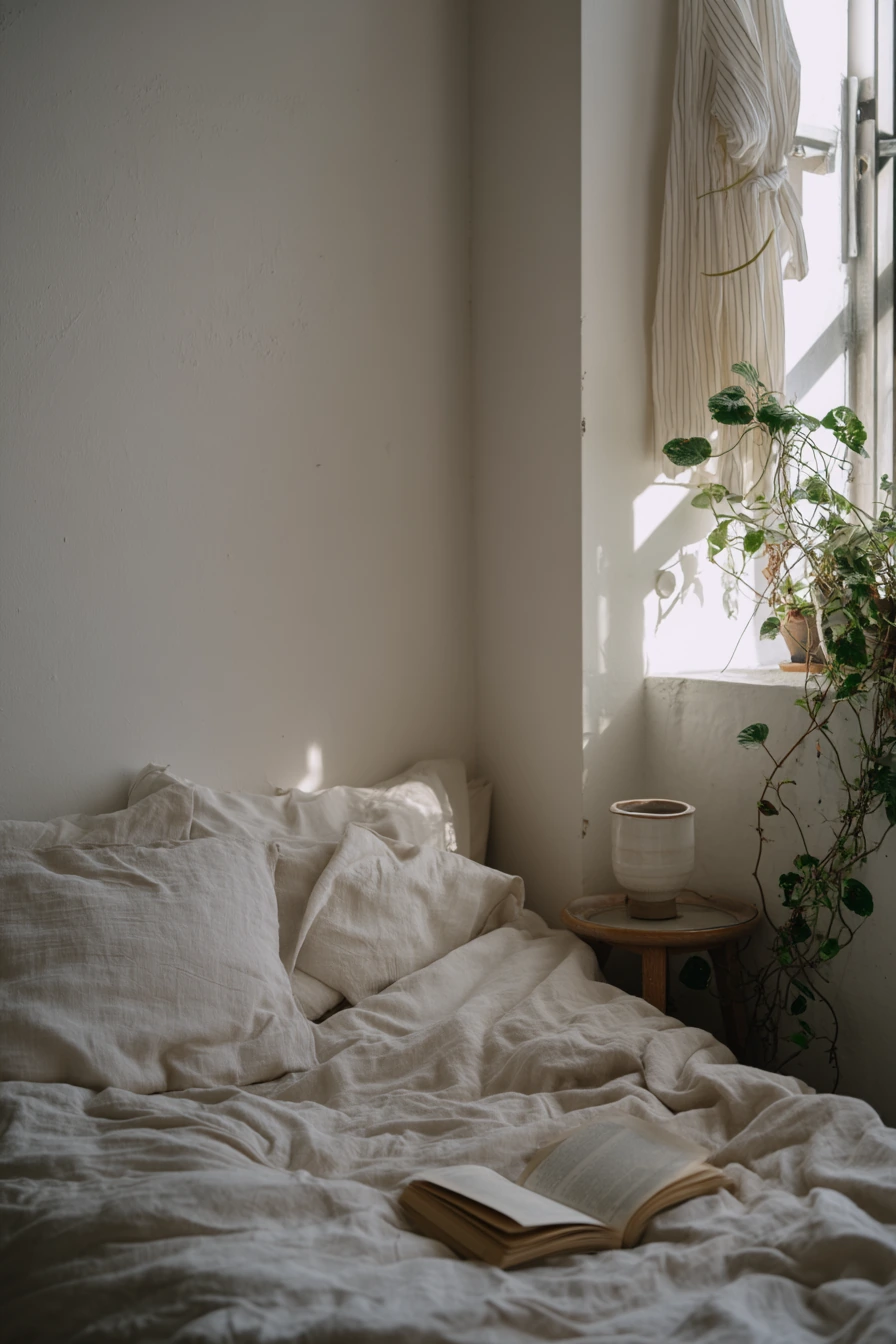
A small apartment bedroom feels restful when the basics are soft and the layout is simple. A low platform bed makes the ceiling feel higher and keeps the room looking open. Crumpled linen bedding is ideal because it looks relaxed and still feels clean when it is not perfectly pressed.
Use a bedside stool instead of a bulky nightstand. Add a ceramic lamp for gentle light and keep one book face-down to show the room is lived in. A soft cotton robe on a wall hook saves closet space and becomes part of the decor. Place a trailing plant near the window for a little green and a calmer mood.
Let morning light wash across pale walls and textured bedding. If you need darkness at night, layer a blackout shade under a sheer curtain. Keep the color palette light: cream, soft gray, pale wood. For storage, use under-bed bins and one narrow hamper so laundry does not spread. The goal is a tranquil minimalist retreat that still works for real life.
- Choose one bedding color and vary texture, not pattern, to keep it calm.
- Use wall hooks for robe, bag, or headphones to clear surfaces.
- Add a small tray on the stool for glasses and lip balm.
- Keep one scent item, like a small candle, for evening wind-down.
- Use a slim mirror to reflect window light and brighten the room.
Pro Design Tip: Mount your bedside light on the wall when possible to free up surface space and make the bedroom feel larger.
Budget Considerations: Linen can be expensive; start with one linen duvet cover and pair it with affordable cotton sheets in a similar tone.

9. Apartment Gallery Wall and Console Styling
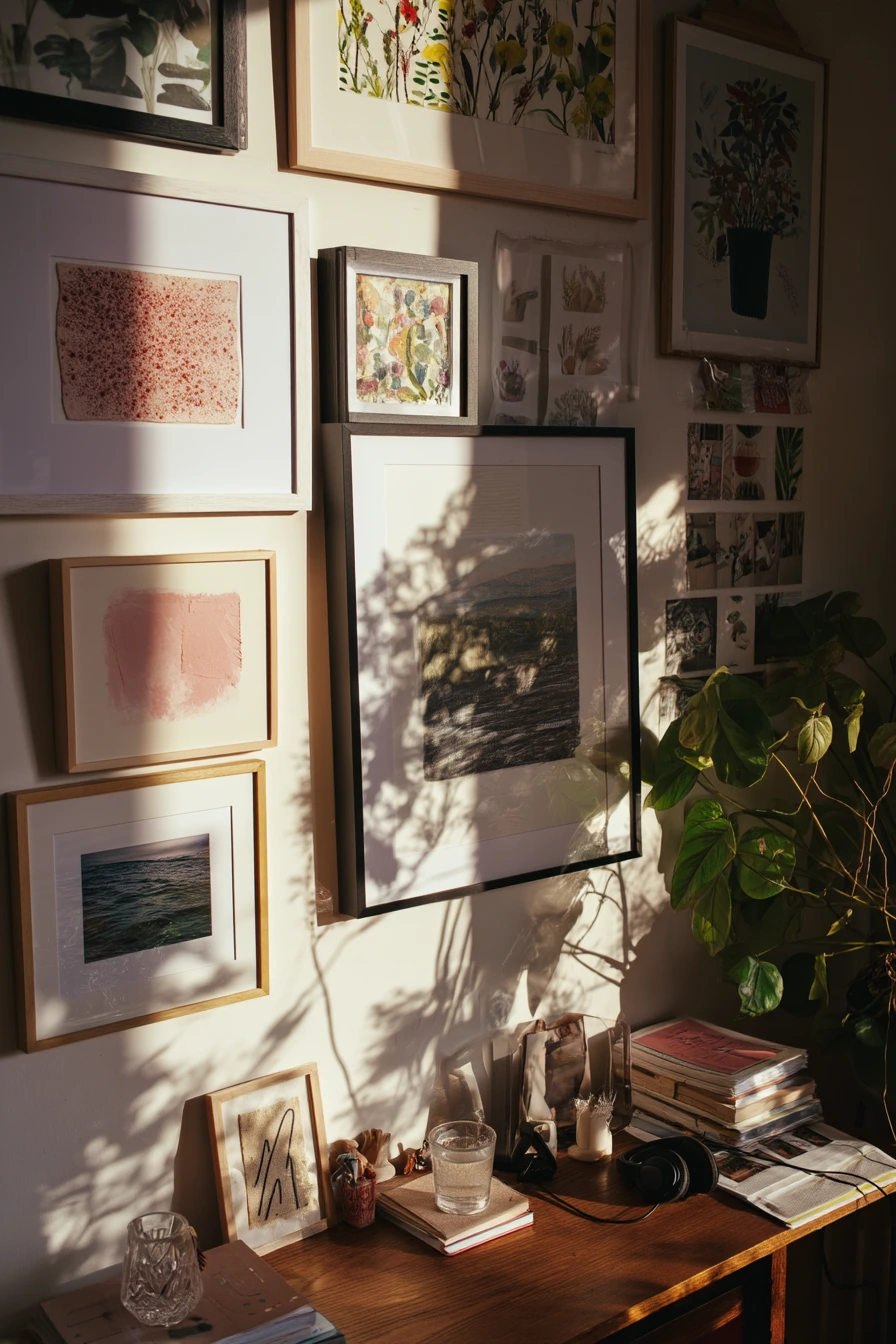
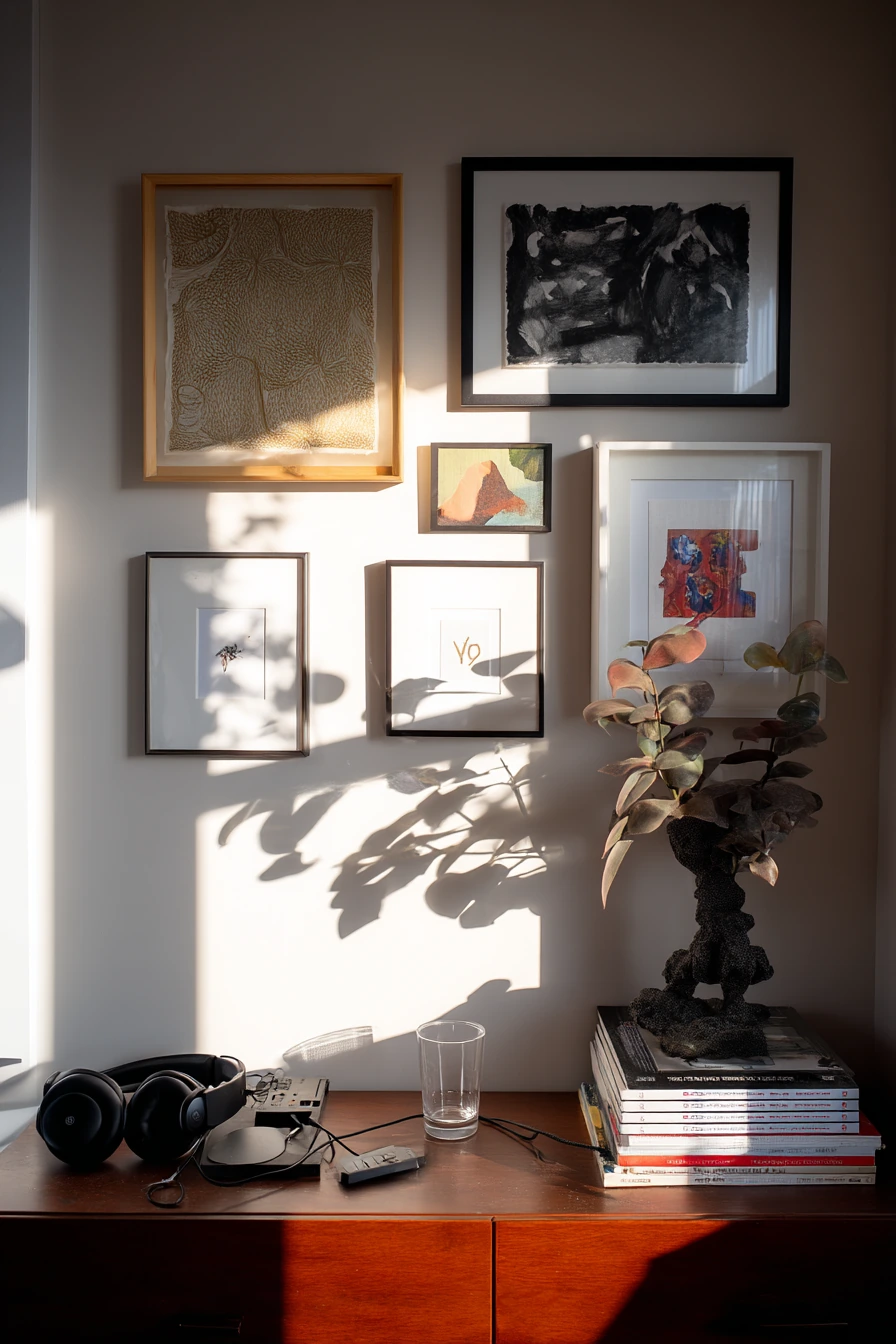
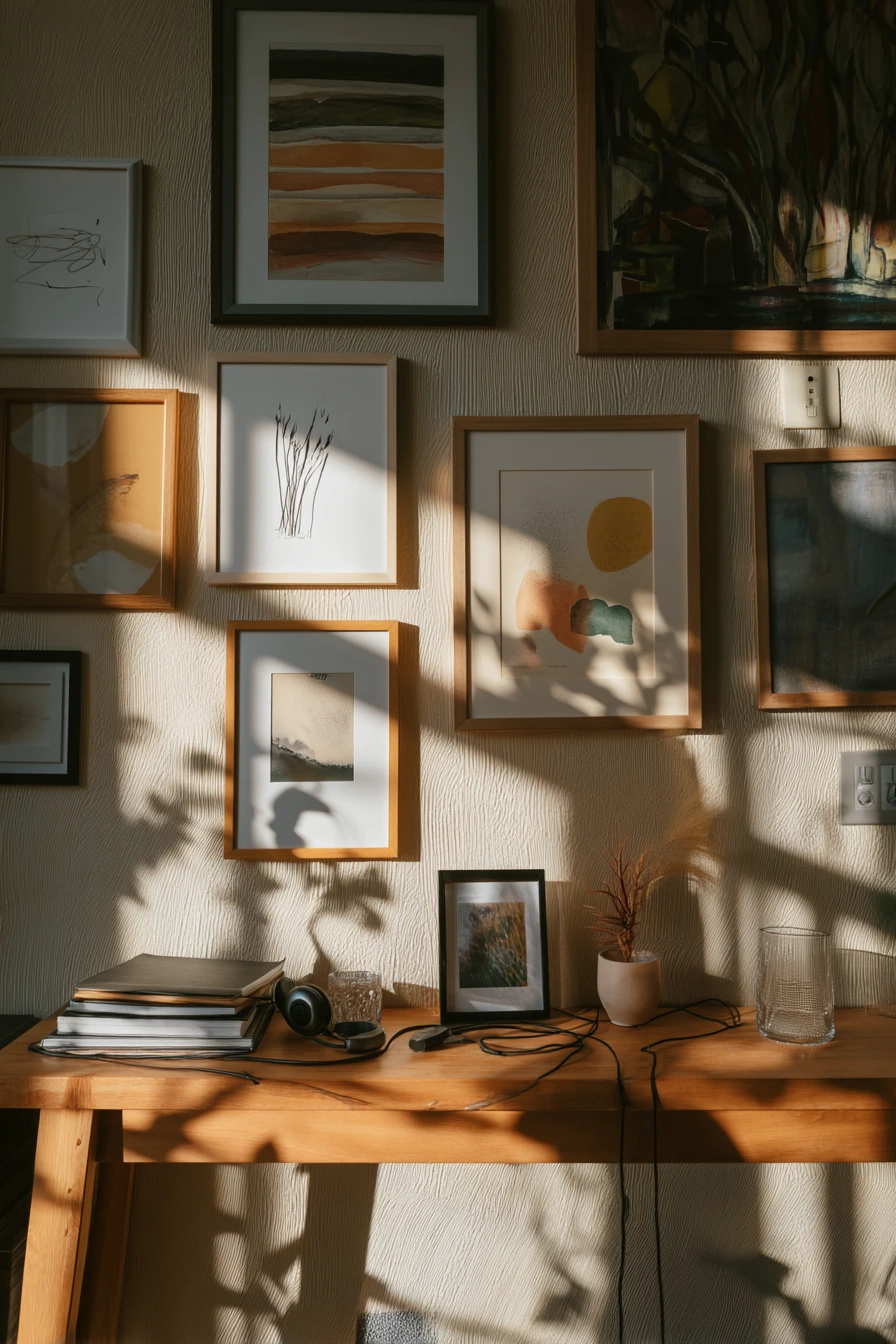
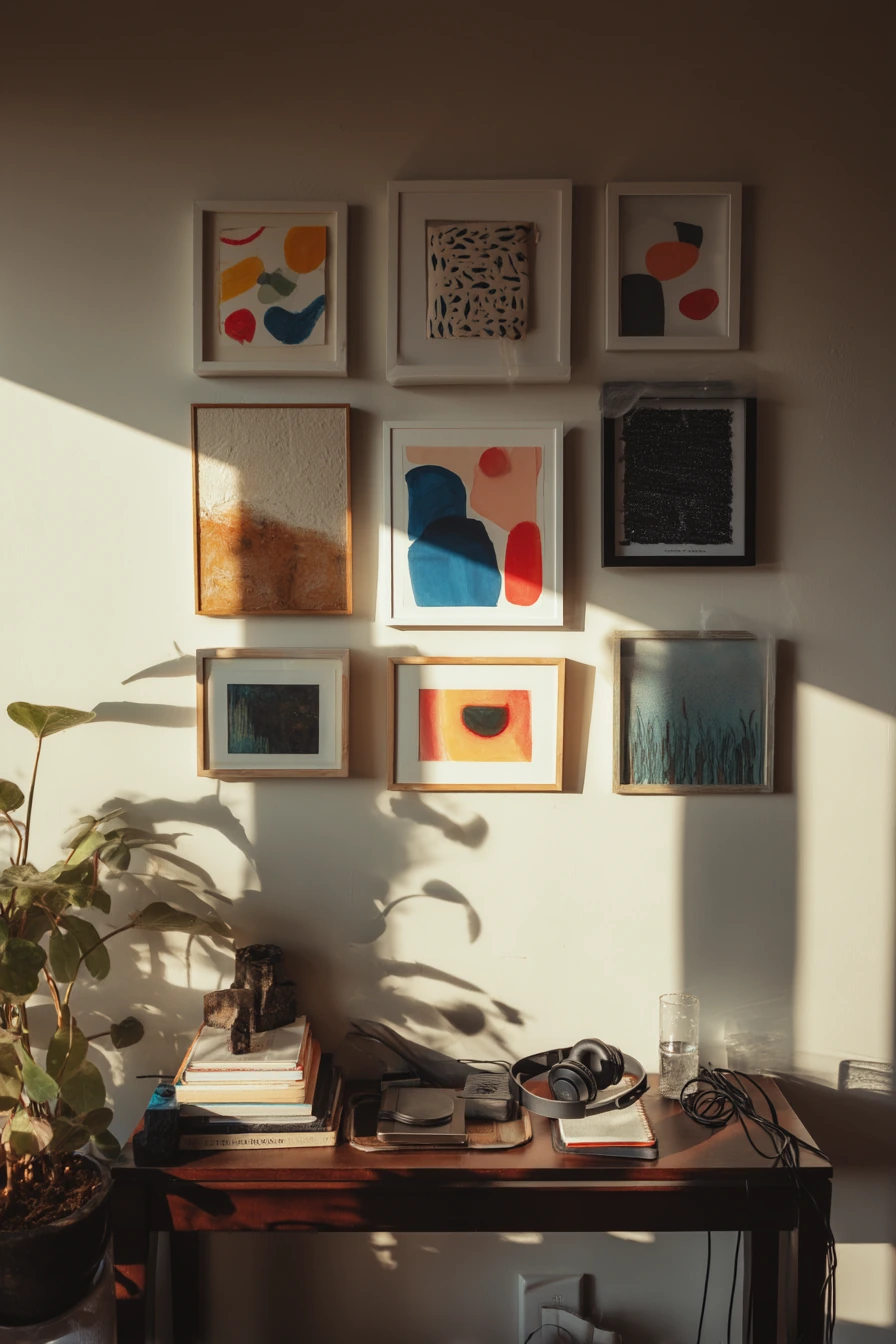
A creative living wall gallery adds personality fast, even in a small apartment. Use mismatched art prints, but keep a simple link between them, like a shared color or similar mat style. Arrange the frames so there is a steady spacing between pieces. Warm afternoon window light will highlight the textures and make the frames look richer.
Add a narrow console table below the gallery wall. This gives you a landing zone for small items without taking much floor space. Style it with sketchbooks stacked loosely, a tiny sculpture, and a water glass or small vase. Keep headphones near a charging cable, but make it neat with a small dish or cable box so the console does not look messy.
Plant shadows drifting across artwork can be part of the look. Place a plant nearby, but do not block the art. If you rent, use removable hooks and light frames. If you want a more collected feel, mix photo frames, line drawings, and one bold print. This setup makes your apartment feel expressive and real, not like a catalog.
- Lay frames on the floor first to test the layout before hanging.
- Use painter’s tape to mark the outer edges on the wall.
- Keep the bottom row of art 6 to 8 inches above the console.
- Add one small lamp on the console for evening glow.
- Limit tabletop items to three main groups to avoid clutter.
Pro Design Tip: Start with one anchor piece in the center, then build outward, keeping the overall shape like a loose rectangle for a clean look.
Budget Considerations: Print free or low-cost digital art and use thrifted frames; spray paint frames the same color for a cohesive wall.
10. Compact Apartment Entryway Ideas That Stay Tidy
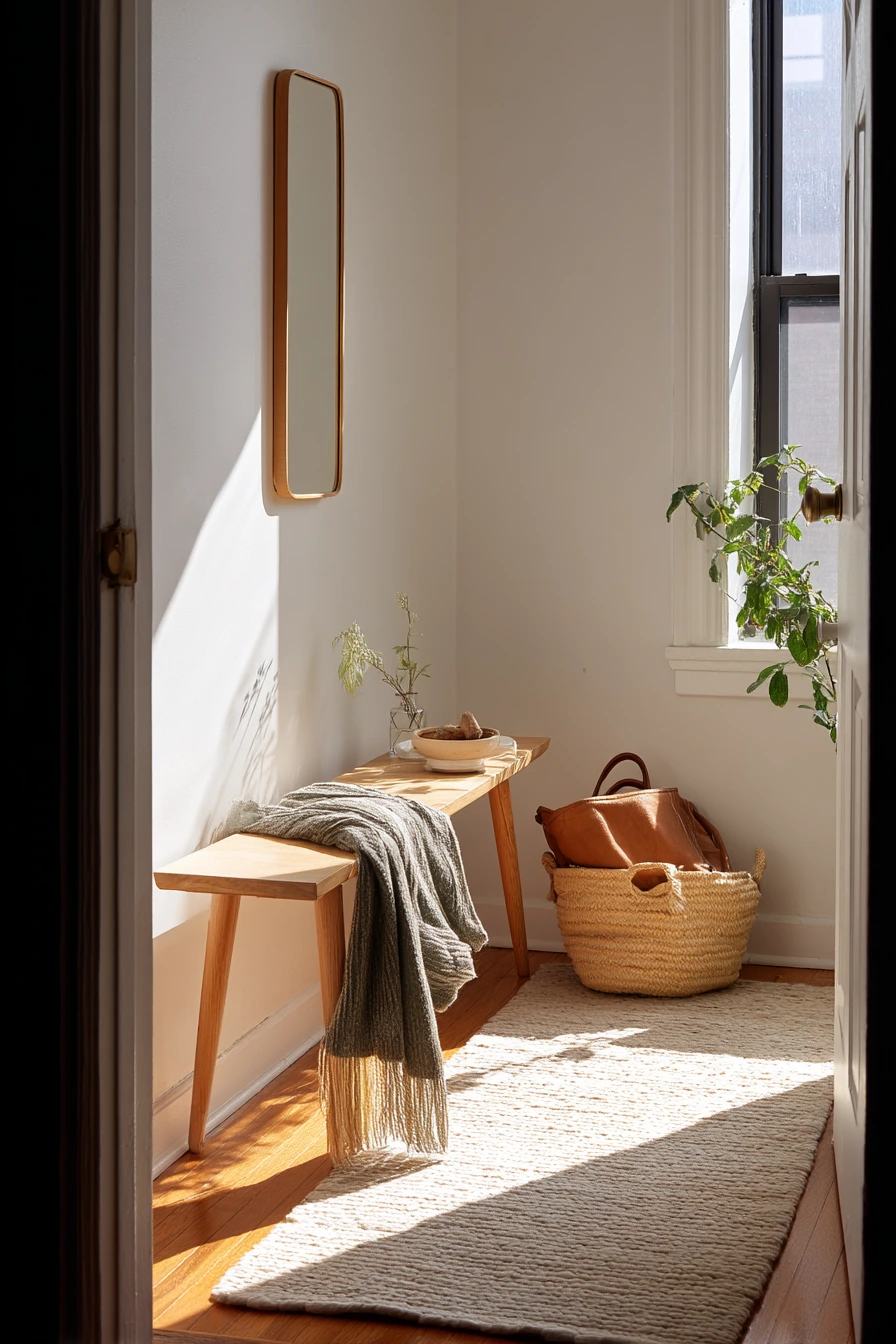
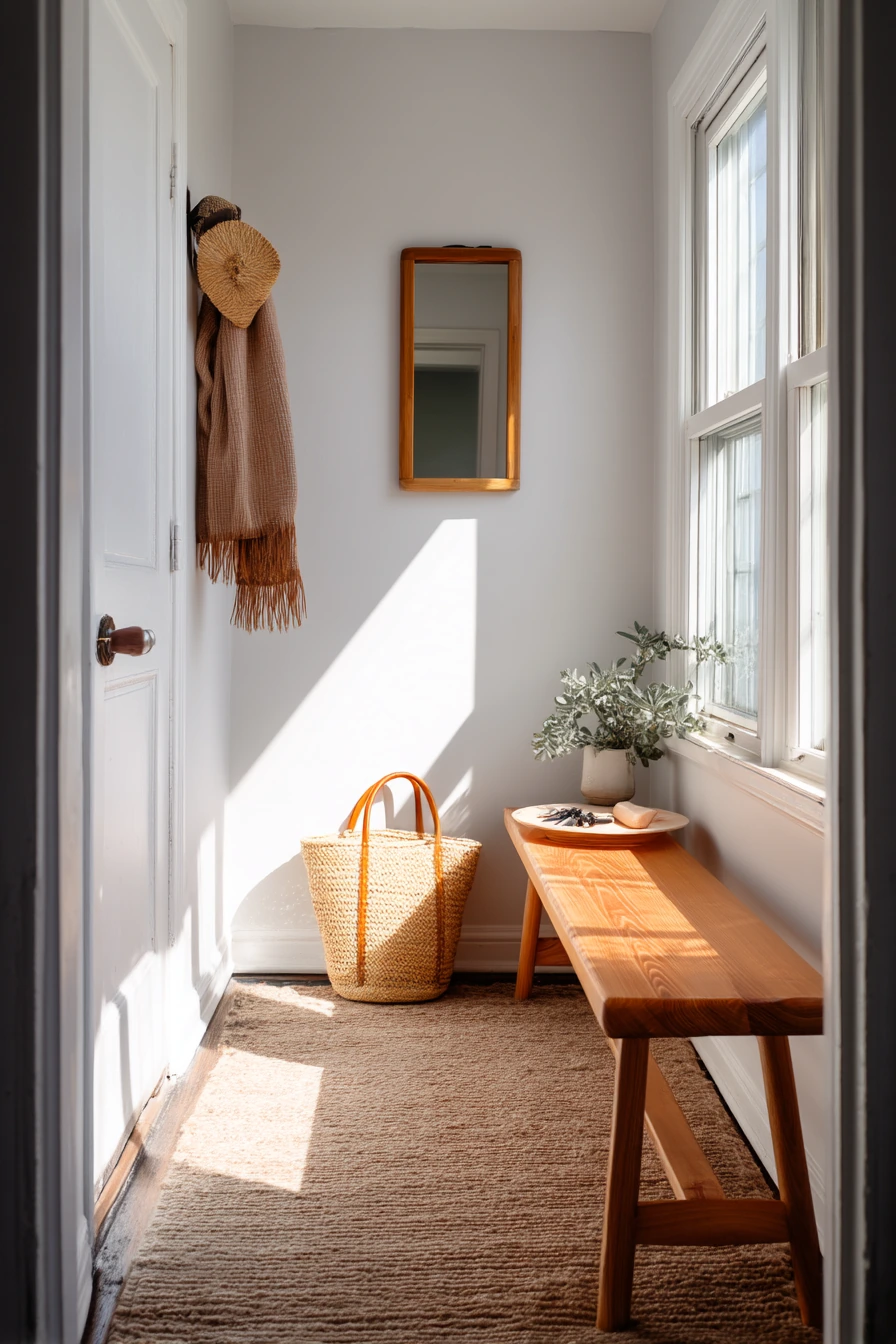
A compact apartment entryway sets the tone the moment you walk in. Keep it simple with a slim wooden bench and a textured runner rug. A mirror reflecting soft daylight makes the hallway feel wider and helps with quick checks before you leave.
Add a woven basket for scarves, hats, and small items. Keep a canvas tote casually dropped, but give it a real home on a hook so it does not live on the floor. Use a ceramic dish for keys so they stop disappearing. A small plant casting a delicate shadow across the wall adds life without taking much room.
The trick is to plan for the daily mess. Shoes, mail, and bags need clear spots. If your runner rug gets rumpled, use rug tape to keep it flat and safer. Choose pieces that are narrow but useful, and keep the entryway easy to reset in one minute. This helps the whole apartment feel calmer because clutter does not spread into the living space.
- Mount 3 to 5 hooks at different heights for bags and jackets.
- Use a tray or dish for keys, earbuds, and coins.
- Store umbrellas in a tall container to save floor space.
- Keep one small bin for mail and recycle it weekly.
- Choose a bench with a lower shelf for shoes if possible.
Pro Design Tip: Set up a simple drop zone with three parts: hooks, a key dish, and a shoe spot, so everyone in the home follows the same routine.
Budget Considerations: A mirror and hooks can create an entryway without furniture; add a narrow bench later when you find one that fits.


Good home apartment ideas are usually small changes you can keep up with every day. Focus on light, clear surfaces, and a few warm textures like linen, wood, wool, and ceramics.
Pick one area to improve first, like a reading corner, a dining nook by the window, or a tidy entryway. When that space works well, move to the next.
Frequently Asked Questions
1. How can I make a small apartment or studio feel bigger without a major remodel?
Focus on maximizing light, keeping furniture low-profile, and utilizing vertical space. Use floating shelves instead of bulky cabinets, hang mirrors to bounce natural light around the room, and choose furniture with exposed legs (like a sofa or media console on raised legs) so the floor remains visible, making the footprint feel larger.
2. What are the best ways to keep a compact living space from looking cluttered?
Embrace the “one in, one out” rule and give every item a designated home, such as a key dish in the entryway, a basket for throws in the living room, or a tray for daily tech gear. Corral smaller items into decorative boxes or woven bins, and leave at least 20 to 30 percent of your shelf and counter surfaces completely empty.
3. How do I choose the right rug size for a small room or studio?
In compact living rooms or studios, choose a rug large enough for at least the front legs of your sofa and any surrounding chairs to sit on it. This visually anchors your seating area, defines the “zone” in an open-plan space, and prevents the room from feeling disjointed.
4. What lighting strategy works best for cozy, lived-in apartment spaces?
Layer your lighting by combining natural window light during the day with warm, low-level illumination at night. Use a mix of table lamps, floor lamps, and candles with warm-toned bulbs (around 2700K) to create a gentle, inviting glow and avoid harsh overhead glare.
5. How can I decorate a rental apartment without damaging walls or permanent fixtures?
Use renter-friendly hanging solutions like removable adhesive strips, damage-free picture-hanging hooks, and peel-and-stick wallpaper accents or decals. These tools let you personalize your walls and create distinct zones, but peel off cleanly when your lease ends without leaving sticky residue or peeling paint.
Would you like me to help generate social media captions or Pinterest pin text to go along with this apartment decor guide?