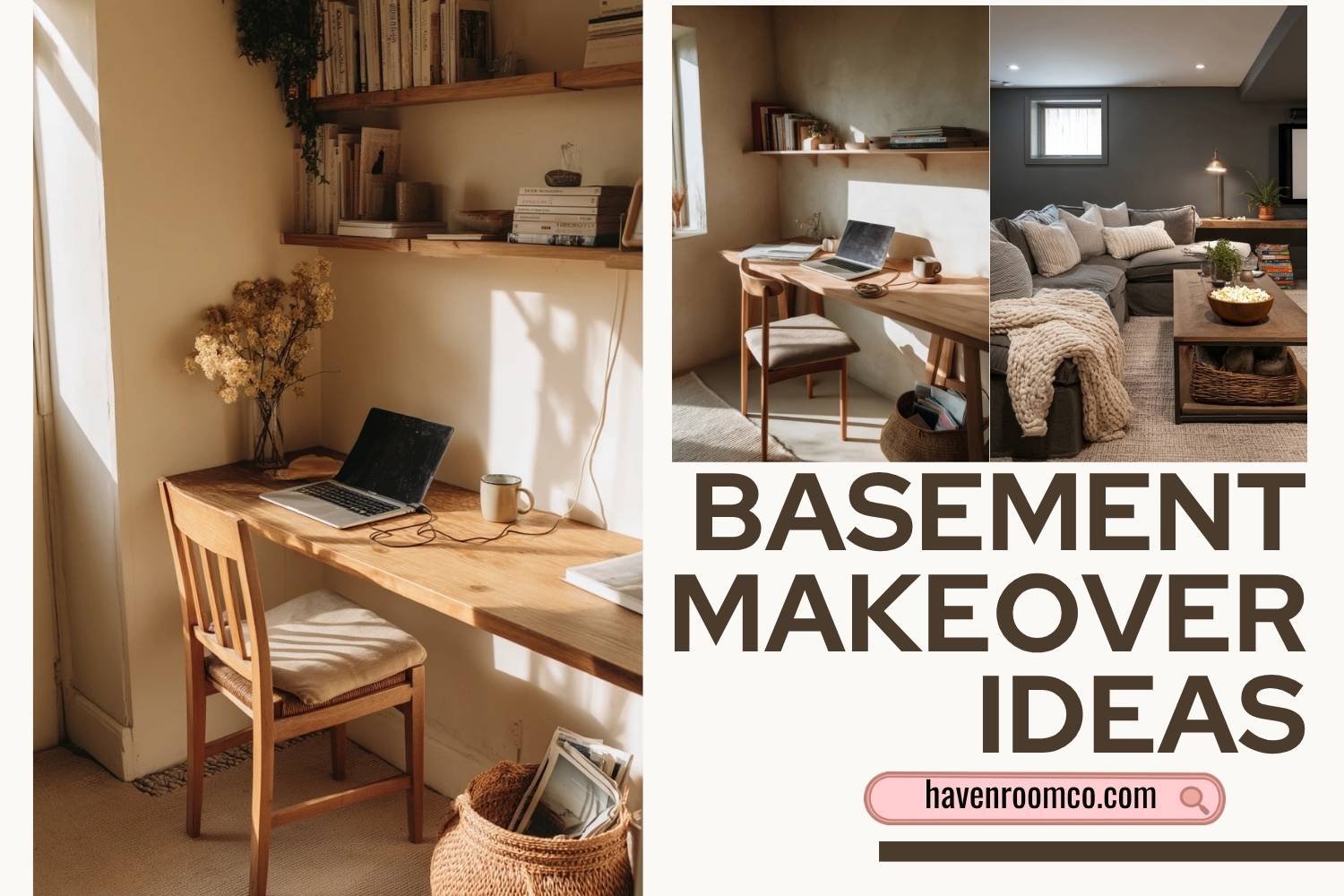
Looking for basement makeover ideas that feel warm, simple, and actually usable every day. A basement can be dark and awkward, but with the right layout, lighting, and finishes, it can become the best room in the house.
This guide walks you through 10 real-life basement setups, from a family movie nook and playroom to a small guest bedroom and home office. Each idea includes easy styling tips, a clear plan for what to buy, and ways to work with small basement windows.
You will also get practical notes on flooring, wall color, storage, and moisture control. These basics matter in below-grade spaces, especially if you want a cozy, lived-in look that still feels clean and calm.
Use the sections like a checklist. Pick one theme, copy the layout, then adjust the details to fit your budget and your basement size.
1. Family Basement Movie Nook With Sectional and Projector
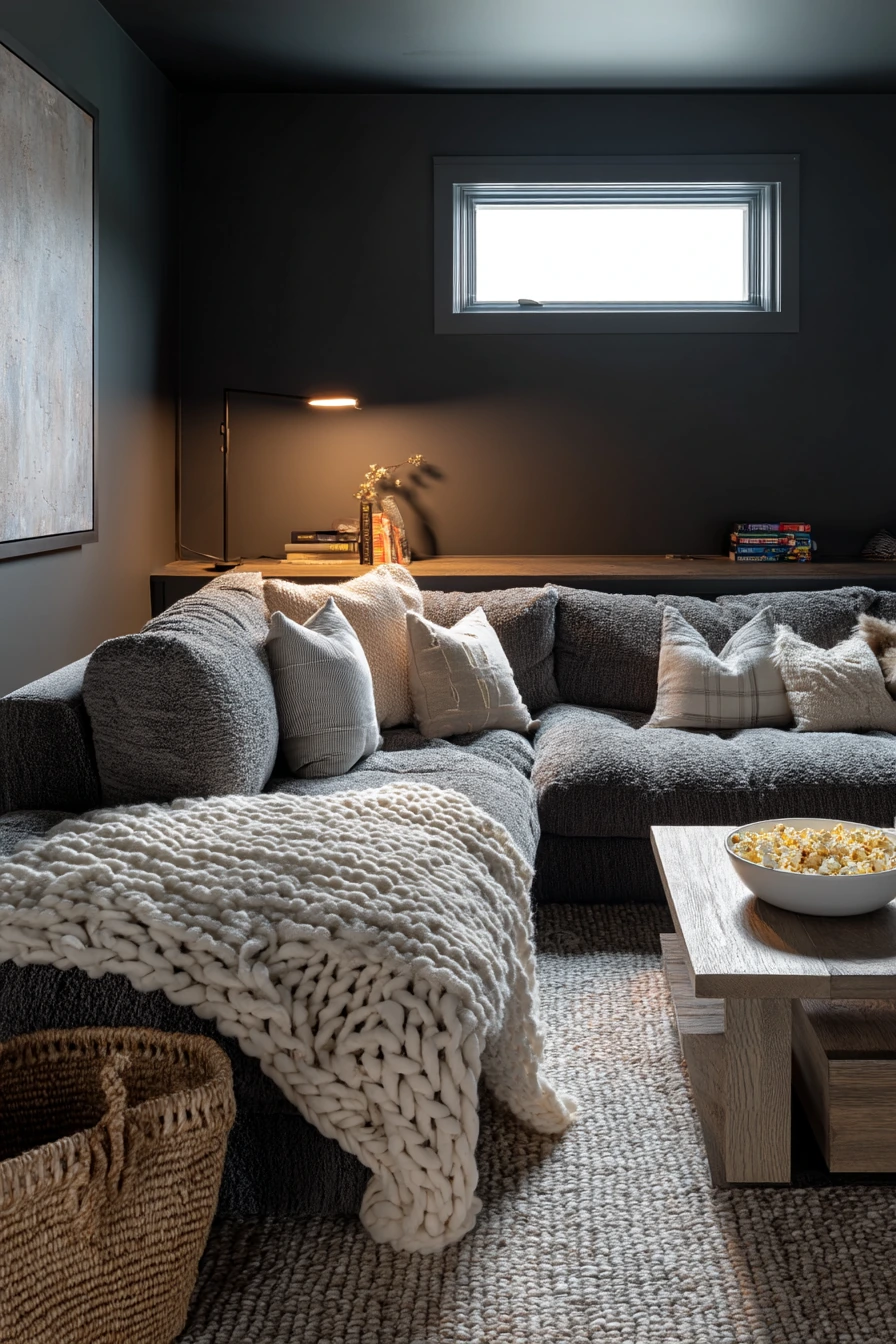
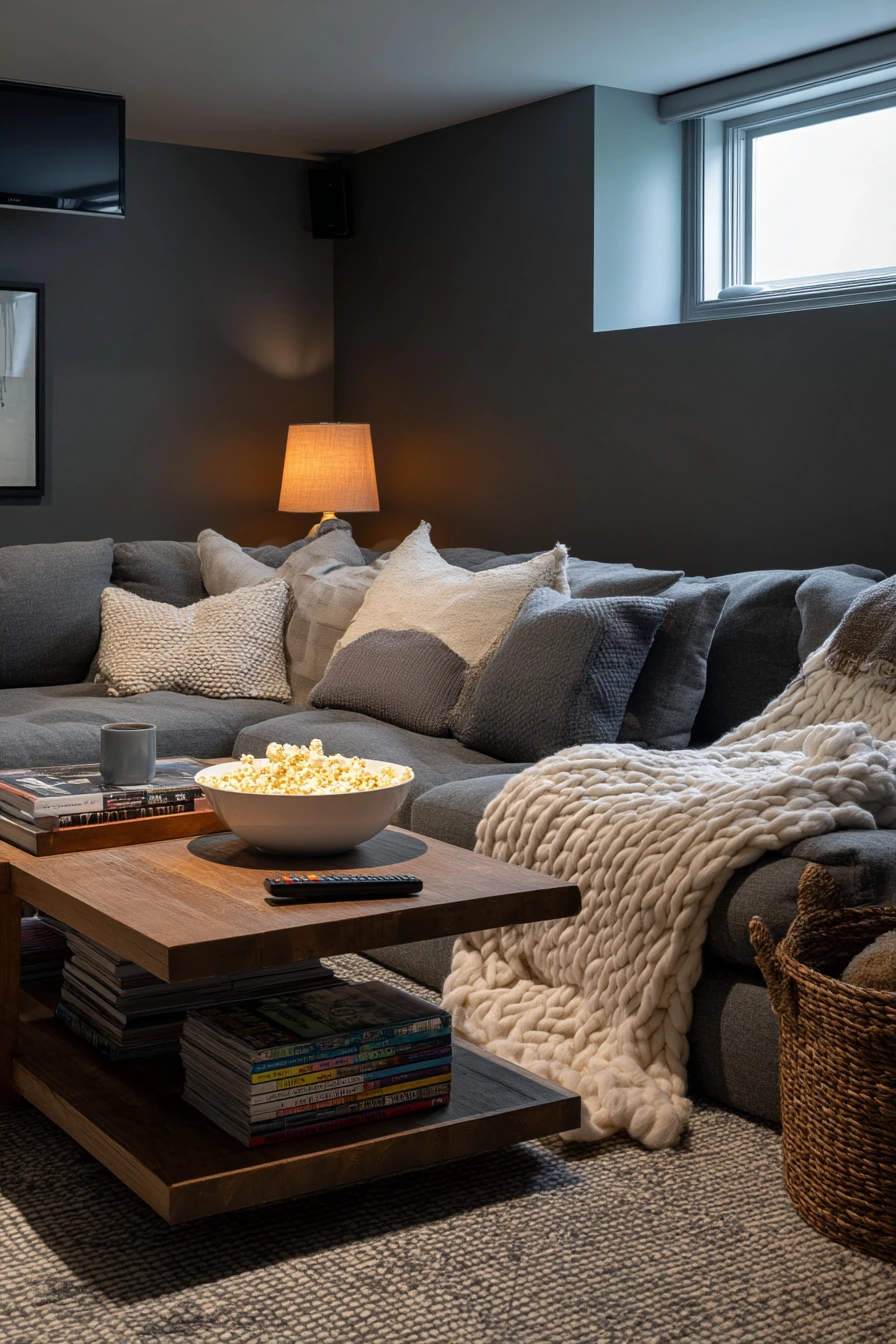
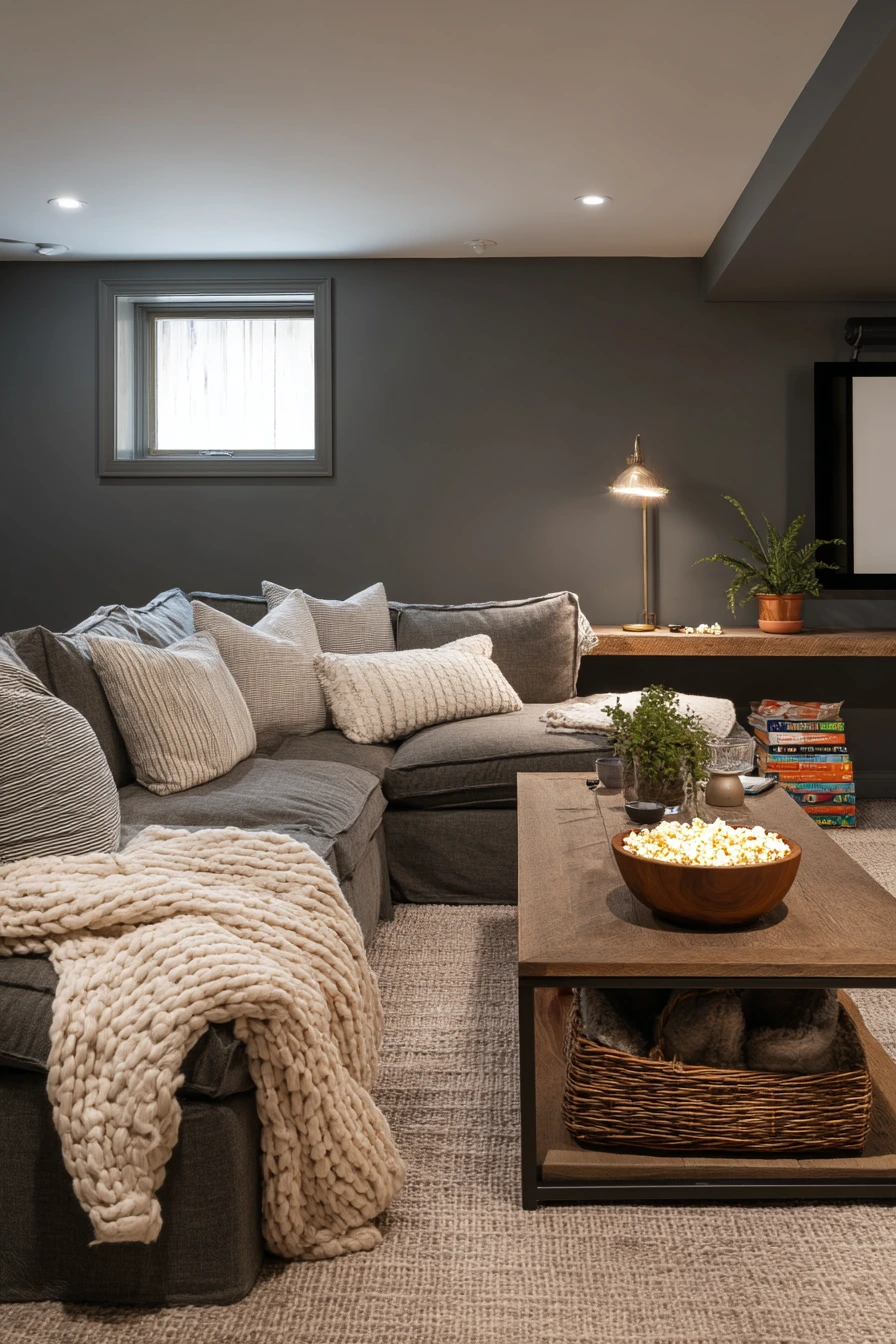
A finished family basement movie nook works best when it feels soft and easy, not perfect. Start with a plush sectional sofa facing a wall-mounted projector screen. Add a textured rug underfoot to warm up the space and reduce echo. Matte charcoal walls help the screen look sharper and also hide scuffs from kids and pets.
Style the coffee table like a real family room. A wood coffee table with a popcorn bowl and the remote makes the space feel ready for movie night. A low oak media shelf can hold stacked board games and extra blankets. Keep a toy basket near the sofa corner so cleanup takes two minutes.
Lighting is the secret in a basement. Mix a warm table lamp glow with soft window light from a small basement window. If the room feels cave-like, use two lamps instead of one bright overhead light. A chunky knit throw that is slightly wrinkled is fine. That lived-in look makes the nook feel inviting.
- Hang blackout curtains on the small window to control glare on the projector screen.
- Use a large rug with a thick pad to add comfort and dampen sound.
- Choose a washable throw and stain-resistant sofa fabric for family use.
- Place board games on an open shelf so kids can grab them without digging.
- Add one dimmable lamp near seating and one near the media shelf for balance.
Pro Design Tip: Mount the projector screen so the bottom edge sits at seated eye level, then center the sectional to the screen, not to the room, for better viewing.
Budget Considerations: A projector setup can be low cost if you use a smooth painted wall instead of a screen and buy a refurbished projector.

2. Basement Workspace With Long Desk and Floating Shelves
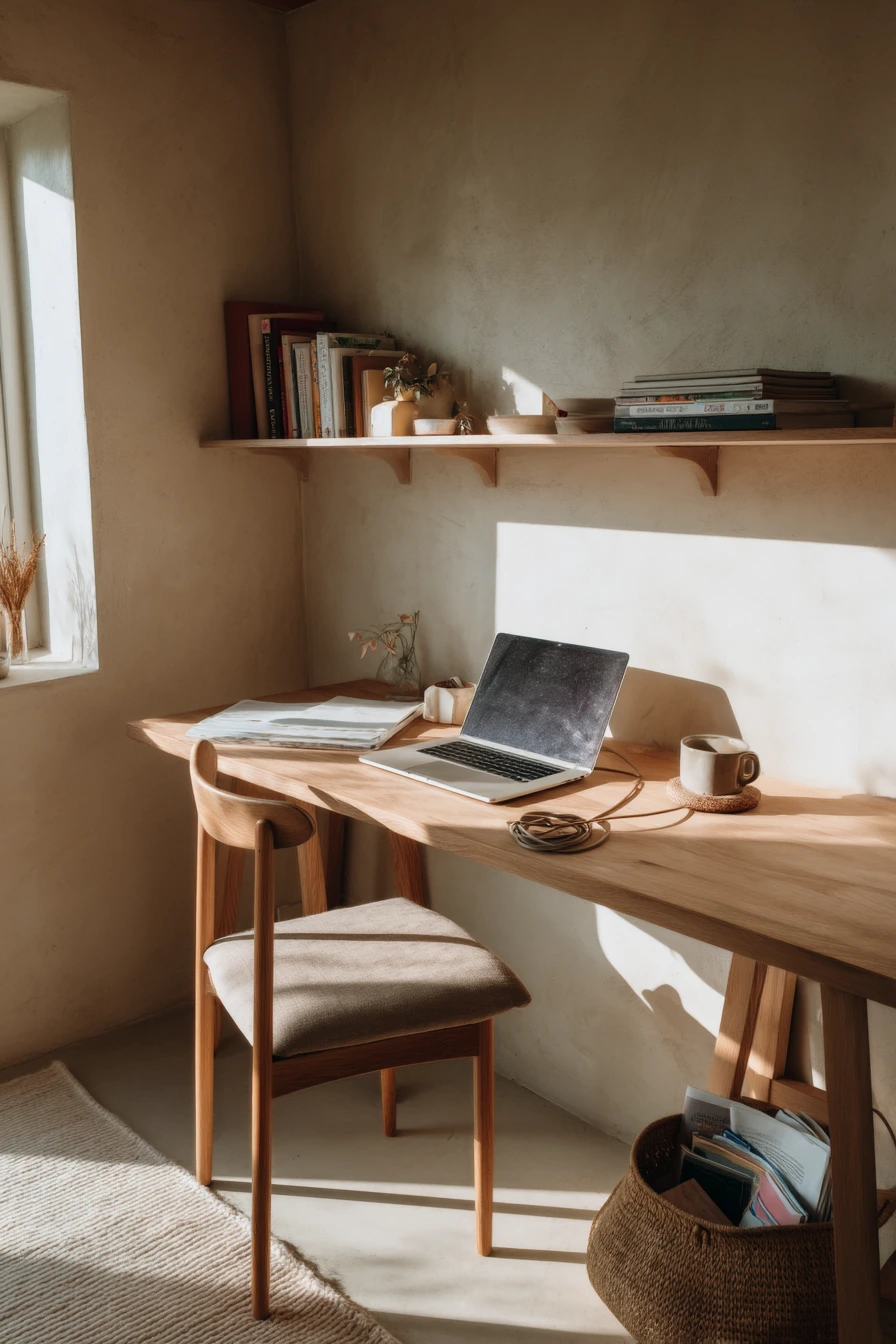
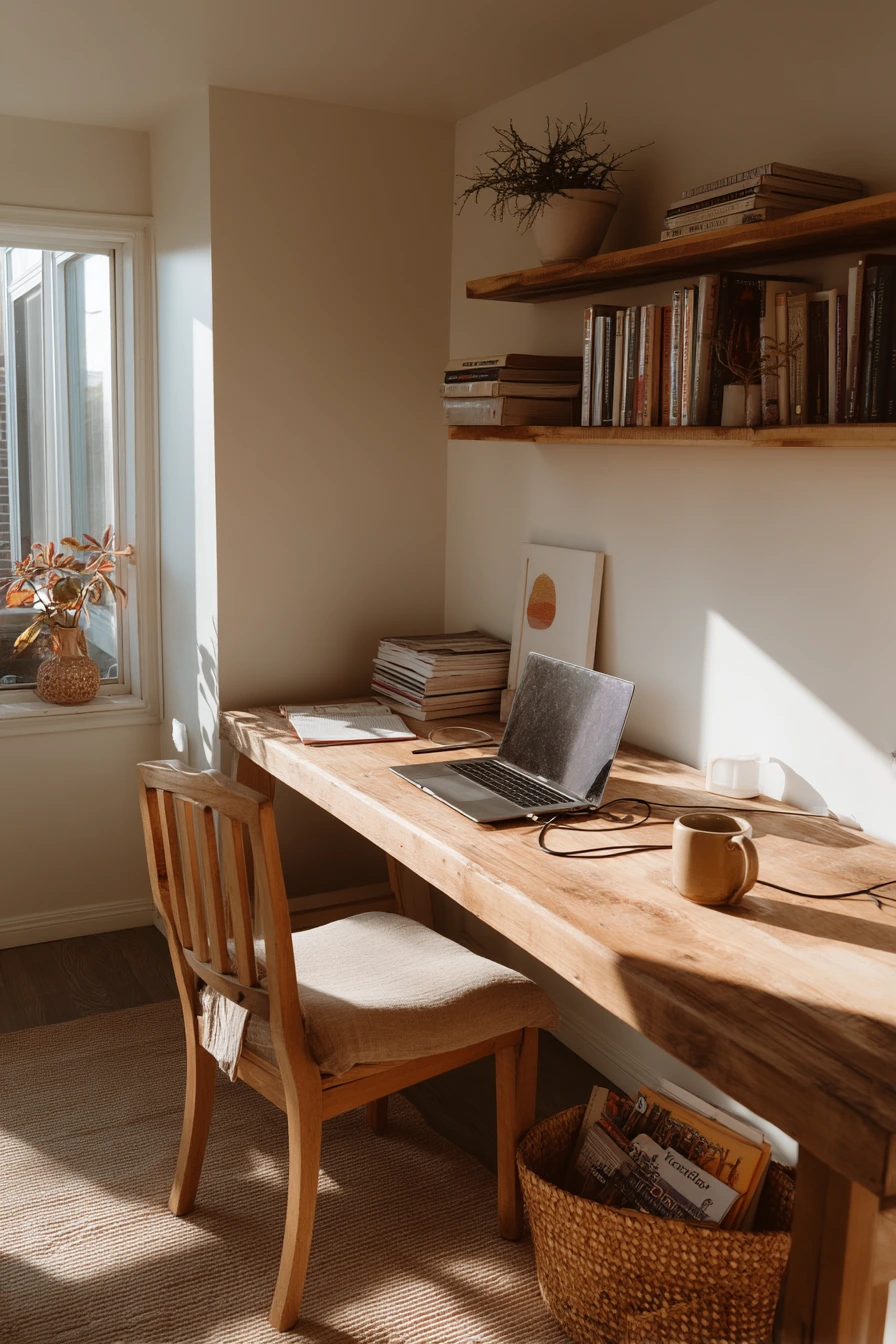
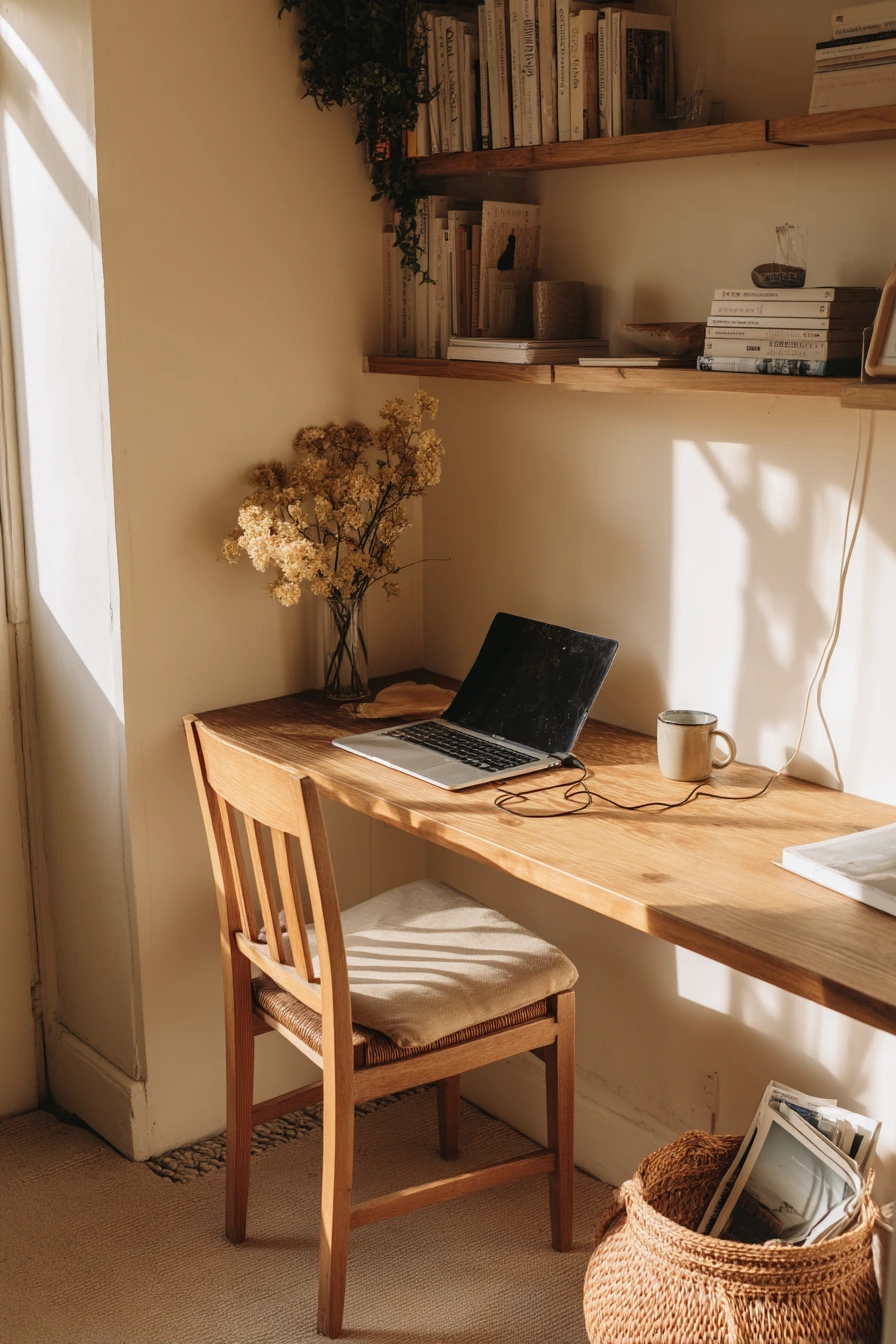
A converted basement workspace can feel calm and bright if you keep the palette simple. A long oak desk under a small window uses the best light in the room. Pale plaster walls reflect daylight and help the area feel less like a basement. Add a neutral rug to soften steps and make the chair glide better.
Style the desk with just a few items so it stays focused. Keep the laptop open with the charging cable managed in a clip under the edge. Add a ceramic mug beside a small notebook stack for a clean, everyday look. A linen desk chair slightly pushed back makes the space feel real, not staged.
Floating shelves are a smart way to add storage without taking up floor space. Place books on one side and a small plant on the other. The shadows from the shelves add depth, even with simple walls. A woven basket with magazines can sit under the desk or beside it to catch clutter fast.
- Use a task lamp with a warm bulb to prevent eye strain in low light.
- Add a small plant that handles low light, like pothos or snake plant.
- Store cords in a cable box or under-desk tray to keep the floor clear.
- Pick a chair with a supportive seat and add a thin cushion if needed.
- Hang one piece of art near the desk to make the zone feel finished.
Pro Design Tip: Place the desk so you face sideways to the window, not directly at it, to reduce screen glare and keep light even on your work surface.
Budget Considerations: If a solid oak desk is too pricey, use two file cabinets with a wood top and paint the cabinets to match the walls.

3. Basement Playroom Makeover With Toy Shelves and Reading Tent

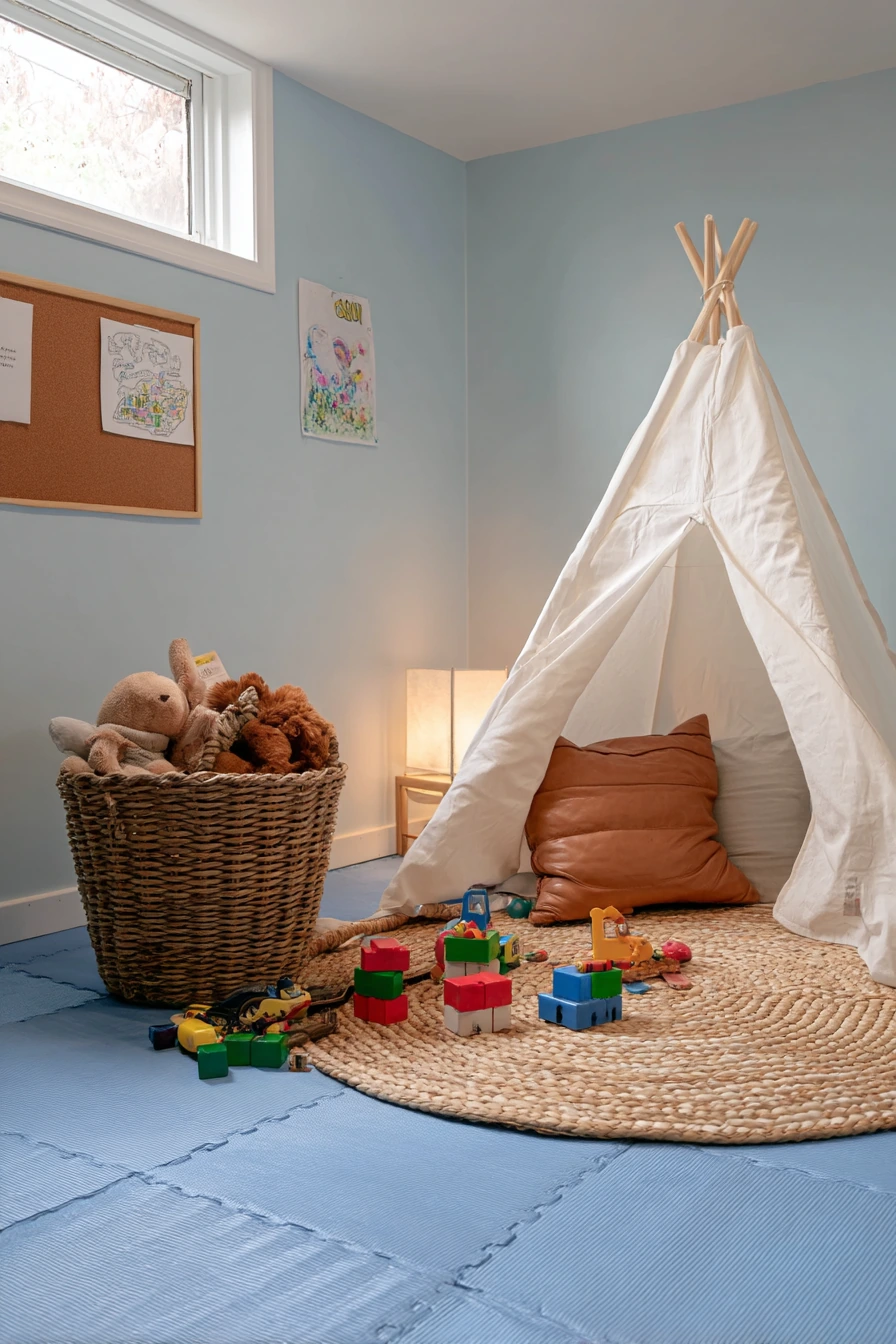
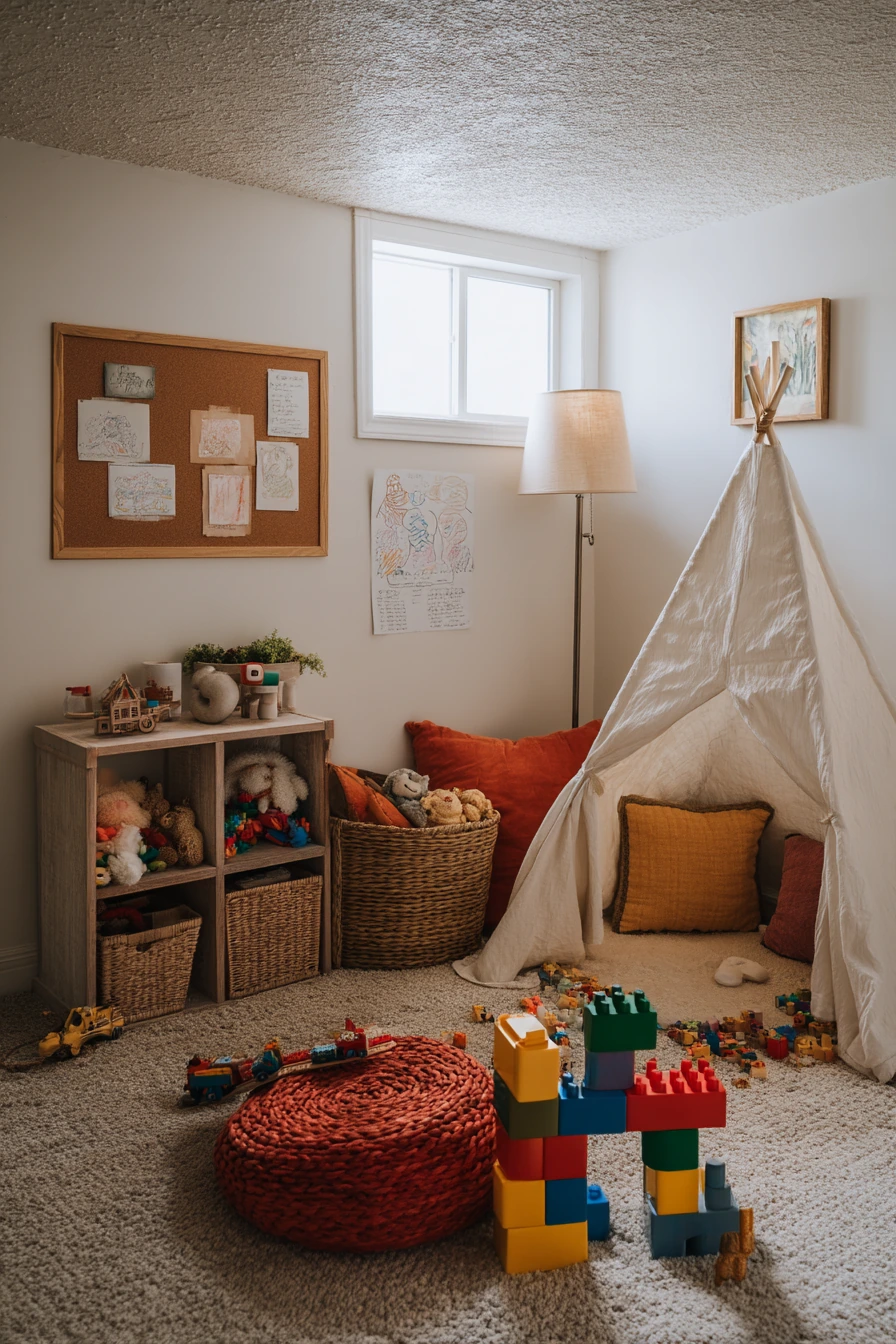
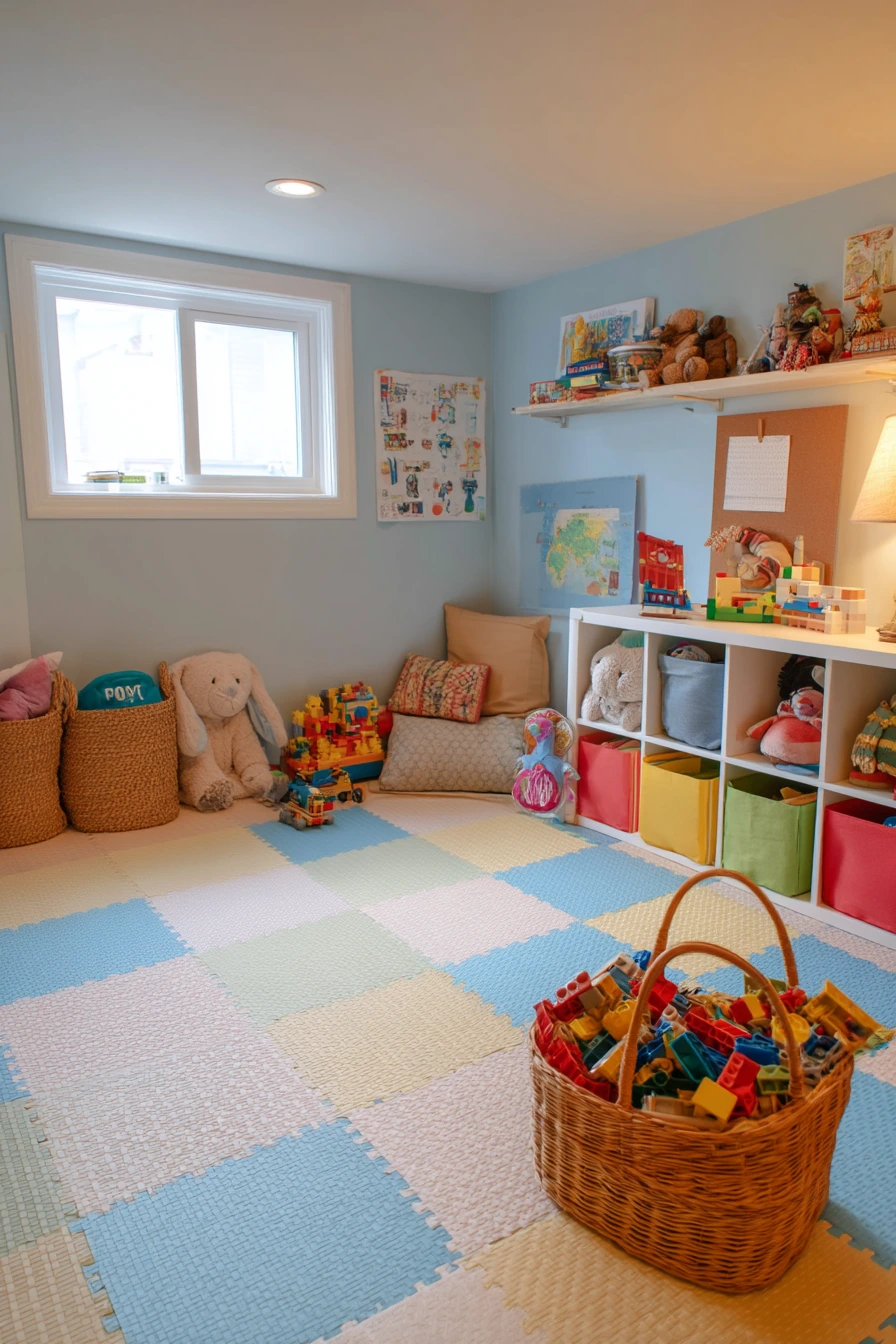
A family basement playroom makeover should be safe, easy to clean, and fun without looking messy. Soft foam mat flooring is a good first step, especially on cold concrete. Choose mats in a calm color so the colorful blocks and toys stand out. Keep the play area open in the middle so kids can build and move around.
Use low toy shelves filled with bins or baskets. Kids can see what they have and put items back. Add a cork board wall for kid drawings and rotate the art each week. A small reading tent with a pillow pile makes a cozy corner that feels special. A wicker basket overflowing with stuffed animals works well near the reading spot.
Lighting needs to support play and quiet time. Let gentle daylight from a narrow window do what it can, then add a warm floor lamp glow for evening. If you have scattered toys like a toy train near the rug edge, put a shallow tray nearby for quick scooping. This keeps the room feeling lived-in but not chaotic.
- Anchor the room with one main rug zone so toys do not spread everywhere.
- Label bins with pictures and words for quick clean-up.
- Use corner guards and furniture anchors for shelves and storage units.
- Keep a small table for coloring with a wipeable top and easy chairs.
- Add a lidded bin for tiny pieces to prevent lost parts and foot pain.
Pro Design Tip: Set up “zones” with furniture placement: active play in the center, storage along one wall, and reading in a corner to reduce visual clutter.
Budget Considerations: Foam floor tiles and secondhand low shelves can keep costs down; paint mismatched pieces the same color for a more unified look.
4. Moody Basement Bar Corner With Reclaimed Wood Counter
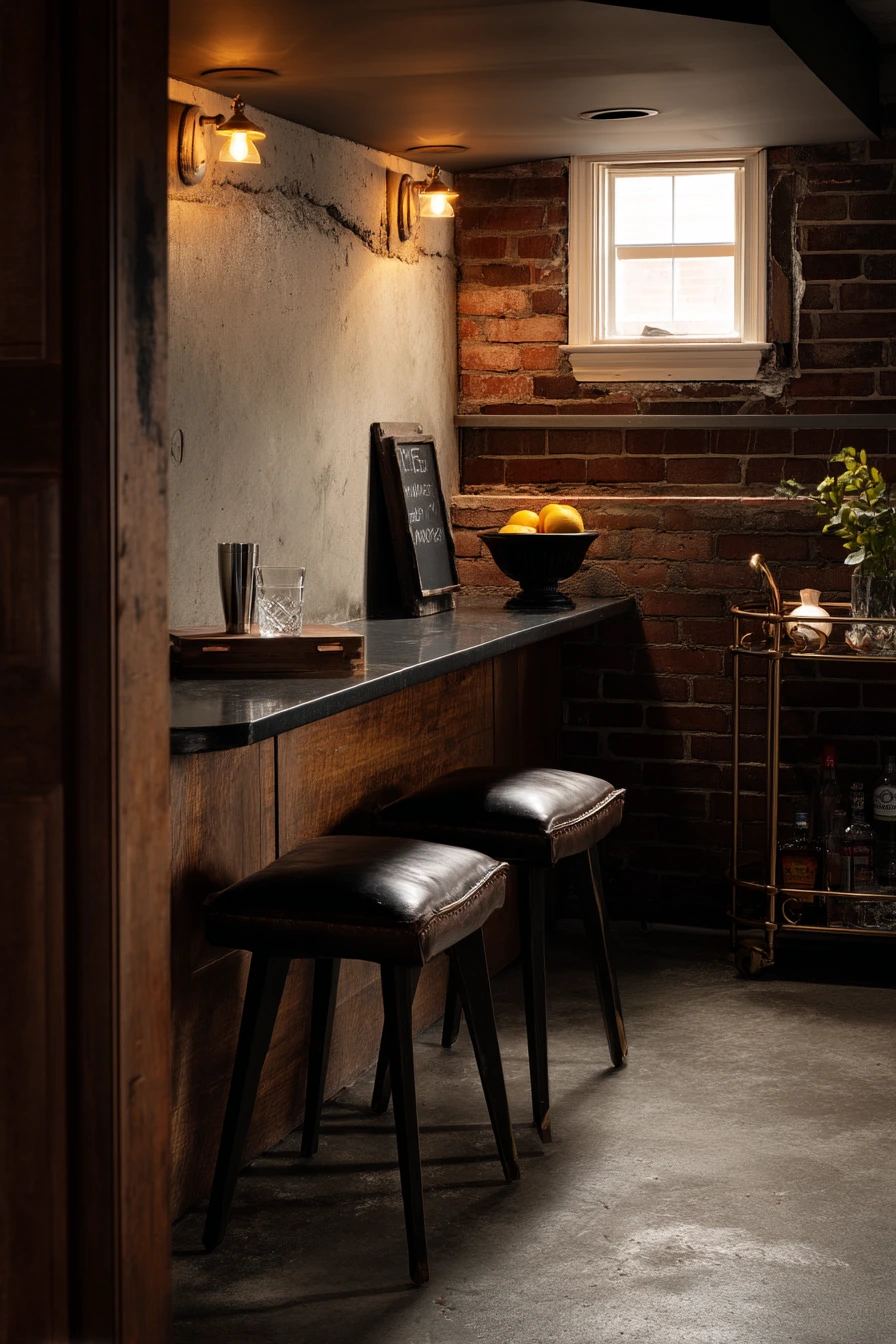
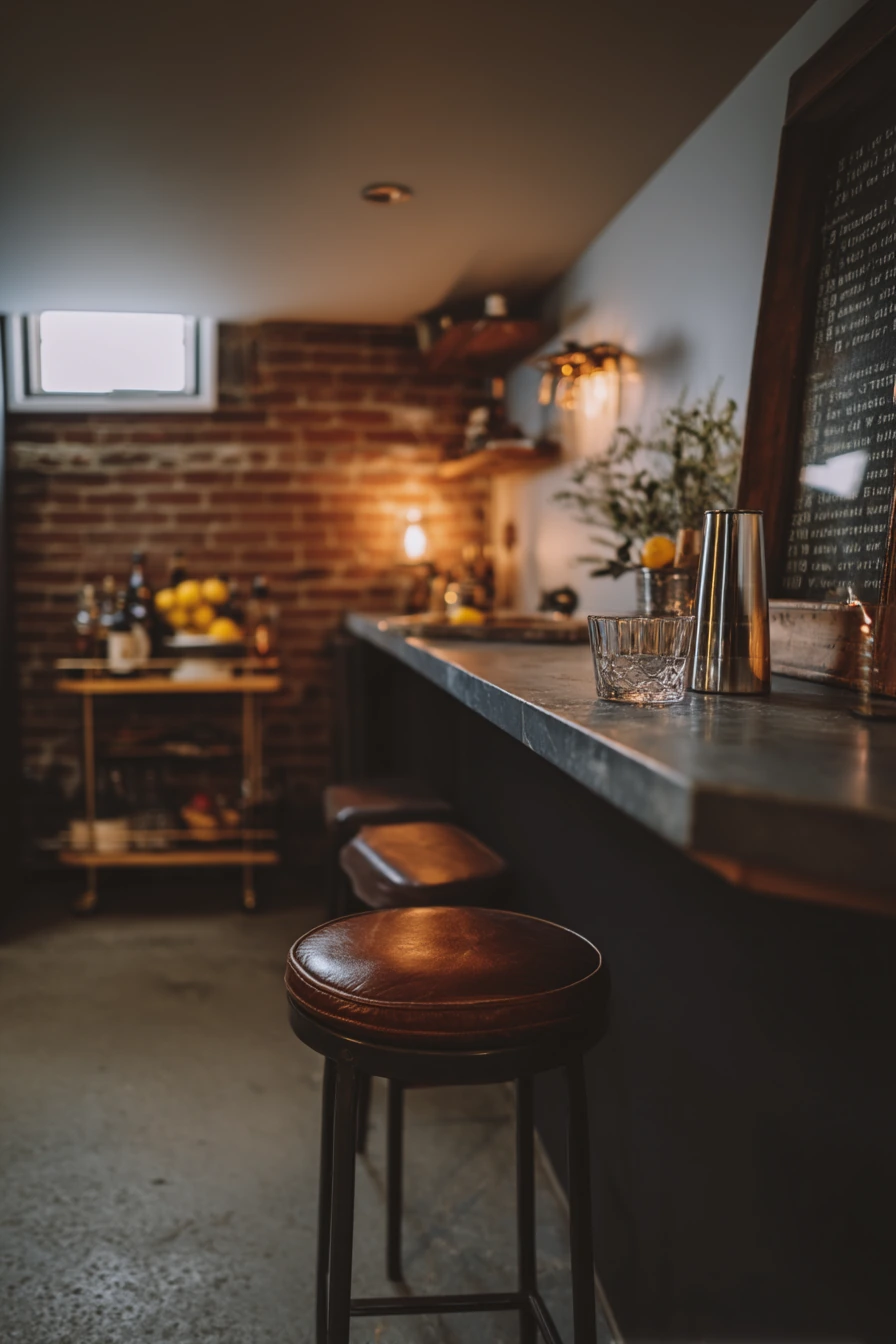
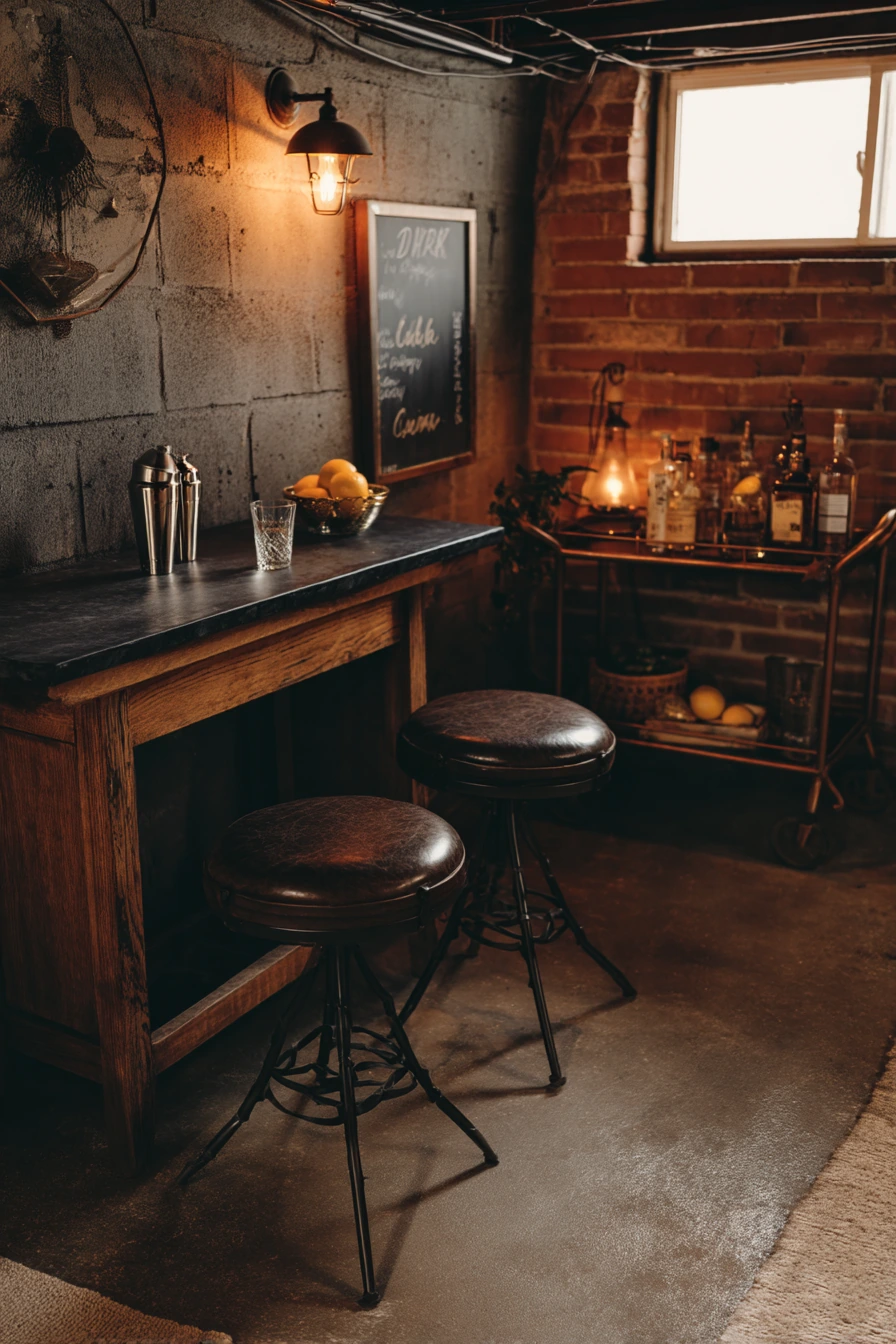
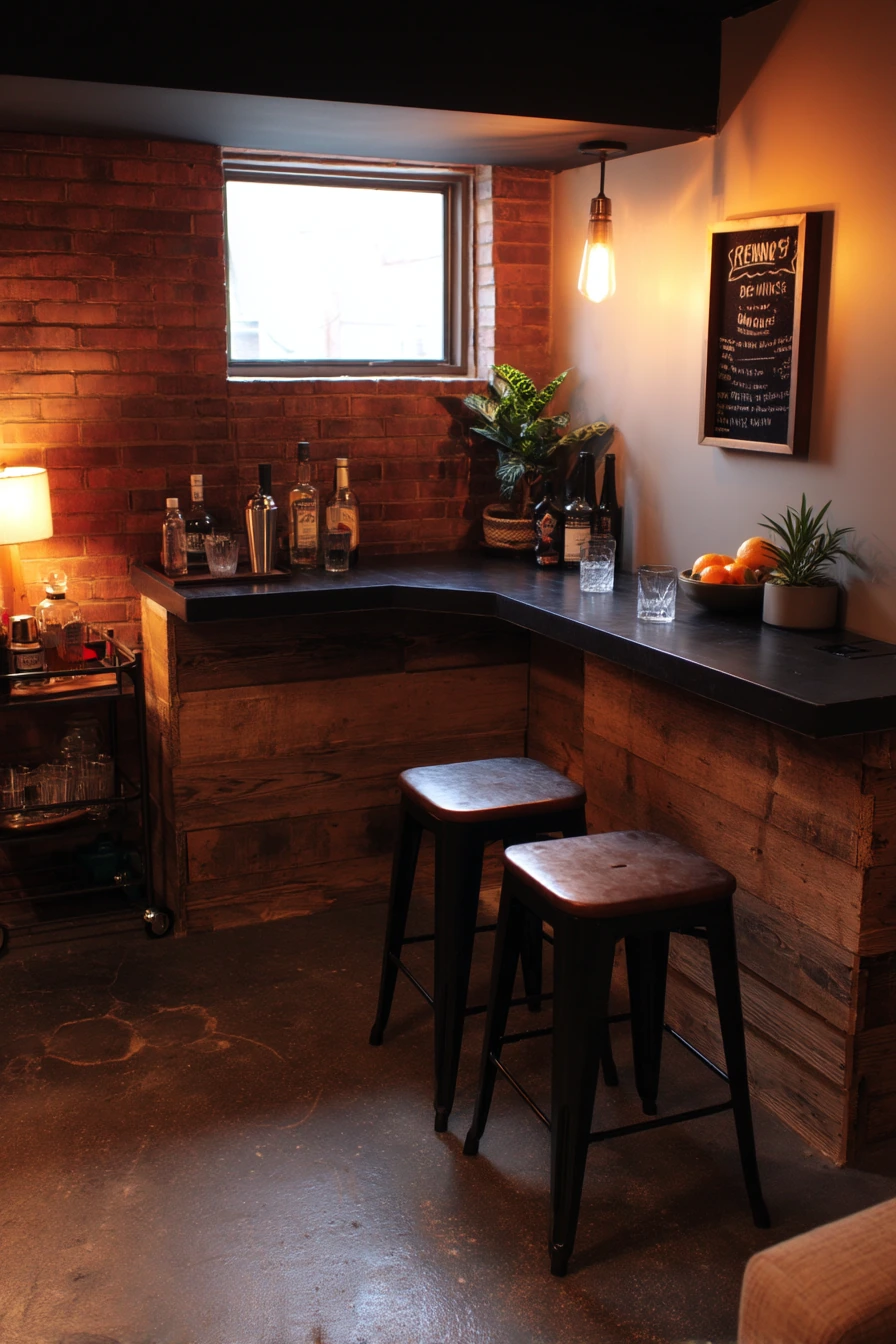
A moody basement bar corner is perfect for a small unused area. Start with a reclaimed wood bar counter for warmth and texture. Two leather stools slightly angled make the corner feel ready for a casual chat. If your basement has a brick accent wall, lean into it with warm sconce light to create a cozy glow.
Keep the countertop simple. A cocktail shaker and a water glass are enough styling for daily use. Add a vintage bar cart with bottles and a citrus bowl so the bar feels stocked but not crowded. A chalkboard drink menu leaning casually against the wall adds personality and helps guests choose without asking.
Basement light can be tricky, so balance it. Use faint daylight from a small basement window and add amber bulbs in your sconces or lamps. A textured concrete floor looks cool in a bar zone, but it can feel hard. Add a runner rug behind the counter where you stand most.
- Install a small mirror or metallic tray to bounce light in a dark corner.
- Use spill-friendly finishes like sealed wood and wipeable stools.
- Store extra glassware on the cart and keep daily items on the counter.
- Add hooks under a shelf for bar towels and bottle openers.
- Keep one closed cabinet or bin for clutter so the bar stays neat.
Pro Design Tip: Layer lighting at two heights, like a wall sconce plus a small lamp on the cart, to make the bar feel richer and less flat.
Budget Considerations: Reclaimed wood can vary in price; if needed, use a butcher block top or a stained plywood counter sealed with polyurethane.
5. Small Basement Guest Bedroom With Linen Bedding
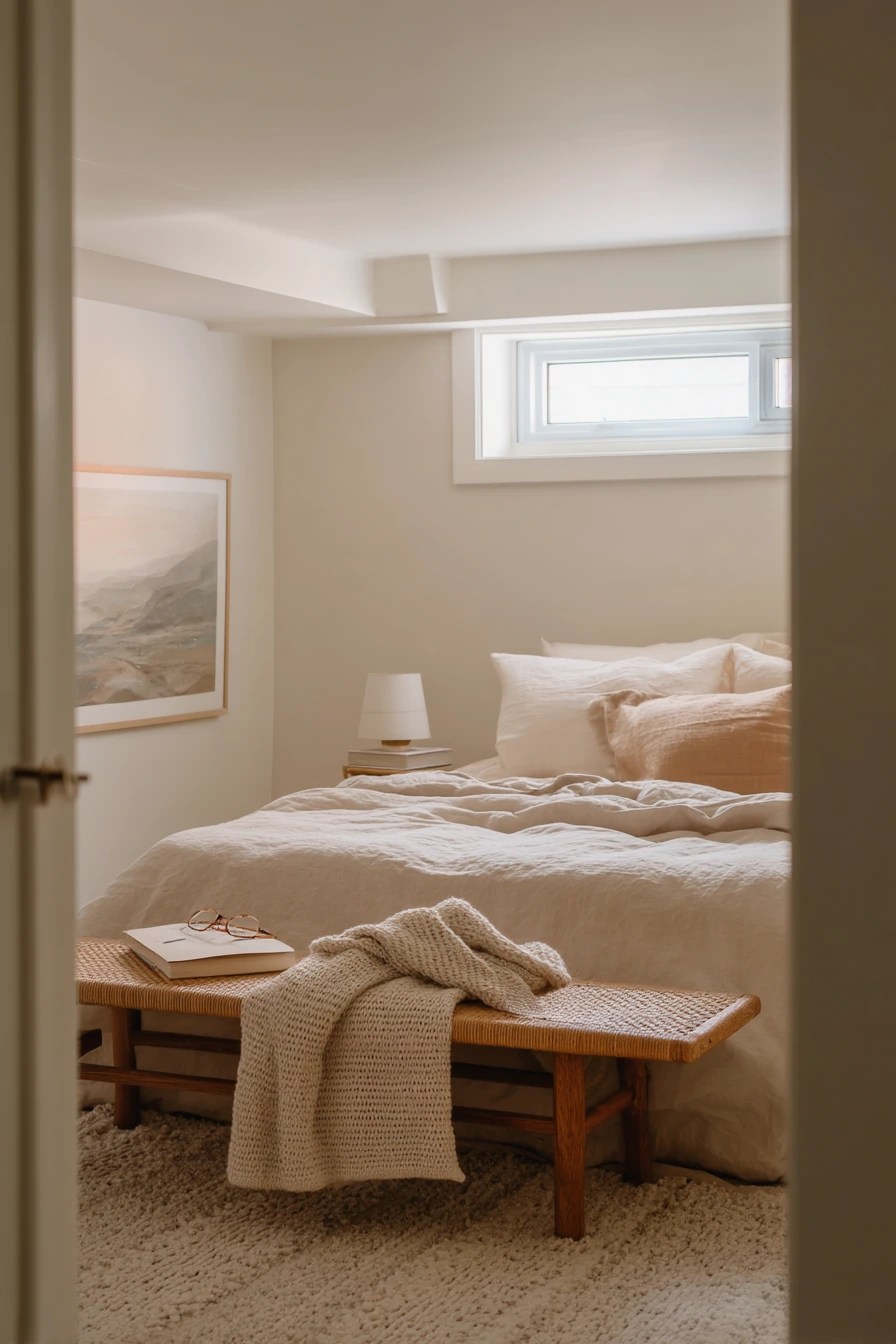
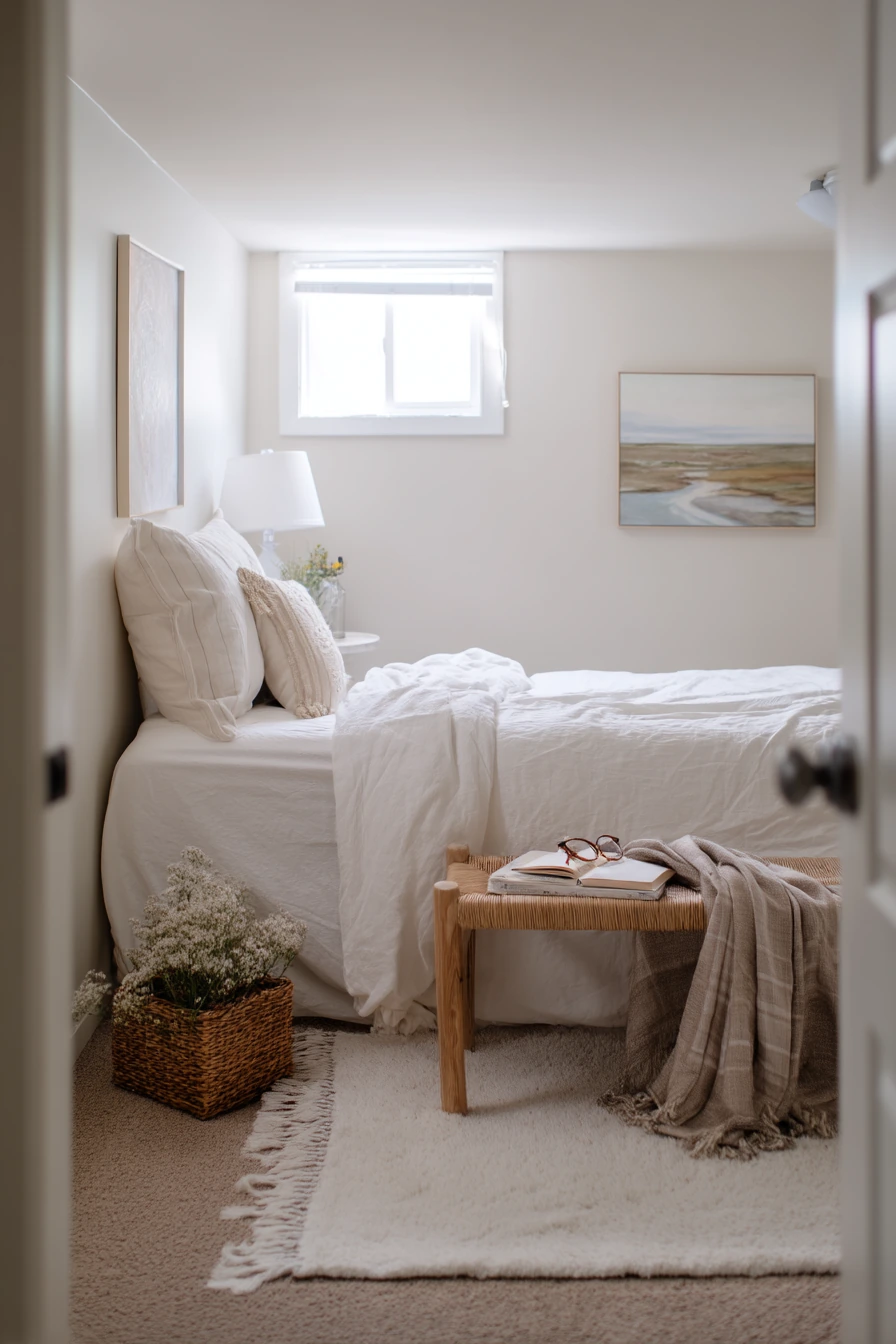
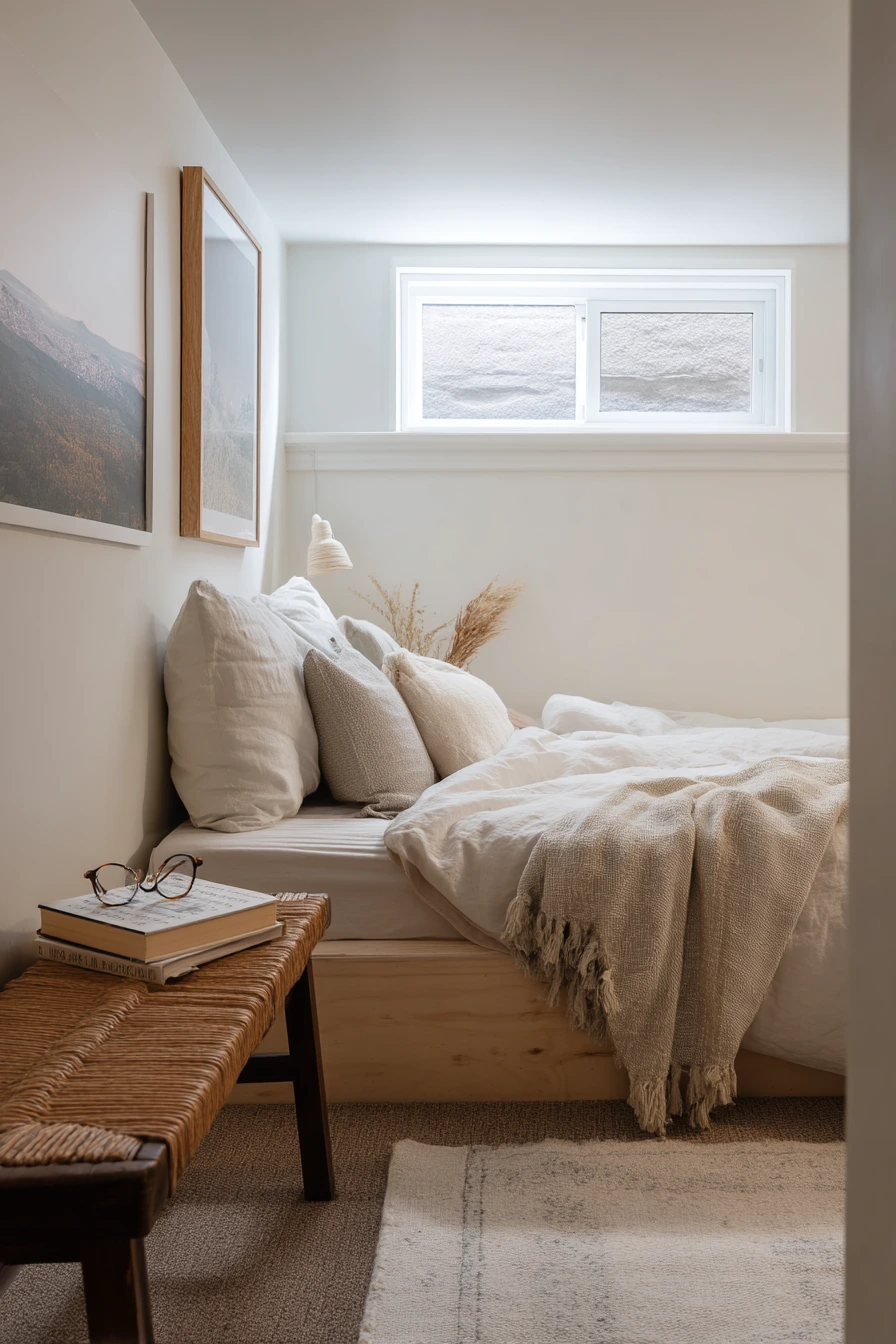
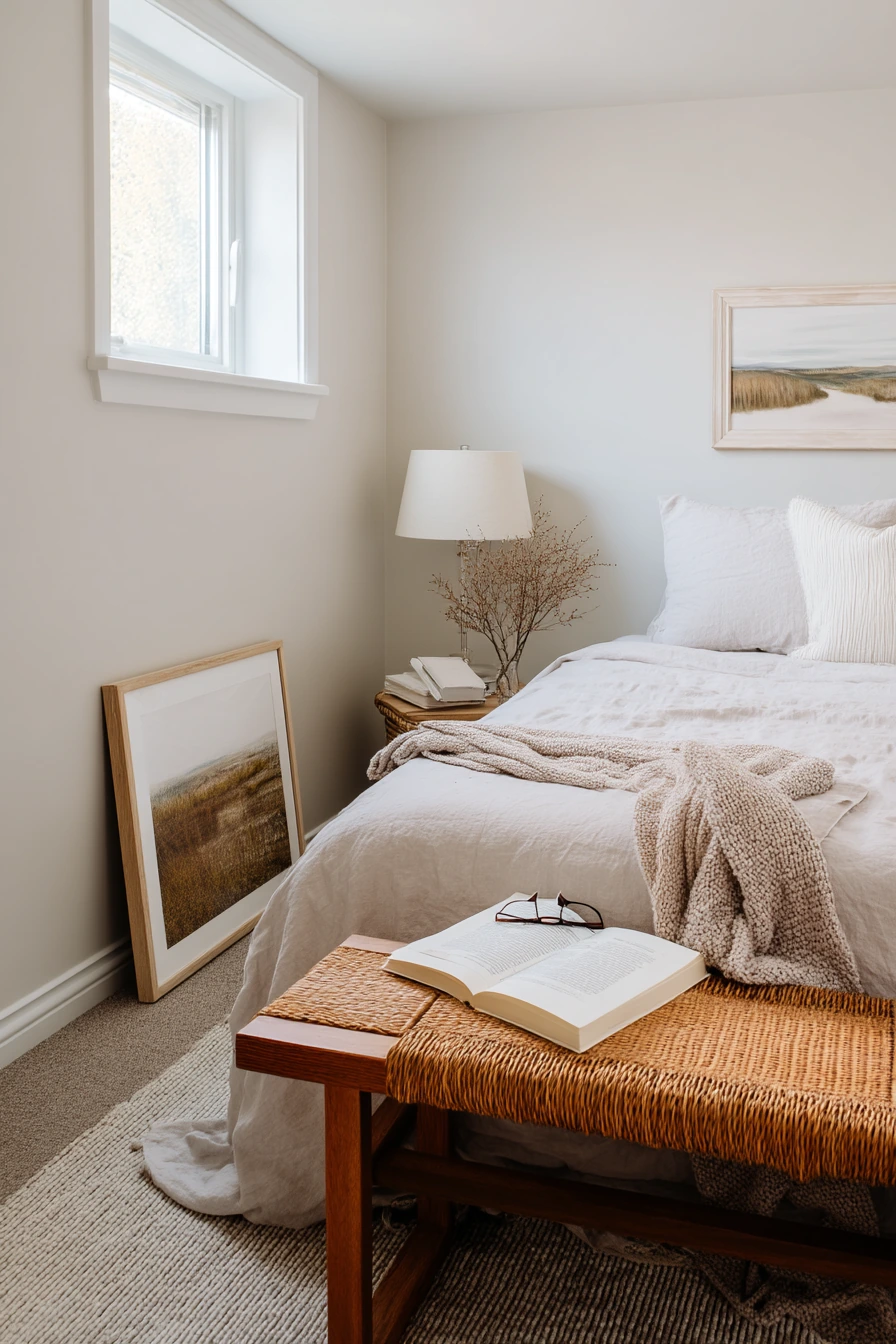
A small basement guest bedroom makeover should feel calm and clean, even if the ceiling is low. A low platform bed helps the room feel taller and more open. Choose soft linen bedding and a rumpled throw for a relaxed look that does not feel fussy. Keep the color palette light so the space reflects the little daylight it gets.
Style the bedside with just a few items: a paperback book and reading glasses on the bedside table make it feel ready for a real guest. Add gentle lamplight for evenings and early mornings. A soft rug underfoot is important in a basement, where floors can feel cold.
For decor, keep it simple but not bare. A framed landscape leaning against the wall is an easy way to add art without many holes. A woven bench at the foot of the bed gives a spot for a folded blanket or an overnight bag. If you have a narrow basement window, use a light-filtering shade so privacy and daylight both work.
- Use light wall paint and white bedding to brighten the room.
- Add a small dresser or baskets for guest clothing and extra towels.
- Choose a bedside lamp with a warm bulb for a softer mood.
- Keep one hook rack near the door for coats and bags.
- Place a small tray on the bench for keys, water, and phone charging.
Pro Design Tip: Use one large piece of art and one large rug instead of many small pieces to make a small basement bedroom feel more spacious.
Budget Considerations: Linen can be expensive; try a linen blend duvet cover and add texture with an affordable knit throw and cotton sheets.
6. Home Musician Basement Studio With Acoustic Panels
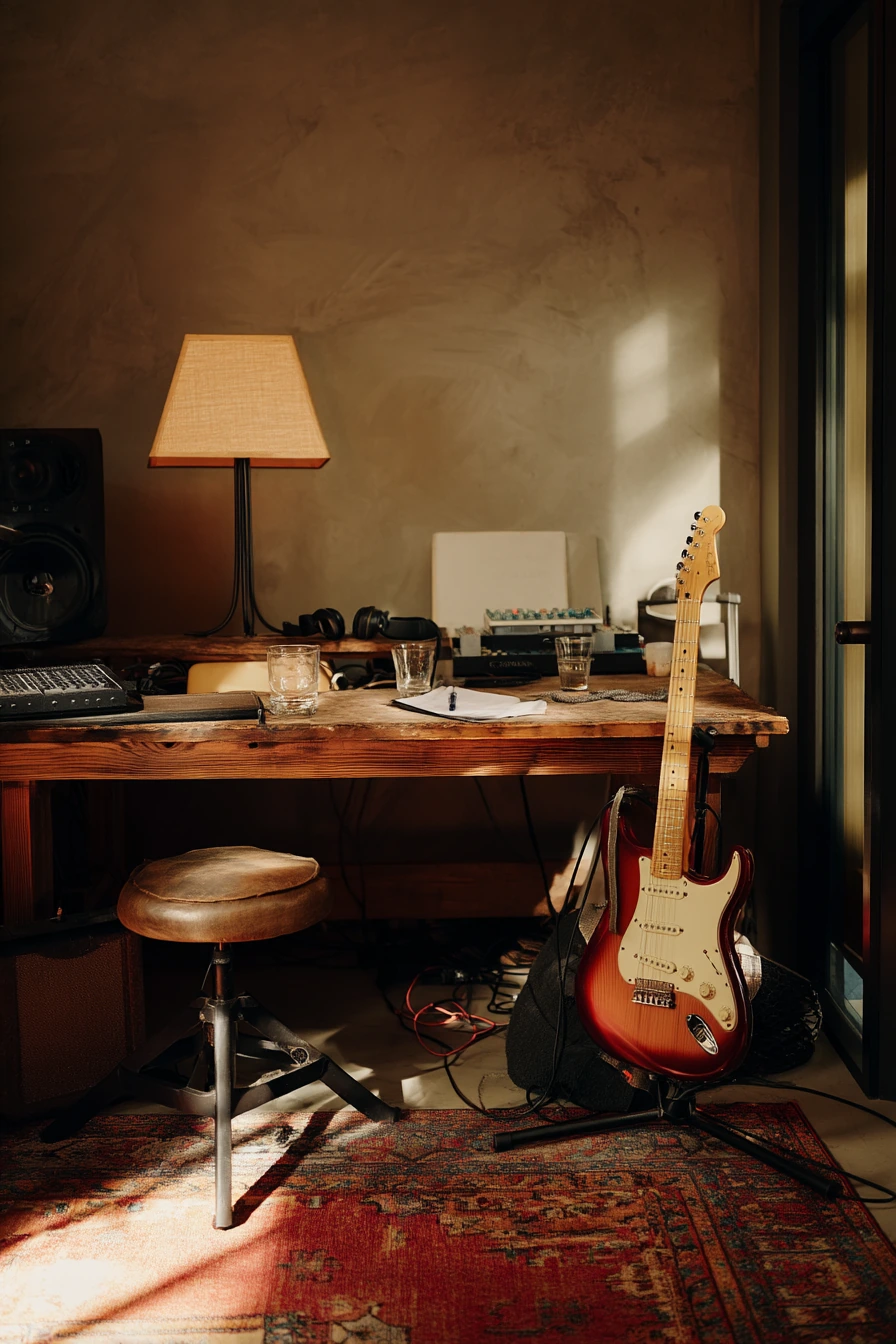
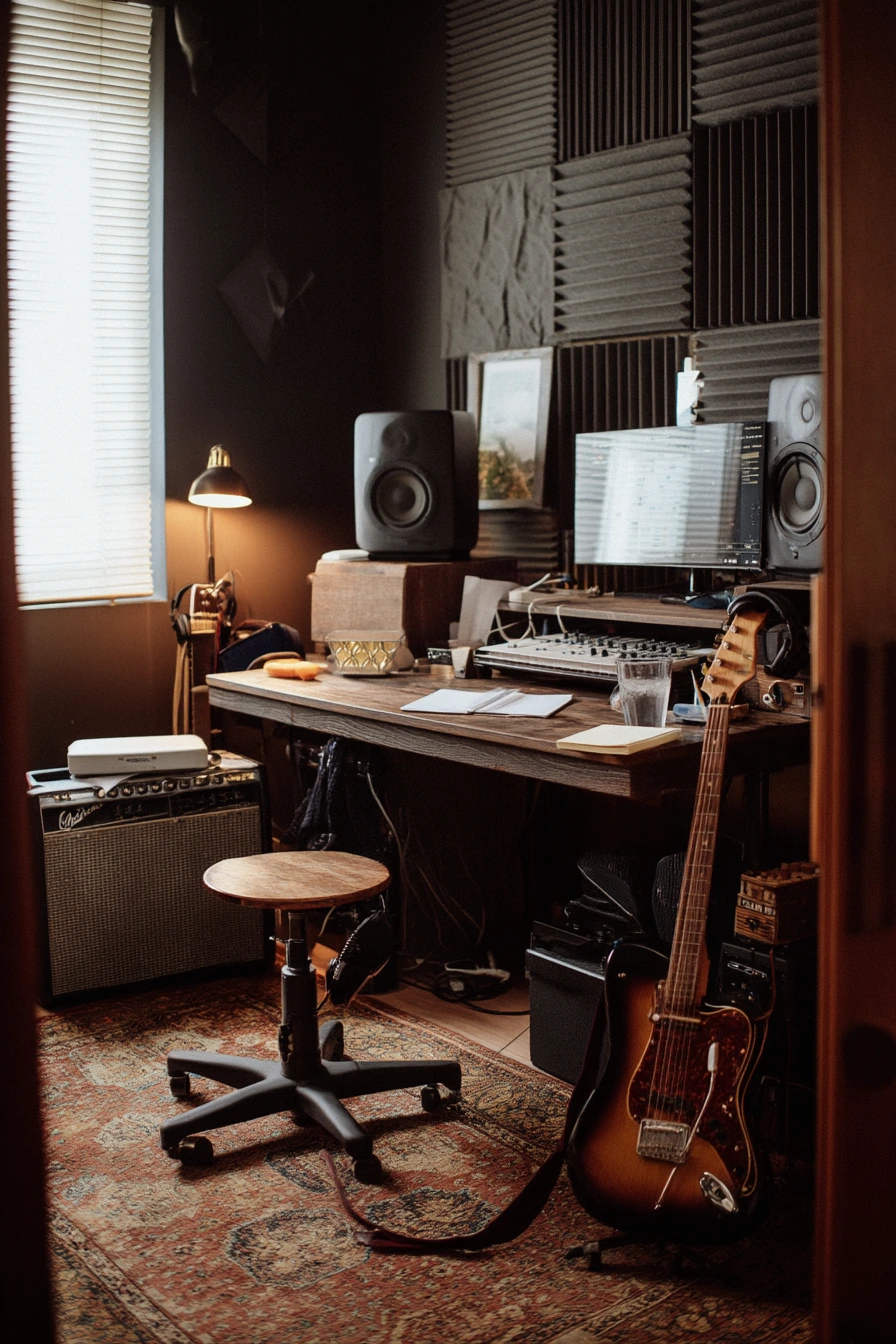
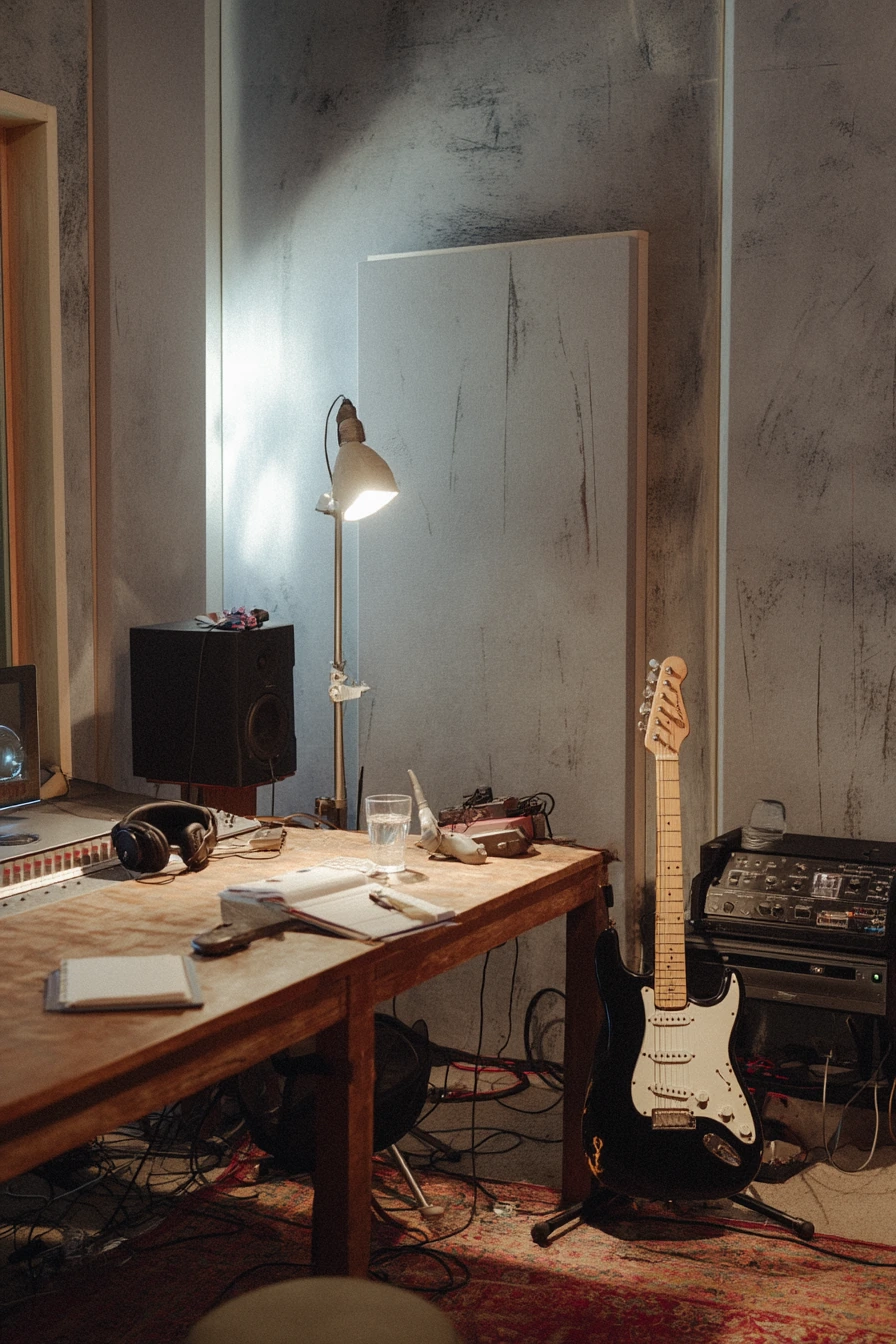
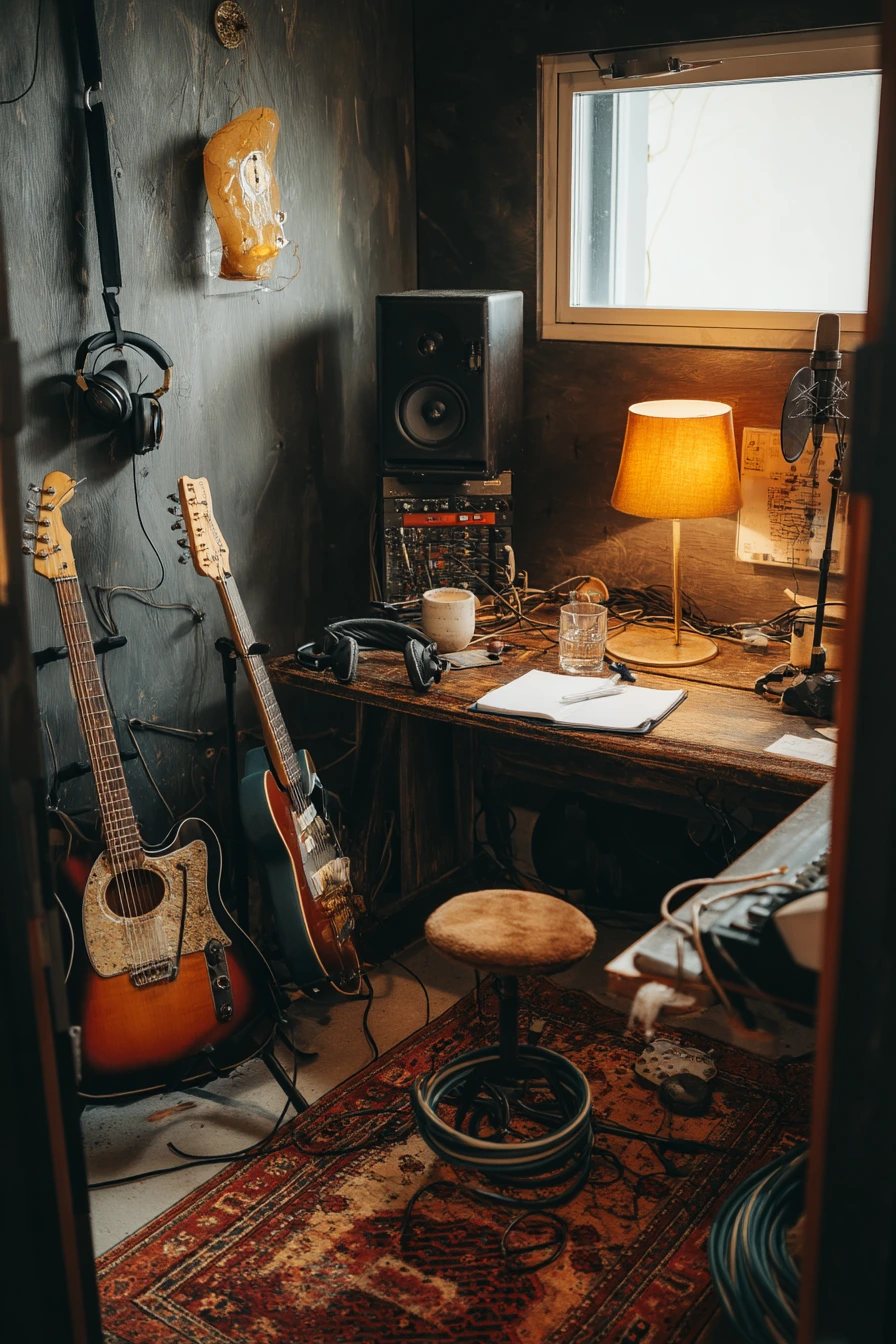
A home musician basement studio is a great use for a below-grade room because basements naturally block outside noise. Start by adding acoustic panels on matte walls to reduce echo and make recordings cleaner. Keep the layout simple: mixing desk on one side, instruments on the other, and a clear path between.
Style it like a working studio, not a showroom. An electric guitar resting on a stand beside an amp makes it easy to pick up and play. Headphones draped over the mixing desk and a notebook with scribbled lyrics feel natural and help you stay creative. Cable coils on the floor can look messy, so use a basket or hooks to keep them contained.
Lighting should be warm and focused. A desk lamp glow mixed with soft window daylight gives a relaxed, creative mood. Add a vintage rug to ground the space and soften sound. If you spend long hours down there, keep a water glass nearby and add a small stool or chair that supports your back.
- Place acoustic panels at first reflection points near the desk and speakers.
- Use a rug and thick curtains to reduce harsh sound in the room.
- Store cables with Velcro ties and label them for quick setup.
- Add a small shelf for pedals, picks, and adapters to avoid clutter.
- Keep one corner open for standing practice and stretching breaks.
Pro Design Tip: Set your desk and speakers symmetrically on the shortest wall, then sit centered, so the sound image is more balanced for mixing.
Budget Considerations: DIY acoustic panels made with rockwool and fabric often cost less than pre-made panels and can look just as clean when framed.
7. Budget-Friendly Basement Lounge With Thrifted Decor
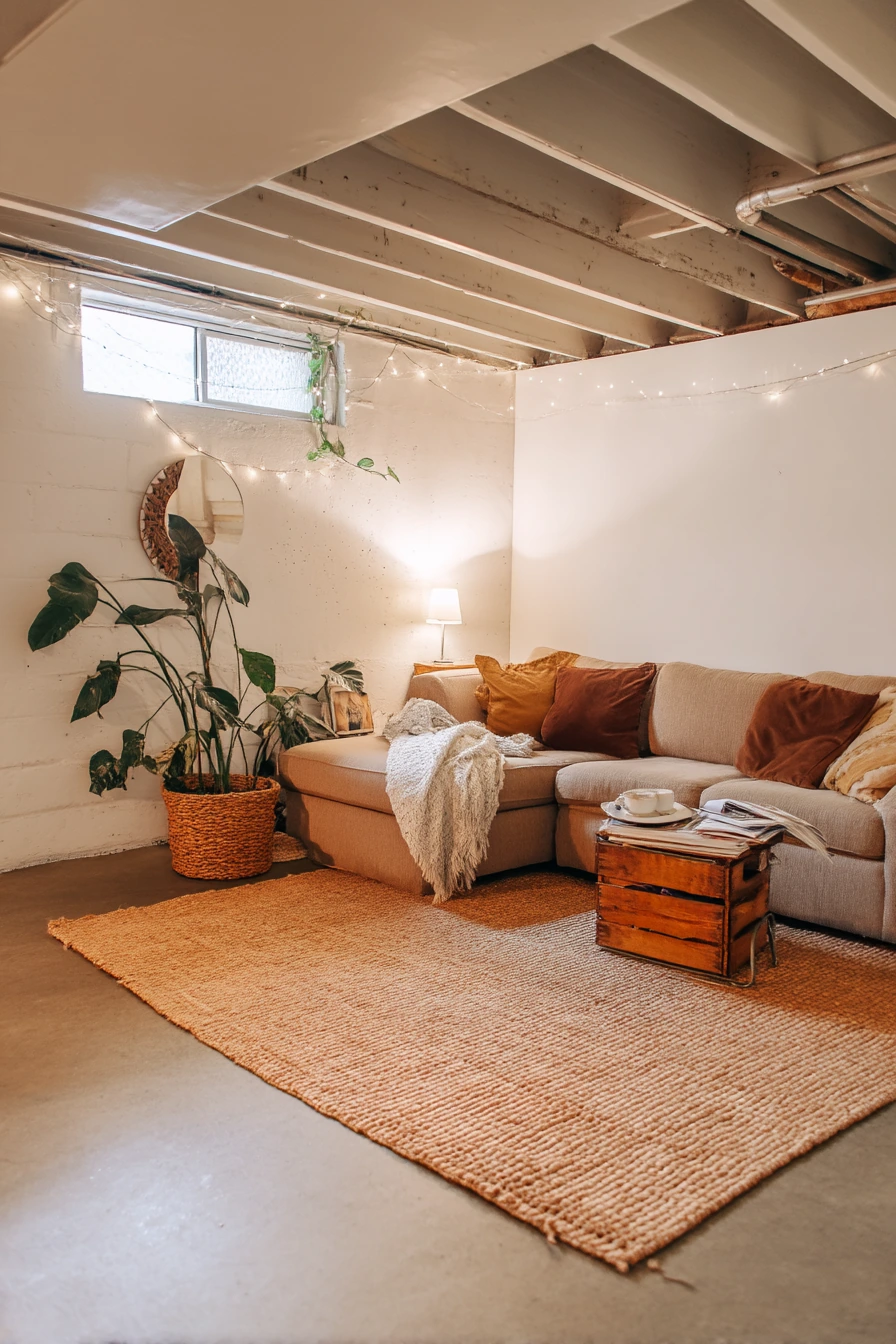
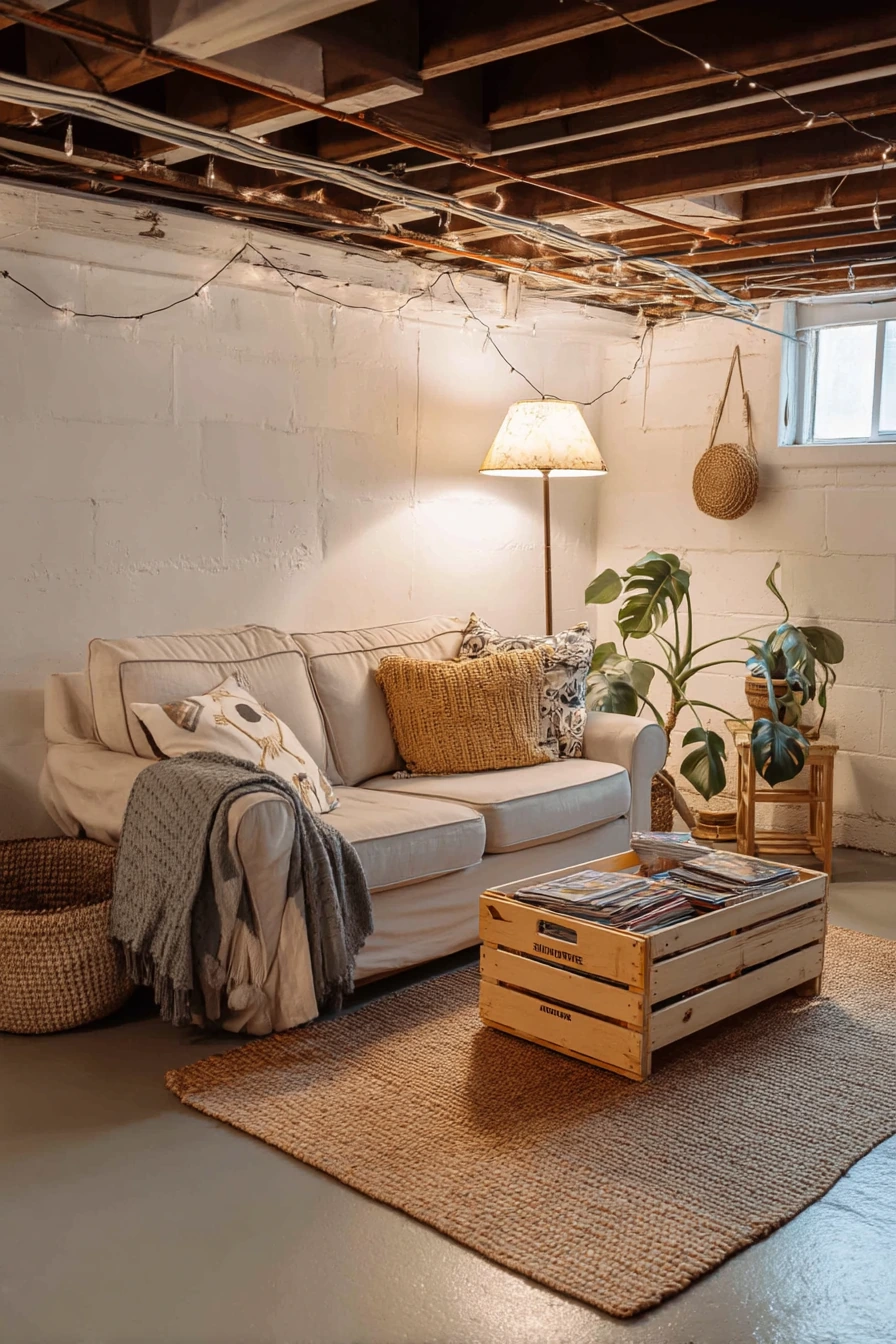
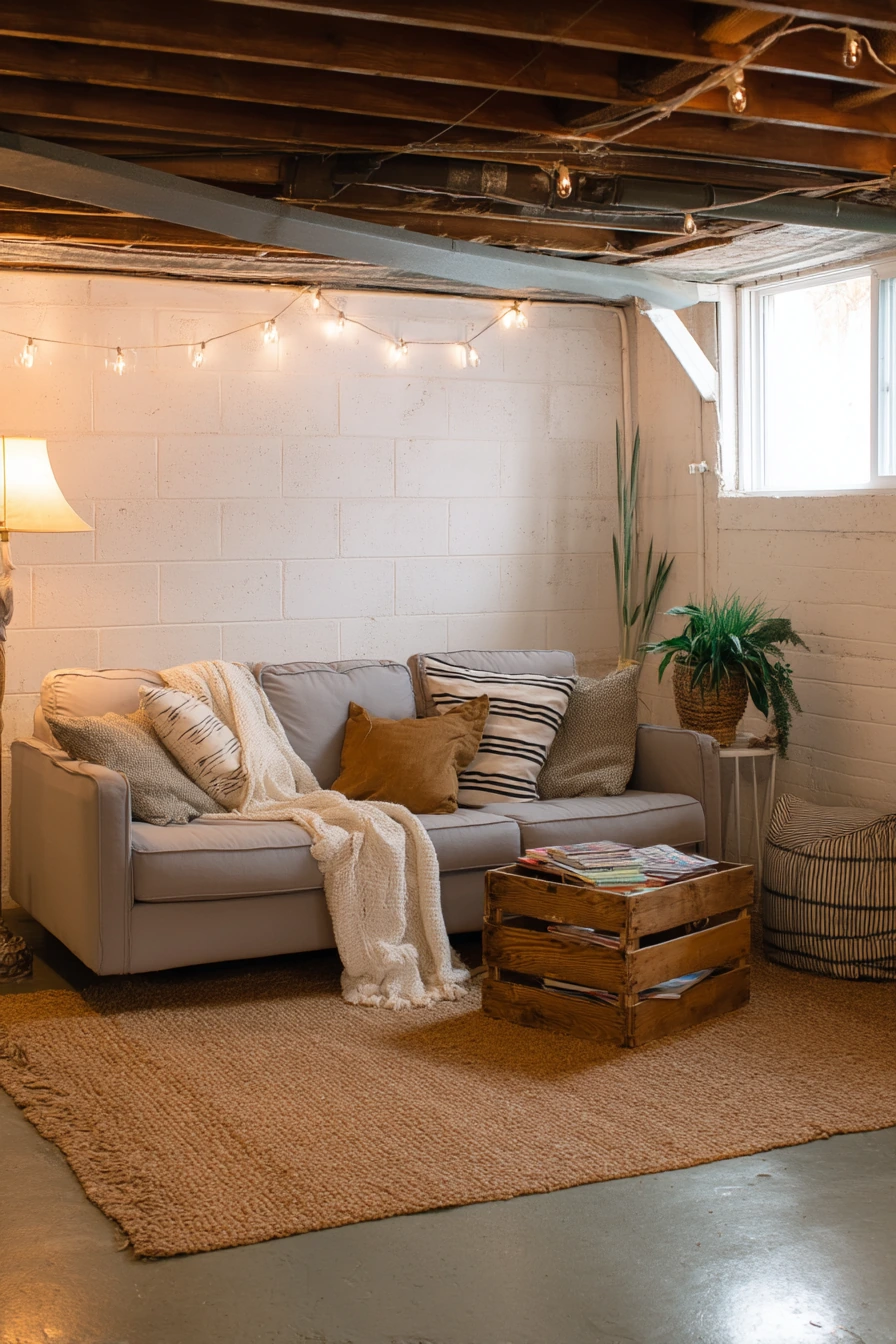
A budget-friendly basement makeover lounge can look good without matching everything. Start with a thrifted sofa and mix in mismatched pillows in the same color family. A woven rug is a simple way to warm up a concrete floor and make the room feel finished. Keep the walls a soft neutral or a light painted tone to avoid a heavy feel.
Use easy, flexible furniture. A crate coffee table stacked with magazines can be moved around when you host friends. Add a folded blanket tossed over the armrest for comfort and texture. A floor plant casting a shadow on the painted wall adds life, even if the basement gets low light. Choose a tough plant like a snake plant if sunlight is limited.
Lighting makes this lounge work. String lights draped along a beam give gentle glow and help the space feel cozy. Pair them with one lamp so the room is not too dim. Try to keep storage hidden in baskets so the lounge stays calm and inviting for a weekend hangout.
- Pick two main colors and repeat them in pillows, throws, and art.
- Use baskets to hide games, cords, and extra blankets.
- Add peel-and-stick wall art or simple frames for a finished look.
- Set up a small side table for drinks to protect the crate top.
- Use warm bulbs and avoid harsh blue light in a basement.
Pro Design Tip: Mix textures, like knit, woven, and wood, to make a low-budget lounge feel layered and intentional.
Budget Considerations: Thrift stores and online marketplaces can cut costs; spend a bit more only on the rug pad and lighting since they change comfort the most.

8. Compact Basement Workout Zone With Rubber Flooring
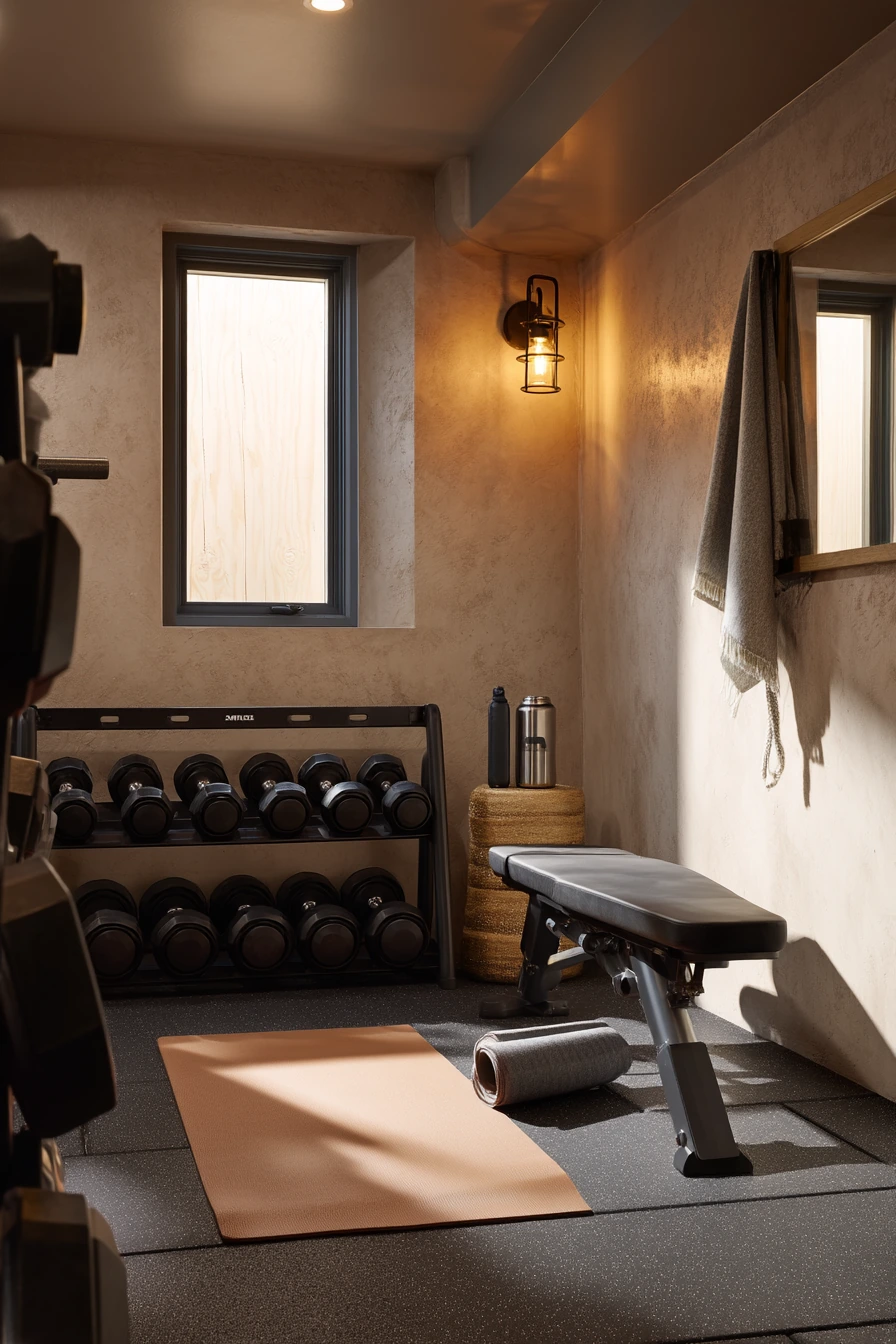
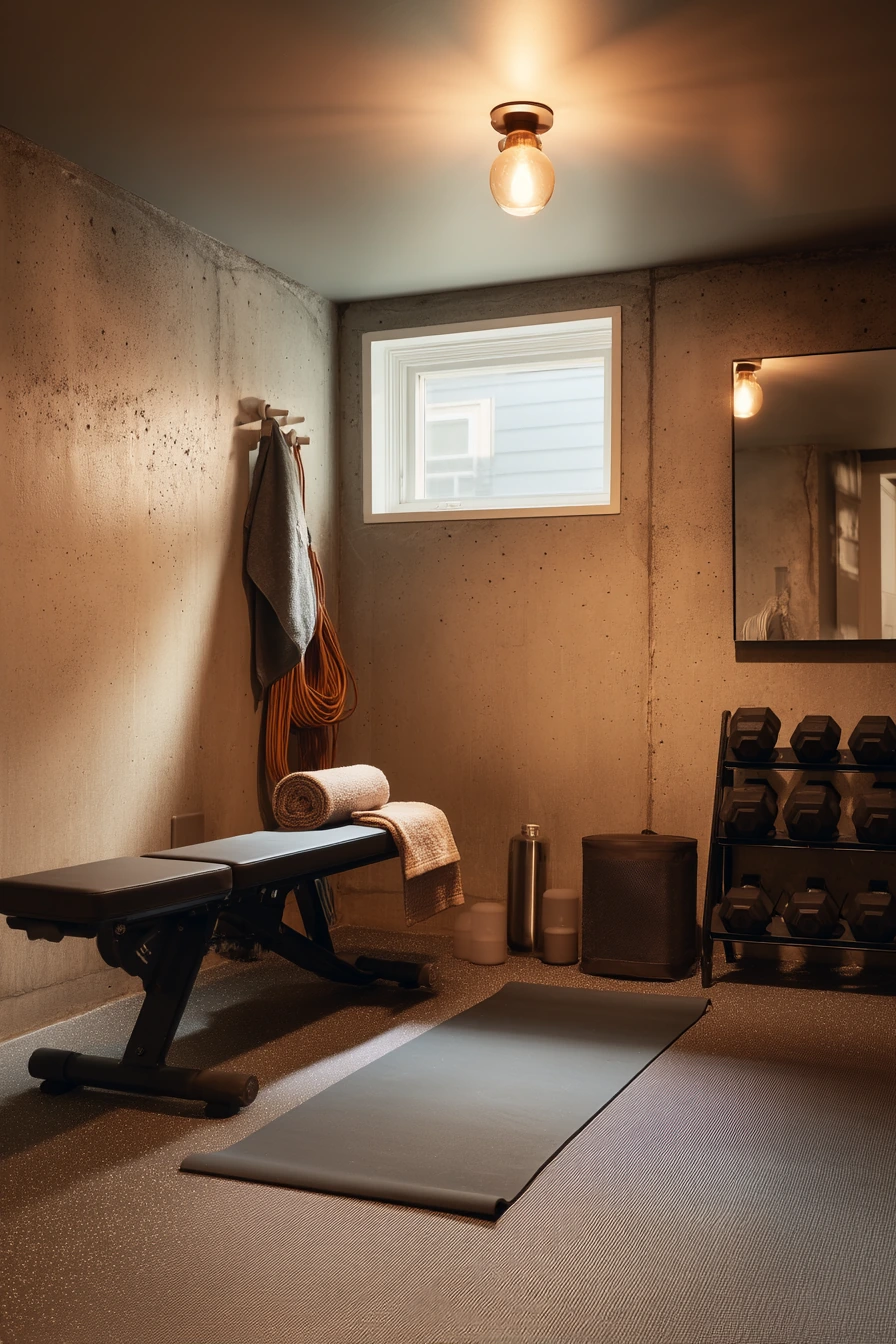
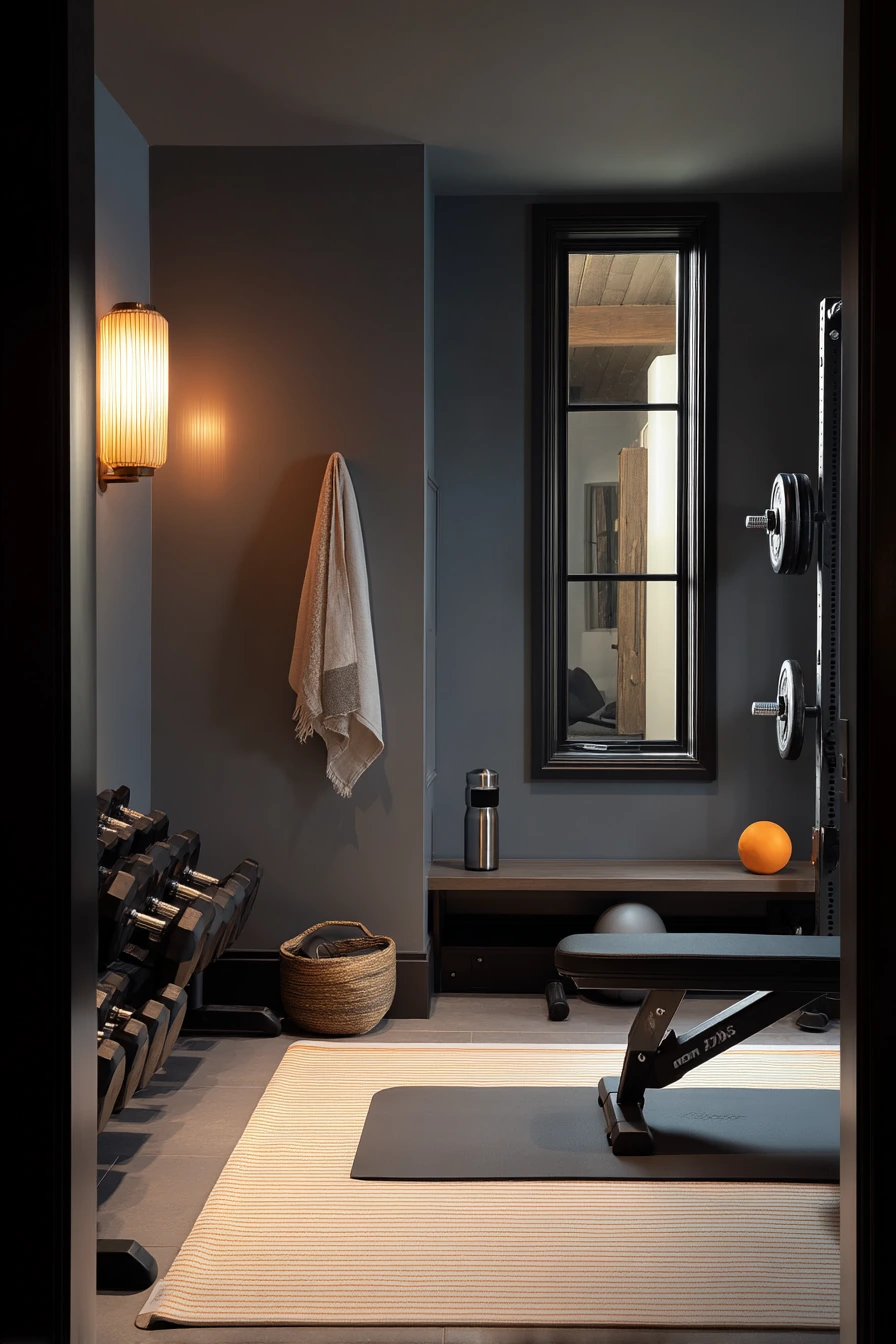
A compact basement workout zone is ideal when you want a dedicated routine space without taking over the whole basement. Start with rubber flooring to protect the slab and reduce noise. Place a yoga mat rolled halfway so it is easy to unroll and use. Add a mirror wall if you can, since it helps form and makes the space feel bigger.
Keep equipment tight and organized. Adjustable dumbbells save space and cover many workouts. A storage rack with resistance bands keeps small items off the floor. Style details can still be useful: a towel draped over a bench and a stainless water bottle beside a small speaker make the zone feel ready for real workouts.
Basement lighting matters for energy. Use soft daylight slipping through a narrow window, then add a warm ceiling lamp glow so the area is bright enough in the early morning. If you sweat a lot, add a small fan or dehumidifier nearby. A clean, dry basement makes workouts feel better and helps your gear last longer.
- Keep a small bin for wipes and a hand towel for quick cleanup.
- Use wall hooks for bands and jump ropes to free up floor space.
- Place a mirror where you can see full-body form for key moves.
- Choose equipment you will use weekly, not what looks impressive.
- Add a timer or phone stand so you do not set devices on the floor.
Pro Design Tip: Mark out a clear 6 by 8 foot “movement box” with no furniture so you can lunge, stretch, and do floor work safely.
Budget Considerations: Horse stall mats can be a cheaper rubber flooring option; check thickness and air them out before installing to reduce odor.

9. Quiet Basement Reading Nook With Bookcases and Armchair


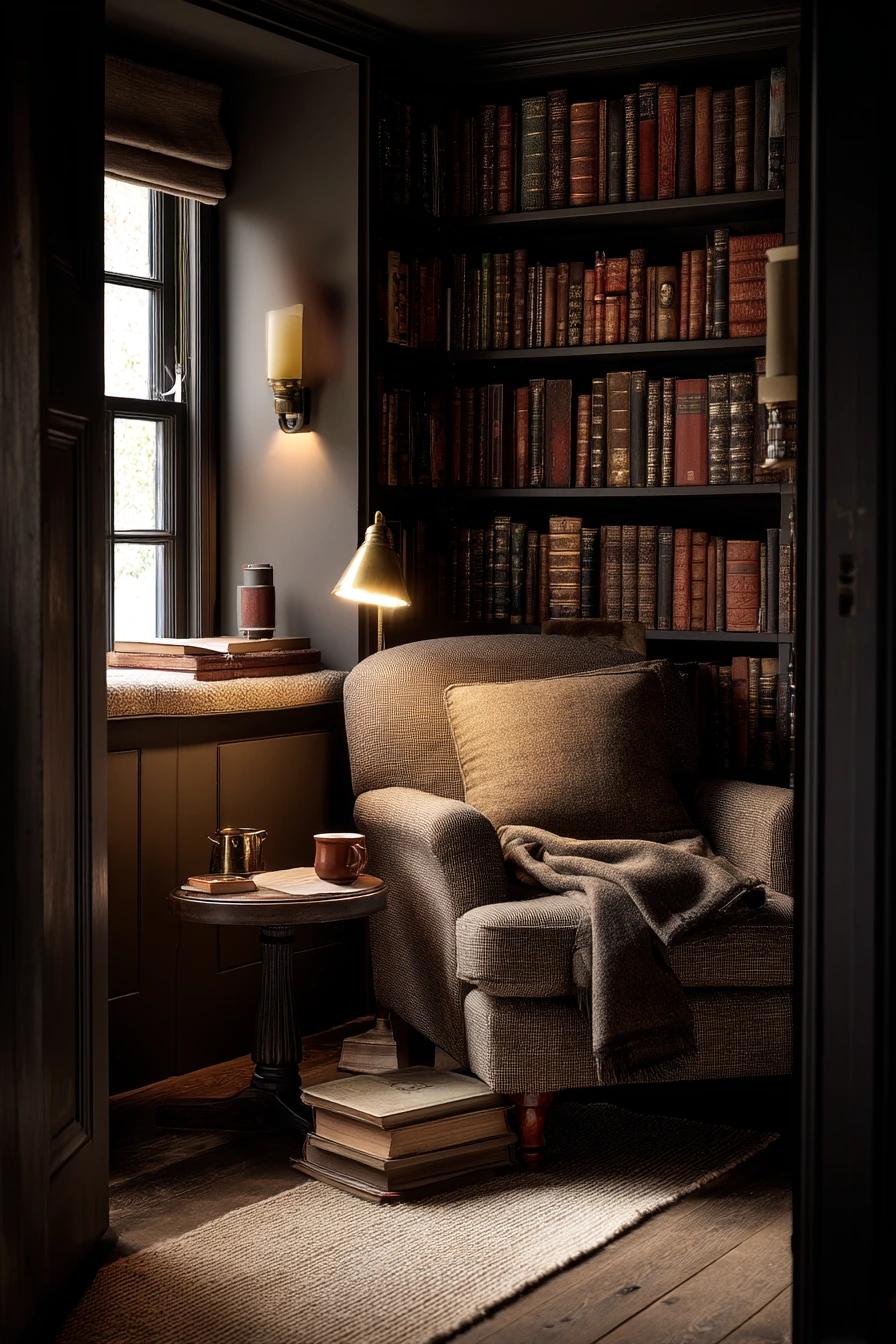
A quiet basement reading nook is a smart way to use a smaller corner where a full room setup is not needed. Line the wall with tall bookcases to create a library feel and add storage. Place a worn armchair beside a small round table so you have a spot for an open novel and a tea mug. Add a folded wool blanket on the chair arm for comfort.
Layer soft surfaces to reduce noise and make the nook warmer. A soft rug layered over wood floor helps your feet and makes the space feel cozy. If the basement has a small window behind shelves, keep the window treatment light so you still get delicate daylight. Even a little natural light can make the nook feel more pleasant.
Lighting is the main design tool here. A warm brass reading lamp aimed at the pages gives the right glow without lighting the whole basement. Keep the table clear with only a coaster and one small tray for bookmarks and glasses. The goal is a hushed, uncluttered spot you will use often.
- Use bookends and baskets on lower shelves to keep rows tidy.
- Add a small lumbar pillow to support longer reading sessions.
- Pick a lamp with an adjustable arm to control glare on pages.
- Keep a small basket for returns, like books you finished or want to donate.
- Place the chair so you can see the room entrance for a relaxed feel.
Pro Design Tip: Arrange books by height or color in a few sections, not all shelves, to create calm order without making it hard to find titles.
Budget Considerations: Use secondhand bookcases and paint them one color; swap the chair’s look with a simple slipcover if reupholstery is costly.

10. Bright Basement Craft Studio With Worktable and Pegboard
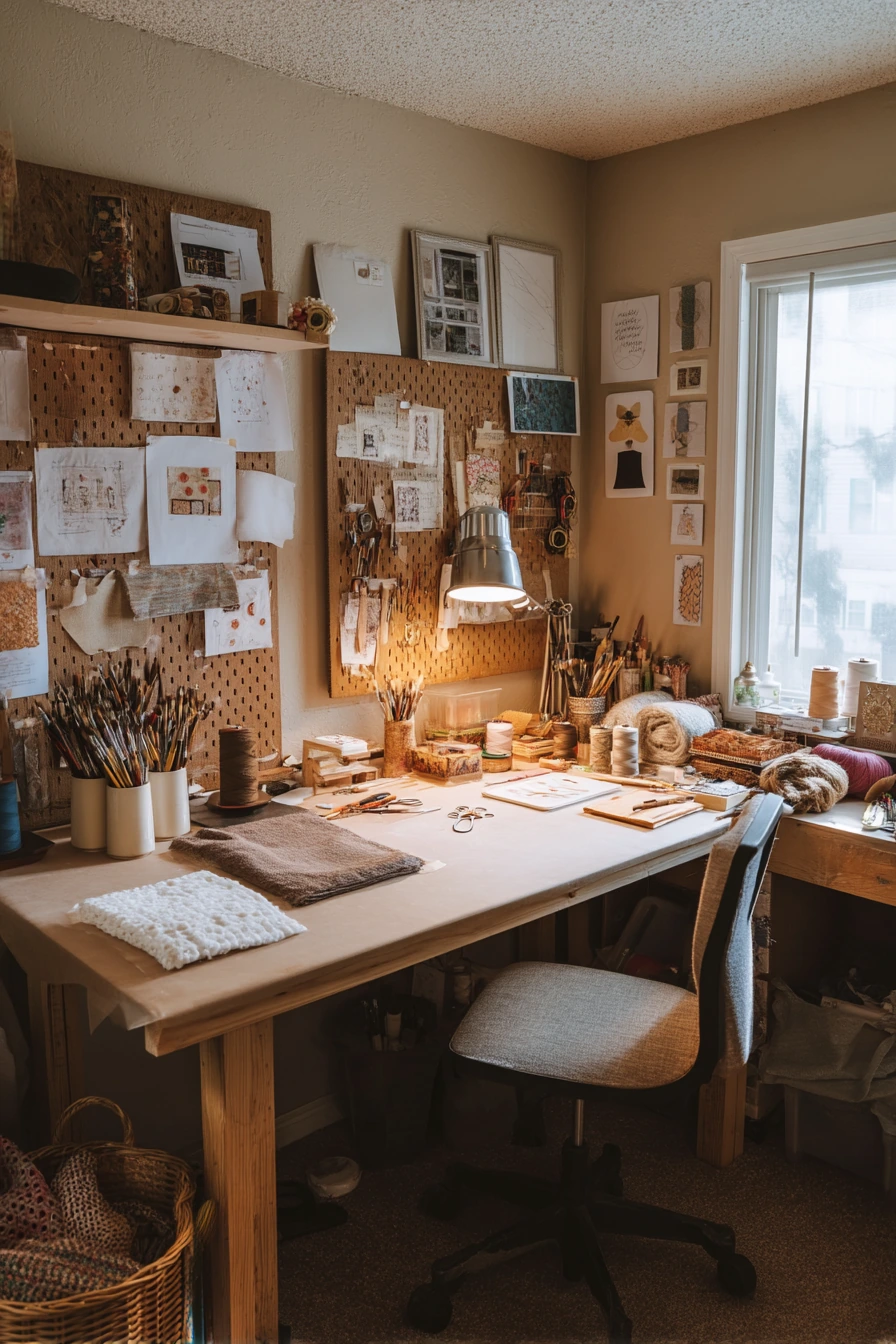

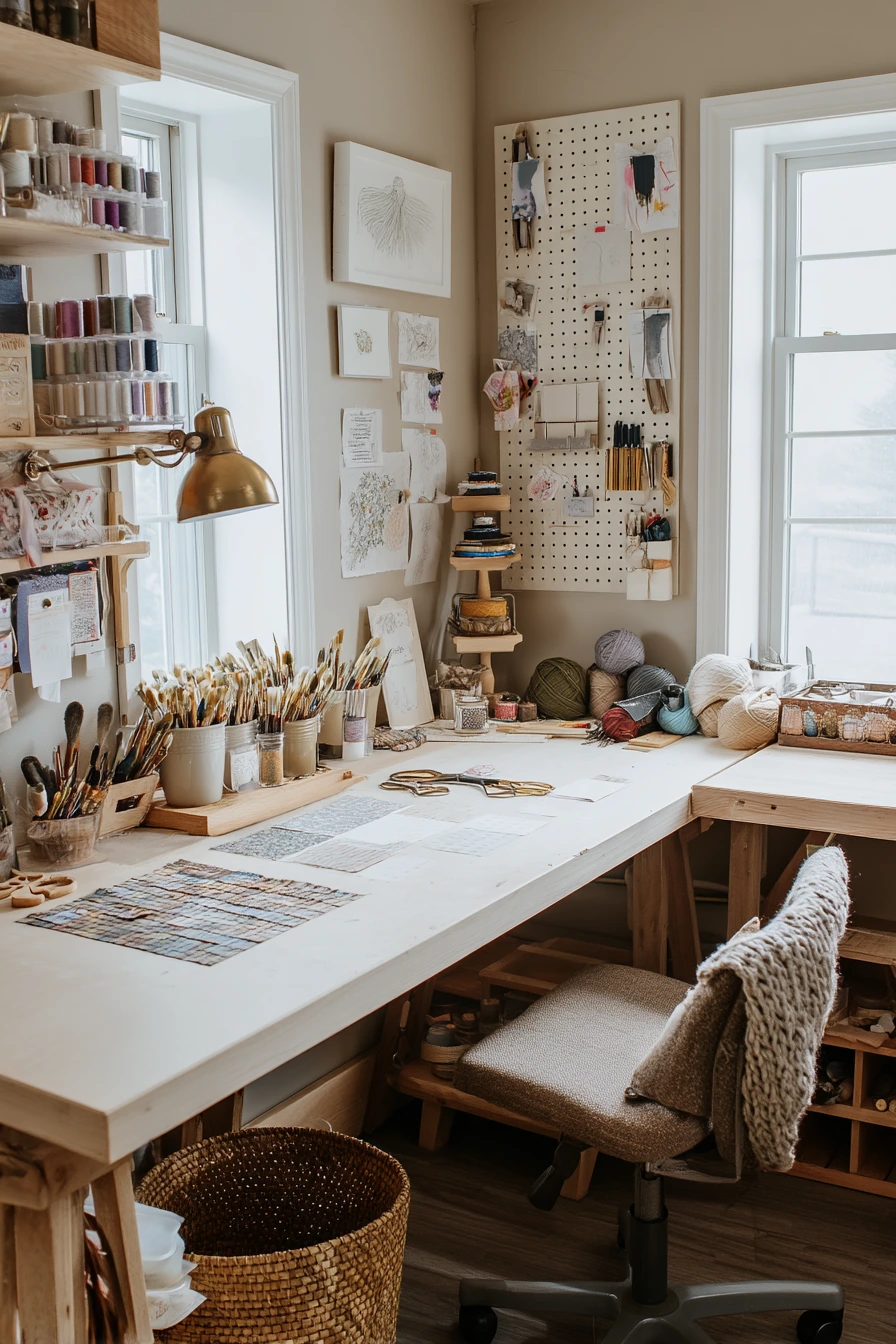
A bright basement craft studio works when storage is visible and tools are easy to reach. Start with a large worktable as the center of the room. It is normal to have fabric swatches, scissors, and thread spools out, but keep them grouped in trays so the table still feels usable. Neutral walls help reflect light and keep color projects accurate.
Use vertical storage so the floor stays open. Pegboard storage is perfect for scissors, rulers, and small bins. Add a corkboard filled with pinned sketches to keep ideas in view. Place a jar of paintbrushes near the window side of the table so soft daylight helps you see details. A rolling chair slightly pulled out keeps the room looking active and real.
Lighting should be both bright and warm. Balance a warm task lamp glow with window light so the space does not feel harsh. Add a woven basket of yarn under the table for bulk items. If your basement is damp, store paper and fabric in lidded bins to prevent smell and damage.
- Sort supplies into clear bins by category, like fabric, paper, and paint.
- Use a cutting mat to protect the table and speed up measuring.
- Install a pegboard above the table for tools you use daily.
- Keep a small trash can and a recycling bin within arm’s reach.
- Create a “current project” tray so works-in-progress do not spread out.
Pro Design Tip: Choose one wall for storage and keep the other walls calmer, so your eyes rest and the studio feels brighter and more organized.
Budget Considerations: A simple folding table can work as a craft surface; upgrade later with a sturdy top and add inexpensive pegboard for big storage impact.

Basement makeover ideas work best when you pick one clear purpose for the space and build around it. A movie nook, office, playroom, bar, guest room, studio, lounge, workout corner, reading nook, or craft room can all fit in a basement with the right plan.
Focus on comfort basics first: warm lighting, soft flooring, smart storage, and moisture control. Then add a few lived-in details like throws, baskets, and easy wall art to make it feel welcoming.
FAQ
1. What is the first step in a basement makeover?
Start by checking for moisture, musty smells, and cracks. Fix leaks and add a dehumidifier if needed before buying furniture.
2. How do I make a basement feel brighter?
Use light wall paint, add more lamps, and choose mirrors or light wood pieces. Avoid one harsh overhead light and use layered lighting instead.
3. What flooring is best for a finished basement?
Luxury vinyl plank, sealed concrete with rugs, and carpet tiles are common choices. Pick something that handles damp conditions and is easy to clean.
4. How can I make a basement cozy on a budget?
Add a large rug with a pad, warm bulbs, thrifted seating, and baskets for storage. Texture helps more than expensive decor.
5. How do I deal with small basement windows?
Keep window coverings light and simple, and place key zones near the window when possible. Use lamps to fill in dark corners.
6. What is a simple way to reduce echo in a basement?
Add rugs, curtains, soft seating, and bookcases. In a music or media space, consider acoustic panels or wall hangings.
7. How do I split one basement into two uses?
Use rugs, shelving, and lighting to define zones. For example, a workout corner can sit near a wall while a lounge area stays centered.
Pick one idea from this list and start with one weekend project. Small changes add up fast in a basement.