
Looking for wall painting ideas bedroom projects that feel fresh but not hard to do. Paint is one of the fastest ways to change a room, and it can work in small spaces, rentals, and full makeovers.
This guide shows 10 bedroom paint looks inspired by calm organic palettes, warm clay tones, two-tone walls, murals, and bold feature walls. Each idea includes simple styling notes so your bed, nightstands, and lighting fit the paint choice.
You will also get practical steps like where to place an accent wall, what sheen to pick, and how to keep painted shapes clean. If you came from Pinterest, you can use these ideas as a plan you can save and try this weekend.
Each section ends with a Pro Design Tip and a Budget Consideration, so you can choose what looks best and what fits your spend.
1. Sage Green Accent Wall Behind the Bed
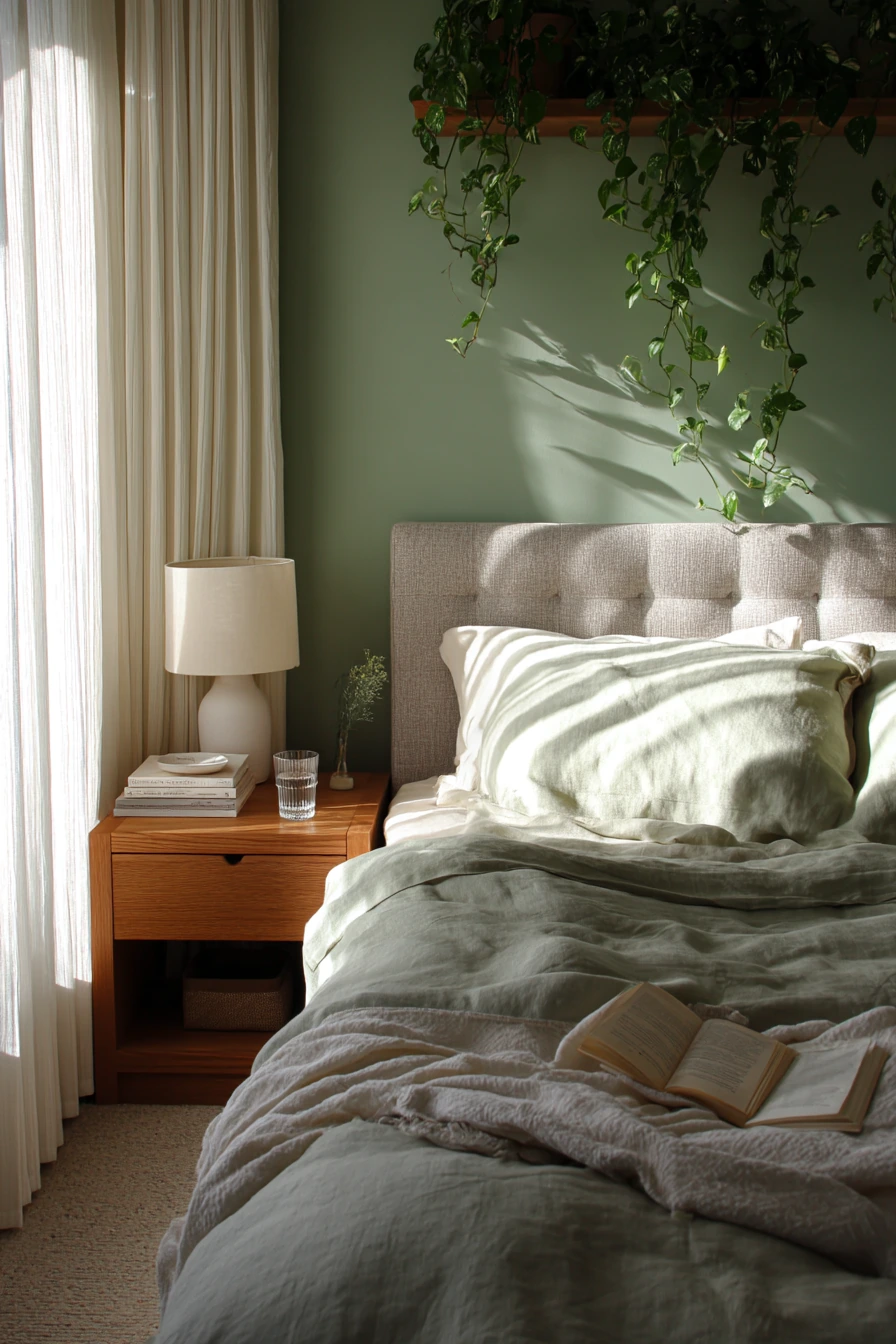
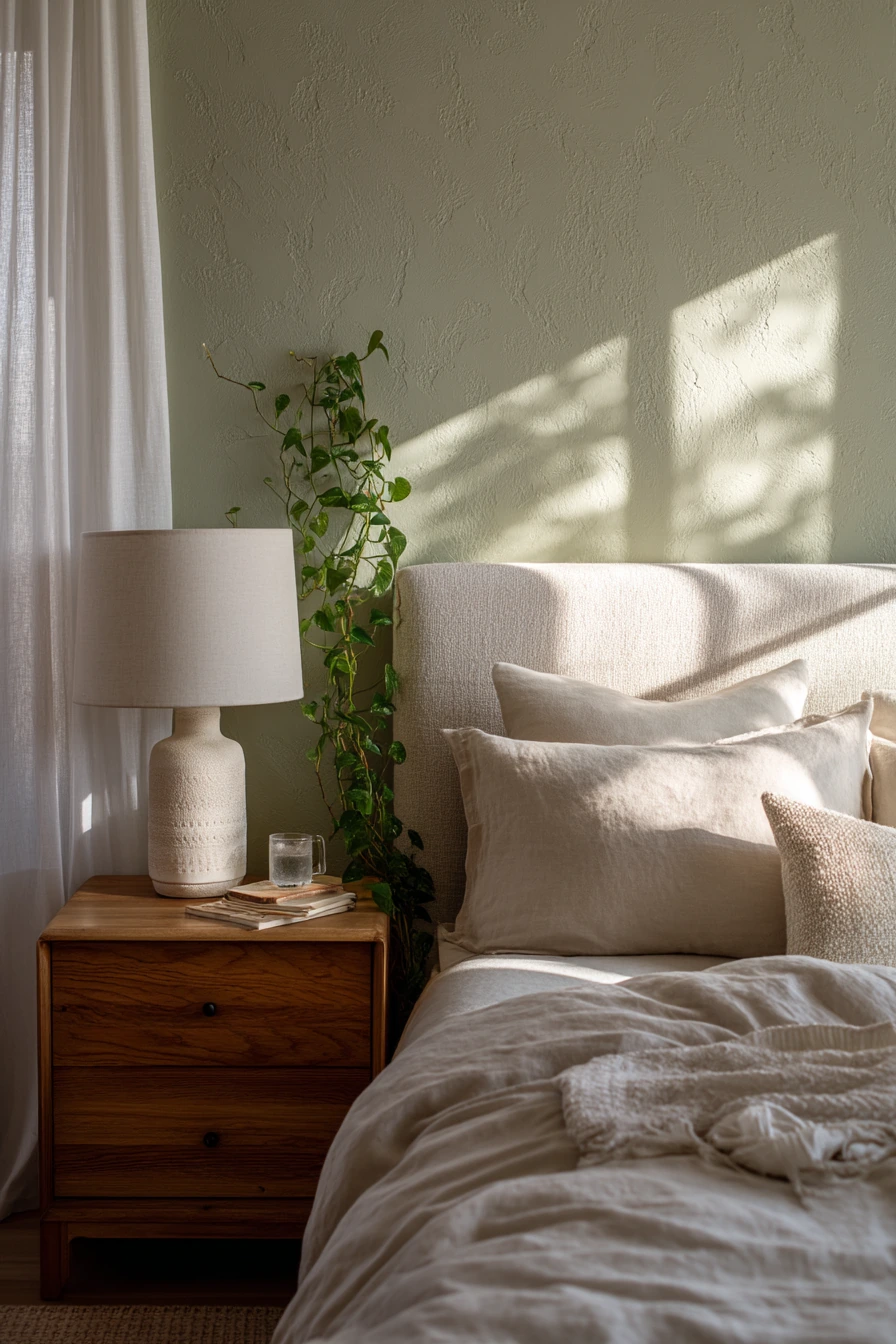
A hand-painted sage green accent wall is a simple way to make the bed area feel calm. Sage sits between green and gray, so it works with a lot of bedding colors. It also looks good in morning sun, especially with sheer curtains that soften the light. If you have an upholstered headboard, sage frames it without looking too sharp.
To style this wall painting idea for a bedroom, keep the rest of the room airy. Use tactile linen bedding in off-white, oat, or light gray. Add pale oak nightstands and a ceramic lamp for a soft, natural look. A folded knit throw that is slightly wrinkled keeps it relaxed, not staged. Finish the bedside with a paperback book and a water glass so the room feels lived in.
Plants are a strong match here. A trailing pothos near the window can cast gentle plant shadows on the wall, which adds texture without extra decor. If you want more contrast, add small black details like a frame, knob, or alarm clock. For paint, choose a matte or eggshell finish to avoid glare and keep the wall calm.
- Paint the wall behind the headboard for a clear focal point.
- Test sage samples in morning and evening light before buying.
- Pair with pale oak and warm whites to avoid a cold look.
- Use linen curtains to keep the space bright and soft.
- Add one trailing plant to bring movement and shadow.
Pro Design Tip: Paint the accent wall and the wall return (the short side near the corner) in the same sage to make the bed nook feel wider and more finished.
Budget Considerations: If full wall paint is too much, paint a wide sage rectangle behind the bed to mimic an accent wall and use leftover paint for small touch-ups later.


2. Terracotta Painted Arch Headboard Wall
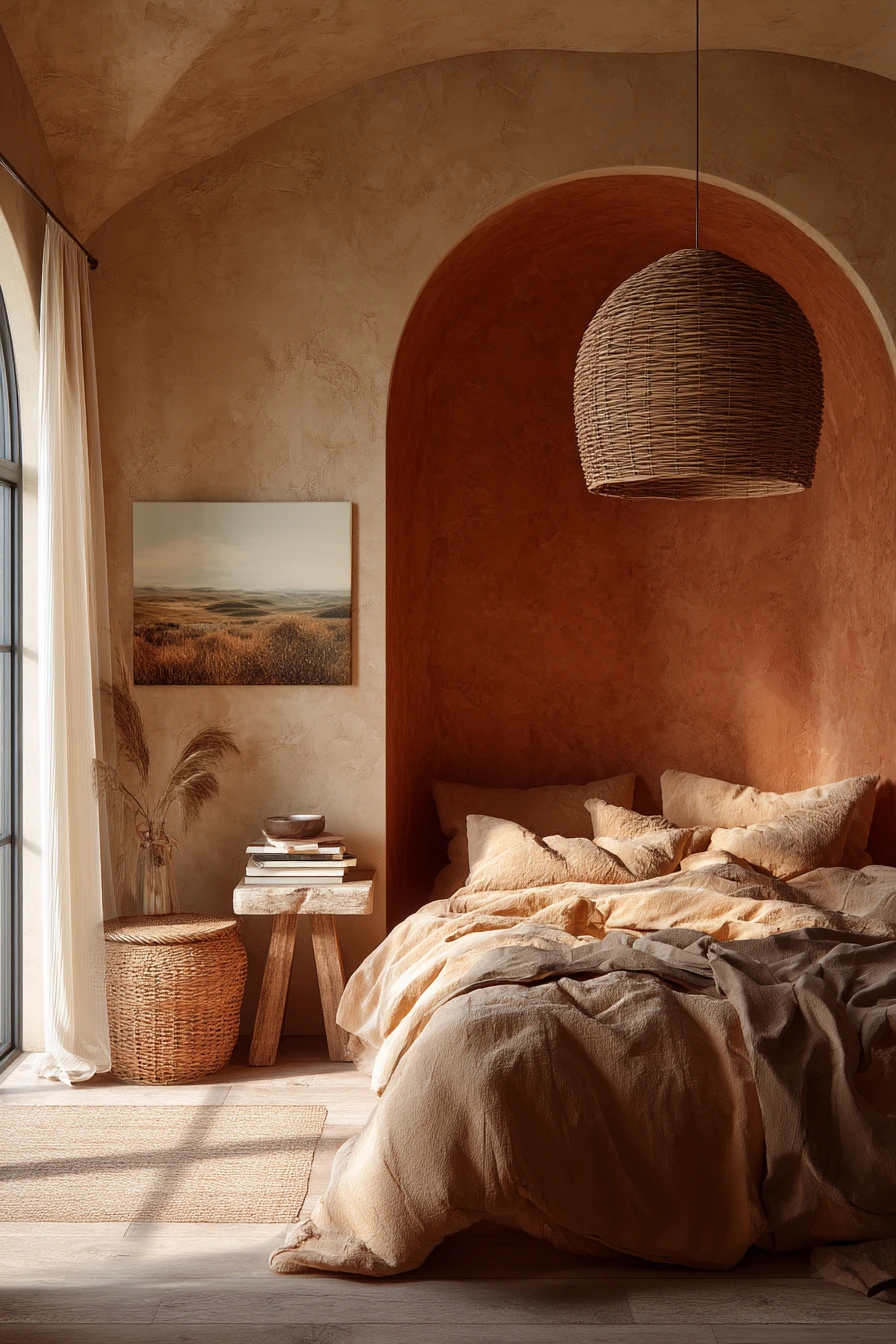
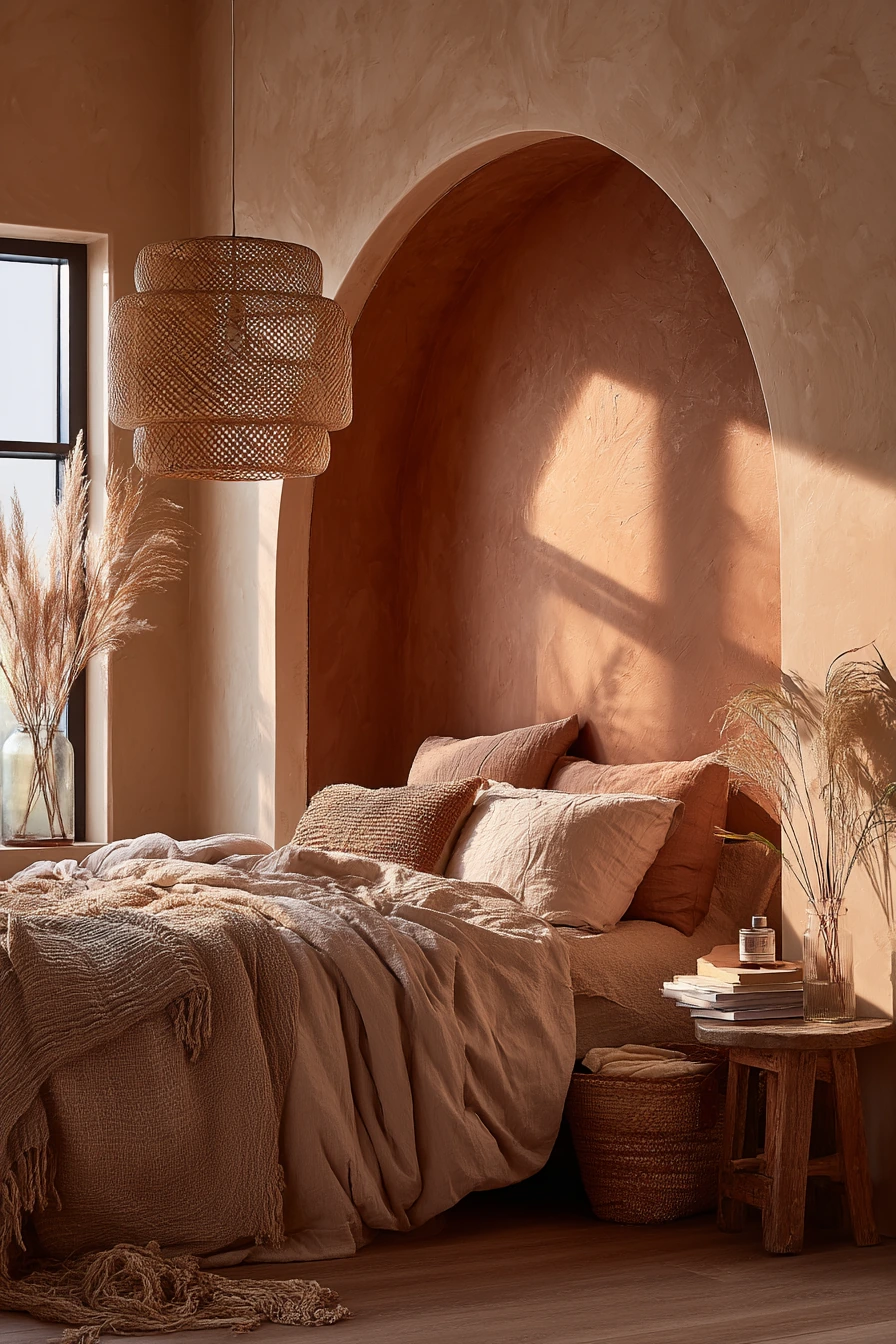
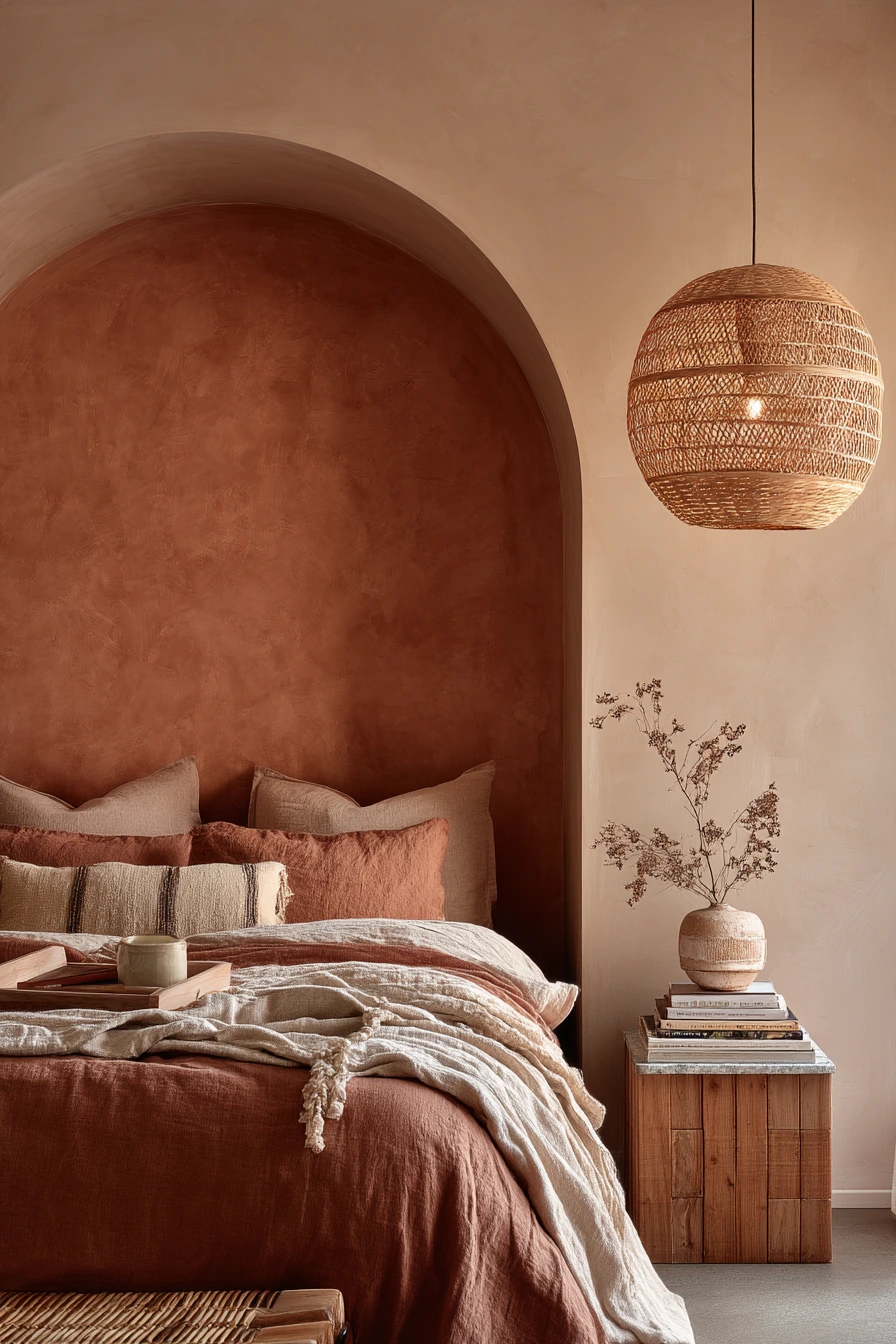
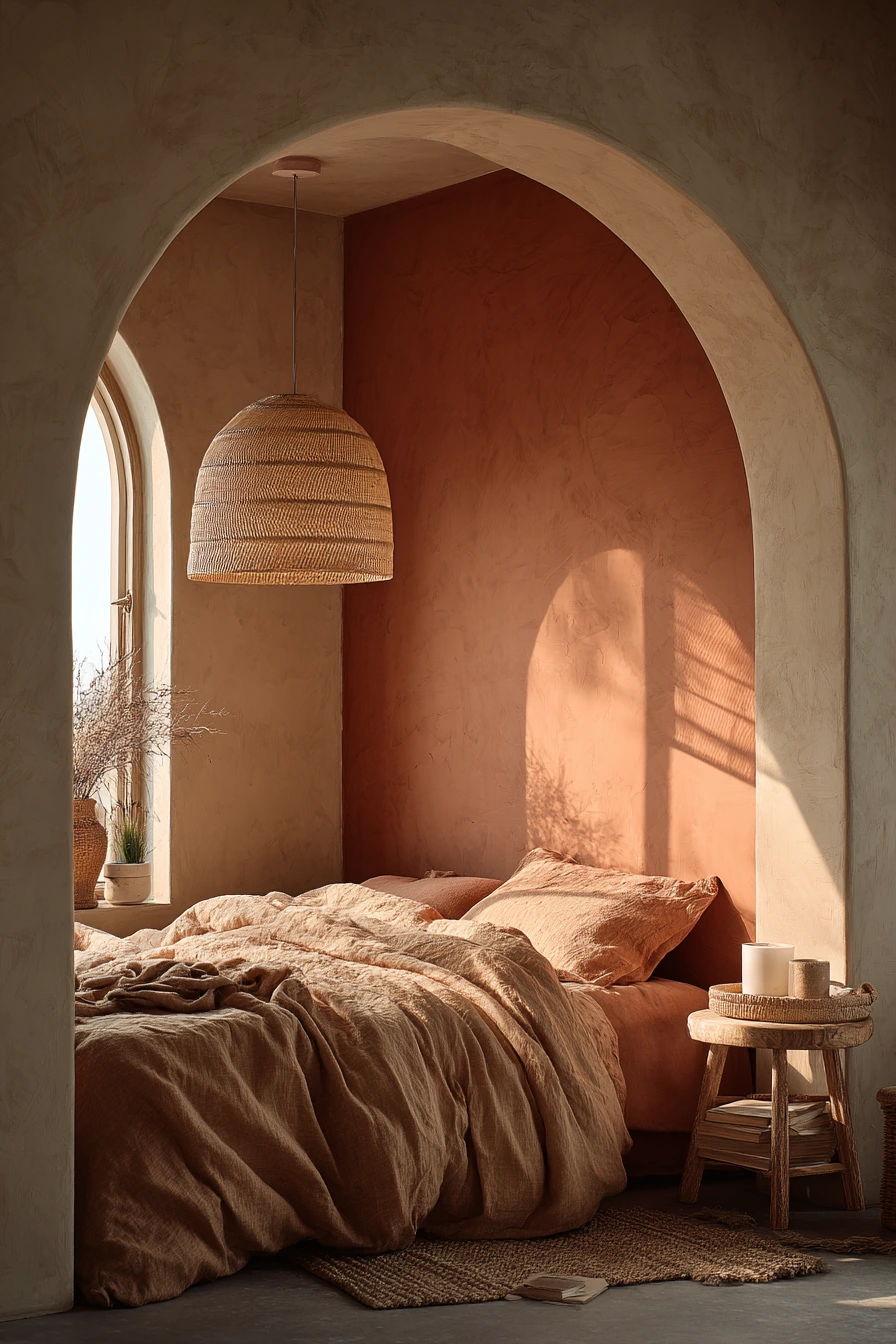
A terracotta painted arch is a cozy bedroom paint idea that adds shape without adding clutter. The warm clay tone looks great on a soft beige wall and gives the headboard a clear frame. It also brings a desert-inspired palette into the room, which feels warm and grounded.
Keep the bedding simple so the arch stays the star. A rumpled cotton duvet in cream or sand works well, and it matches textured paint. Add a woven rattan pendant for warmth and a relaxed look. On the bedside, a stool table with stacked books feels casual. Do not hide the real-life details like a phone charging cable, because this style looks best when it feels lived-in.
To paint the arch, measure the bed width first. The arch should be wider than the headboard, with a little space on each side so it does not feel tight. Use a pencil and string method, or a large round object, to mark the curve. Use low-tack tape for the straight sides, and a small angled brush to cut the curve cleanly. Soft golden window light will make the color look richer, so check the tone at different times of day.
- Choose terracotta with a muted, earthy base, not bright orange.
- Make the arch wider than the headboard for balance.
- Use a matte finish to keep the look soft and chalky.
- Style with rattan, light wood, and cotton bedding.
- Add one small black accent to keep it from looking too sweet.
Pro Design Tip: Paint a thin lighter border around the arch (one shade lighter than the fill) to make it look more like a built-in wall detail.
Budget Considerations: Skip a full room repaint by keeping the arch on one wall and using matching accessories like a clay vase or rust pillow to repeat the color.
3. Two-Tone Bedroom Wall With Wood Trim
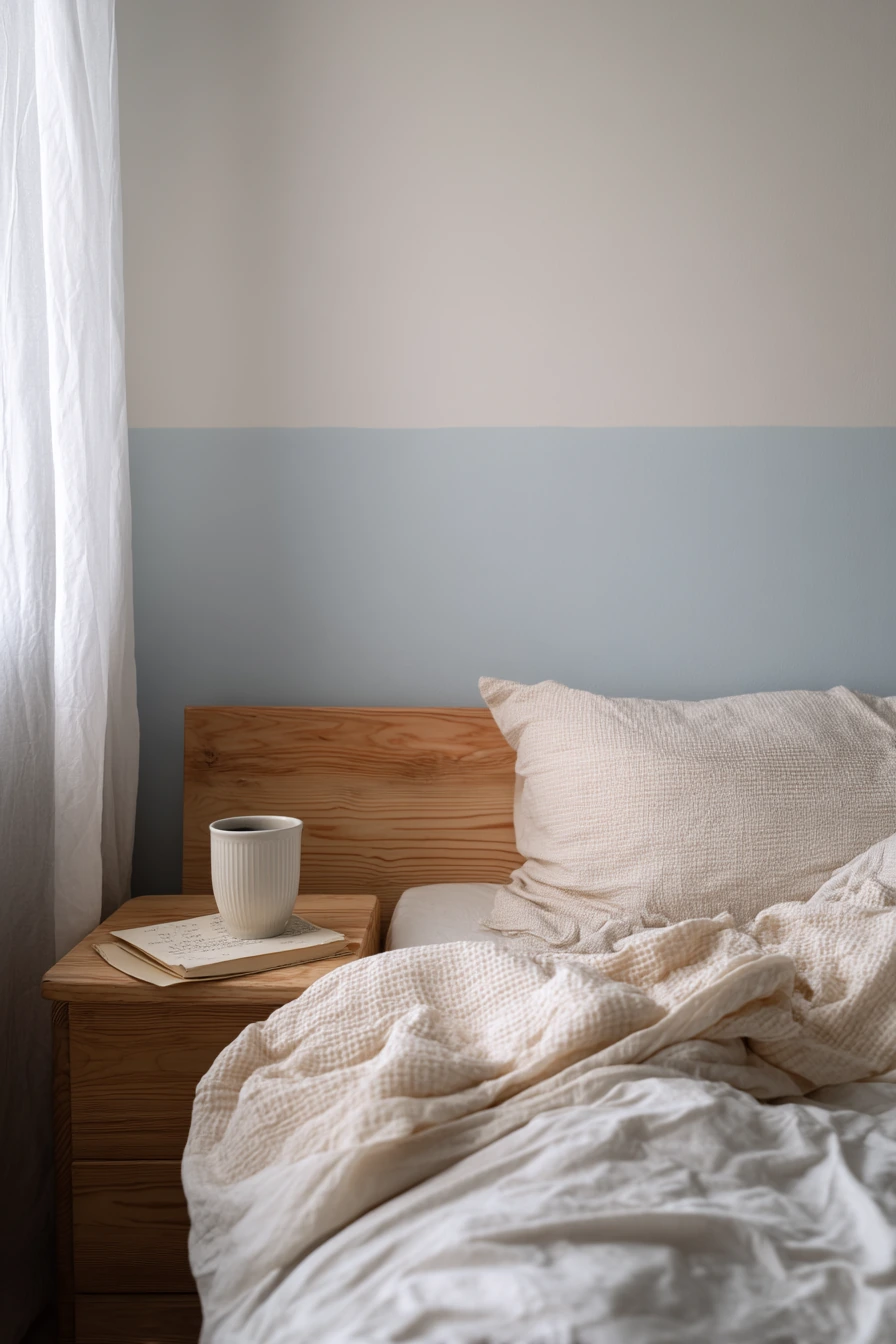
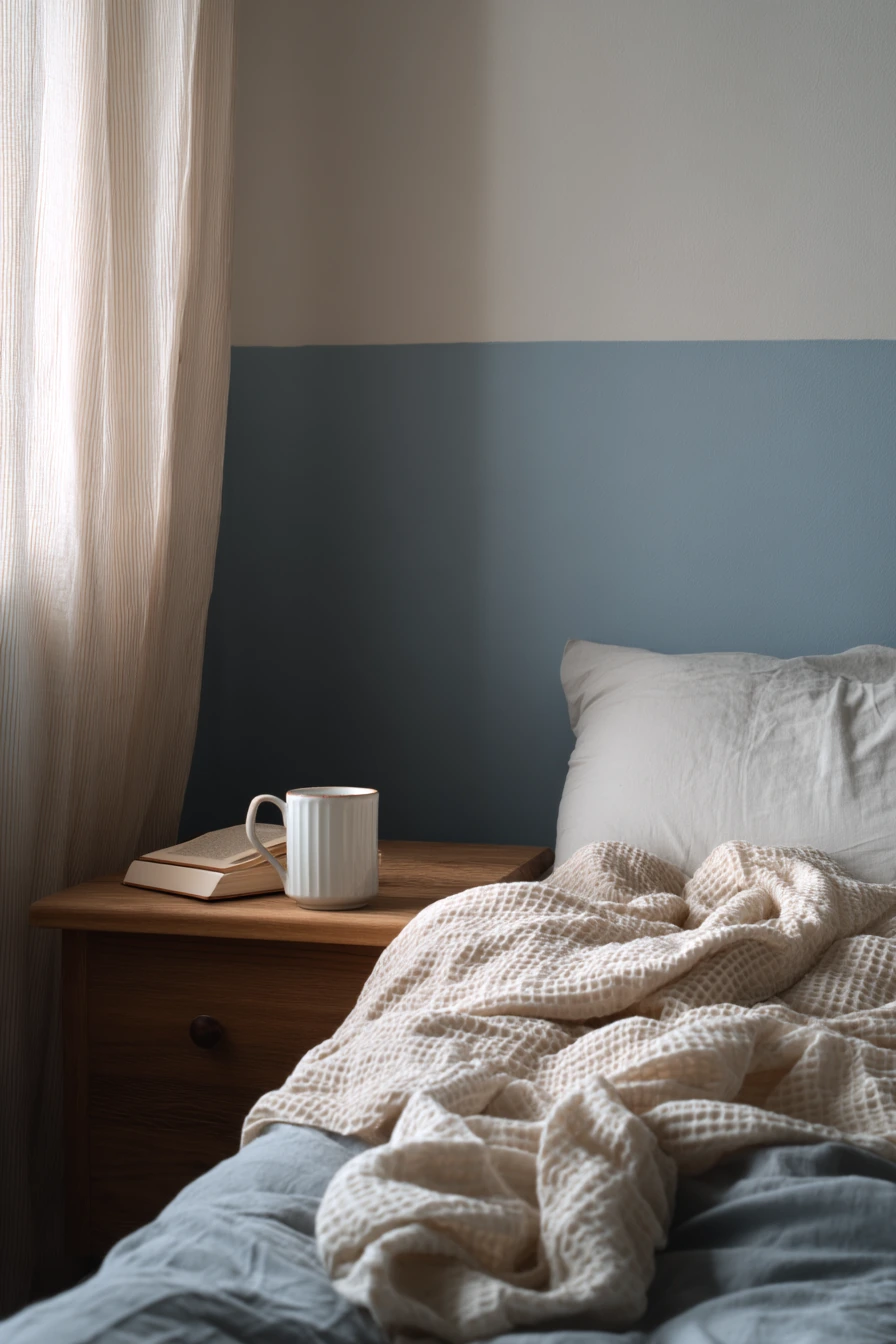
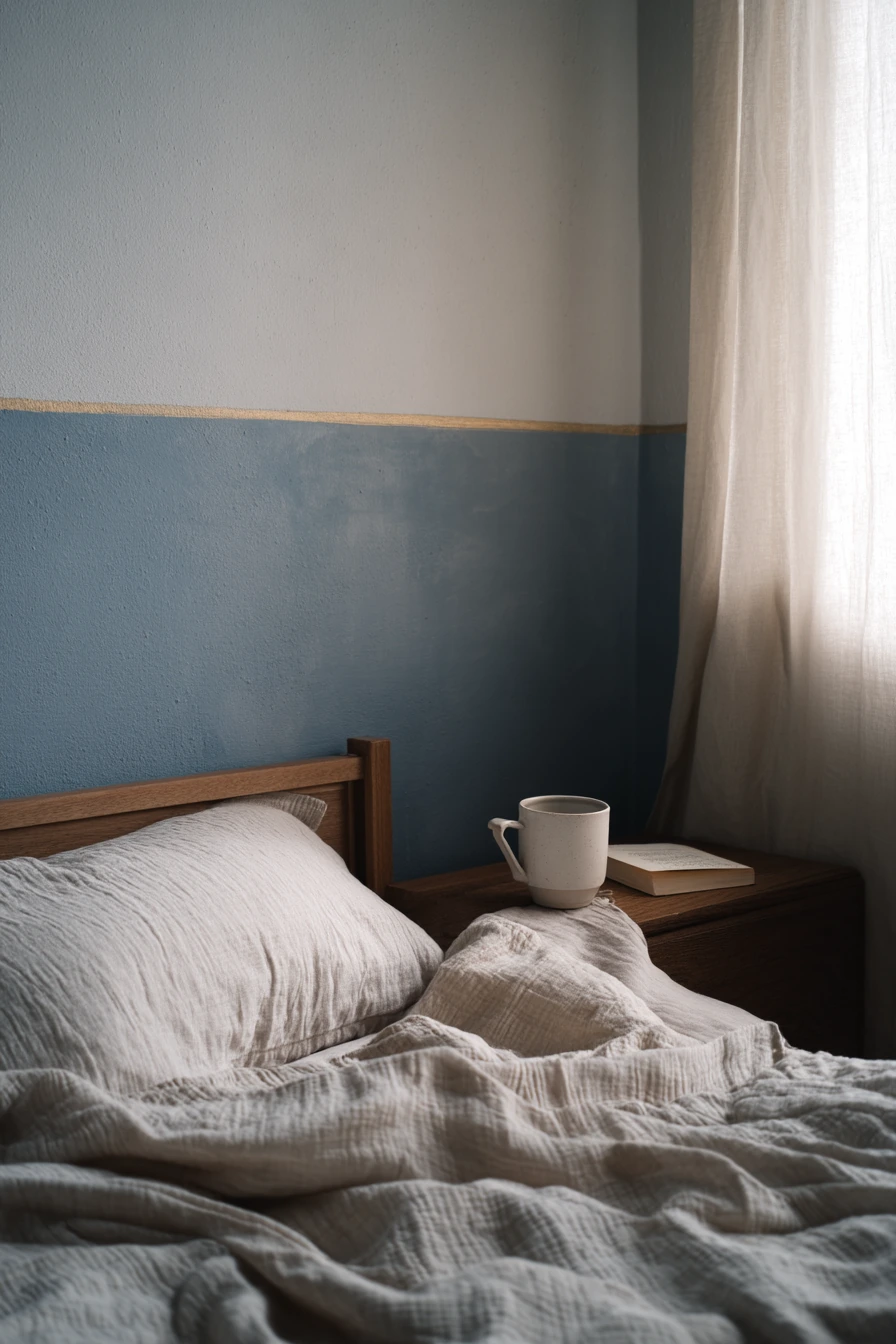
A two-tone painted wall is a smart wall painting idea for a bedroom when you want structure and calm. Dusty blue on the lower half with creamy white above feels clean, and it fits a quiet Scandinavian mood. The slim wood trim between colors gives a finished line and makes the wall look planned, not random.
This look works well in a compact bedroom because it breaks up a tall wall and makes the room feel more balanced. Pair it with a minimalist oak bed and soft neutral bedding. A waffle blanket that is slightly wrinkled adds texture without needing more color. On the nightstand, a ceramic mug and a journal keep the space practical and cozy. Use linen curtains so the morning light stays gentle.
For the paint line, decide the height based on furniture. A good rule is to place the divide around the top of the mattress or slightly higher. If you use wood trim, paint both colors first, then attach the trim and touch up. If you do not want trim, use a level and good painter’s tape, then peel tape while the paint is still a bit wet. Choose eggshell for easier cleaning on the lower half.
- Pick a dusty blue that looks gray in low light, not bright.
- Place the color split around mattress height for a natural line.
- Use slim wood trim to hide small paint wobbles.
- Keep bedding simple so the wall stays calm.
- Add warm wood pieces to stop the blue from feeling cold.
Pro Design Tip: Use the same wood tone for the trim and nightstands so the wall detail feels tied into the furniture.
Budget Considerations: If trim costs too much, use a thin stripe of paint in a third neutral color as a “faux trim” line between the two tones.

4. Soft Botanical Mural Above the Bed
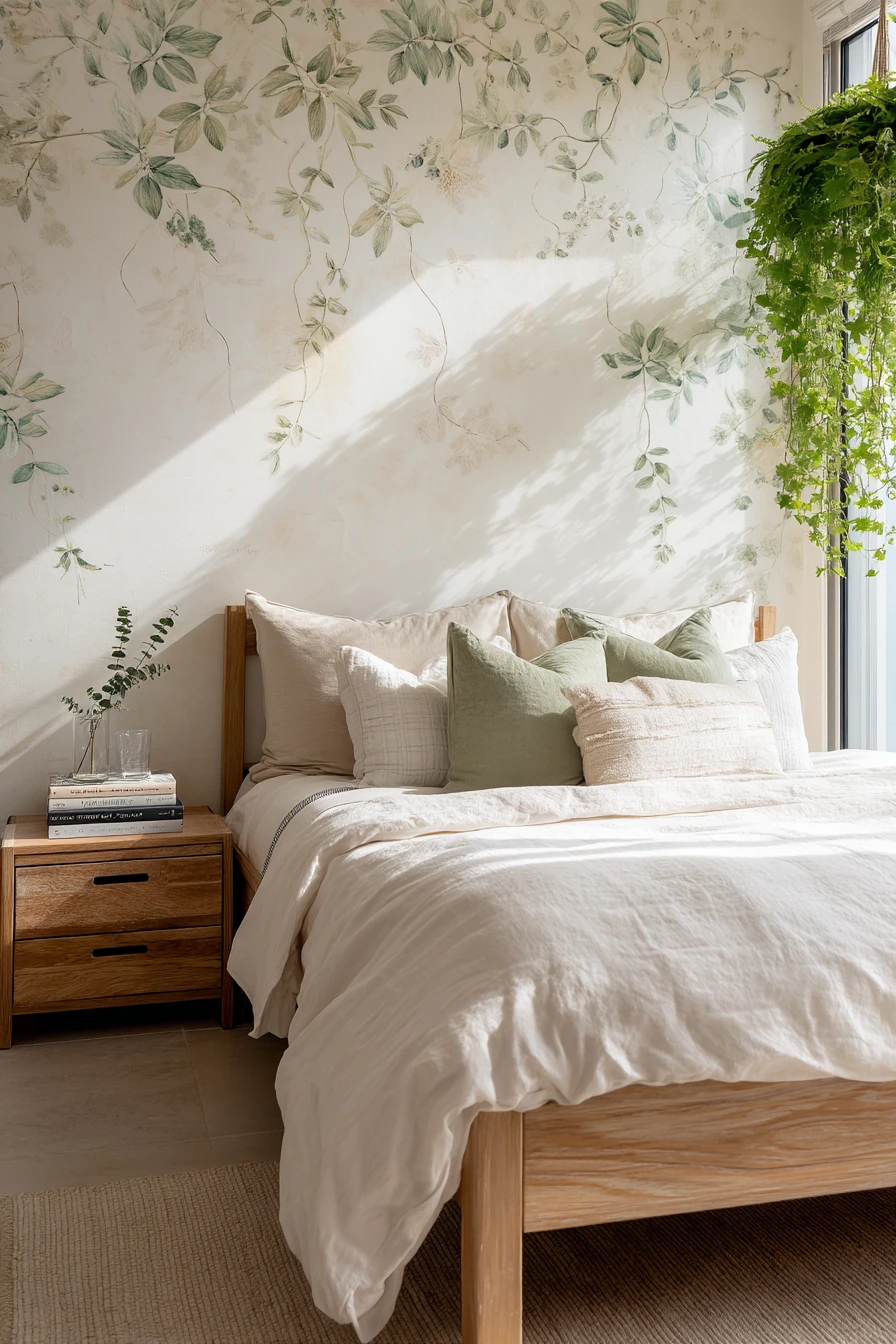

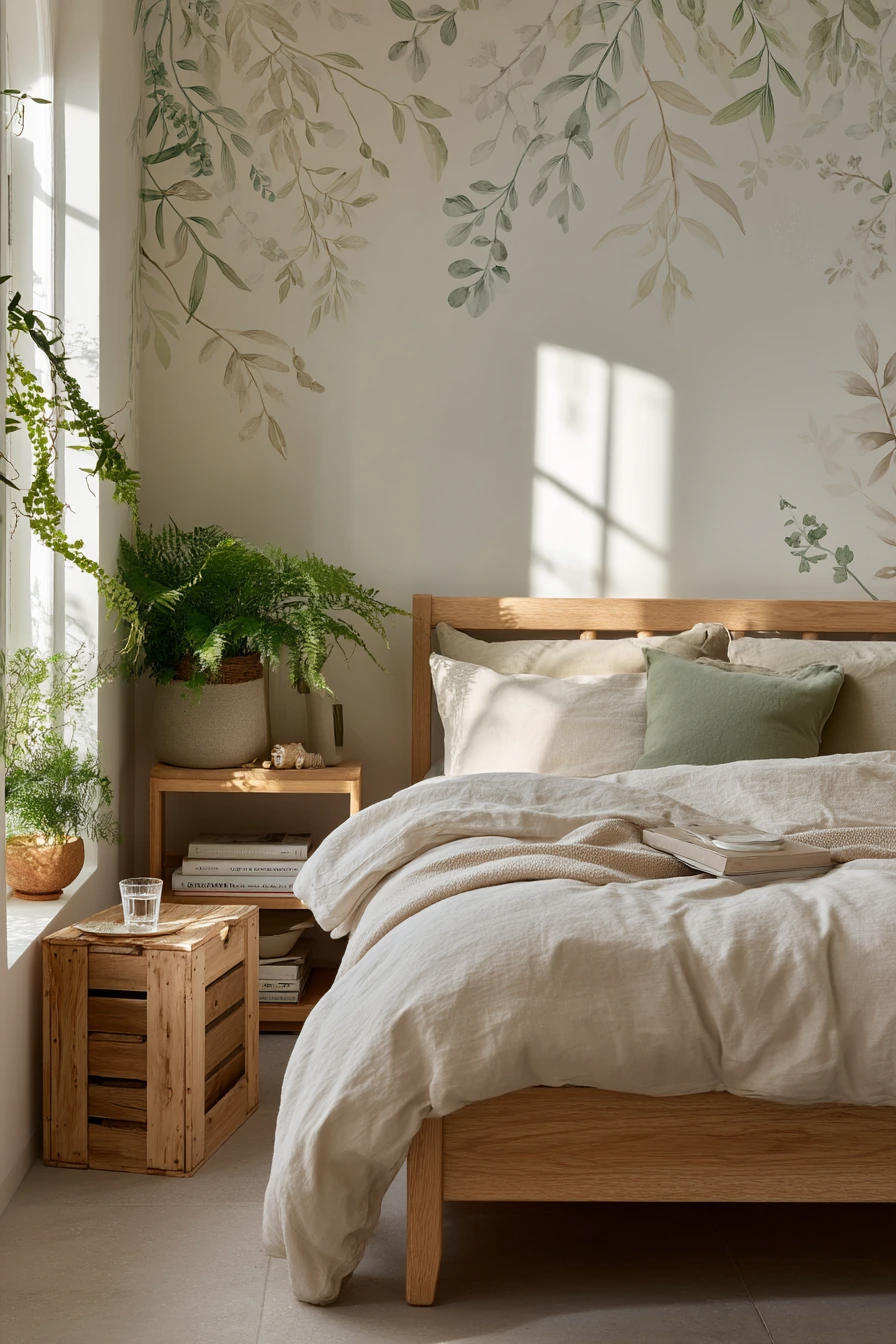
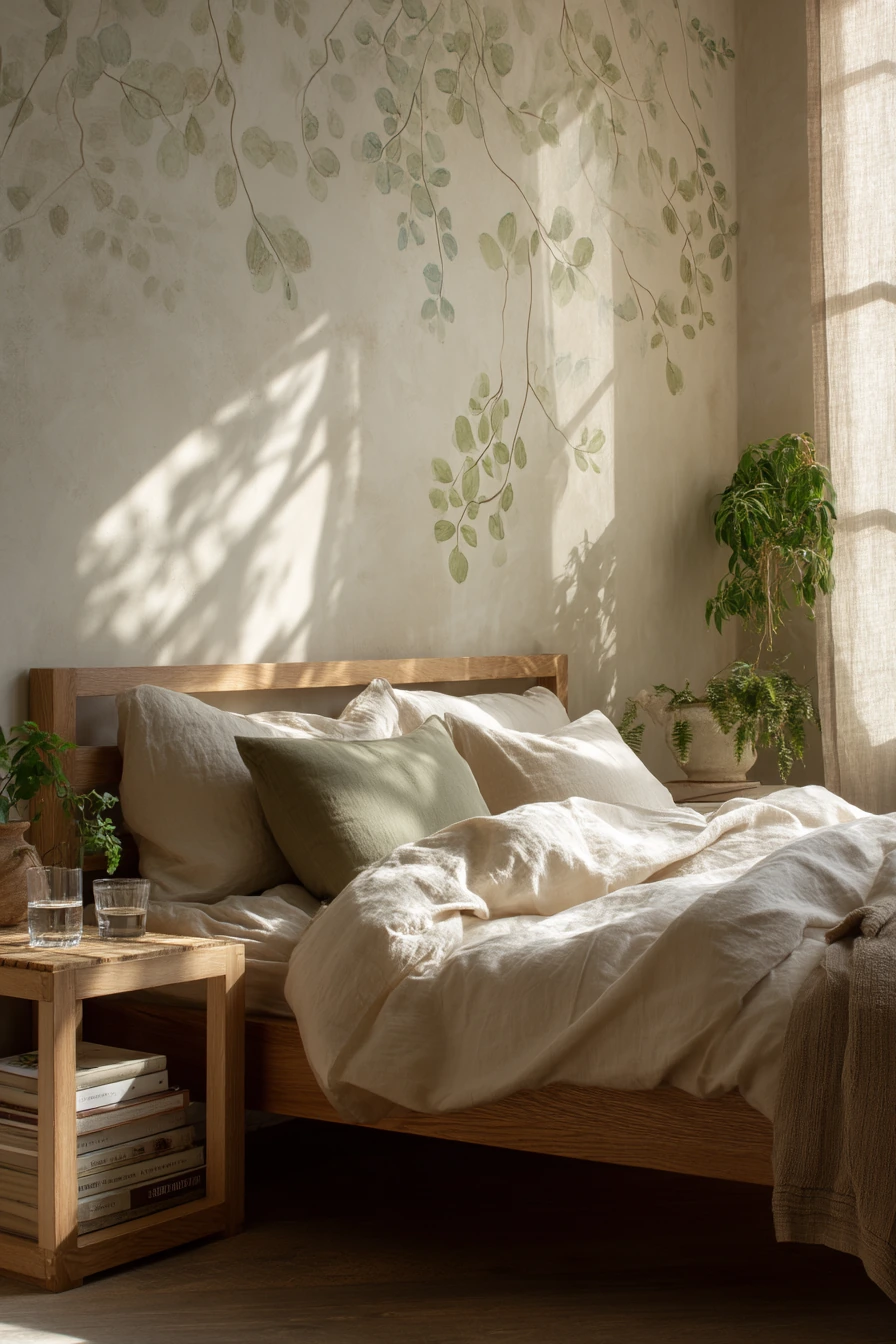
A delicate botanical mural is a bright bedroom paint idea that adds art without hanging frames. Leafy vines in muted greens over a warm ivory background feel fresh and relaxed. This style looks best with airy sunlight and a few real plants so the mural and the room match.
Style the bed simply so the mural reads clearly. A light oak frame bed and casual linen bedding keep it natural. Use a bedside crate or small table with a stack of art books and a water glass for an easy, lived-in look. If you have a fern by the window, drifting plant shadows can move across the mural during the day, which adds depth without extra effort.
For painting, start with a light pencil sketch and keep the lines loose. You do not need perfect leaves. Use two or three green tones and one soft brown for stems. Matte paint helps hide brush marks, which is good for hand work. Keep the mural area centered over the headboard and stop it before the corners so it does not look like wallpaper. If you want a safer first try, paint a smaller band of vines like a headboard-height border.
- Choose muted greens so the mural feels calm, not loud.
- Keep the background a warm ivory, not a bright white.
- Use 2 to 3 leaf shapes and repeat them for an easy pattern.
- Pair with light oak and linen for a natural match.
- Add one real plant near the window to echo the mural.
Pro Design Tip: Paint the mural slightly lighter than you think you need because bedroom lighting is often warm and can make greens look darker at night.
Budget Considerations: If hiring an artist is out of reach, use simple stencils for leaves and add a few hand-painted lines on top to make it look custom.
5. Geometric Painted Feature Wall With Charcoal Lines
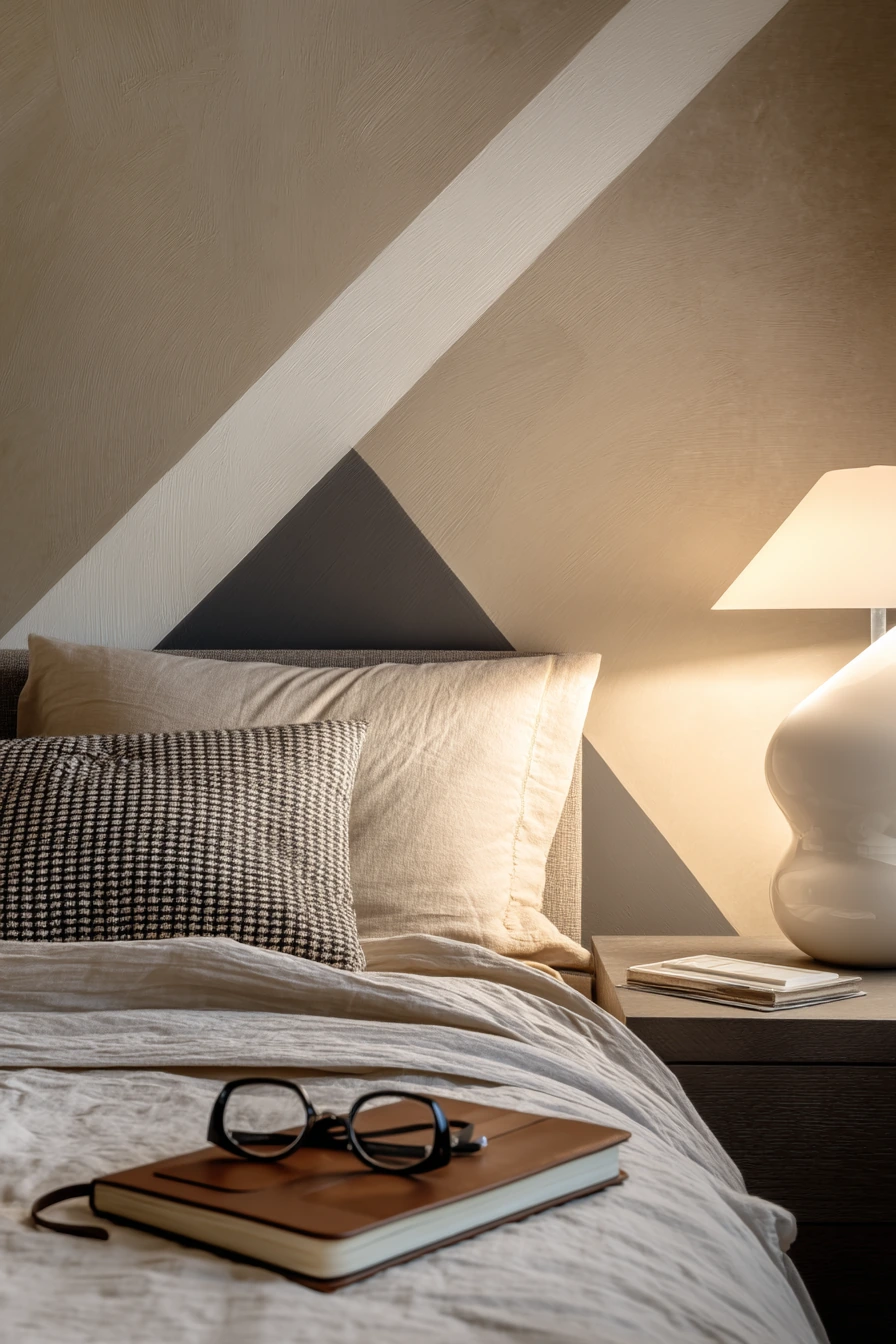
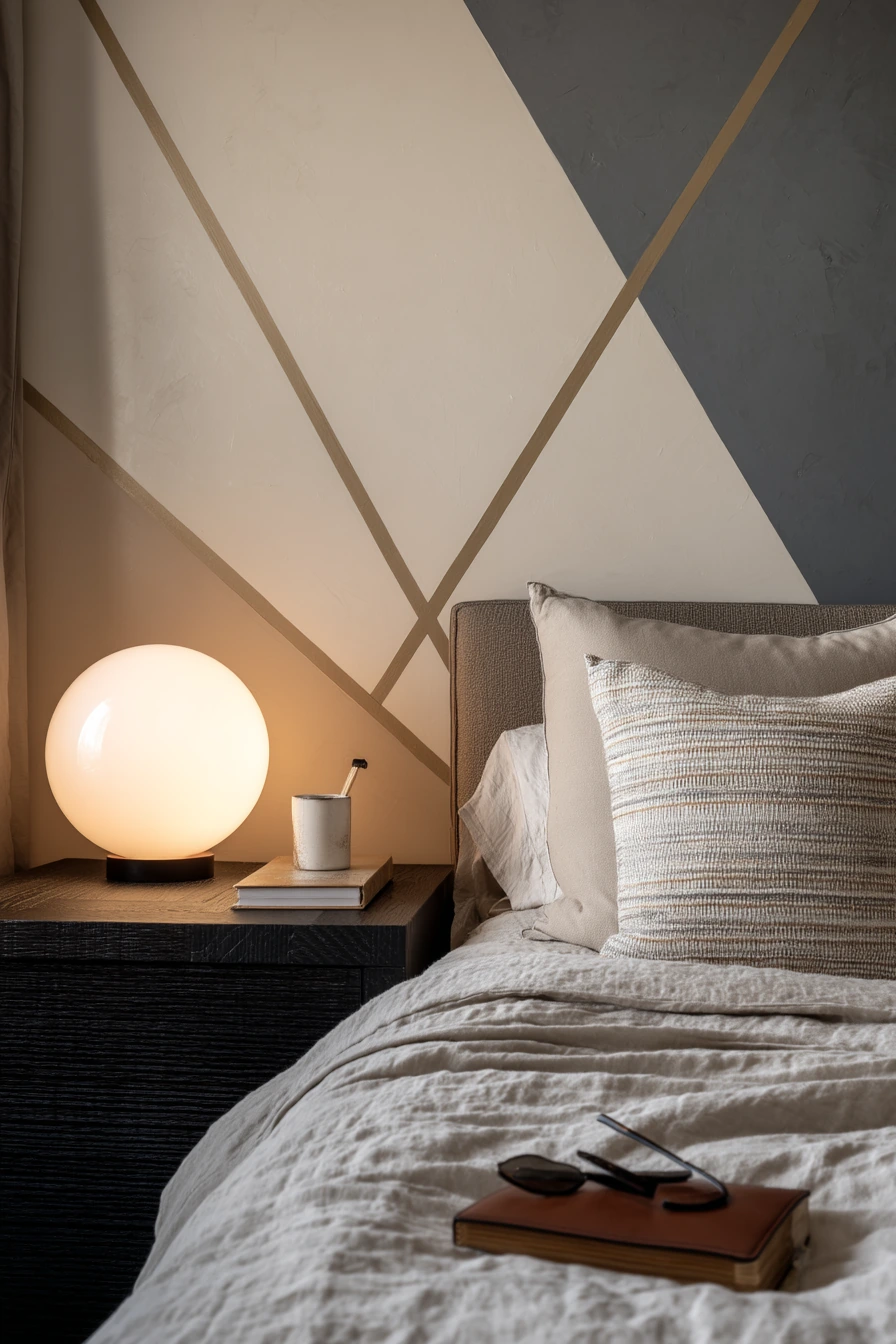
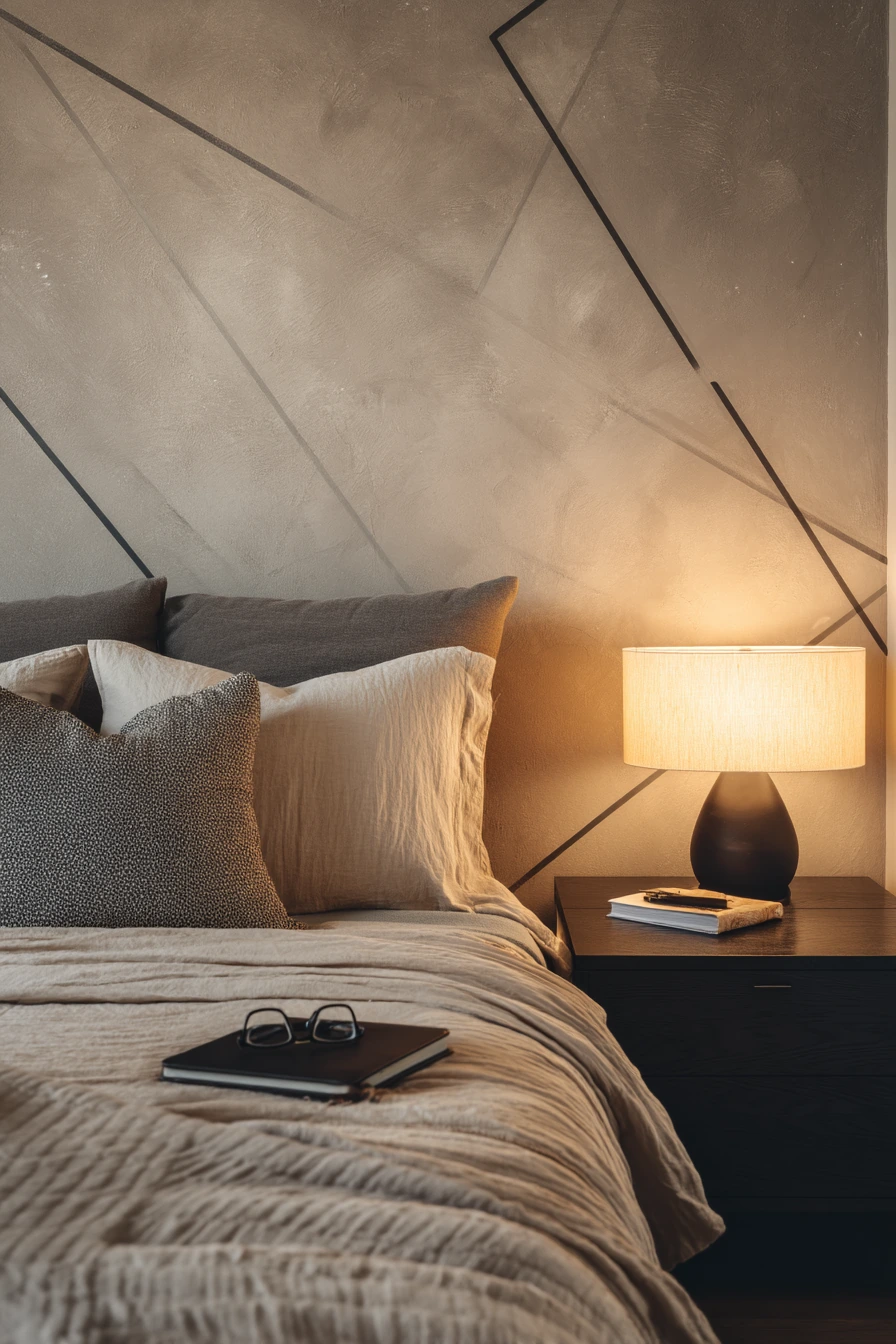
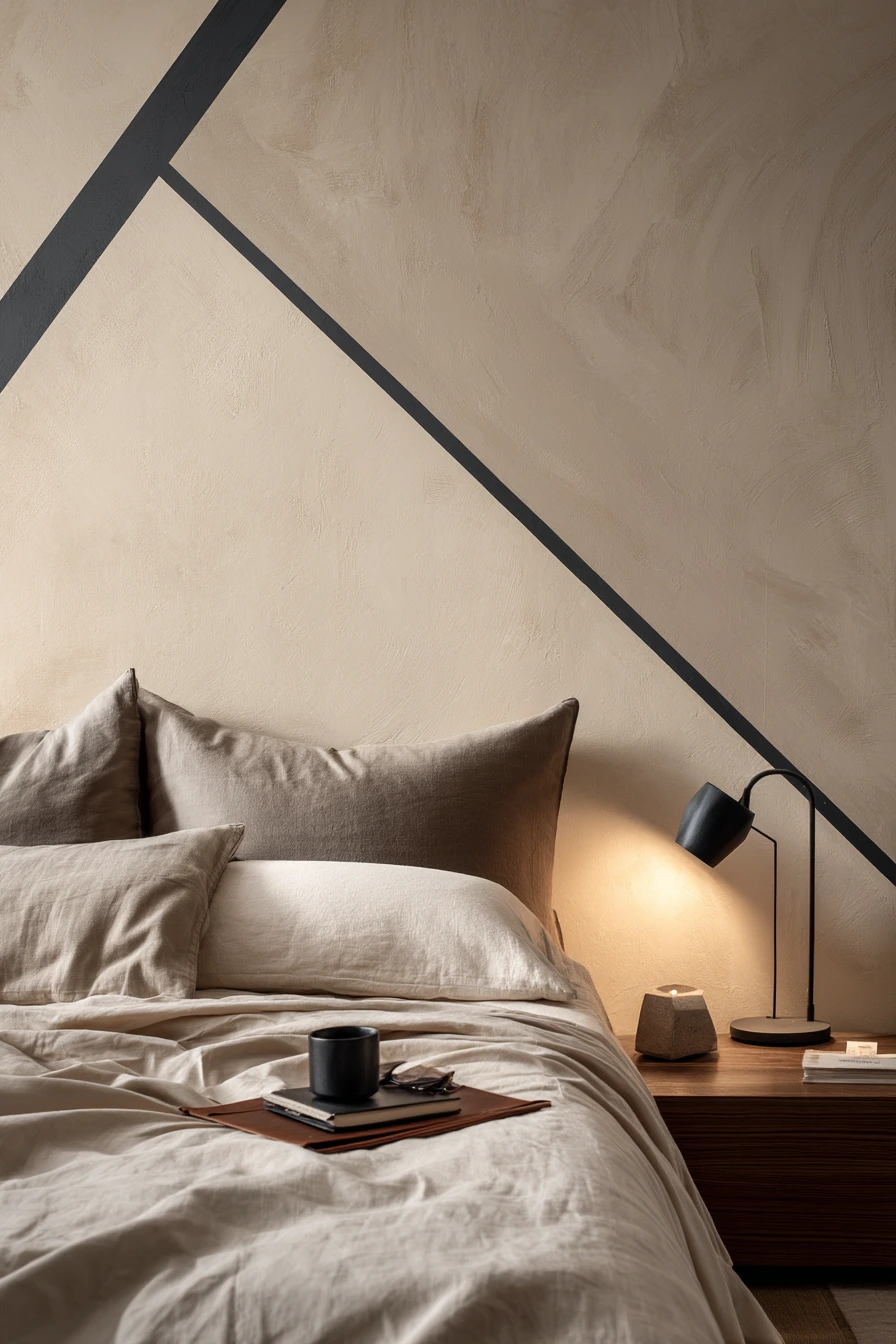
A geometric painted wall design is a modern wall painting idea for a bedroom that adds energy without adding extra decor. A soft beige base keeps it calm, while bold charcoal diagonal lines create abstract shapes behind the bed. This look is great if you like clean styling and want the wall to do more of the work.
To style it, stay in the neutral family so the geometry stands out. Use textured neutral bedding that is slightly rumpled for a soft contrast against the crisp lines. Add a sculptural lamp with a warm glow so the charcoal does not feel harsh. On the nightstand, a leather notebook and glasses fit the graphic, modern mood and keep the scene realistic.
Planning is the key. Start with a simple design that uses 3 to 5 large shapes, not tiny triangles. Measure the wall and mark key points with pencil. Use a laser level or a long level to keep diagonals consistent. For the charcoal lines, use painter’s tape and press the tape edge down firmly with a card to prevent bleed. Pull tape off slowly while paint is still a little wet. Matte finish looks modern and hides small wall bumps.
- Use a warm beige base so the room stays inviting.
- Keep shapes large so the wall does not look busy.
- Use a laser level to keep diagonals clean and straight.
- Repeat charcoal once in the room, like a frame or lamp base.
- Choose warm bulbs to soften the contrast at night.
Pro Design Tip: Paint the charcoal lines in a slightly softer “charcoal brown” instead of true black to keep the bedroom feeling restful.
Budget Considerations: This is mostly tape and time. Save money by using one base paint you already have and buying a small sample pot for the charcoal line color.
6. Blush-to-Peach Ombre Bedroom Wall
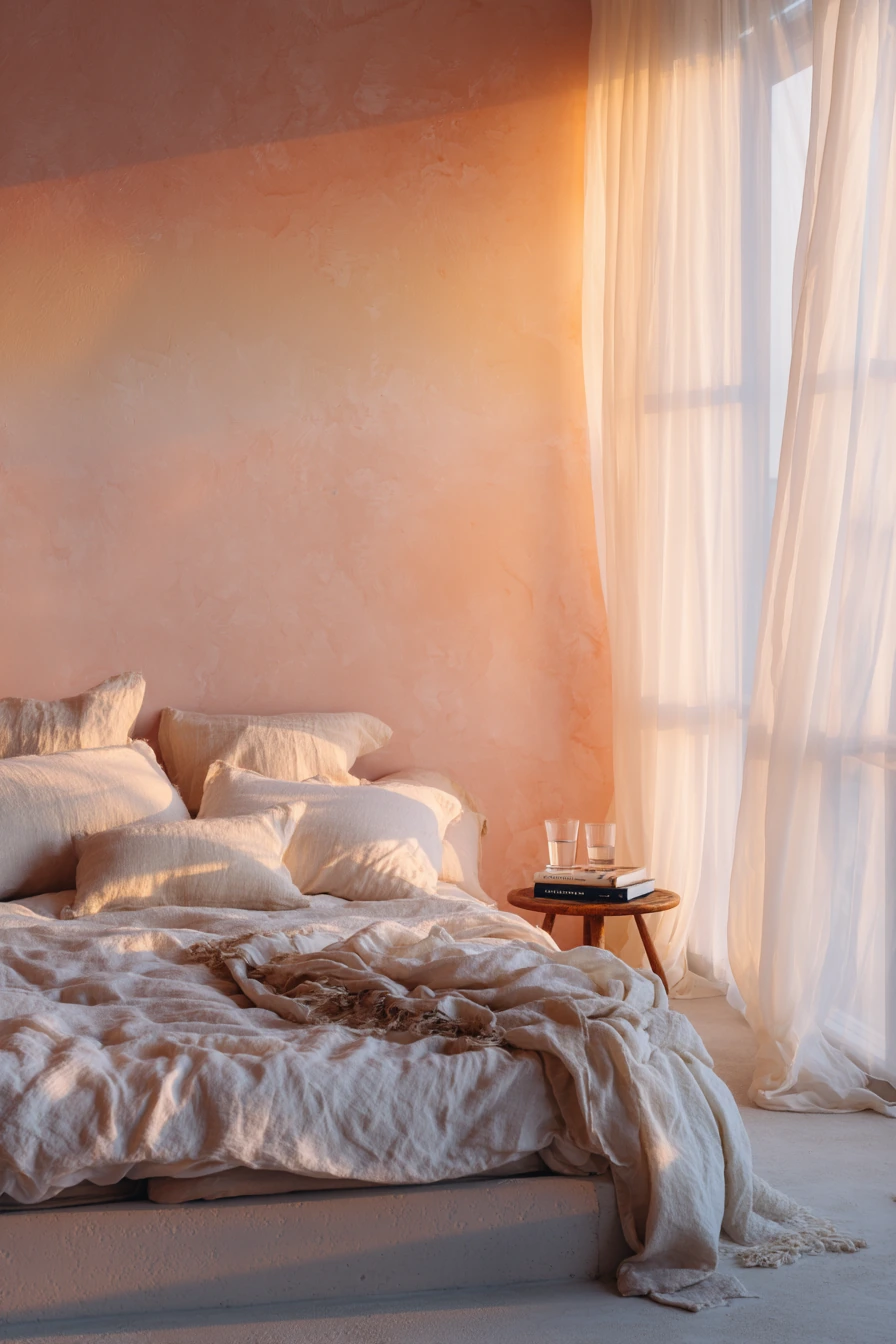
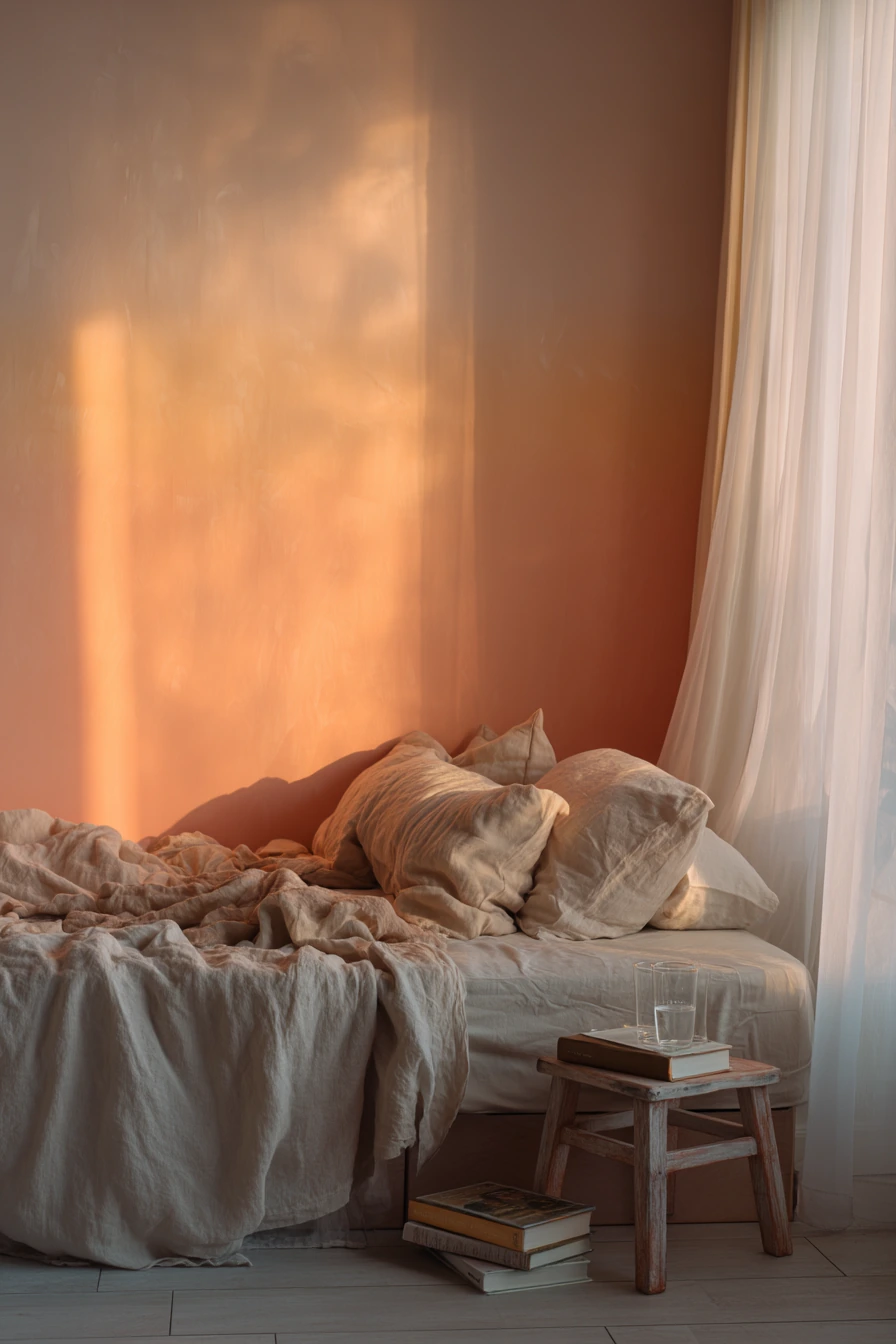
An ombre painted wall fading from blush pink to warm peach creates a dreamy bedroom backdrop. The soft gradient feels gentle in sunrise light and works well with sheer curtains that glow. This wall painting idea for a bedroom is best when the rest of the room stays light and simple.
Choose a low platform bed and airy linen bedding so the wall can feel tall and open. Add a crumpled throw blanket draped casually for texture. Keep bedside styling minimal, like a small stack of novels and a water glass on a stool. Too many objects can compete with the gradient.
To paint ombre, pick 3 shades that are close, like blush, light coral, and peach. Paint horizontal bands from top to bottom, then blend while the paint is still damp. Use a wide dry brush or a damp sponge to soften the edges where colors meet. Work in small sections and keep a wet edge to avoid harsh lines. Matte paint hides blend marks better than satin. If you are nervous, start with a shorter ombre area behind the headboard instead of the full wall.
- Pick 3 close shades for a smoother fade.
- Work fast and blend while paint is still wet.
- Use matte paint to hide brush and roller marks.
- Style with light bedding and a simple bedside stool.
- Use warm white lighting so blush does not turn gray.
Pro Design Tip: Blend with two tools, a roller for coverage and a clean dry brush for softening, so you get a smooth gradient without patchy spots.
Budget Considerations: Buy one quart of the middle shade and use paint samples for the lightest and darkest shades since you need less of them.
7. Taupe Limewash Wall for a Textured Look
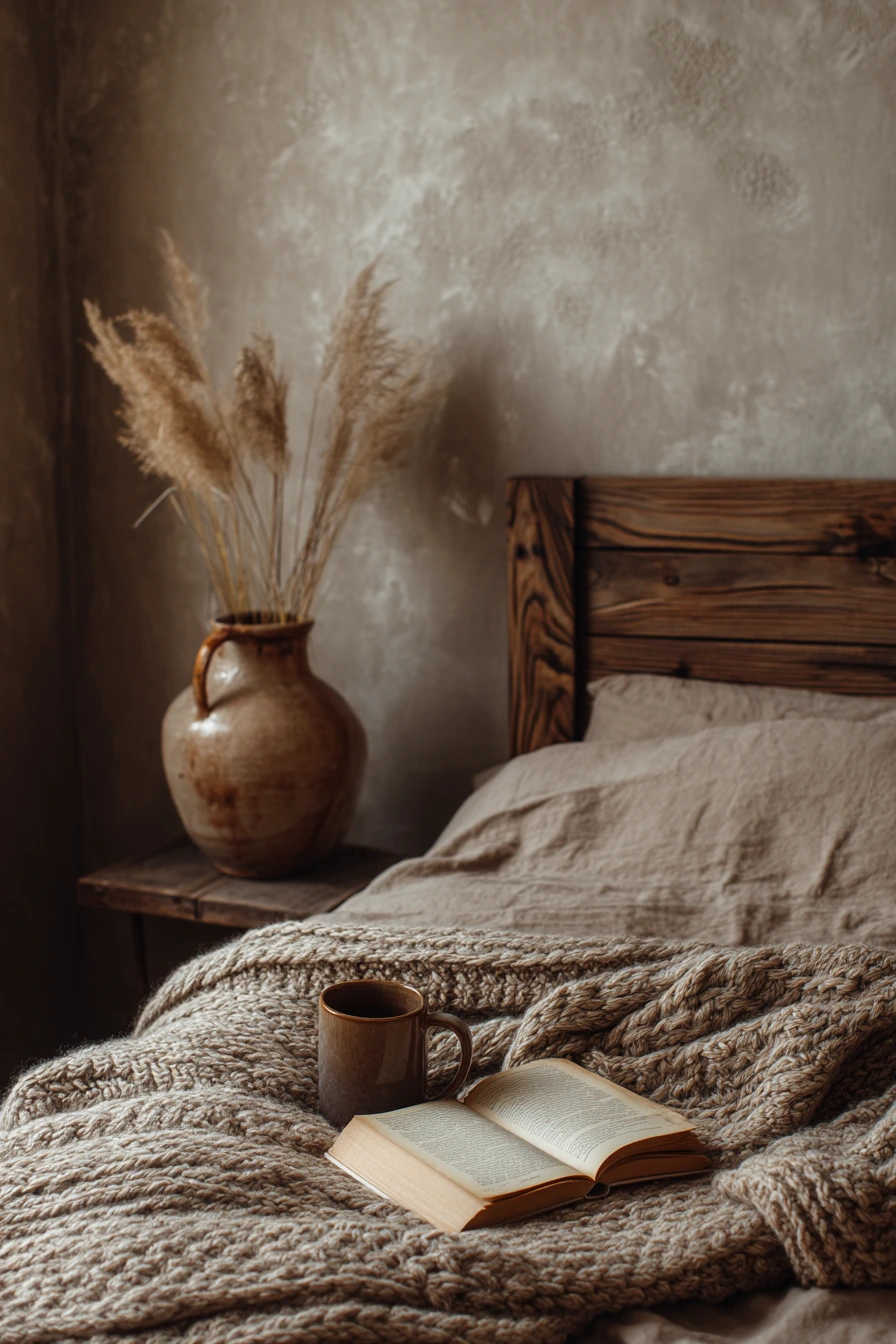
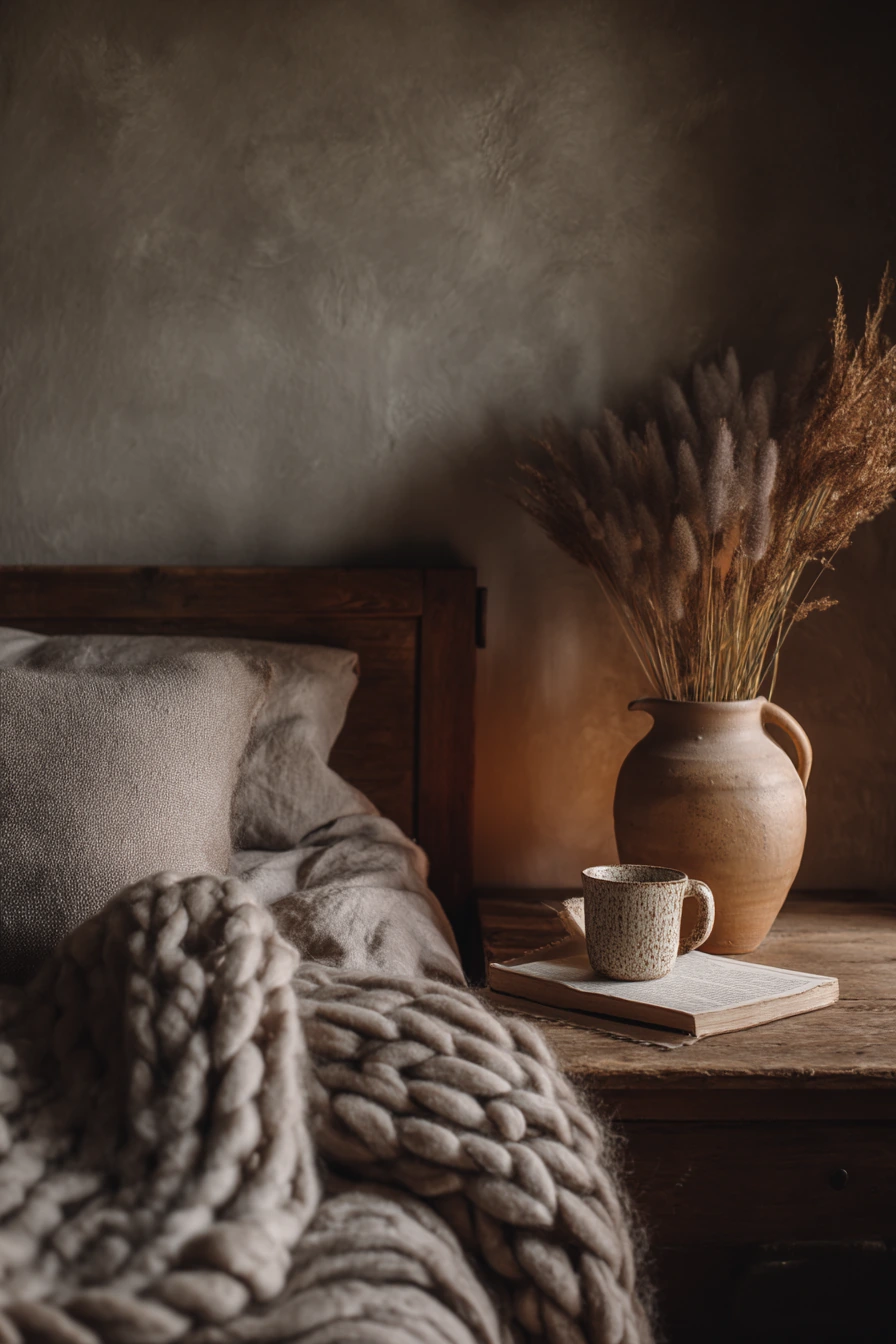
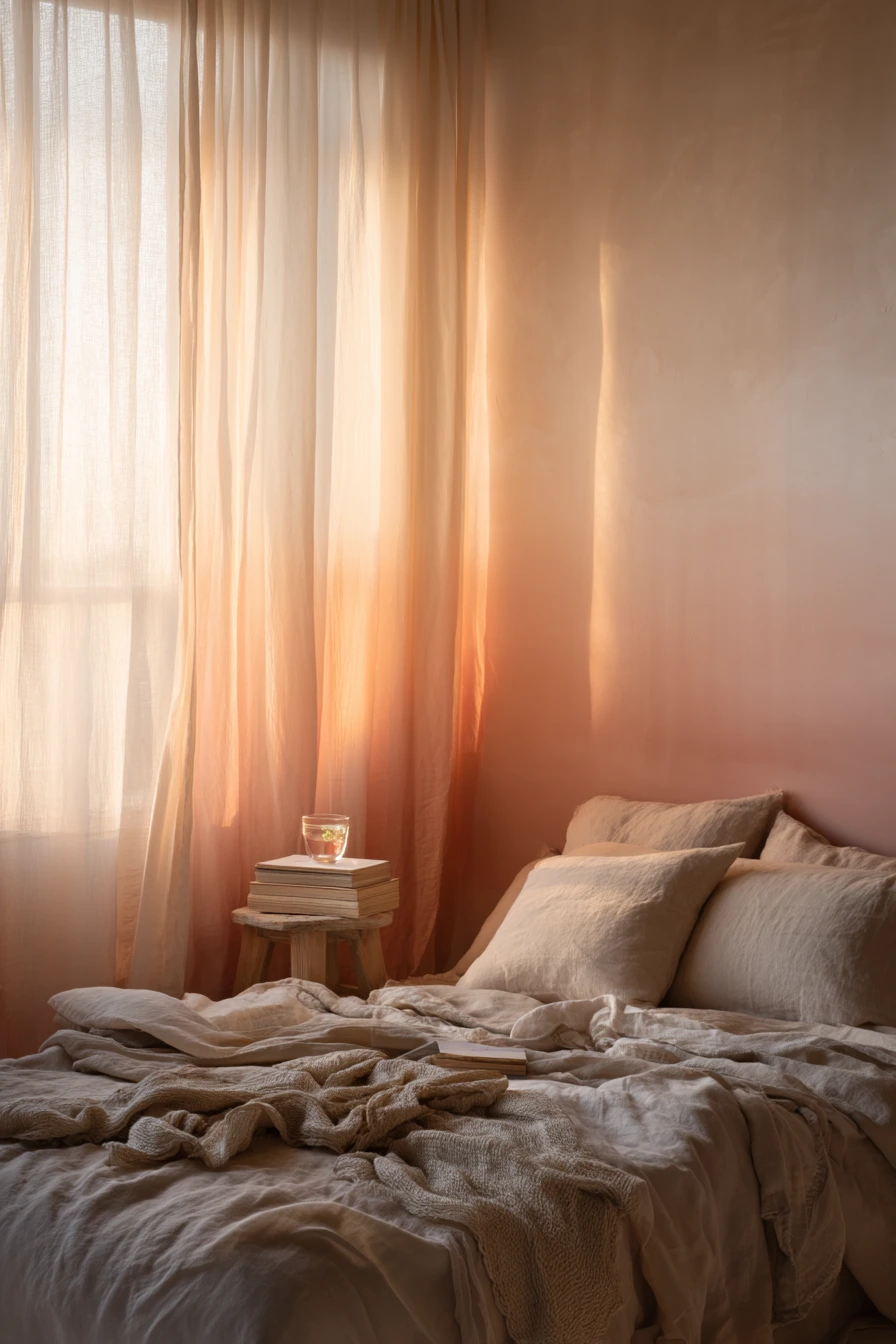
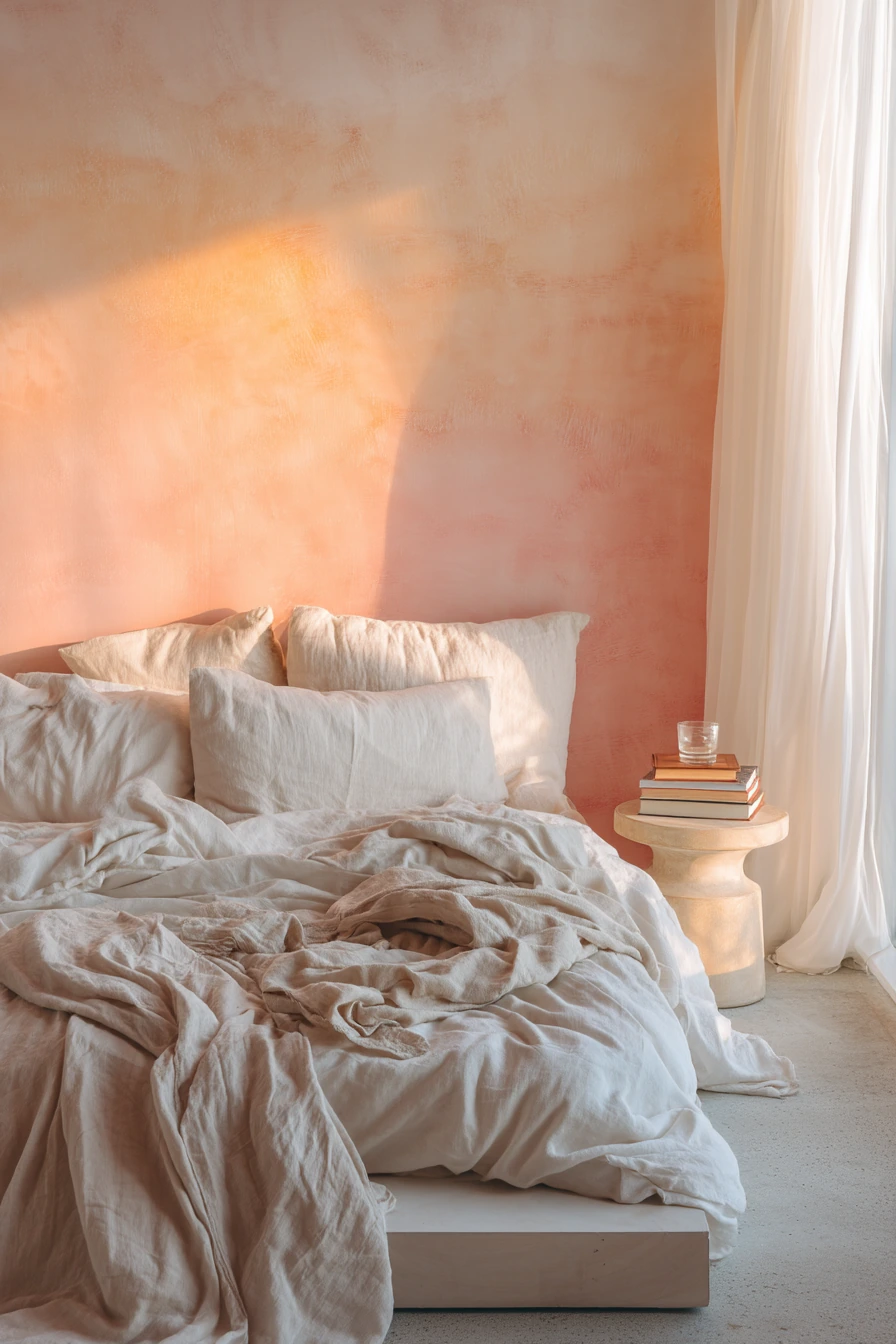
A hand-applied limewash wall in muted taupe tones brings soft, mottled texture to a bedroom. It feels earthy and warm, especially with evening lamplight and a little window glow. This is a strong wall painting idea bedroom homeowners choose when they want depth without a bold color.
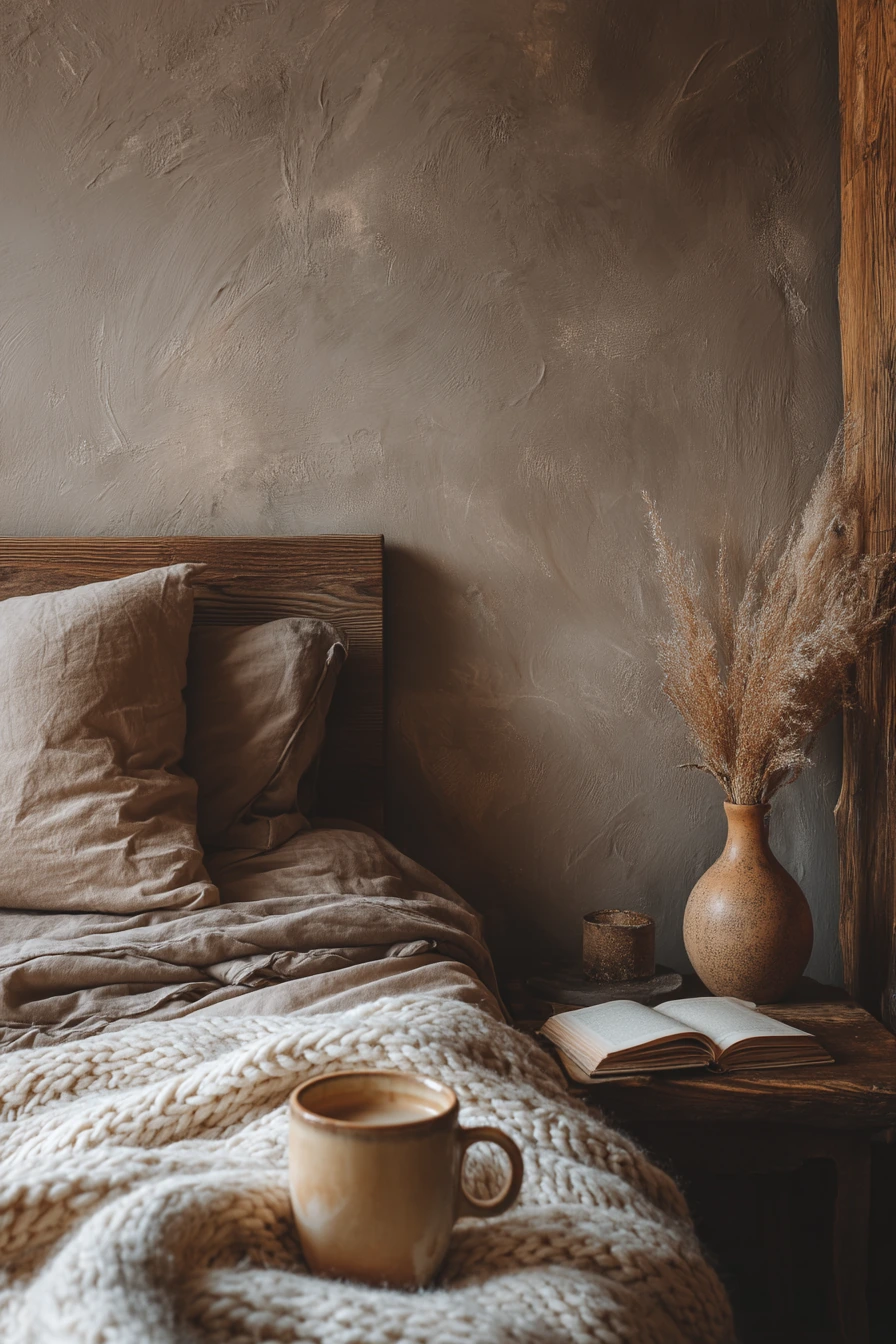
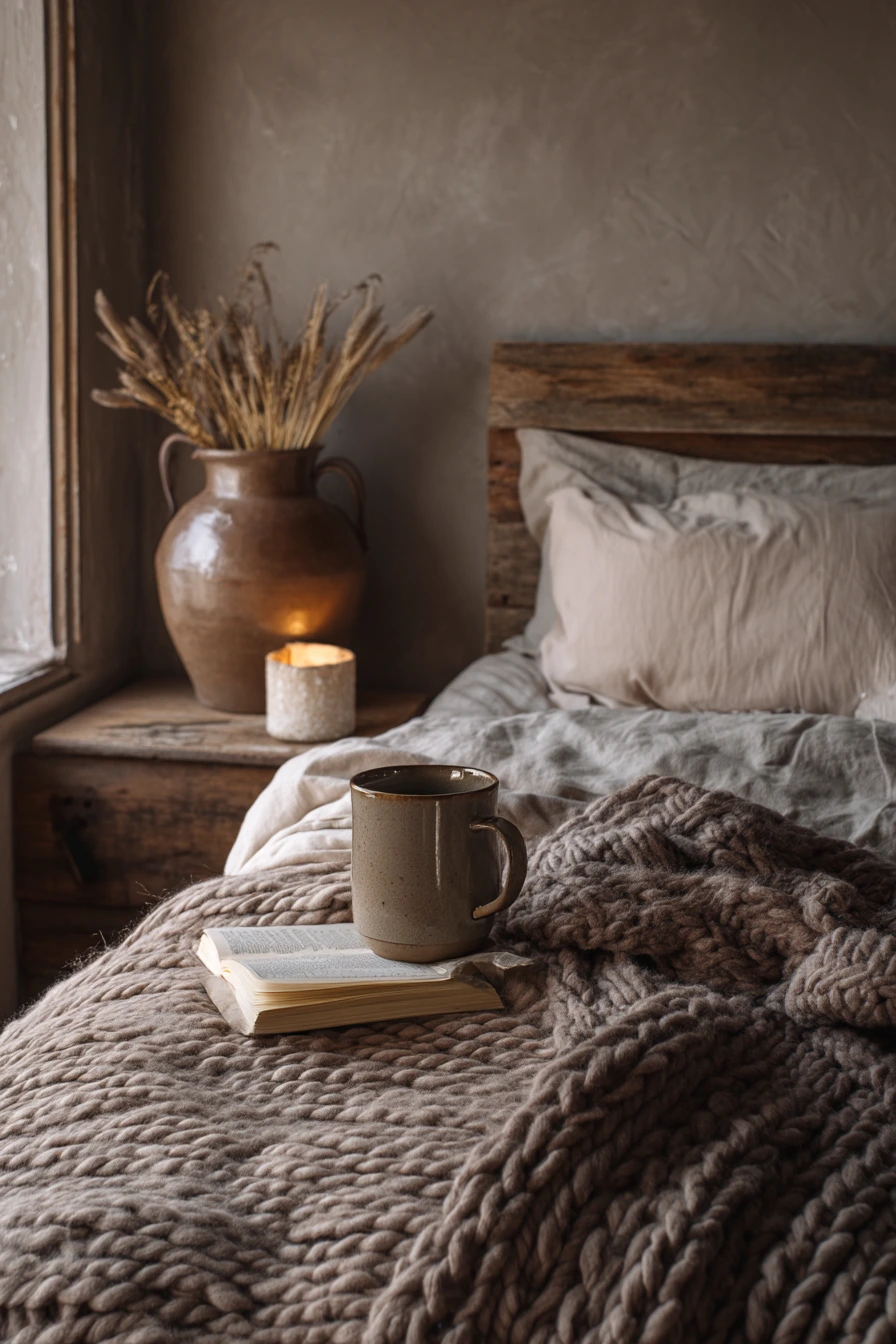
Style it with natural materials so the finish looks right. A wooden bedframe, chunky knit throw loosely folded, and simple linen bedding keep the focus on texture. Add dried grasses in a clay vase for a quiet rustic touch. On the nightstand, a ceramic mug and an open book match the cozy corner feel and make the room look real.
Limewash has a different process than regular wall paint. The wall prep matters. Fill holes, sand lightly, and prime with the right base coat so the finish sticks and cures evenly. Apply in small sections with a large brush using crisscross strokes. Step back often, because the texture looks different up close than from the doorway. Choose a taupe that leans warm to avoid a muddy look. Expect the color to shift as it dries.
- Pick a warm taupe so the room stays inviting.
- Prep the wall well for an even, durable finish.
- Use crisscross brush strokes for natural movement.
- Keep furniture in wood, linen, and clay tones.
- Layer lighting so the texture looks good day and night.
Pro Design Tip: Test limewash on a large board first and move it around the room, because the texture and color change a lot in different light.
Budget Considerations: Limewash materials can cost more than standard paint; if you need a cheaper option, use a faux limewash technique with two close paint colors and a large brush.
8. Pastel Color-Block Wall for a Youthful Bedroom
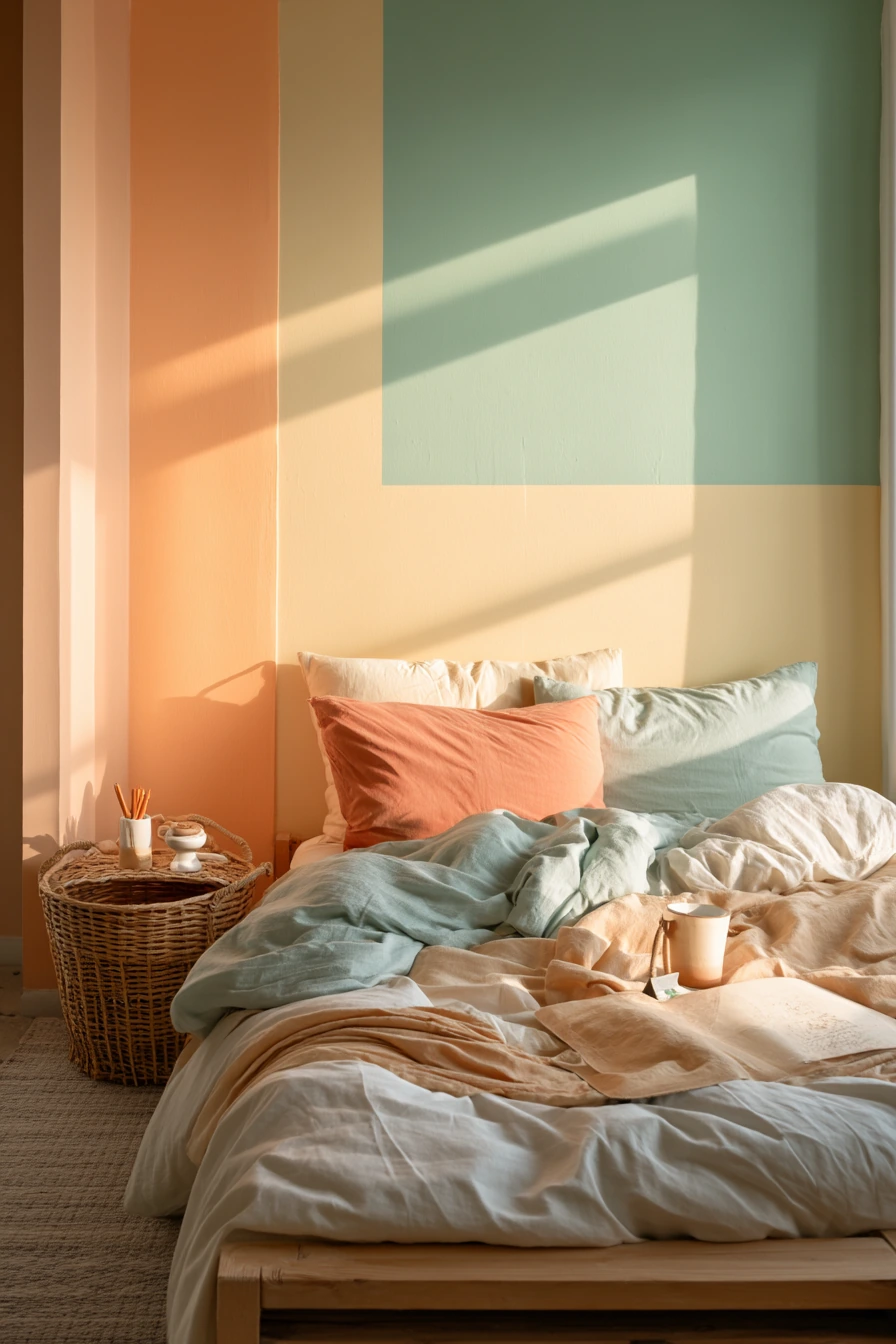
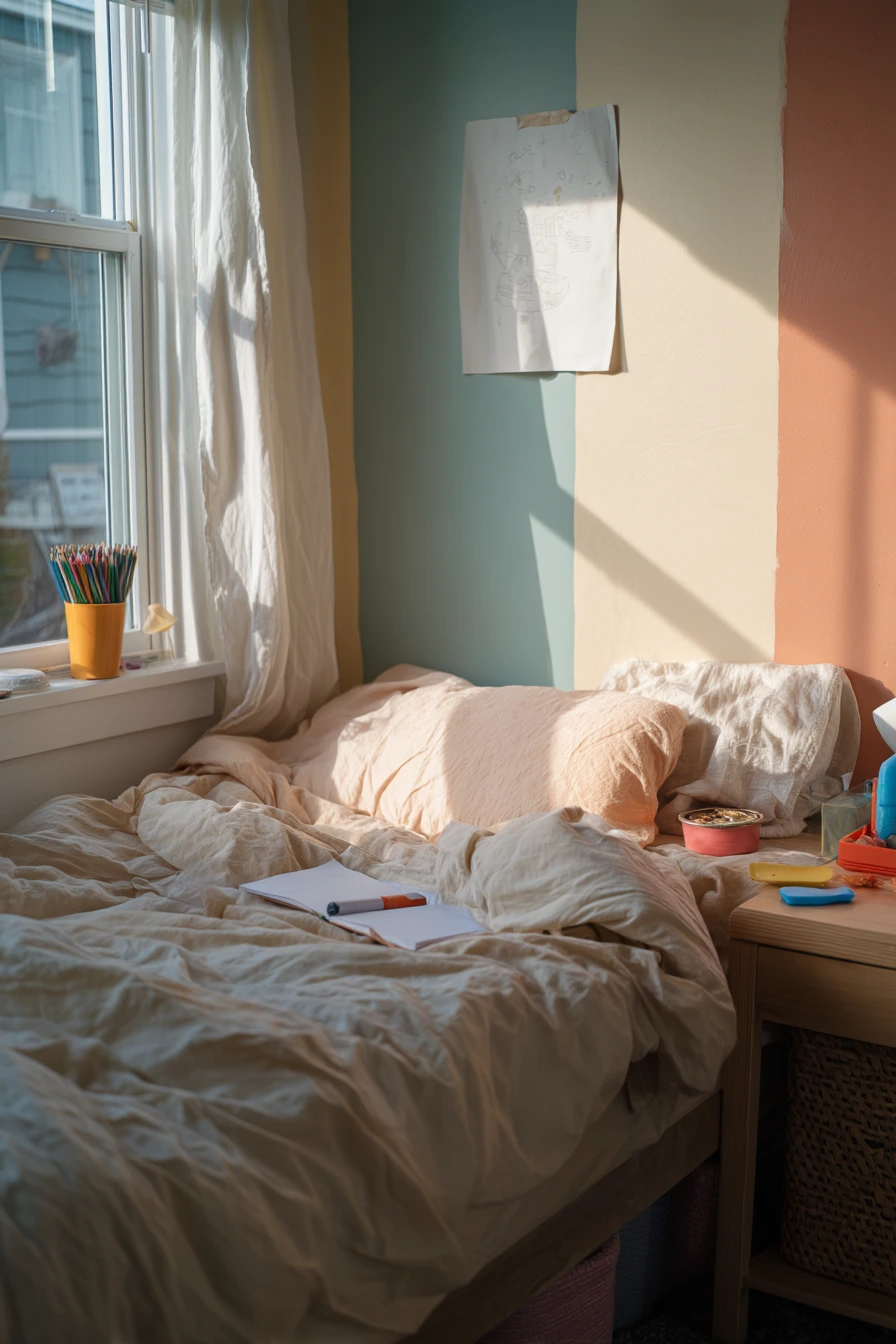
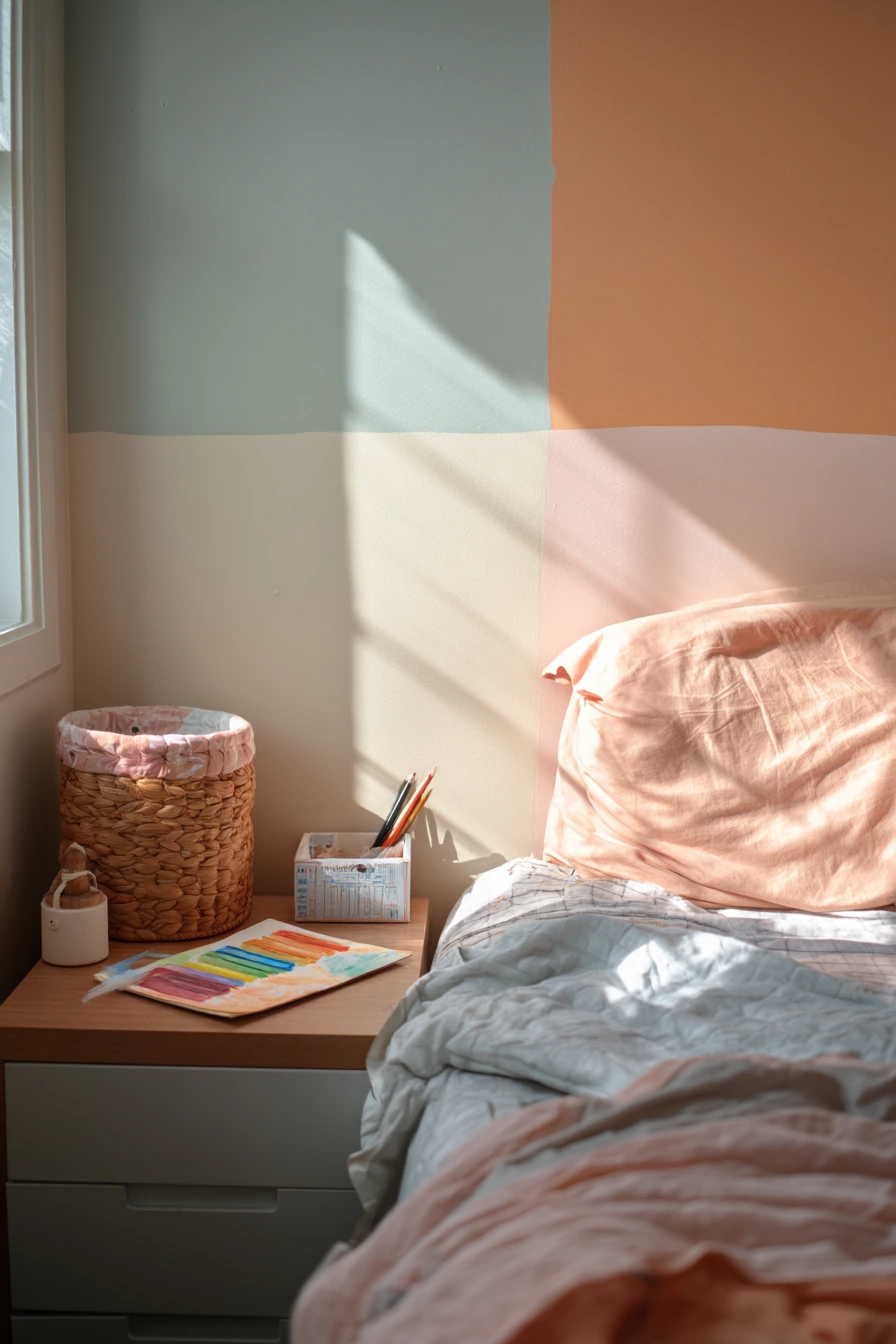
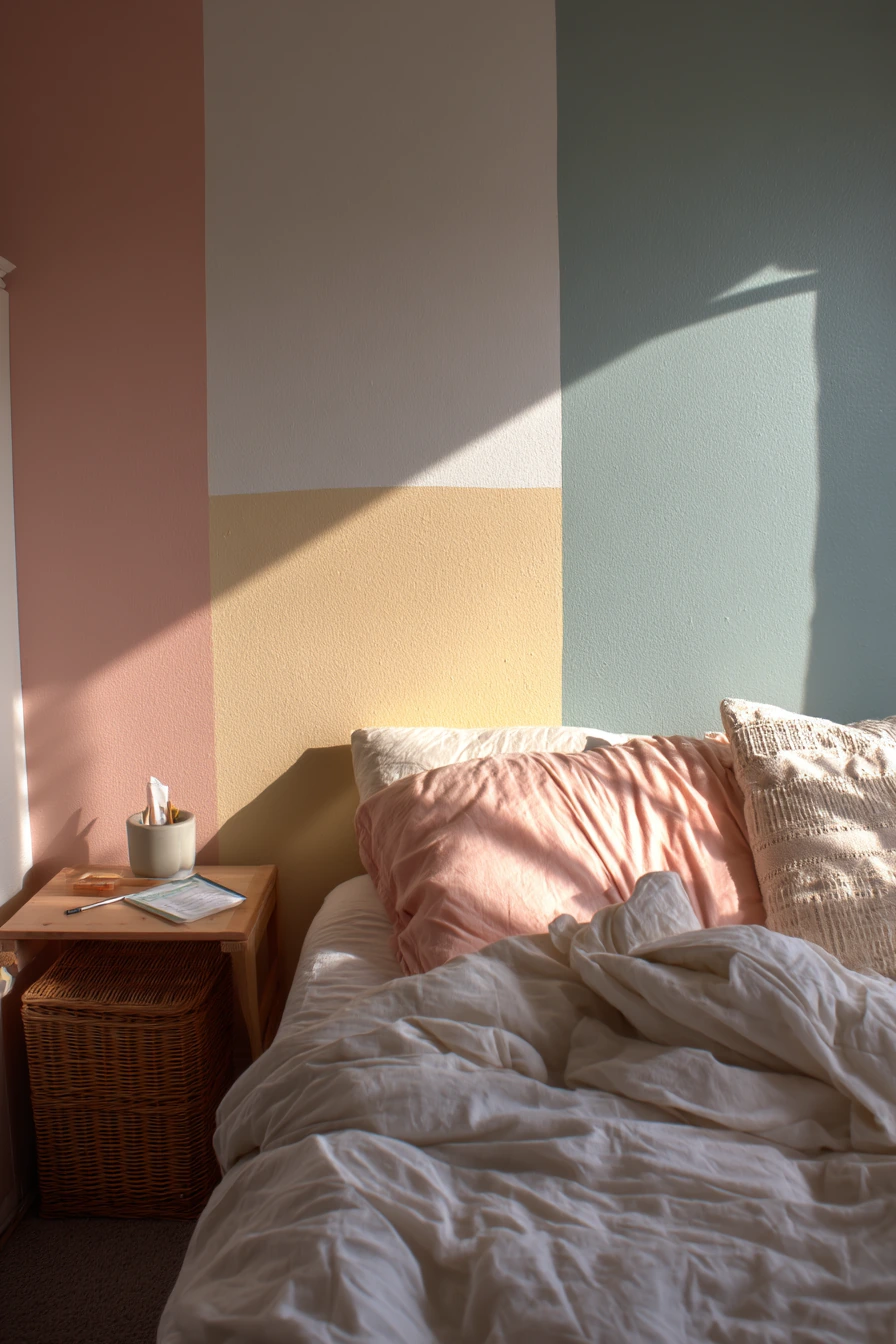
A playful color-block wall with pastel peach, sage, and cream is a fun wall painting idea for a bedroom that still feels soft. The rectangles create a cheerful backdrop behind the bed without needing posters or lots of wall decor. This style works well for a kid room, teen space, or a guest room that needs more personality.
Keep the bedding simple so the blocks look clean. A cotton duvet that is slightly creased feels casual and easy to care for. Add a toy basket tucked beside the nightstand if this is a child’s room, or use a woven bin for storage in a small space. A sketchbook and pencil on the bed corner fits the relaxed creative vibe and gives the room a daily-use feel.
For painting, plan the layout first. Use painter’s tape and a level to mark your rectangles. Choose a main cream base and two accent colors so the wall does not get too busy. Keep most blocks large, with only one smaller block for interest. Use matte paint so light does not bounce and show tape edges. Let each color dry before taping over it, or you can pull up paint. This look also pairs nicely with simple wood furniture and soft white curtains.
- Use cream as the main base to keep the room calm.
- Choose 2 pastel accents like peach and sage for balance.
- Measure and tape carefully for crisp edges.
- Repeat one pastel in a pillow or throw to tie it together.
- Add closed storage to keep the room from looking busy.
Pro Design Tip: Keep all pastels at the same “softness” level, meaning similar gray undertones, so the blocks look coordinated instead of random.
Budget Considerations: Use sample pots for the smaller color blocks and reserve the full-size can for the cream base color you will use the most.
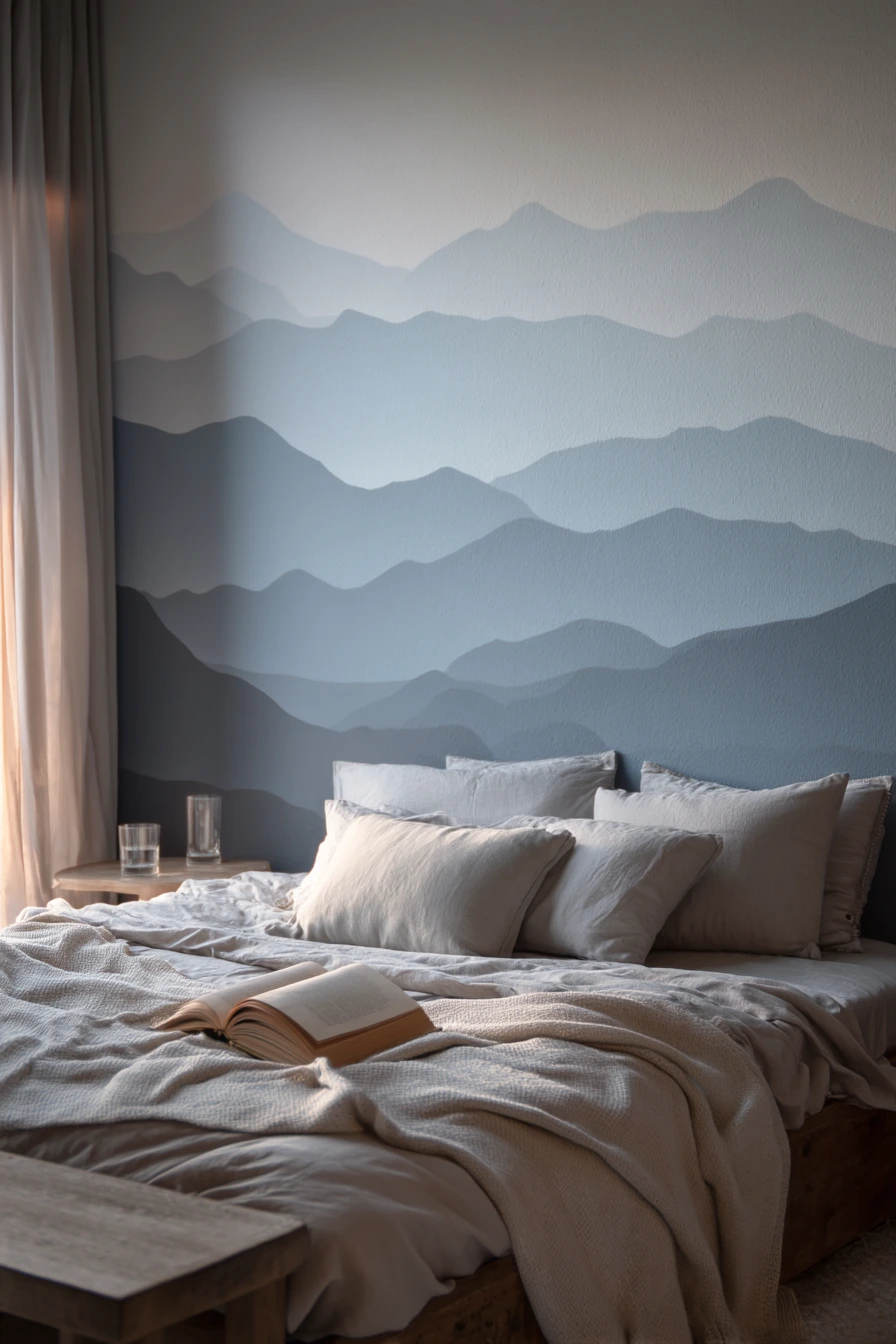
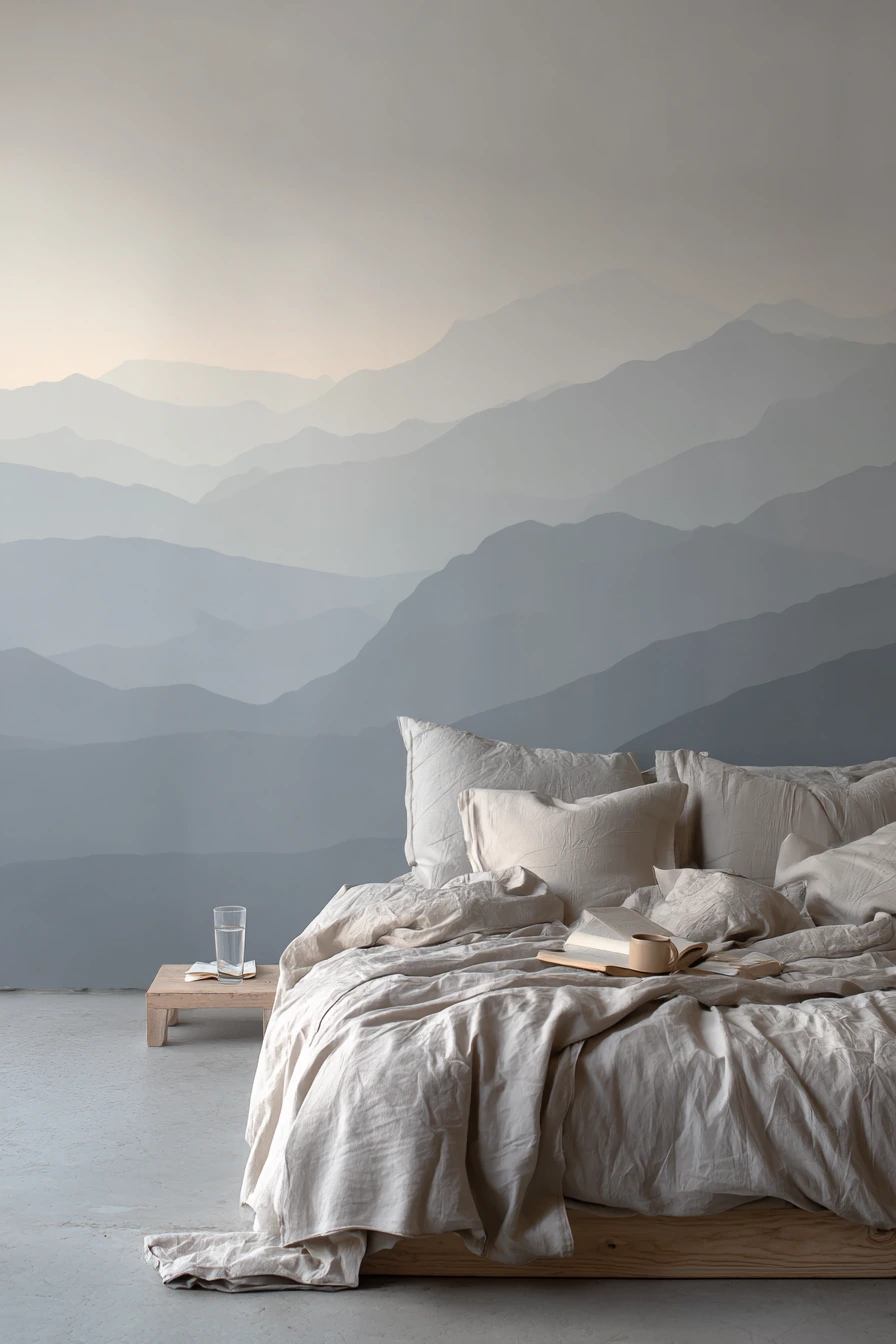
9. Minimalist Mountain Mural in Gray-Blue Layers
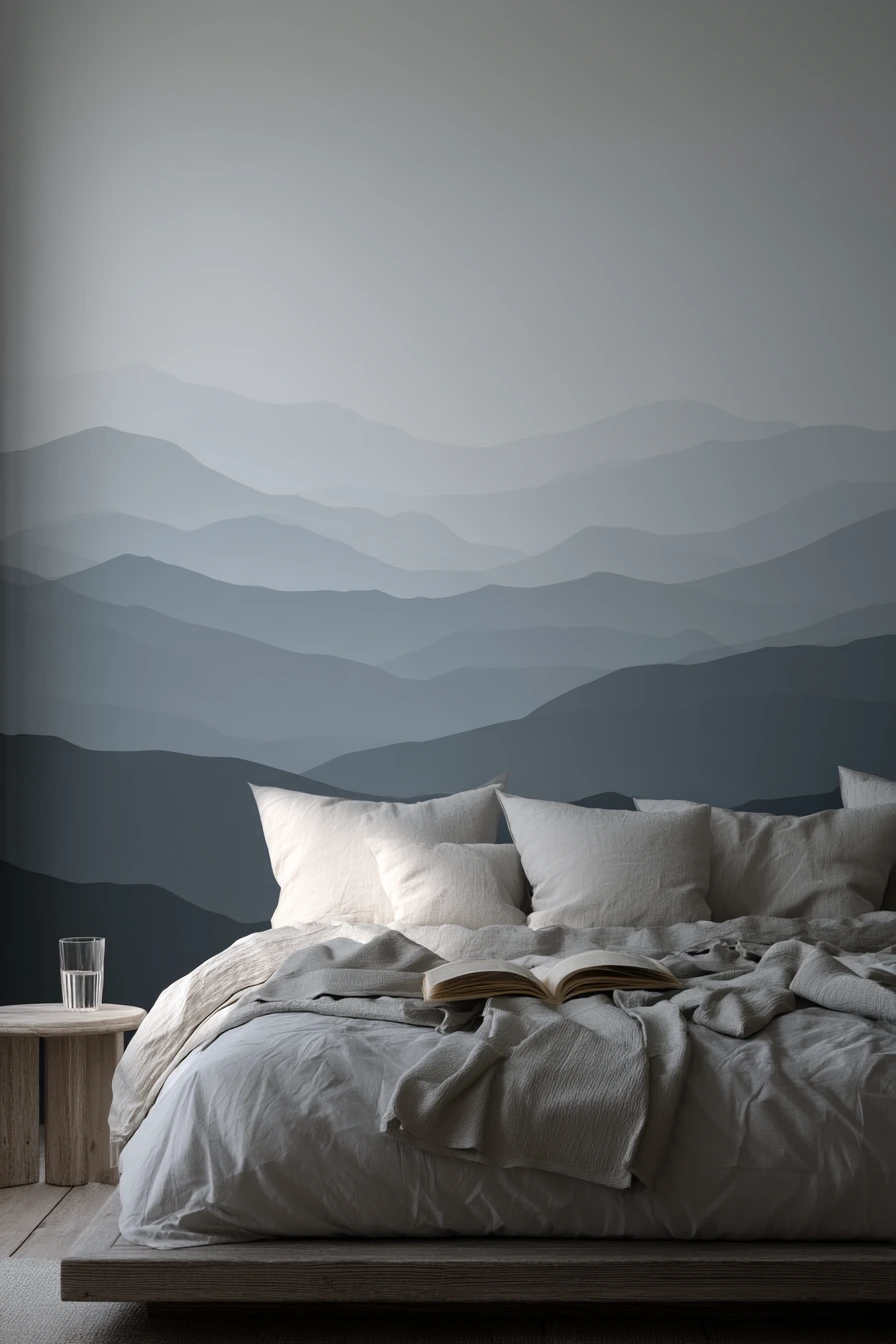
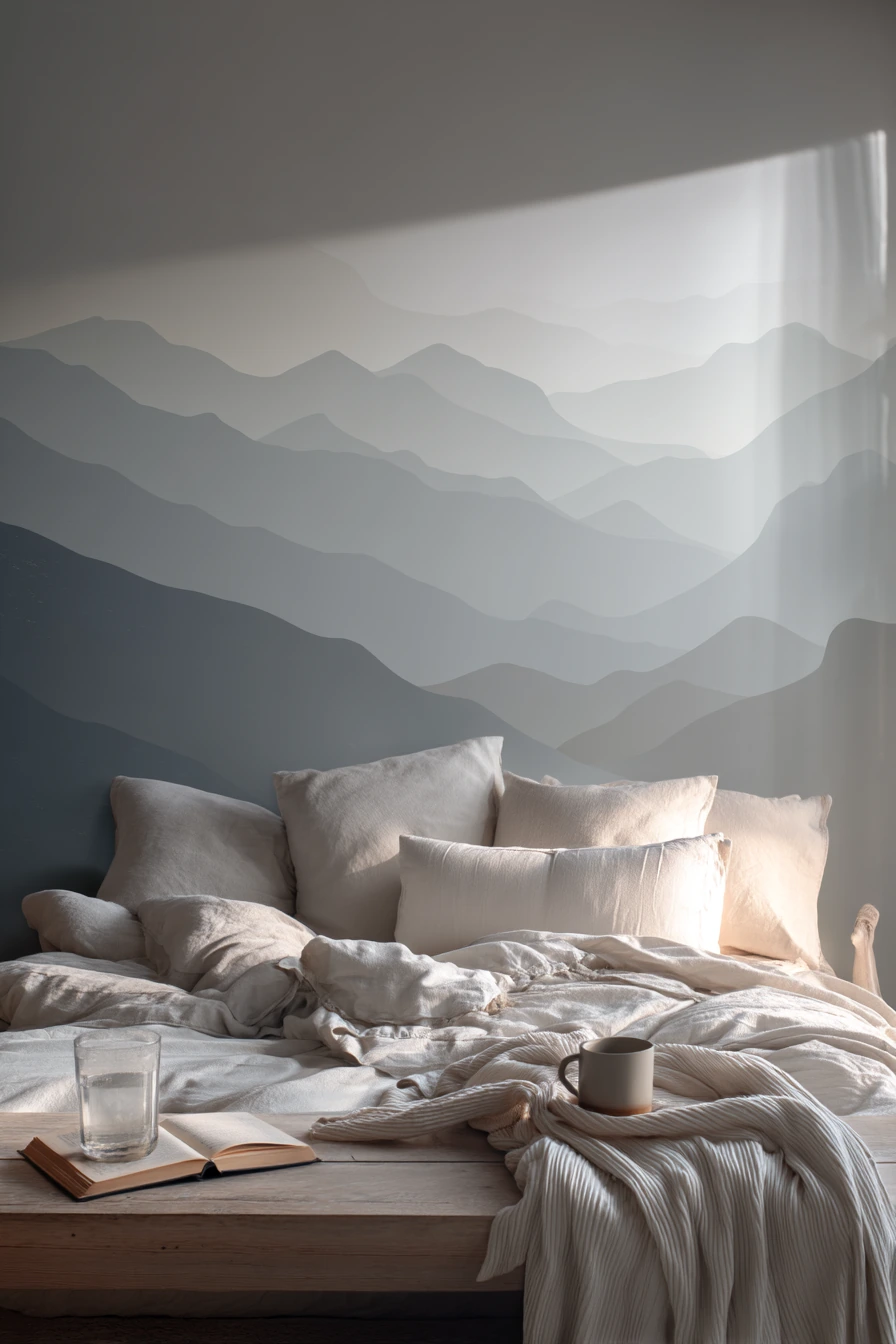
A minimalist mountain landscape mural in layered gray-blue silhouettes is a peaceful bedroom paint idea that feels like a view but stays simple. The soft shapes add depth behind the bed without the detail of a full scenic painting. In quiet morning light, the layers look gentle and calm.
Style this look with low, clean furniture. A low wood bed and soft neutral bedding keep the mural as the main feature. Add a folded throw blanket that is slightly wrinkled for texture. On the bedside table, a travel book and a water glass match the nature-inspired theme without looking like decor for decor’s sake.
To paint it, start with a base wall color in warm white or very light gray. Then choose 3 to 4 gray-blue tones that get lighter as they go back. Sketch a simple horizon and use wide, smooth brush strokes for the mountain edges. You can use a sponge to soften the top ridge line so it looks like mist. Keep the mural low and wide, centered behind the bed. Avoid high peaks that reach the ceiling, because that can make the room feel busy.
- Use 3 to 4 gray-blue shades for simple depth.
- Keep shapes broad and soft, not detailed.
- Center the mural behind the bed and keep it low.
- Pair with light wood and warm whites for balance.
- Add one texture item like a knit throw to soften the look.
Pro Design Tip: Make the closest mountain layer the darkest and the farthest the lightest to create easy perspective, even with very simple shapes.
Budget Considerations: You can mix your own gray-blue shades by tinting one base color with small amounts of black and blue paint, instead of buying many separate cans.
10. Deep Navy Feature Wall for a Moody Bedroom
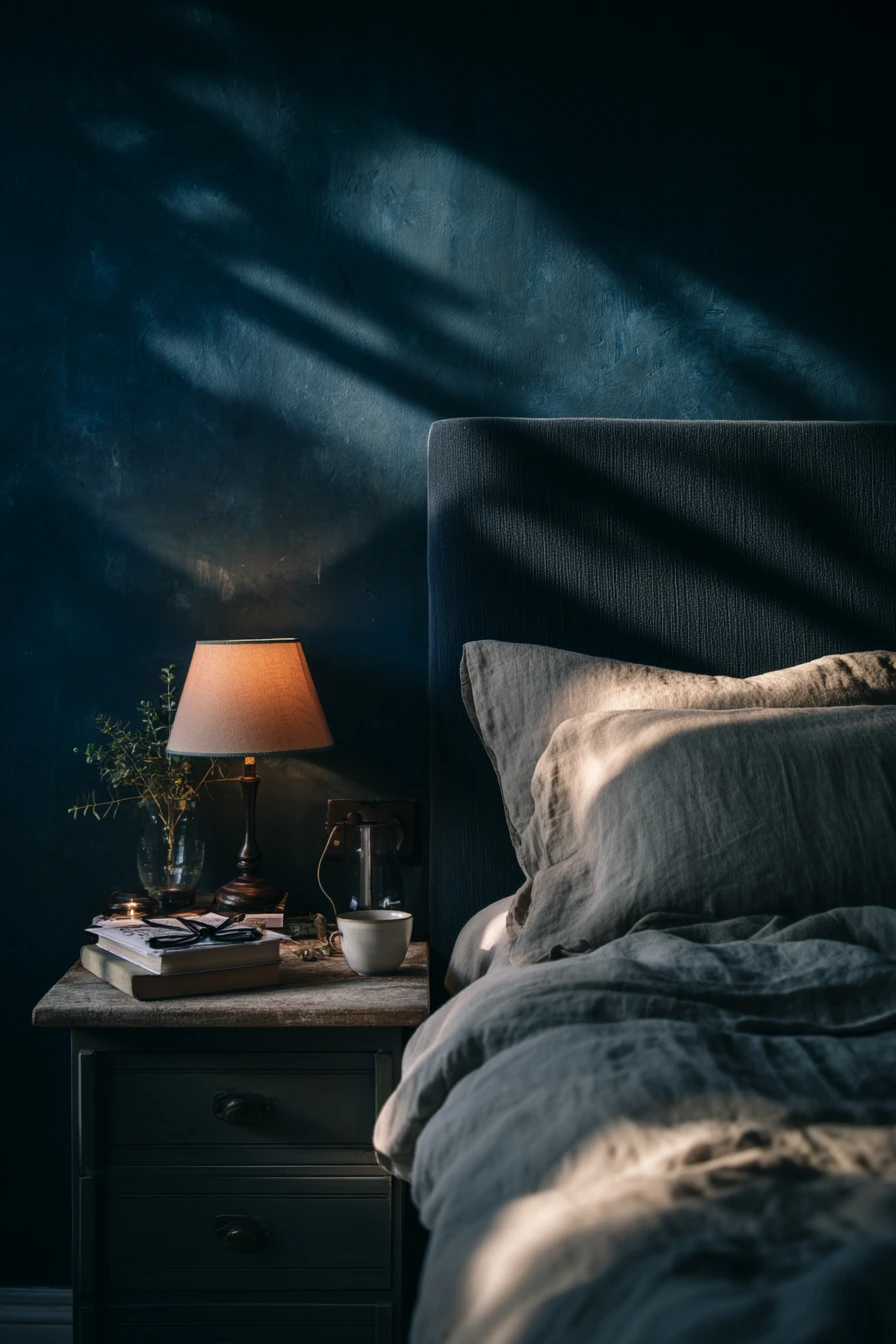
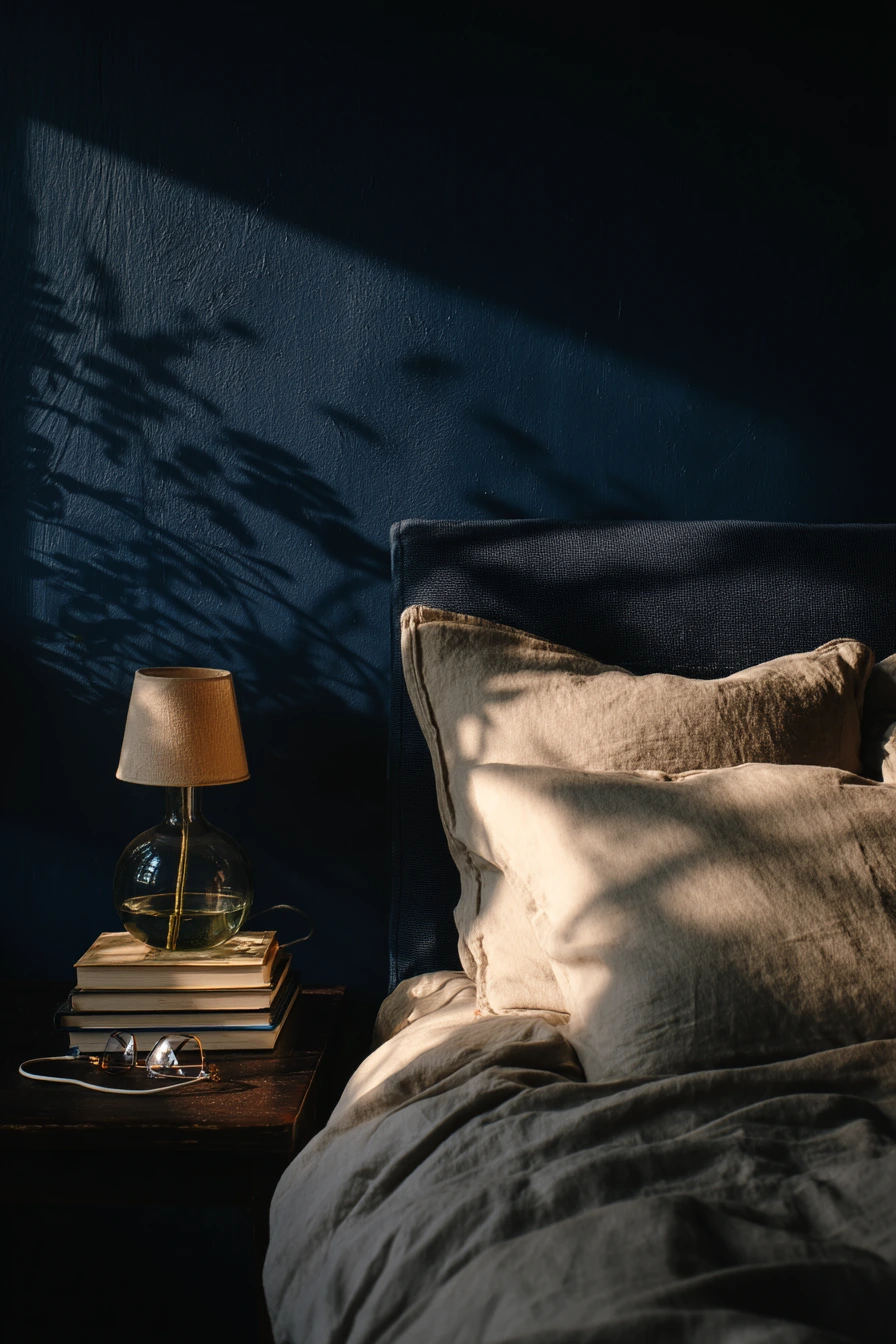
A deep navy painted feature wall behind the bed is a classic moody choice that still feels calm. A matte finish absorbs warm lamplight and helps the room feel cozy at night. Navy also pairs well with many fabrics, from crisp cotton to textured linen.
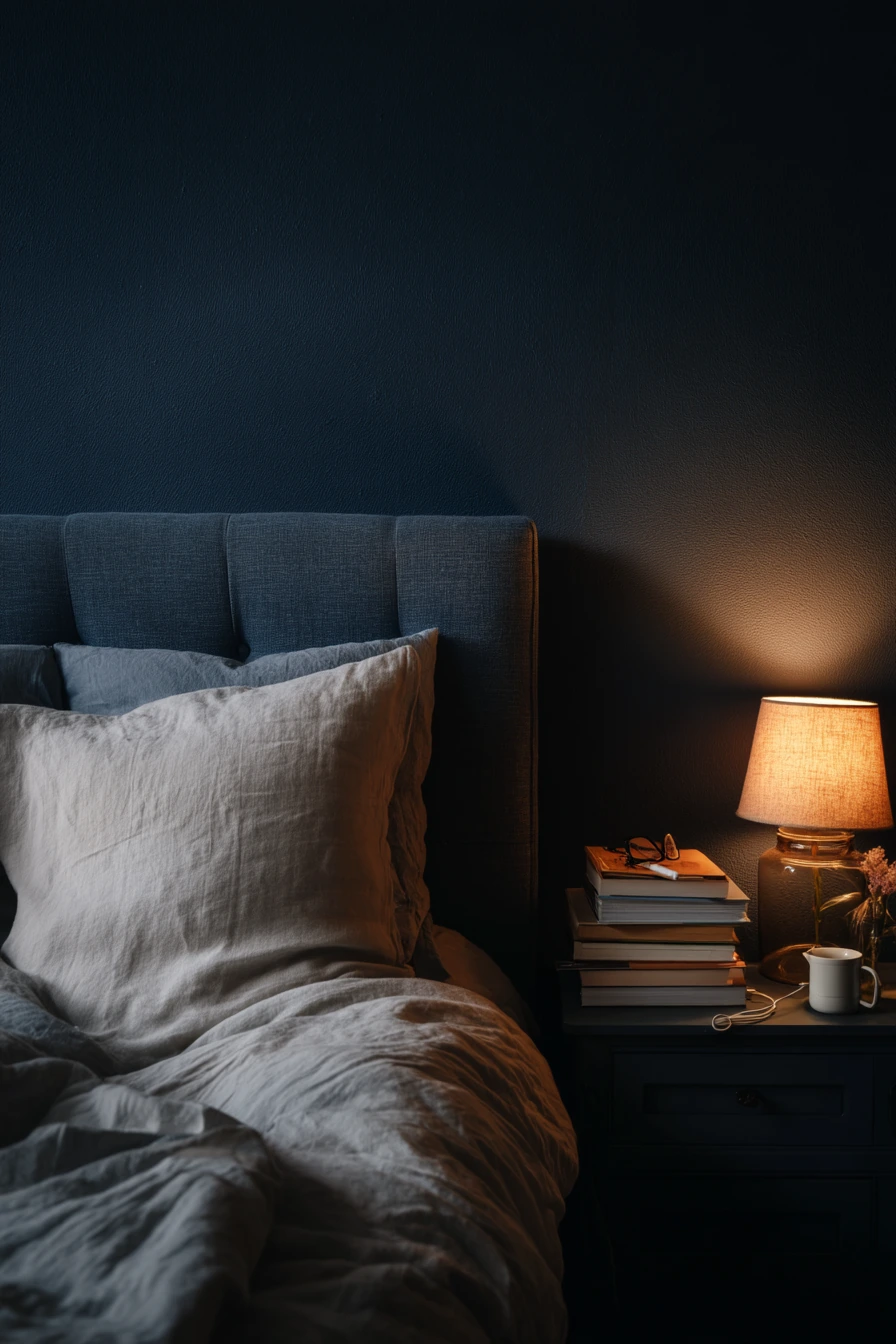
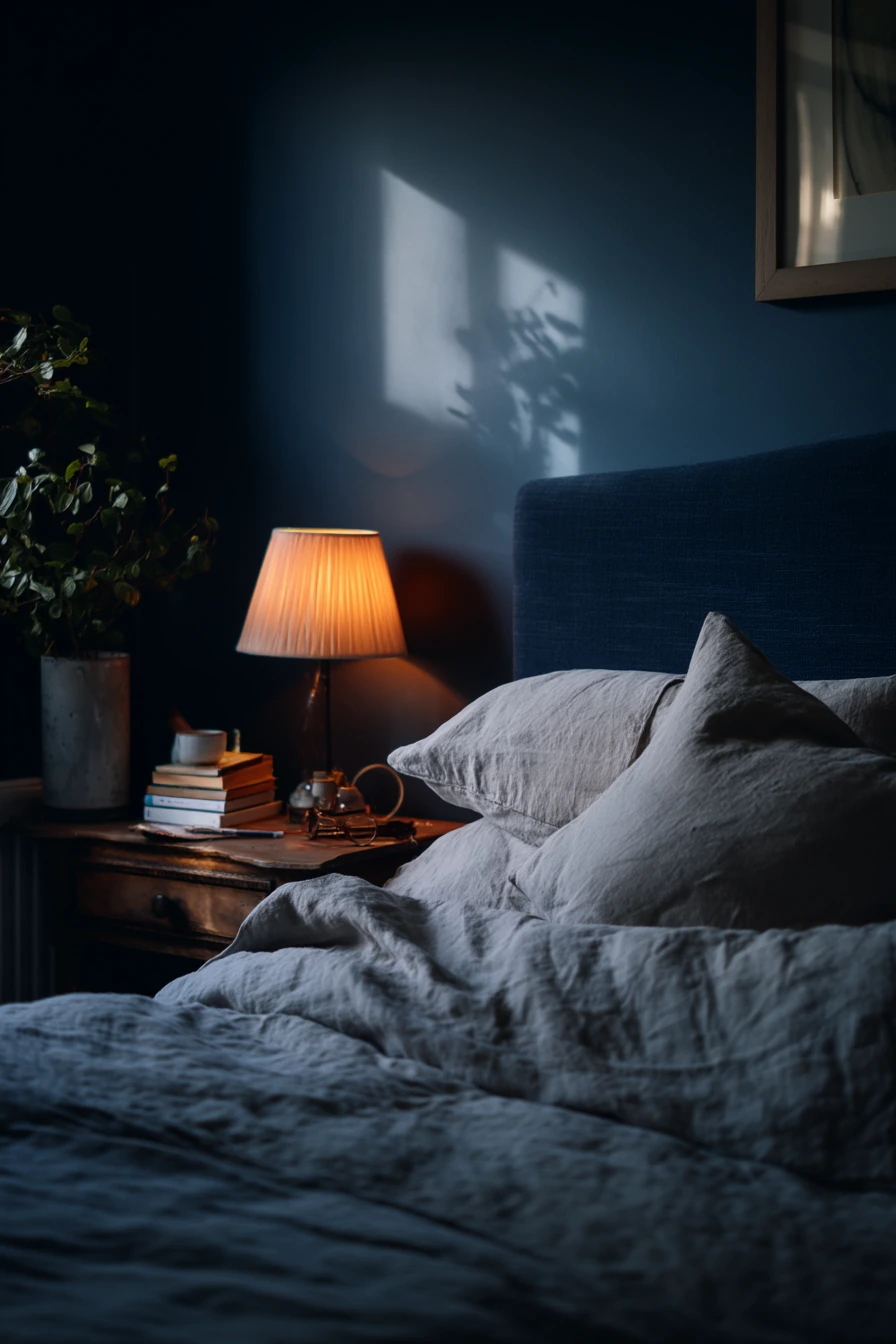
To style it, use layered bedding in creams, taupes, or soft grays. Textured linen bedding that is softly rumpled looks great against a dark wall because it adds contrast. Keep bedside items practical, like a stack of novels, reading glasses, and even a visible charging cable beside a phone. This makes the room feel like a real place you use every day, not a showroom. Add a plant for faint shadows on the wall to soften the darkness.
For paint, choose a high-quality matte that can handle scuffs, since a bed wall often gets touched. Paint at least two coats, and cut in carefully around outlets and trim. If your room is small, keep the other walls light and use mirrors or light curtains to bounce daylight. Use warm bulbs and dimmers to avoid a cold blue look at night. If you want a softer effect, try navy on only the lower two-thirds of the wall with a light top section.
- Use matte navy for a soft, cinematic feel.
- Keep other walls light to balance the darkness.
- Layer cream and taupe textiles for contrast and warmth.
- Add warm lighting and a dimmer for night comfort.
- Include one plant to break up the solid color.
Pro Design Tip: Paint the trim in the same navy for a modern, seamless look, or keep trim warm white for a sharper frame, but choose one approach and stay consistent.
Budget Considerations: Dark colors often need extra coats; buy a paint-and-primer formula to reduce the number of layers and save on labor and time.
The best wall painting ideas bedroom projects start with one clear plan: pick a mood, choose the wall that matters most, and keep the rest of the room simple. Accent colors like sage, terracotta, and navy can change the whole feel without new furniture.
If you want the easiest win, try an accent wall or two-tone split. If you want more personality, go with a mural, arch, or geometry. Take a few minutes to test samples in morning and evening light, then style with bedding, wood tones, and warm lighting.
FAQ
1. What is the best wall to paint as an accent wall in a bedroom?
The wall behind the headboard is usually the best choice for an accent wall because it frames the bed and creates a natural focal point. Among different wall painting ideas bedroom designs, this option adds style and balance to the space.
2. Should bedroom walls be matte or eggshell?
Matte paint creates a soft, elegant look and helps hide minor wall imperfections, while eggshell paint is easier to clean. Choose matte for a sophisticated finish or eggshell for areas that need more durability.
3. How do I choose paint colors that look calm?
Choose muted shades such as sage green, dusty blue, warm ivory, and soft taupe to create a relaxing atmosphere. Avoid overly bright colors on large walls if you want your bedroom to feel peaceful and comfortable.
4. How can I paint clean lines for geometric or color-block designs?
Use a level, quality painter’s tape, and a pencil to mark your design before painting. Press the tape edges firmly against the wall and remove the tape while the paint is slightly wet for clean, sharp lines.
5. Are bedroom wall murals difficult to paint?
Simple bedroom murals are easier to create than you might expect. Start with basic shapes, a limited color palette, and light pencil guidelines. You can try a small design above the bed before creating a larger mural.
6. What if my bedroom is small and I want a dark color like navy?
You can use navy blue on one accent wall while keeping the remaining walls light to maintain a balanced look. Add warm lighting, mirrors, and sheer curtains to help reflect light and prevent the room from feeling too dark.
7. How much paint do I need for one bedroom feature wall?
Most bedroom feature walls require approximately one quart to one gallon of paint, depending on the wall’s dimensions, surface condition, and number of coats. Dark or dramatic colors may require additional coats for even coverage, so check the paint manufacturer’s coverage instructions before purchasing.